Period: Neolithic

Dryburn Henge, Cumbria

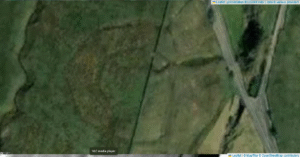
Dry Burn enclosure - Satellite

Dryburn Henge lies on Alston Moor in Cumbria, within the North Pennines Area of Outstanding Natural Beauty. It occupies a strategic nodal point on the high moor, roughly at NY 760 430, where routes across the Pennine watershed converge. The surrounding terrain is underlain by Carboniferous Great Scar Limestone and interbedded Yoredale shales, with scattered fluvioglacial gravels in valley bottoms.
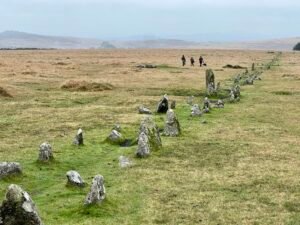
What might Stonehenge Mean? Dartmoor and Carnac add to the Picture

Dartmoor Stone Rows

Stonehenge has always been enigmatic, due to its use of those definitive morticed trilithons, all of which where squared of, more like the structures of the Maltese temples and other stone structures closer to Africa, as opposed to those of the rest of Britain and most of the wider North-west European ritual landscape.

Megalithic Stone Monuments in France May Be Europe’s Oldest

Carnac

The recent University of Gothenburg–led excavations at Le Plasker, and their startling radiocarbon dates of 4600–4300 BC for the Carnac alignments, deserve both applause for methodological rigor and a measured dose of critical scrutiny before we rewrite Neolithic Europe’s storybook.

Oval Barrow east of Ulshaw Bridge

Ulshaw Bridge Mound - Yvonne Luke - Long Cairns of the Yorkshire Dales

This unexcavated and undated barrow matches many of other Late Neolithic / Early Bronze-Age round barrows (c. 2400–1500 BC) dotted along the flanks of the Yorkshire Dales.

Guide: Ritual/Ceremonial Mounds

Marlborough mound 20240518 looking southwards

These are raised platforms created first and foremost for cult, procession, assembly or conversion—not for fortification or routine boundary-making. They tend to be much more significant and monumental than other mounds and raised platforms. Some are the largest structures known of their type. In Britain, possibly the best known example is Silbury Hill in Wiltshire.

Guide: Barrows

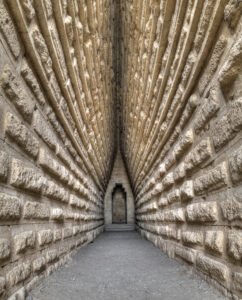
royal kurgans barrow, interior

A barrow is a mound of earth and/or stones raised over a grave or group of graves. Used from the Neolithic through to the Iron Age (roughly 4000 BCE to 500 CE), barrows were often constructed to honour elite individuals, such as tribal leaders, warriors, or chieftains. They are frequently found singly or in cemeteries known as barrow fields.

Guide: Classification of Henge Monuments

Avebury Landscape

Archaeologists use the word “henge” for later-Neolithic and earliest Bronze-Age earthen rings whose ditch lies inside the bank, creating a deliberately bounded interior. The term itself was coined in 1932 by Kendrick; it was refined in the 1950s by Richard Atkinson, whose system still frames most discussion.

Moulton Henge

Moulton Henge - 1m Lidar

Archaeologists now recognise a true Neolithic henge lying immediately south-west of Moulton village, roughly midway between the Swale and Dere Street. The monument is almost 200 m across, with a low earthen bank encircling an inner ditch and a central platform about 110 m wide; the ditch lies inside the bank—the classic “Class II” henge arrangement.

Unveiling the Archaeological Landscape of Nosterfield

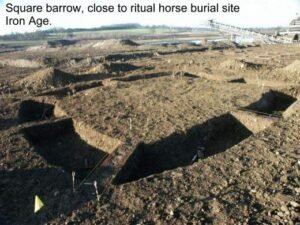
Square Barrow at Nosterfield Quarry, near Thornborough Henges

The Nosterfield Quarry excavation sits at the heart of one of Britain’s most enigmatic prehistoric landscapes—the Thornborough Henges Complex.

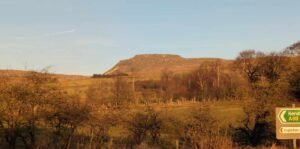
Ingleborough Hill – Yorkshire Dales

Ingleborough Hill, part of the Yorkshire Dales National Park, is one of the famous “Three Peaks” in the area, alongside Whernside and Pen-y-ghent. It stands at 723 meters (2,372 feet) and has a rich geological and archaeological history.

Contact Us
close slider