Category: Leaders

The hero archetype and Lugh

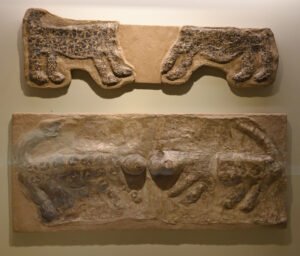
Museum of Anatolian Civilizations Çatalhöyük Leopard reliefs all in 2019 01

At its core the “hero” is the figure who steps out of ordinary society, confronts chaos or a monster, and returns (or dies) having secured order for the group. In Jungian and comparative-myth terms it sits in the “warrior-champion” slot of the collective story-board; evolutionists would say it crystallises the survival value of decisive coalition leadership in small bands.
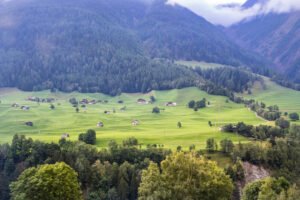
Anciens Arsenaux Neolithic Settlement, Sion – Switzerland

Upper Rhone Valley

Sion lies midway along the upper Rhône Valley, an east‑west trench gouged by repeated Pleistocene glaciers and now flanked by the Pennine and Bernese Alps. The settlement area sits on the alluvial fan of the Sionne torrent, a cone of well‑sorted sands and gravels that projects onto the wider Rhône flood‑plain. 

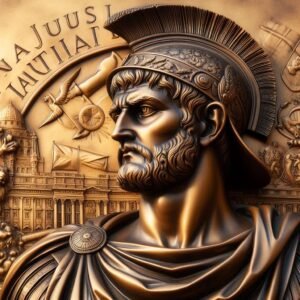
Gnaeus Julius Agricola

In a series of annual military campaigns Agricola put down revolts in north Wales, subdued the Brigantes tribe in the north, extended Roman control over the Scottish lowlands, where he established a string of forts between the Forth and the Clyde, sent troops into Galloway, and made inroads into the eastern Highlands. During the latter campaign his vessels were the first to circumnavigate the islands.

Roman Rig Defensive Works

The Roman Rig is a defensive dyke built to defend against attack from the south. It runs from Sheffield, past Templeborough and carries on almost to Doncaster. If this is a Brigantian dyke it would certainly add weight to Websters definition of the Roman border in the period.

Drumanagh Promontory Fort – First Ever Intact Roman Pot Found in Ireland

Roman samian ware

RTE Ireland has reported that more recently they have made yet another remarkable discovery—an intact Roman pot. the first one to be uncovered on Irish soil, and providing more tantalising clues about ancient Roman-Irish interactions.

Although the Roman Empire they never reached Ireland (except, seemingly, in myth). That does not mean, that Roman influence and goods did enter Ireland, and it means that Drumanagh continues to headline as one of Irelands most tantalising archaeological sites for that same reason – exactly what were the Romans doing in Ireland?

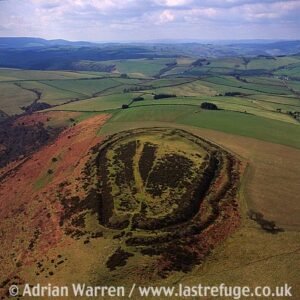
The Legend of Caer Caradoc

Caer Caradoc

Caer Caradoc is often linked to Caradoc (or Caradog), a prominent figure in Welsh mythology and Arthurian legend. Caradoc is considered one of the knights of the Round Table in Arthurian lore, and he is sometimes referred to as Caradoc of the Battle or Caradoc the Brave. He was known for his bravery and his loyalty to King Arthur.

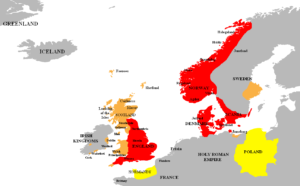
Canute the Great

Canute the Great

The legend of King Cnut, also known as Canute the Great, is a fascinating tale that highlights themes of humility and the limits of power. King Canute ruled over England, Denmark, and Norway in the early 11th century. He was a powerful Viking king known for his military prowess and political acumen.

Briefing – The Myth of Breogán and the Tower of Heracles

Statue of Breogans at a Coruna

Breogán is a legendary figure in Galician mythology and is regarded as the founder of the Galician people. The myth of Breogán is part of the ancient Celtic tradition, and while the details of his story vary across sources, he is universally seen as a key figure in the mythological ancestry of the Galicians.

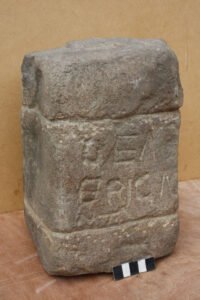
Curse tablet addressed to the god Bregneus – Bath

Potentially false altar to Brigantia - R Tomlin

‘To the god Bregneus I give the axe which I have lost from my house, (the house) of Hegemon. […] has stolen, he is not to be permitted sleep or health (until) he has brought it to your temple as we ?arrange. The hammer which I previously lost, it also […] ?I give.’

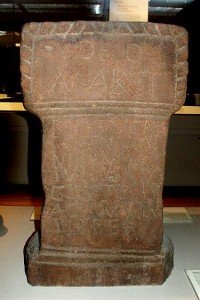
Altar dedicated to Bregans and the Divinity of the Emperor

Altar dedicated to Bregans and the Divinity of the Emperor

Contact Us
close slider