Category: Dark Ages Brigantia

Great Roe Wood (Roe Wood) Enclosure – Woodhouse

Great Roe Wood - Sheffield - OS Series 1

Great Roe Wood (often simply called “Roe Wood”) sits on the Magnesian Limestone ridge that carries the Roman Rig between Sheffield and Doncaster, just northeast of the village of Woodhouse (OS grid SK 450 920). This ridge forms a natural corridor overlooking the Don valley, with shallow soils over limestone giving way to deeper alluvial gravels in the valley bottom.

Roman Rig Defensive Works

The Roman Rig is a defensive dyke built to defend against attack from the south. It runs from Sheffield, past Templeborough and carries on almost to Doncaster. If this is a Brigantian dyke it would certainly add weight to Websters definition of the Roman border in the period.

Black Dike – Coverdale

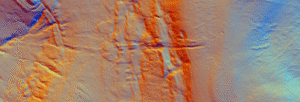
Black Dike - 1m LiDAR

Black Dike is the diminutive counterpart to the great Tor Dike, rising from its western arm and climbing to the watershed between Great and Little Whernside. Beginning at roughly SD 988 756—where Tor Dike cleaves the limestone scarp—the Black Dike pursues a steep, sinuous course uphill for nearly 0.6 km, finally spilling onto the ridge crest at about 675 m above sea level

Prehistoric mounds, cairns and boundary earthworks in Coverdale

Cairn atop Little Whernside

A gazetteer of probable prehistoric mounds, cairns and boundary earthworks in Coverdale. It is not complete and is still being researched.

Flats Hill – Carlton in Coverdale

Flats Hill Mound - Carlton-in-Coverdale - view from road

Flats Hill mound is approximately 30 meters in diameter and stands about 3.6 meters high. It has never been excavated, although a dry stone wall seems to have been started, and then stopped, partly over its top. It has been suggested as, and is listed as a probable barrow, with a presumably wide date, likely to be in the Bronze Age or Iron Age date range.

The names Cambre, Cambria, Cumbria, and Cymru

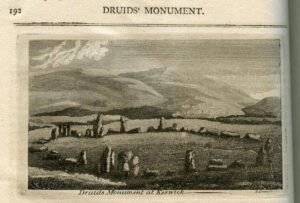
Castlerigg- Hutchinson's History of Cumberland

The similarities between the names Cambre, Cambria, Cumbria, and Cymru (the native Welsh name for Wales) have been noted by linguists and historians, particularly when exploring Indo-European and Celtic roots.

East Yorkshire

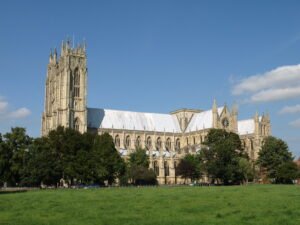
Beverley Minster

East Yorkshire’s Middle-Iron-Age story stands out in Britain because the communities who farmed the chalk of the Yorkshire Wolds developed what archaeologists call the Arras culture: a distinctive blend of continental La Tène fashions and local invention that is visible above all in their cemeteries. Three elements make it special.

World Heritage

The Tower of Hercules

This is our master collection page for all of our heritage articles and sites. It is the root of our tree of sites covered within Brigantes Nation. Both within and without Brigantia. It is everything that has been of interest, so far.

Contact Us
close slider