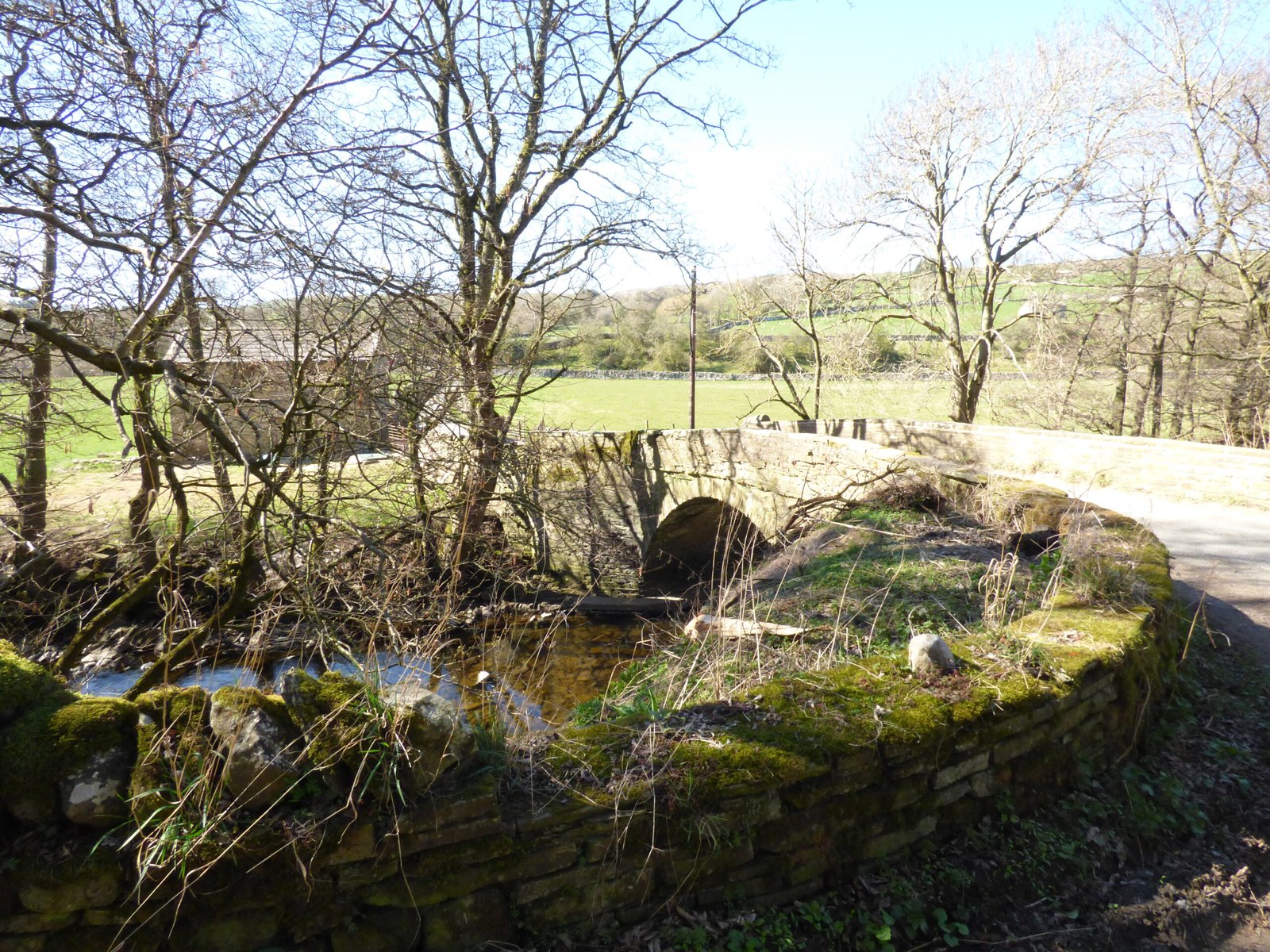
Nathwaite bridge over the River Cover is a strategically placed river crossing, for centuries it has been the only crossing Read more
Site Details
Introduction to the Geography and History of Spain
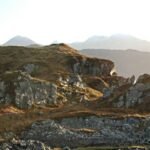
Spain, located on the Iberian Peninsula in the southwestern corner of Europe, is a country of rich contrasts—mountains, beaches, valleys, and vast plains. It shares borders with France and Portugal and is surrounded by the Mediterranean Sea to the east and south, and the Atlantic Ocean to the north and west. The country’s diverse landscapes are mirrored by a complex and storied history, making it a land of great historical, cultural, and geographic significance.
Spain's varied geography is marked by mountain ranges, fertile river valleys, and a wide variety of ecosystems. The Pyrenees mountains separate Spain from France, with some of the highest peaks in Europe. To the south, the Sierra Nevada mountain range hosts Spain's tallest peak, Mulhacén, at nearly 3,500 meters. Between these mountain ranges lie vast plateaus, notably the Meseta Central, and rich, fertile river valleys, such as those formed by the Ebro, Guadalquivir, and Tagus Rivers. Along its coasts, Spain is home to beautiful Mediterranean beaches and the rugged cliffs of the Atlantic.
Spain's northern regions are particularly renowned for their green landscapes (such as Galicia and Asturias), contrasting with the dry, sun-drenched plains of the south, like Andalusia. The Basque Country in the north stands out with its own unique culture and language, and Catalonia adds another layer of cultural complexity with its distinct language and historical identity.
The History of Spain:
The history of Spain is one of great complexity and cultural integration, shaped by various peoples over millennia. Spain’s roots trace back to the Iberians, who inhabited much of the peninsula before the arrival of Phoenicians, Greeks, and later the Romans.
Iberians and Celts: Before Roman rule, the Iberian Peninsula was home to a diverse mix of indigenous tribes. The Iberians, alongside Celtic tribes, such as the Celtiberians in the center, formed the basis of Spain’s early cultural identity. Their interactions, as well as their struggles against invaders, laid the groundwork for the later fusion of cultures on the peninsula.
Roman Hispania: In 218 BCE, during the Second Punic War, the Romans began their conquest of the Iberian Peninsula, which was eventually fully integrated into the Roman Empire as Hispania. The Roman period brought significant urbanization, infrastructure, and cultural development to Spain. Notably, the Romanization of the Celtiberians and other groups in Hispania influenced Spain’s language, culture, and systems of governance for centuries. The Roman Empire’s road networks, aqueducts, and urban planning still remain part of Spain’s landscape today.
Visigoths and Moorish Spain: After the fall of the Roman Empire, Spain became part of the Visigothic Kingdom. In 711 CE, the Moorish invasion from North Africa dramatically changed Spain’s political and cultural landscape. Over the next several centuries, much of Spain was ruled by Islamic caliphates, most notably the Umayyads. This period of Moorish Spain saw significant advancements in architecture, science, and philosophy, most notably in Córdoba.
Reconquista and Christian Spain: The Reconquista (the Christian reconquest of Spain from the Moors) culminated in 1492 with the capture of Granada. This marked the end of Muslim rule in Spain and the unification of the country under Ferdinand and Isabella. Spain then entered a golden age, exemplified by the Spanish Empire, which at its height, spanned across the Americas, Europe, Africa, and Asia.
Modern Spain: In more recent history, Spain endured a civil war in the 20th century, resulting in the rise of Francoist Spain, which lasted from 1939 to 1975. After Franco’s death, Spain transitioned to a democratic constitutional monarchy, with King Juan Carlos I playing a key role in leading the country into the modern era.
Galicia and Brigantium:
One of the most historically significant regions of Spain is Galicia, located in the northwest of the country. It is a land of lush green hills, deep valleys, and a rich Celtic heritage. The Galicians have long been linked with the Celtic tribes of ancient Hispania, and their culture and language—Galician—still retain many of these Celtic influences today.
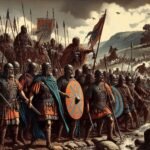
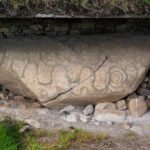
The ancient people of Galicia are believed to have been part of the Celtic world that spanned much of western Europe, and their cultural legacy has been compared to that of the Brigantes, who lived in Britain and Ireland. Both groups shared similar social structures and religious practices, with a strong emphasis on the ancestral connection to the land.
The Brigantes—who inhabited parts of northern Britain, notably Yorkshire—are believed to have had connections with the Galicians through ancient migration or trade routes, further linking these two groups. While the exact nature of this connection remains speculative, the geographical proximity of Galicia and the Brigantes’ territory makes it a fascinating area to explore for potential cultural and social ties. Through archaeological evidence and linguistic studies, some researchers speculate that the Galicians’ Celtic roots could be connected with the Celtiberian tribes, and possibly even the Brigantes, sharing aspects of rituals, beliefs, and way of life.
Conclusion
Spain’s geography and history are fundamental to understanding the origins of Galicia and its relationship to the broader Celtic world, including potential connections to the Brigantes. With its rich natural environment and complex historical layers, Galicia provides a fascinating lens through which we can explore the development of Celtic cultures, their sacred landscapes, and their evolving spiritual practices. In the coming sections, we will dive deeper into Galician geography, archaeology, and historical context, and explore the possibilities of connections to the Brigantes of Britain and Ireland.
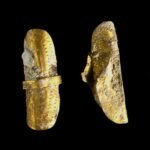
In britain BC, the autor describes the grave of a hunter, buried with two ivory canes stained brown. The use of the two canes was unknown.
I have a photo of teenagers from Acoma NM dancing at the Indian Peublo Cultural Center in Albuquerque NM USA, where the dancer representing an elk is using such canes. There was a child dancing as a goat who was also using canes.
My theory is that the canes were used to make the hunter apppear to be an ungalate, so he could approach his quarry closer undetected.












1 comment
In britain BC, the autor describes the grave of a hunter, buried with two ivory canes stained brown. The use of the two canes was unknown.
I have a photo of teenagers from Acoma NM dancing at the Indian Peublo Cultural Center in Albuquerque NM USA, where the dancer representing an elk is using such canes. There was a child dancing as a goat who was also using canes.
My theory is that the canes were used to make the hunter apppear to be an ungalate, so he could approach his quarry closer undetected.