Period: Viking

Guide: Ritual/Ceremonial Mounds

Marlborough mound 20240518 looking southwards

These are raised platforms created first and foremost for cult, procession, assembly or conversion—not for fortification or routine boundary-making. They tend to be much more significant and monumental than other mounds and raised platforms. Some are the largest structures known of their type. In Britain, possibly the best known example is Silbury Hill in Wiltshire.

Guide: Hillfort Mounds of Europe

Trelleborg airphoto

Guide: Common Features of Iron Age Hillforts This article attempts to serve as a guide for many of the features of the hillforts found in Britain, in Read more Guide: Iron-Age minting: Ceramic Pellet-mould trays This article explores the most tangible evidence we possess for indigenous minting north of the Humber: the smashed ceramic “pellet-mould” …

Continue reading

Guide: Barrows

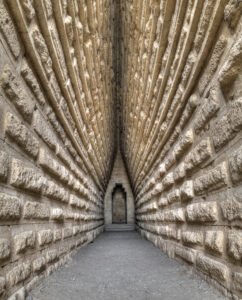
royal kurgans barrow, interior

A barrow is a mound of earth and/or stones raised over a grave or group of graves. Used from the Neolithic through to the Iron Age (roughly 4000 BCE to 500 CE), barrows were often constructed to honour elite individuals, such as tribal leaders, warriors, or chieftains. They are frequently found singly or in cemeteries known as barrow fields.

West Scrafton – Coverdale

West Scrafton

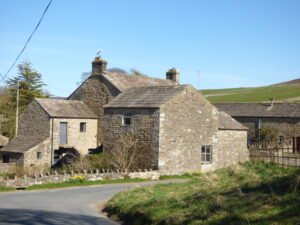
West Scrafton is a village located in Coverdale in the Yorkshire Dales. It sits on the southern upward slops of Coverdale, and had its most recent heyday in the 19th century when coal mining took over the village.

Guide: The Ard – Early Ploughing in English Brigantia

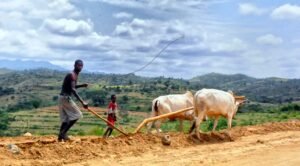
Single Tyne Plough, Arba Minch

The ard, also known as a scratch plough, represents one of the earliest forms of agricultural technology used by the people of ancient Brigantia.

Guide – The Roman Period in the British Isles

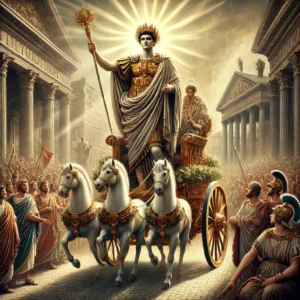
Emperor Augustus dressed as a deity, parading through ancient Rome

Julius Caesar made the first significant Roman attempt to conquer Britannia in 55 BCE during his campaign in Gaul. He landed on the shores of south-eastern Britain, but his invasions were brief and mostly for reconnaissance. Despite some skirmishes, there was no lasting conquest at this stage.

Ingleton – Yorkshire Dales

A waterfall

Ingleton, located in North Yorkshire, England, has a rich and diverse history that spans thousands of years. The village is situated in the scenic area of the Yorkshire Dales, which has long been inhabited and influenced by a variety of cultures.

Early Christian syncretism and how the old ones hid amongst the new religion

Syncretism is where two or more differing beliefs become merged. In England, this first happened under Roman rule, where many pre-existing Celtic shrines to specific deities were associated with Roman deities of the same qualities or attributes. Based on extensive research, I am now confident that in Britain, the early Christians undertook a similar process and with that knowledge, we should be able to reverse engineer, to some extent, our local Brigantian Celtic pantheons.

The growth of Christianity 50AD – 1100AD

We look at the development of Christianity from 50AD to 1100AD in both the broader European context and also for the people of Brigantia.

Contact Us
close slider