Category: Archaeological Periods

The Story of Boltby Scar

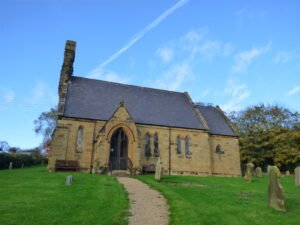
Boltby Church, Yorkshire Moors

Boltby is a very important ancient site IMO. A gold “hair braid”, was found there, linking it to the Amesbury Archer, buried with two similar hair braids. This also provides a link to the founding of Stonehenge, which helps set a potential scene for a possible “zeitgeist”, of the day.
The hero archetype and Lugh

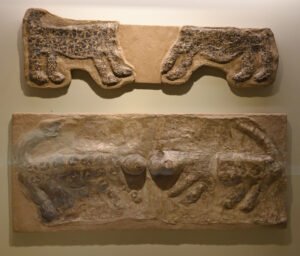
Museum of Anatolian Civilizations Çatalhöyük Leopard reliefs all in 2019 01

At its core the “hero” is the figure who steps out of ordinary society, confronts chaos or a monster, and returns (or dies) having secured order for the group. In Jungian and comparative-myth terms it sits in the “warrior-champion” slot of the collective story-board; evolutionists would say it crystallises the survival value of decisive coalition leadership in small bands.

Head One – St Michaels Church, Kirklington

Kirklington Head 1 - left side

This head is one of thirteen “Celtic”, or archaic heads that are located within the interior of the church. Twelve of those heads, including this one, are located in four rows of three, which run down either side of the churches arched columns. The thirteenth head is located in the bell tower.

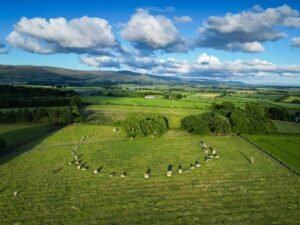
Long Meg and her Daughters standing stone and stone circle

An aerial photo of Long Meg and her Daughters standing stone and stone circle in Cumbria. Part of a site report on britgantesnation.com

Long Meg and her Daughters is a remarkable Neolithic monument located near Penrith in Cumbria, England.

Cana Barn Henge

Cana Barn henge

The stats for this Neolithic monument are astounding: 200m across, once a great circle of earthen banks and deep ditches. Today, almost lost: 5,000 years of plough and neglect have flattened the banks and filled the ditches, and Cana Henge is now nothing but a smoothly undulating grassy field on the moor overlooking Ripon.

Anciens Arsenaux Neolithic Settlement, Sion – Switzerland

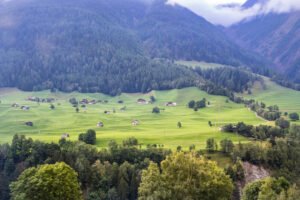
Upper Rhone Valley

Sion lies midway along the upper Rhône Valley, an east‑west trench gouged by repeated Pleistocene glaciers and now flanked by the Pennine and Bernese Alps. The settlement area sits on the alluvial fan of the Sionne torrent, a cone of well‑sorted sands and gravels that projects onto the wider Rhône flood‑plain. 

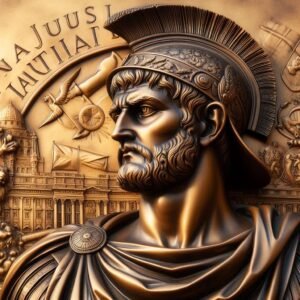
Gnaeus Julius Agricola

In a series of annual military campaigns Agricola put down revolts in north Wales, subdued the Brigantes tribe in the north, extended Roman control over the Scottish lowlands, where he established a string of forts between the Forth and the Clyde, sent troops into Galloway, and made inroads into the eastern Highlands. During the latter campaign his vessels were the first to circumnavigate the islands.

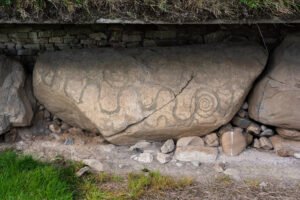
Snake Iconography in the British Isles

Knowth, Brú na Bóinne (Boyne Valley), Ireland

Syncretism through the ages Syncretism, the amalgamation of different religions, cultures, or schools of thought, has its roots in the ancient world. Thoughts on Celtic Religion – Raimund, Karl To begin with, lets first look at the sources available to us: There are quite numerous sources available, contrary to Read more Hillforts: Defence or Ritual? …

Continue reading

Liverpool Street Roman Road, Manchester

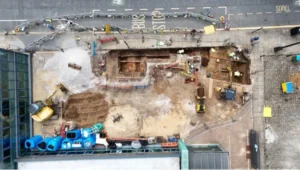
Liverpool Street Excavations - Roman Road - Manchester University

Archaeologists have exposed a well-preserved cambered Roman road surface in Manchester’s Castlefield area (Liverpool Road/Liverpool Street reporting), astonishingly only c. 15 inches (≈38–40 cm) below modern tarmac, with an assemblage of Romano-British pottery and other small finds broadly dating its active use to the 1st–3rd centuries AD.

Mamucium Roman Fort, Manchester

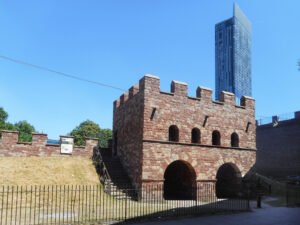
Roman Gatehouse at Mamucium

Mamucium occupies a low sandstone promontory at the junction of the Rivers Medlock and Irwell. The bedrock is the Triassic Sherwood Sandstone Group, a firm, well‑drained red sandstone that gave Roman engineers a stable platform for earthworks and timber palisades, while nearby river gravels supplied road‑making aggregate.

Contact Us
close slider