Guide – The Roman Period in the British Isles
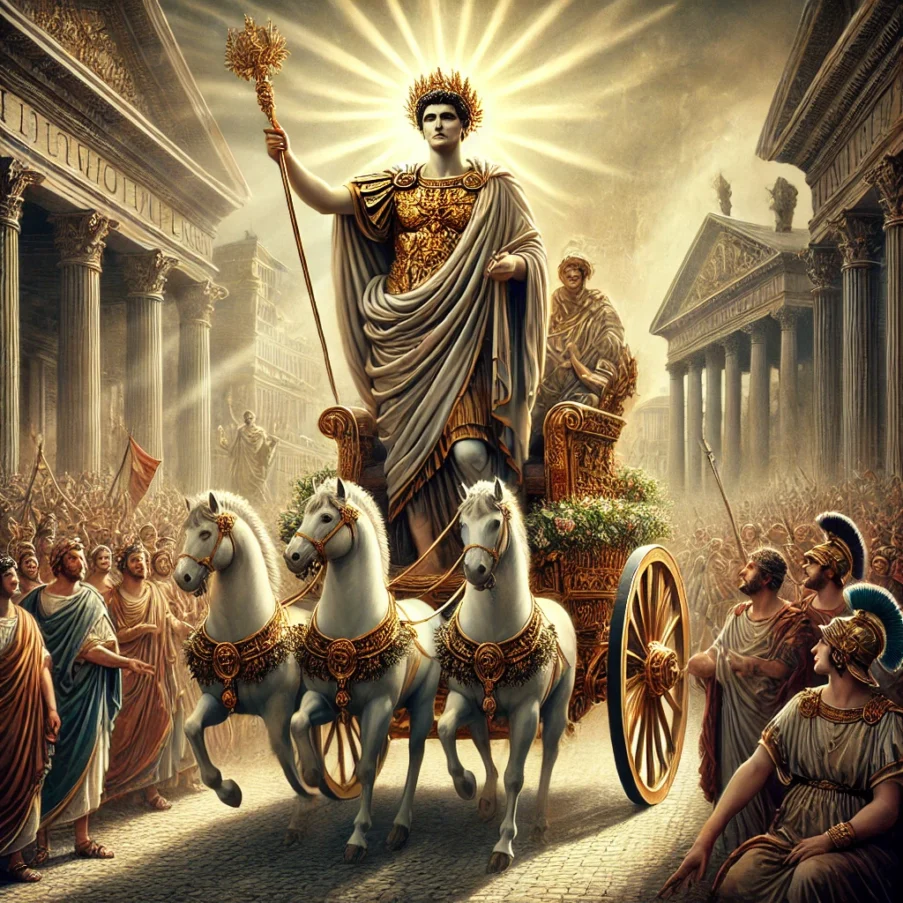
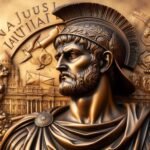
Emperor Augustus dressed as a deity, parading through ancient Rome
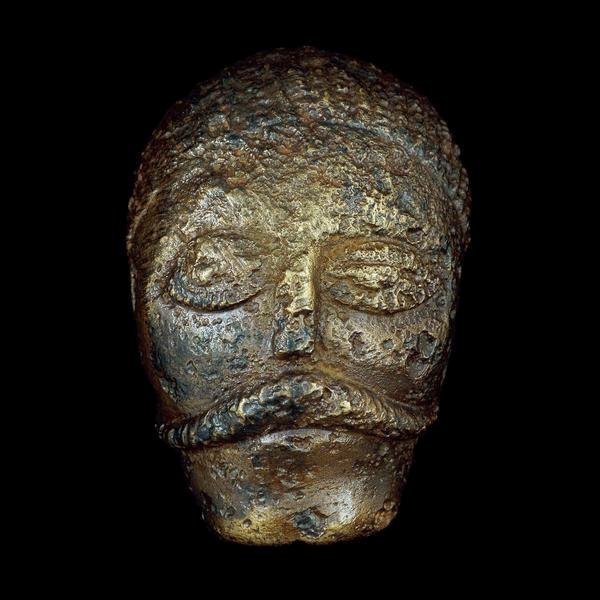
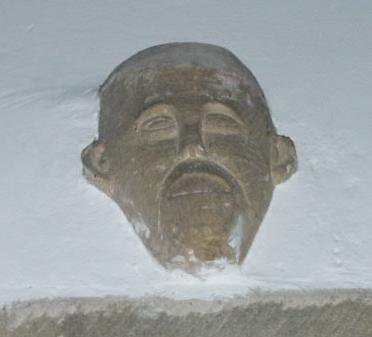
Celtic Heads
Celtic Head from Witham, 2nd c B.C. (British Museum) "Celtic" carved heads are found throughout the Read more
Timeline 60BC – 138AD
This timeline is focussed on the British Celtic culture and those cultures which had influence on the British Celts. It Read more
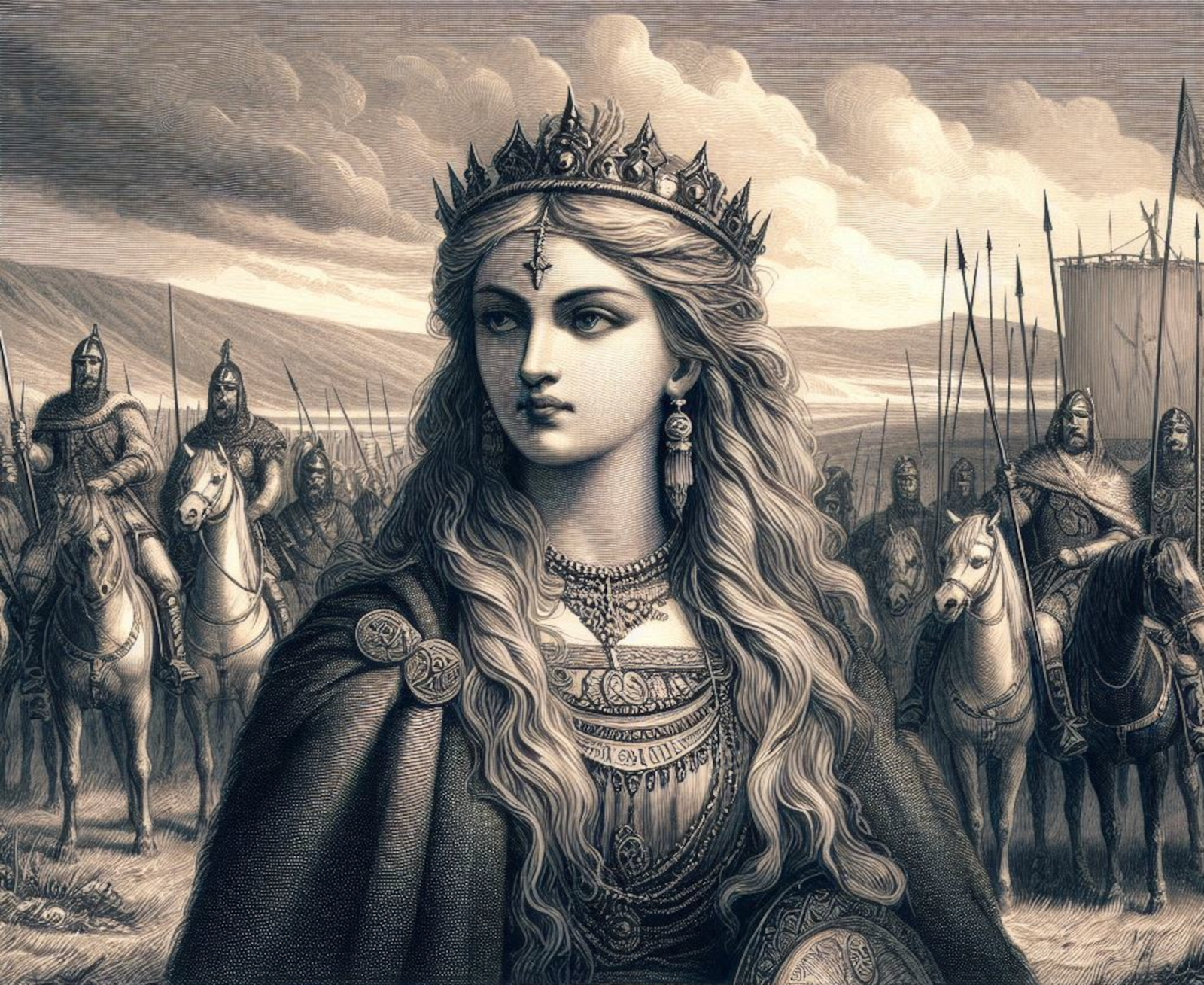
Cartimandua
Yorkshire, and much of northern Britain was also ruled by a queen, the most powerful ruler in Britain in fact. Read more
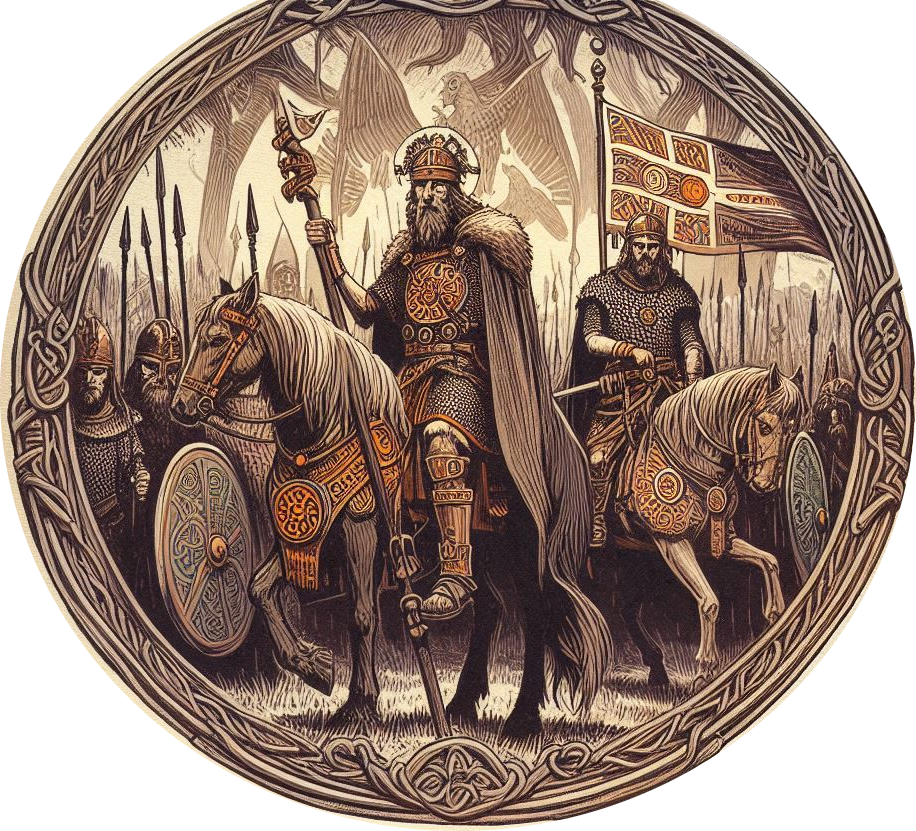
Caratacus
Caratacus was highly influenced by the Druids, and both he and his brother Togodumnus were among the leading lights of Read more
Cerialis Petillius
Quintus Petillius Cerialis Caesius Rufus was the son-in-law of Vespasian Cerialis and became Governor of Britain in AD.71; his instructions Read more
Julius Caesar
Ask anyone to name a famous Roman character, and the name of Julius Caesar is sure to be the most Read more
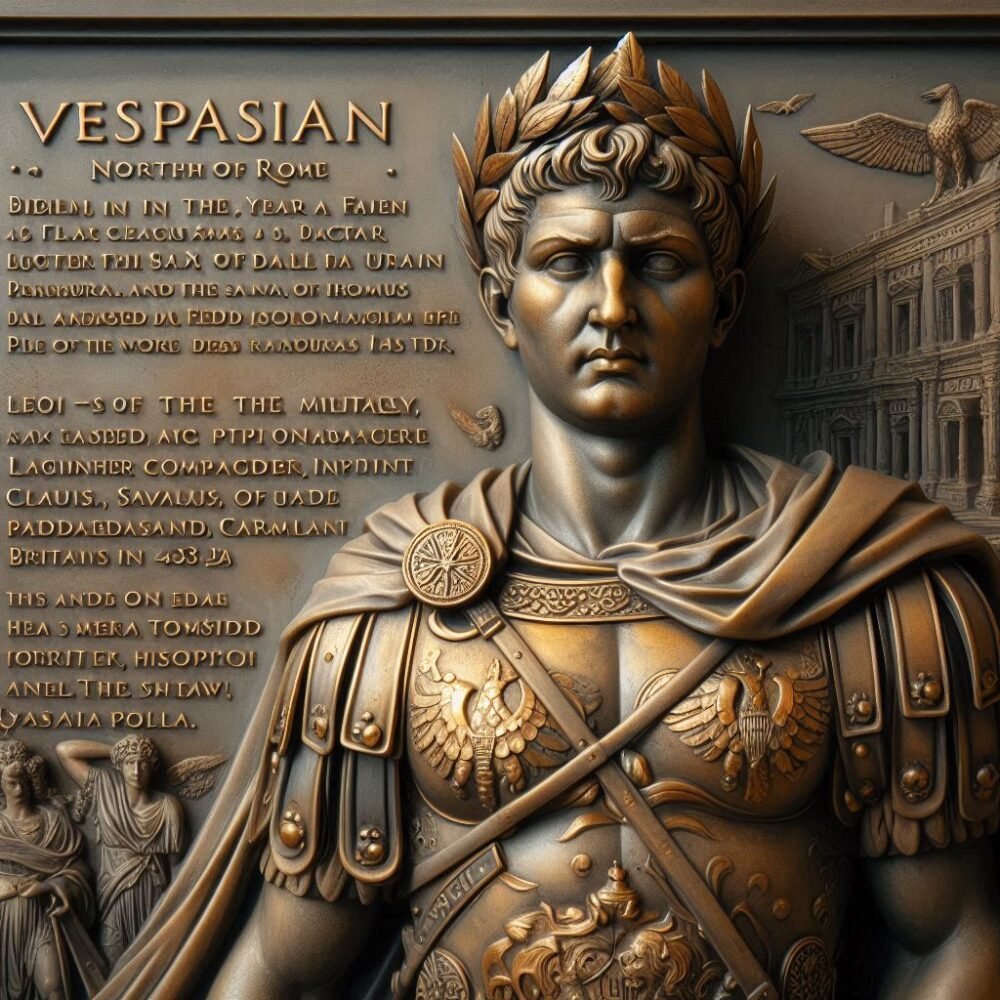
Vespasian
Born in the year 9 at Reate, north of Rome, Vespasian was the son of a tax collector, Flavius Sabinus Read more
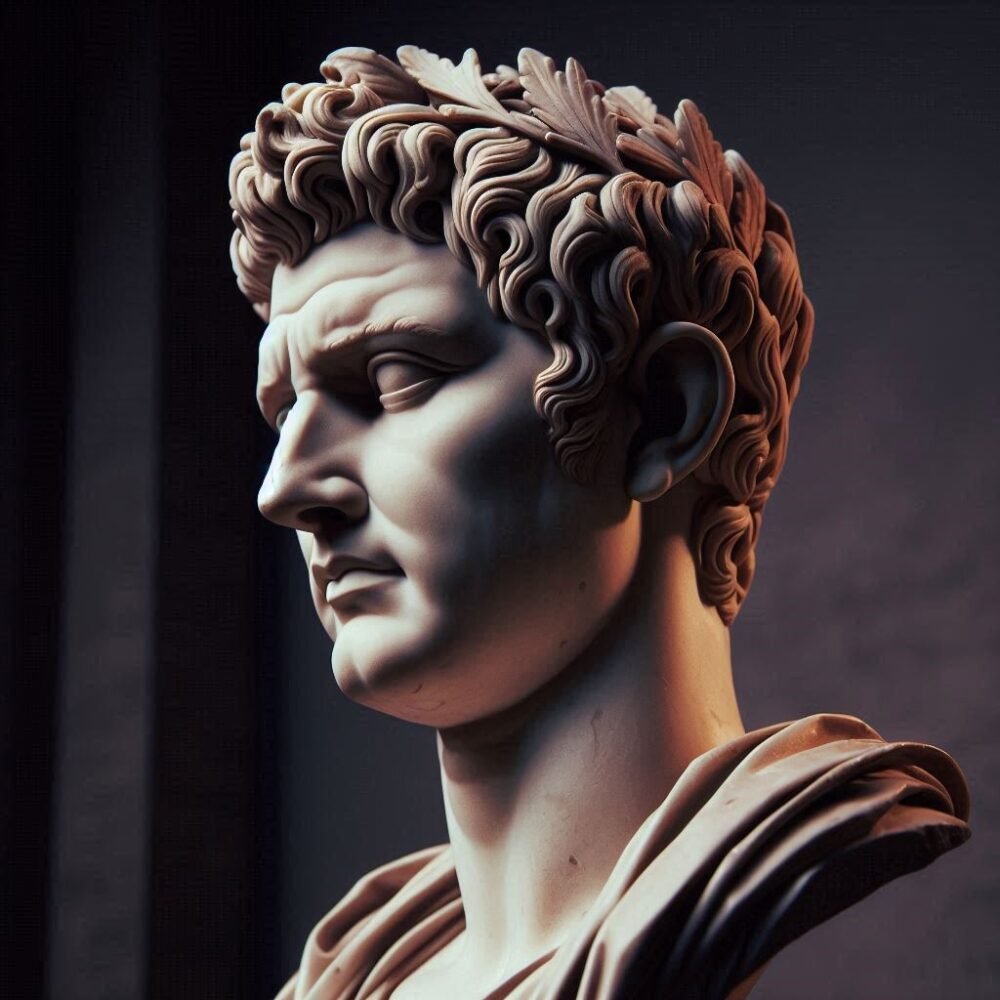
Augustus
Suetonius wrote of him: He was very handsome and most graceful at all stages of his life, although he cared Read more
Claudius
Tiberius Claudius Nero Germanicus was born Lugunum in 10 BC, the youngest son of Nero Drusus, brother of Tiberius. He Read more
Celtic Gods
Many Celtic deities seem to have been associated with aspects of nature and worshipped in sacred groves. Some appear in Read more
The Roman Period in the British Isles (43 CE – 410 CE)
Roman Conquest and Expansion (43 CE – 100 CE):
The Roman Invasion and the Brigantes (55 BCE – 43 CE):
- Julius Caesar made the first significant Roman attempt to conquer Britannia in 55 BCE during his campaign in Gaul. He landed on the shores of south-eastern Britain, but his invasions were brief and mostly for reconnaissance. Despite some skirmishes, there was no lasting conquest at this stage.
- However, the real Romanization of Britain began under the leadership of Emperor Claudius, who launched a full-scale invasion in 43 CE. This marked the beginning of Roman control over Britannia.
Boudica’s Rebellion and the Brigantes’ Response (60-61 CE):
- While the Brigantes had been Roman allies, the infamous Boudica led a powerful uprising in 60 CE, aimed at reclaiming her tribe’s independence from Roman control. Boudica, the queen of the Iceni, was brutally treated by the Romans, and she rallied other tribes, including some within the Brigantes’ territory, to revolt.
- Boudica’s army famously destroyed Camulodunum (Colchester), London, and Verulamium (St Albans), causing widespread destruction. Though the Romans eventually quelled the rebellion, the uprising demonstrated the ongoing tension between Roman rule and local tribes.
- The Brigantes did not directly participate in Boudica’s rebellion but were impacted by the violence and unrest. This rebellion led to a more rigorous Roman presence in the north, which in turn, influenced the Brigantes’ eventual submission to Roman rule.
The Brigantes and Cartimandua’s Role:
- Cartimandua, Queen of the Brigantes, played a pivotal role early in the Roman conquest. When Roman legions arrived in northern Britain, the Brigantes, with their capital at Isurium (modern Aldborough), initially allied with the Romans. Cartimandua’s support was crucial in the early stages of Roman expansion.
- Isurium became the administrative centre of Roman authority in the Brigantian territory, acting as a base for Roman military presence and trade. This alliance allowed the Brigantes some degree of autonomy, as Cartimandua maintained control over her tribe, albeit under Roman supervision.
Romanization and Cultural Impact:
- The Province of Britannia: After the initial conquest, the Romans divided Britannia into several administrative areas, which they governed with a series of forts, roads, and towns. The region quickly became an integral part of the Roman world, benefiting from trade and Roman cultural influences.
- Roman Towns and Cities: The Romans introduced urbanization to Britain, with the construction of Roman towns such as Colchester, Londinium (London), Verulamium (St Albans), and Bath. These cities featured Roman-style baths, temples, forums, and amphitheaters.
- Infrastructure: One of the most significant impacts of Roman rule in Britain was the creation of an extensive network of roads, which connected major towns and military forts across the province. These roads facilitated trade, communication, and military movement.
- Religion: Roman paganism influenced the religious landscape in Britain, with many of the native Celtic beliefs being replaced by Roman gods. Later, the spread of Christianity began in Britain during the Roman period, although it was initially met with resistance.
Military Presence and Hadrian’s Wall (100 CE – 410 CE):
- Roman Military Presence: To control the Celtic tribes in the northern regions, the Romans established forts and garrisons, particularly in the northern borderlands. Hadrian’s Wall, built around 122 CE, marked the Roman Empire’s northernmost frontier in Britain. It was both a military defence and a symbolic boundary separating Roman Britain from the unconquered tribes of present-day Scotland.
- Celtic Resistance and Rebellions: Throughout the Roman occupation, there were periodic uprisings from the local Celtic tribes, the most famous being led by Boudica, queen of the Iceni tribe in 60-61 CE. Despite these challenges, the Romans remained in control for nearly 400 years.
The Brigantes and the Roman Conquest:
- The Brigantes Tribe was one of the most powerful Celtic tribes in northern Britain, and their lands spanned what is now Yorkshire, the North Midlands, and parts of Lancashire. In the context of the Roman conquest of Britain, the Brigantes were significant players. While some of the tribes in southern Britain fought the Romans fiercely, the Brigantes initially adopted a complicated stance.
- Queen Cartimandua, the Brigantes’ queen during the early stages of the Roman invasion, had a
Agricola and the Roman Advance North (77 CE – 84 CE):
- Gnaeus Julius Agricola, the Roman governor of Britain, pushed the Roman frontier further north after his appointment in 77 CE. He famously campaigned against the Caledonians (the Scots) and was responsible for major military victories.
- Agricola’s campaign culminated in the Battle of Mons Graupius in 83 CE, where the Romans decisively defeated the Caledonian forces. This battle marked the zenith of Roman military control in Britain and allowed for the fortification of the northern frontier.
- As part of his campaign, Agricola constructed Hadrian’s Wall in 122 CE, which marked the northern boundary of the Roman Empire in Britain. This massive fortification stretched across the width of the island and was designed to defend Roman-controlled Britain from the northern tribes.
The Brigantes Under Roman Rule:
- After the Roman military campaign in northern Britain, the Brigantes were largely subjugated and became part of the Roman province of Britannia. This meant their lands, including the Thornborough Henges, were integrated into the Roman system. While the Romans maintained control over their land, the Brigantes were allowed a degree of autonomy, though they were required to pay tribute and provide support to Roman operations.
- Romanization had a profound impact on the Brigantes. Over time, many of the tribe’s traditional ways of life, including their religion, material culture, and social structures, became intertwined with Roman customs and technologies.
Hadrian’s Wall and Roman Control (122 CE onwards):
- By 122 CE, the Romans had established Hadrian’s Wall as the boundary of the empire in Britannia. This fortified barrier, spanning the width of northern England, was a symbol of Roman dominance and provided both military defense and a mechanism for controlling trade and movement.
- The Brigantes, now fully under Roman rule, had to adapt to the presence of Roman fortifications within their lands, including a series of Roman towns and military camps that dotted the landscape. The region’s cultural fabric began to shift significantly under Roman influence, incorporating Romanized architecture, coinage, and trade.
- The Brigantes’ role within the Romanized landscape was now clear: while they still retained some local leadership, their power was now part of a broader Roman system.
The Antonine Wall and Further Roman Expansion (142 CE – 160 CE):
- The Antonine Wall, built between 142 CE and 160 CE, marked a further attempt to extend the Roman frontier into Scotland. This wall ran further north than Hadrian’s Wall, but Roman control over these territories was not to last. The wall was eventually abandoned, and Hadrian’s Wall once again became the definitive Roman boundary in the region.
- The Brigantes lived in a post-Roman world where the land around them was influenced by Roman military strategy, but the sense of tribal identity continued to persist, even as Roman culture became more deeply integrated into their daily lives.
Decline and Withdrawal (Late 4th Century – 410 CE):
- By the early 5th century, the Roman Empire was in decline. Roman legions were withdrawn from Britain in 410 CE, largely due to pressures from internal strife and external threats to the empire. This marked the end of the Roman rule in Britain, leaving the province vulnerable to invasion by Anglo-Saxons and Picts.
Post-Roman Britain and the Anglo-Saxon Period (5th Century – 8th Century)
The Decline of the Brigantes:
- After the Roman withdrawal in 410 CE, the Brigantes no longer had the protection and influence of Roman governance. During the Anglo-Saxon period, the Brigantian territories saw a shift in power as new groups such as the Angles and Saxons began to settle the region.
- The Brigantes’ lands were absorbed into emerging Anglo-Saxon kingdoms, though some Celtic traditions persisted, particularly in the more remote areas of northern Britain.
Anglo-Saxon Migration (5th – 6th Century):
- Post-Roman Collapse: After the Romans withdrew, Britain entered a period often referred to as the Dark Ages. Without a centralized power, Britain was divided into several small kingdoms and was subject to raids from various tribes.
- Anglo-Saxon Settlement: During the 5th and 6th centuries, Anglo-Saxons from Germany, Denmark, and the Netherlands began to settle in Britain, particularly in the south and east. The Anglo-Saxon kingdoms—including Kent, Wessex, Northumbria, and Mercia—were established.
- Conversion to Christianity: The Christianization of the Anglo-Saxons began in the 6th century, most notably with the arrival of St. Augustine in 597 CE. His mission to convert the Anglo-Saxons to Christianity led to the establishment of monasteries and churches, which became central to both religious and political life in Anglo-Saxon Britain.
Anglo-Saxon Kingship and Culture:
- King Alfred the Great (871-899): One of the most notable Anglo-Saxon rulers was Alfred the Great, King of Wessex, who defended against Viking invasions and is remembered for his efforts to promote education and legal reform. He played a critical role in the development of Anglo-Saxon law and culture.
- Viking Invasions: Starting in the late 8th century, the Vikings began their raids on Britain, starting with the sacking of Lindisfarne in 793 CE. Over the next two centuries, Viking forces established the Danelaw in the northern and eastern parts of Britain. This led to cultural and political changes in the Anglo-Saxon kingdoms.
The Norman Conquest (1066 CE)
The Norman Conquest of England in 1066 CE is a significant turning point in British history, marking the end of the Anglo-Saxon period and the beginning of Norman rule under William the Conqueror.
The Battle of Hastings:
- In 1066, William the Conqueror, Duke of Normandy (in modern-day France), claimed the English throne after the death of King Edward the Confessor. William’s forces defeated King Harold II at the Battle of Hastings, establishing Norman control over England.
Changes Under Norman Rule:
- Feudalism: The Normans introduced a feudal system to England, redistributing land to Norman lords and establishing castles across the country to control the population.
- Domesday Book: One of the most notable aspects of William’s rule was the creation of the Domesday Book in 1086, a comprehensive survey of England’s land, resources, and population, which helped to establish a more efficient system of taxation and governance.
Cultural and Linguistic Shifts:
- The Normans introduced French as the language of the court and law, creating a significant linguistic divide between the ruling classes and the Anglo-Saxon peasants. Over time, this led to the blending of Old English and Norman French, laying the groundwork for the development of Middle English.
The Legacy of the Brigantes:
Even though the Brigantes did not survive as a distinct tribe following the Anglo-Saxon settlement, their legacy is still present in the modern landscape. The Thornborough Henges, a major prehistoric site in Brigantian territory, serves as a reminder of the tribe’s importance. The cultural influence of the Brigantes, particularly their connections to Celtic traditions, likely played a role in shaping the broader development of the Northumbrian Kingdom and other Celtic-influenced areas.
Conclusion
The Roman period in the British Isles marked the high point of urbanization and Romanization, followed by a period of political fragmentation after the Roman withdrawal. The Anglo-Saxon period saw the development of key kingdoms and the eventual spread of Christianity. The arrival of the Vikings and their later integration into British society contributed to the complex social and political landscape of early medieval Britain. The Norman Conquest in 1066 dramatically altered the course of English history, leading to a new political order and cultural changes that still echo today.