Category: Archaeological Periods

Camp Green (Danes Camp), Hathersage

Danes Camp Hathersage

Camp Green (often called “Danes Camp”) crowns a limestone-capped knoll immediately north-east of St Michael’s Church in Hathersage (OS grid SK 234 819). Perched above the Hope Valley, it commands wide views down the River Derwent corridor and sits at the transition between the Millstone Grit plateaux to the north and the lower limestone and sandstone vale to the south
Wincobank Hill Fort

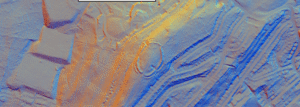
Wincobank Fort – LiDAR – National Library of Scotland 3

This is an oval fort with an internal area of 2.5 acres. A bank, ditch and counterscarp bank are continuous around it except on the N side where ditch and counterscarp have been destroyed.

Scoles Coppice Fort

Scholes (or Scoles) Coppice Camp (sometimes called “Caesar’s Camp”) lies just north-west of Kimberworth in Rotherham, atop the same Magnesian Limestone ridge that carries the Roman Rig. Its grid reference is roughly SE 436 937, placing it only 200–300 m to the north of the Rig’s northern branch

Roman Rig Defensive Works

The Roman Rig is a defensive dyke built to defend against attack from the south. It runs from Sheffield, past Templeborough and carries on almost to Doncaster. If this is a Brigantian dyke it would certainly add weight to Websters definition of the Roman border in the period.

Dryburn Henge, Cumbria

Dry Burn enclosure - Satellite

Dryburn Henge lies on Alston Moor in Cumbria, within the North Pennines Area of Outstanding Natural Beauty. It occupies a strategic nodal point on the high moor, roughly at NY 760 430, where routes across the Pennine watershed converge. The surrounding terrain is underlain by Carboniferous Great Scar Limestone and interbedded Yoredale shales, with scattered fluvioglacial gravels in valley bottoms.

Kirkhaugh Cairns – Cumbria

Kirkhaugh cairn gold ornament

This mound is 22ft. in diam. and about 3ft high. It has been built upon a natural knoll which makes the barrow look larger than it is. Excavation showed that the mound has an earthy core with a rubble capping.

What might Stonehenge Mean? Dartmoor and Carnac add to the Picture

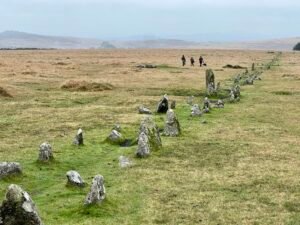
Dartmoor Stone Rows

Stonehenge has always been enigmatic, due to its use of those definitive morticed trilithons, all of which where squared of, more like the structures of the Maltese temples and other stone structures closer to Africa, as opposed to those of the rest of Britain and most of the wider North-west European ritual landscape.

Megalithic Stone Monuments in France May Be Europe’s Oldest

Carnac

The recent University of Gothenburg–led excavations at Le Plasker, and their startling radiocarbon dates of 4600–4300 BC for the Carnac alignments, deserve both applause for methodological rigor and a measured dose of critical scrutiny before we rewrite Neolithic Europe’s storybook.

Cleave Dyke Defensive System

The Cleave dyke system is several Dykes which combine to create a boundary of between 9 and 18 kilometres running north south to the west of Thirsk.

Black Dike – Coverdale

Black Dike - 1m LiDAR

Black Dike is the diminutive counterpart to the great Tor Dike, rising from its western arm and climbing to the watershed between Great and Little Whernside. Beginning at roughly SD 988 756—where Tor Dike cleaves the limestone scarp—the Black Dike pursues a steep, sinuous course uphill for nearly 0.6 km, finally spilling onto the ridge crest at about 675 m above sea level

Contact Us
close slider