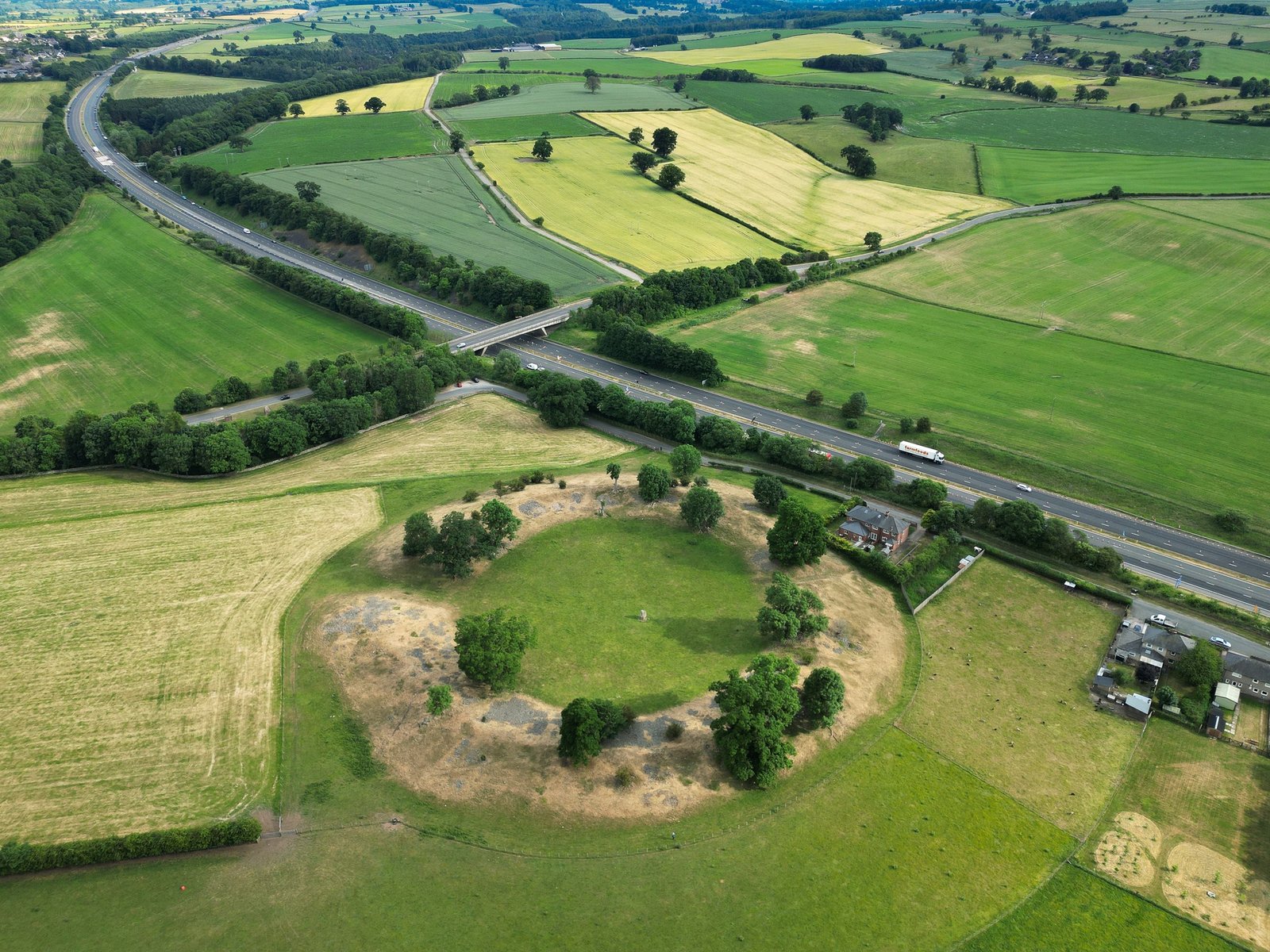
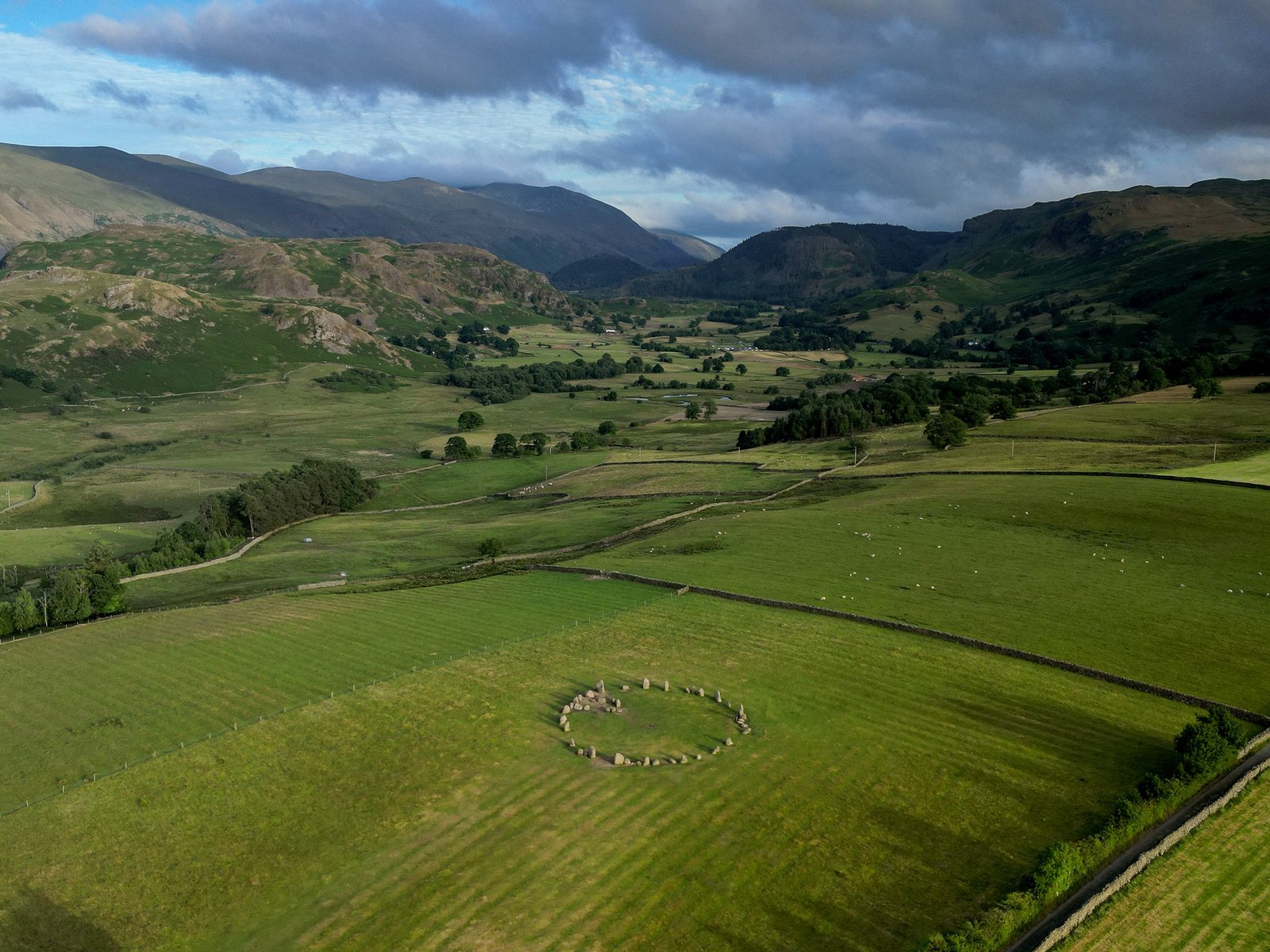
Castlerigg stone circle is one of the oldest and most scenic megalithic monuments in Britain, dating back to the late Read more
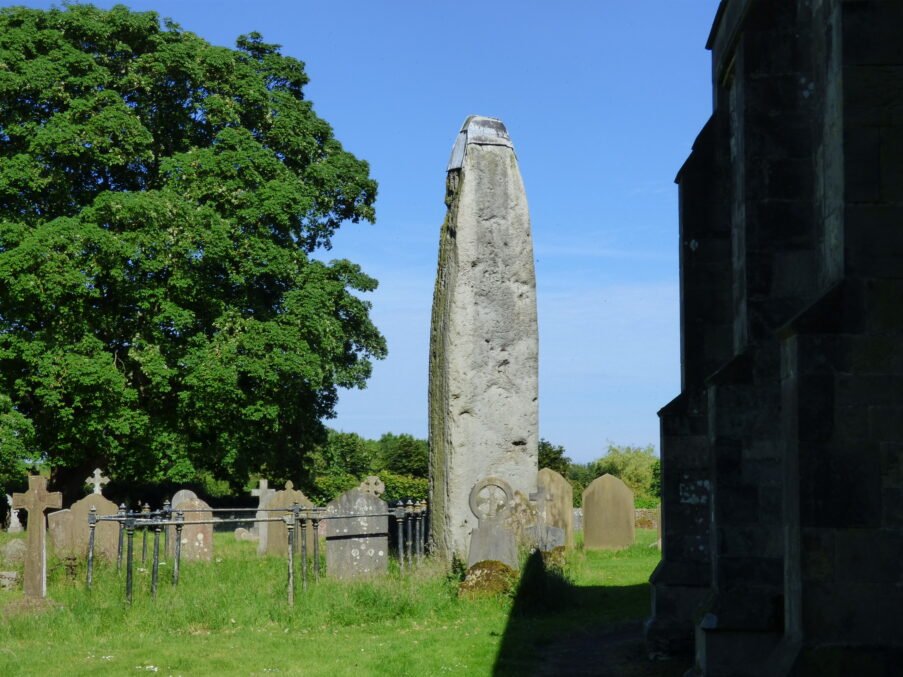
Rudston is England's tallest Standing Stone and it's presence gave the name to the village that it's located in. It's presumed to be of Neolithic origin. It's just over 25ft high. The village has definite ancient origins, being alongside the Roman Road running from York to Sewerby, The village is also the site of a Roman Villa.
The stone was hewn from glomerate moorstone Grit, possibly originating from near Whitby, which is almost 40 miles away.

An incomplete silver coin, probably a halfpenny of probably Edward III (1327-77) mint of London. Not further defined. Obverse scuffed and reverse struck off-centre.Diameter 15.2mm, thickness 0.45mm, weight 0.4g. [...]
An extremely worn and corroded Roman copper alloy sestertius of Domitian dating to c. AD 85-89. Possibly a [IOVI VICTORI S C] reverse depicting Jupiter seated left, holding Victory and sceptre. mint of Rome. [...]
A Roman copper alloy sestertius of Gordian III dating to c. AD 241-244 (Reece period 12). Uncertain reverse type depicting Gordian III, in military attire, standing right, holding transverse spear in right hand and globe in [...]
An incomplete Post-Medieval cast copper-alloy double-loop buckle frame dating to c.1620-1680.Approximately half of the sub-rectangular frame remains. Consisting of an enlarged pointed outside edge that is bevelled on the outside and a central narrowed strap-bar with lobed protrusions on either [...]
A probably Late Medieval to Post Medieval cast lead 2 ounce pierced disc weight.Sub-circular and flat with no official marks or decoration. There is a neat 3.8mm diameter circular piercing near to the outside edge. The weight [...]
APost medieval copper-alloy token farthing issued for the poor of Great Yarmouth, dating to 1669. Obverse: Arms of the Borough of Great Yarmouth, legend GREAT. YARMOVTH. 1669. Reverse: Arms of the Borough of Great Yarmouth, [...]
A small post medieval uniface cast lead alloy token of 14.8mm diameter. One side has the initials WS over a line with unclear lettering or numerals (possibly a date of 1718 or similar) below. [...]
A worn Roman copper-alloy nummus (AE4) of an unidentified emperor. Probable falling horseman (FEL TEMP REPARATIO) reverse type, dating c. AD 348-358. Probably a contemporary copy given reduced size.Measurements: diameter: 11.8 mm and weight: 1.38 [...]
A Medieval silver voided short cross cut farthing of Henry II-John, Class 1-4, not further defined, dating to AD 1154-1205. Moneyer: Rein..Mint: Unclear. [...]
A small post medieval cast lead alloy token of 16mm diameter. One side has an image of a cockerel, standing right, with head raised (Powell Type 18). The other side has an unclear branched motif, [...]
A Medieval silver voided long cross cut farthing of Henry III (AD 1216-1272), not further defined, dating to AD 1247-1272. Moneyer: uncertain; Mint; Canterbury. [...]
A Medieval silver halfpenny of Henry VI, first reign (AD 1422-1461), plain issue, dating to AD 1427-1430 (N 1453). Mint of London. Ref: Withers and Withers 2003: 35; North 1975: 62. [...]
A silver Medieval Venetian soldino of Michele Steno (AD 1400-1413) dating to the period AD 1400-1413. S MARCVS VENETI reverse depicting Winged and nimbate lion of St Mark facing within a circle, holding a book of gospels (type 1). Mint [...]
An incomplete Medieval silver voided short cross penny of Henry III (AD 1216-1272), Class 6c3,dating to AD 1217 (N 976/3). Moneyer and mint uncertain, probably Canterbury. [...]
A fragment of a post-medieval silver sixpence of James I, struck 1604-1624. The coin has a neat linear break which has either been done using a knife or (and more likely) which has split along [...]
A complete copper-alloy Roman nummus of Diocletian, dating to the period AD 296-7 (Reece period 15). GENIO POPV-LI ROMANI reverse type, depicting Genius standing left, holding patera and cornucopiae. Mint of Trier.RIC VI 170a, B [...]
A medieval silver cut halfpenny of Henry II-III, short cross variety. Mint of London. Uncertain moneyer. Struck AD1180-1272.Diameter 18mm. Weight 0.51g. [...]
A complete worn copper-alloy 17th century traders token halfpenny of Cheny Bourne of Milton in Kent. Williamson (1967, 377) Kent no.431Description: Obverse: A sugarloaf. Legend: +CHENY.BOVRNE.OF Reverse: 'C.F.B' in two lines. Legend: +MILTON.[IN.]K[ENT].Measurements: Diameter: 15.8 mm and weight: 0.83g. [...]