Tag: Neolithic

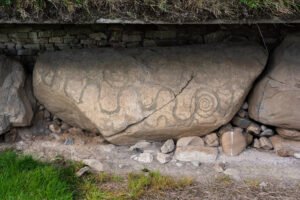
Snake Iconography in the British Isles

Knowth, Brú na Bóinne (Boyne Valley), Ireland

Syncretism through the ages Syncretism, the amalgamation of different religions, cultures, or schools of thought, has its roots in the ancient world. Thoughts on Celtic Religion – Raimund, Karl To begin with, lets first look at the sources available to us: There are quite numerous sources available, contrary to Read more Hillforts: Defence or Ritual? …

Continue reading

Guide: Ritual/Ceremonial Mounds

Marlborough mound 20240518 looking southwards

These are raised platforms created first and foremost for cult, procession, assembly or conversion—not for fortification or routine boundary-making. They tend to be much more significant and monumental than other mounds and raised platforms. Some are the largest structures known of their type. In Britain, possibly the best known example is Silbury Hill in Wiltshire.

Guide: Spoil Heaps

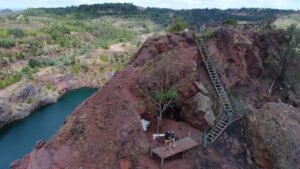
Ochre mine in the Lion Cavern in Eswatini southern Africa - Credit - Jörg Linstädter

These are artificial hills made from the unwanted rock, shale and tailings that come up with coal, metal ore, stone or clay when it is being mined or quarried. Because extractive industry is both deep and long-lived, single collieries or pits can generate tens of millions of cubic metres of spoil; pushed out by locomotive, conveyor or tippler wagon and dumped in successive layers, the piles quickly become a distinctive landform.

Guide – Introduction to the European Ice Age

snow covered field

Antonine Wall Map Gask Ridge Map Roman Military Sites in Scotland English names, Roman names where known, four figure map reference, site type, size, and history, including garrisons and associated military Read more Mystery of Vitrified Forts It was during a trip to.Scotland, in the Summer of 1997, that I first heard of vitrified hillforts. …

Continue reading

Were Thornborough Henges built by giants?

I’ve started to realise there are an awful lot of myths involving giants in Yorkshire, and in the rest of Britain, regarding monument having been built by giants

Chapter 7 – The Importance of Trade

What was so special about The Sacred Vale and Thornborough in particular, that meant this enormous monument complex had to be created? This is in no way a typical landscape for the time – nowhere else in Britain does a complex exist such as it does in The Sacred Vale.

Chapter 6 – The Other Monuments of the Sacred Vale

Except for the henge alignment at Thornborough, very little is known about the other monuments within the Sacred Vale.

Chapter 5 – The Later Neolithic Explosion

The one thousand years between 3,000 and 2,000 BC saw the Vale of Mowbray’s most significant period of development. It is at this time that the area between Boroughbridge and Catterick became the Sacred Vale, a premier ritual landscape, with Thornborough as its heart.

Chapter 4 – The early development of The Sacred Vale

The story of the Sacred Vale begins to the best of our knowledge at Thornborough and starts in the early Neolithic period, from 4,000 BC to 3,000 BC.

Chapter 2 – The Vale of Mowbray and its henges

This is the second chapter of Henge Capital of Britain, in this chapter, I frame the ancient monument complex held within the Vale of Mowbray against other large monument complexes.

Contact Us
close slider