Period: Neolithic

Mitchell Laithes Farm Ring Cairn and burial complex, Ossett, West Yorkshire

The Bronze Age discoveries in Mitchell Laithes Farm, Ossett, West Yorkshire, offer an important glimpse into the region’s ancient past. Archaeological appraisals, particularly the one conducted in 2007 at Mitchell Laithes Rye Royds, have unearthed evidence of short episodes of occupation dating back to 3500-2000 BC.
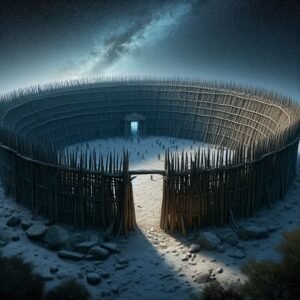
Marne Barracks Neolithic palisaded enclosure

The recent discovery at Catterick has unveiled a significant Late Neolithic palisaded enclosure, shedding light on the prehistoric landscape of North Yorkshire. Excavations revealed two concentric sub-circular palisades, with the outermost having a diameter of up to 200 meters.

Earthworks at the top of Holly Hill, Well

While details about these earthworks are not widely documented, the area is known for its rich archaeological significance. Holly Hill itself is a place of interest, with its Grade II listed status indicating its historical importance.

The use of the word Lady in relation to water related structures

Lady Bridge in Tamworth is a historical structure with medieval origins, serving as a testament to the town’s rich past. Initially constructed to span the River Tame, the bridge has undergone several transformations throughout the centuries. The original wooden bridge dates back to 1294.

Chapter 5 – The Later Neolithic Explosion

The one thousand years between 3,000 and 2,000 BC saw the Vale of Mowbray’s most significant period of development. It is at this time that the area between Boroughbridge and Catterick became the Sacred Vale, a premier ritual landscape, with Thornborough as its heart.

Little Meg Stone Circle

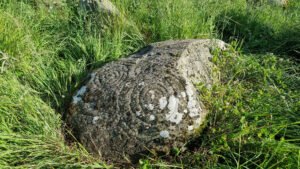
An image of a carved rock, part of the Little Meg stone circle in Cumbria. Part of a site report on brigantesnation.com

Little Meg Stone Circle, also known as Maughanby Circle, is a small and ancient monument located near the village of Little Salkeld in Cumbria, England. It consists of eleven large kerb stones that probably surrounded a Bronze Age kerb cairn, a type of burial mound

Castlerigg stone circle

An aerial view of Castlerigg Neolithic stone circle, in Cumbria. Part of a site visit report on brigantesnation.com

Castlerigg stone circle is one of the oldest and most scenic megalithic monuments in Britain, dating back to the late Neolithic period, around 3000 BC

Mayburgh Henge

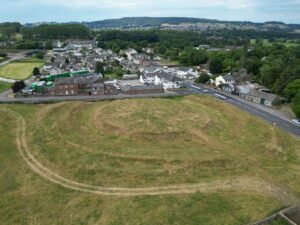
An aerial photo of Mayburgh Henge in Penrith, Cumbria. Part of a site report on brigantesnation.com

Mayburgh Henge is a remarkable prehistoric monument located near Eamont Bridge in Cumbria, England. It consists of a massive circular bank of river cobbles, enclosing a flat area with a single standing stone near the centre.

King Arthurs Round Table Henge

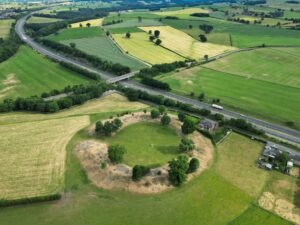
An aerial photograph of King Arthur's Round Table, a Neolithic henge in Cumbria. Part of an article about the henge on brigantesnation.com

King Arthur’s Round Table is a Late Neolithic Henge (2000-1000 BCE). It consists of a low circular platform surrounded by a wide ditch 12m wide by 1.5m wide , this configuration of a bank and ditch being a characteristic of these prehistoric henges.

Newton Kyme Henge

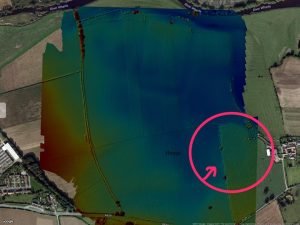
With kind permission of YAAMAPPING

Newton Kyme Henge occupies a slight rise on the south bank of the River Wharfe immediately west of the village of Newton Kyme (OS grid SE 45945 44982), its maximum external diameter extending to around 250 m (heritagegateway.org.uk). The monument is best understood as a Class IIa henge of Late Neolithic–Early Bronze Age date, defined by three concentric ditch circuits with a turf-and-earth bank wedged between the inner and middle ditches.

Contact Us
close slider