Period: Neolithic

The hero archetype and Lugh

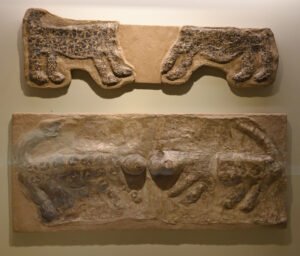
Museum of Anatolian Civilizations Çatalhöyük Leopard reliefs all in 2019 01

At its core the “hero” is the figure who steps out of ordinary society, confronts chaos or a monster, and returns (or dies) having secured order for the group. In Jungian and comparative-myth terms it sits in the “warrior-champion” slot of the collective story-board; evolutionists would say it crystallises the survival value of decisive coalition leadership in small bands.
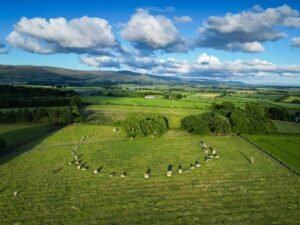

Long Meg and her Daughters standing stone and stone circle

An aerial photo of Long Meg and her Daughters standing stone and stone circle in Cumbria. Part of a site report on britgantesnation.com

Long Meg and her Daughters is a remarkable Neolithic monument located near Penrith in Cumbria, England.

Cana Barn Henge

Cana Barn henge

The stats for this Neolithic monument are astounding: 200m across, once a great circle of earthen banks and deep ditches. Today, almost lost: 5,000 years of plough and neglect have flattened the banks and filled the ditches, and Cana Henge is now nothing but a smoothly undulating grassy field on the moor overlooking Ripon.

Anciens Arsenaux Neolithic Settlement, Sion – Switzerland

Upper Rhone Valley

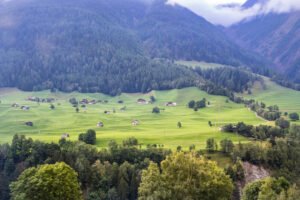
Sion lies midway along the upper Rhône Valley, an east‑west trench gouged by repeated Pleistocene glaciers and now flanked by the Pennine and Bernese Alps. The settlement area sits on the alluvial fan of the Sionne torrent, a cone of well‑sorted sands and gravels that projects onto the wider Rhône flood‑plain. 

Snake Iconography in the British Isles

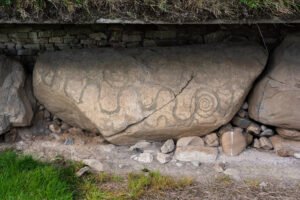
Knowth, Brú na Bóinne (Boyne Valley), Ireland

Syncretism through the ages Syncretism, the amalgamation of different religions, cultures, or schools of thought, has its roots in the ancient world. Thoughts on Celtic Religion – Raimund, Karl To begin with, lets first look at the sources available to us: There are quite numerous sources available, contrary to Read more Hillforts: Defence or Ritual? …

Continue reading

South Street Long Barrow, Avebury

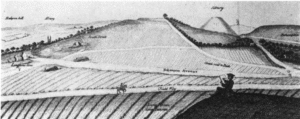
South Street Long Barrow - Stukely plate including South Street Long Barrow

South Street long  barrow once lay 1 km south‑west of Avebury village, midway between the Kennet spring‑line and the Windmill Hill plateau (OS grid SU 090 678; 165 m OD). From its crest the ground falls gently north‑east toward the henge and west toward Beckhampton, so the mound would have been visible from all Early‑Neolithic foci in the area yet lay on good grazing that could be tilled by the first farming groups.

Millbarrow long barrow (Winterbourne Monkton)

Tumulus on Millbarrow

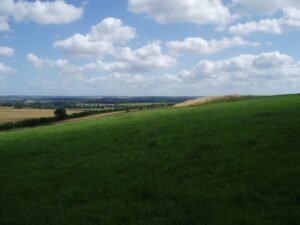
Millbarrow once stood on a low chalk spur 2 km north‑west of Avebury, just above the spring‑line where the Kennet valley opens onto the Marlborough Downs (NGR SU 0943 7221). From its east–west‑aligned crest the ground falls gently south to Windmill Hill and east  into the Kennet valley, giving the mound clear sight of the Avebury monument complex, and easy access to water and pasture.

Horslip (Windmill Hill) Long Barrow, Avebury

Horslip Barrow - AI Recreation

Sitting on the south‑east shoulder of Windmill Hill (grid ref. SU 086 070), 140 ft (43 m) above the Kennet valley, the Horslip long barrow commands the same chalk ridge that carries the famous Early‑Neolithic causewayed enclosure 400 m upslope.

Bubeneč Neolithic Farm, Prague

Bubenec excavations - Institute of Archeology of Academy of Sciences

Quite recently, initial excavation evidence from Bubenec, close to Prague was first announced to the public, pending full publication. As part of that media activity, the head archaeologist for the dig, Petra  Maříková  Vlčková explained that the excavation; below the future Canadian Embassy, in Prague’s Bubeneč district, cut through almost two metres of undisturbed deposits – a rarity in Central Europe.

Wellhill, Dunning Early Neolithic Farm – Perthshire

Dunning Perthshire - Satellite view of Wellhill prehistoric settlement

The village of Dunning in Perthshire, Scotland,  has been revealed through excavation as having traces of human activity dating back 10,000 years. This included evidence of what could be the earliest farming activity recorded in Scotland so far, and also remains of hunter-gathering activity dating back to the Mesolithic period.

Contact Us
close slider