
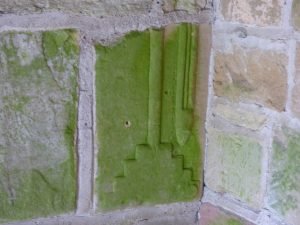
Whilst the current church lacks much in the way of indications of ancient origins, it’s entry porch boasts a wealth of 12c carved stones and is definitely worth a visit.
Whilst the current church lacks much in the way of indications of ancient origins, it’s entry porch boasts a wealth of 12c carved stones and is definitely worth a visit.
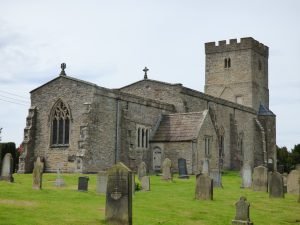
The church at Stanwick sits very close to the original centre of the Iron Age fort. It’s churchyard seems to respect a more ancient ritual use and it’s siting in conjunction with not only Mary Wild Beck but also the Sacred Spring in at the front of this church and it’s 10th century origins indicate this site was a focal point for ritual activity right back to the Iron Age and before.
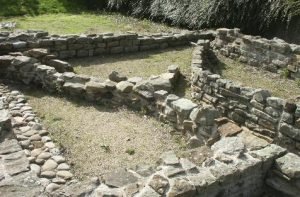
The fort at Piercebridge guarded access to the Main north-south crossing of the River Tees in Roman times, a sizeable vicus grew up on it’s eastern side towards the earliest crossing point.
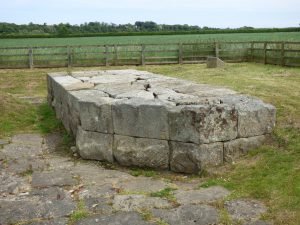
The Roman road from York to the North of England crossed the river Tees at this point. Portions of masonry that where interpreted as a Roman bridge were found in 1972 in advance of gravel quarrying.

St Michael’s Church at Kirklington stems from prior to the Norman Period and has ghosts of an even earlier period in the form of the various carved heads found inside and outside the church.
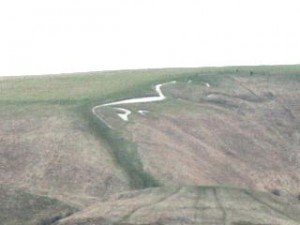
The horse was dated to between 1400–600 BC by the Oxford University Research Unit in 1995 using optical stimulated luminescence dating, its age is probably late Bronze Age.

Sutton Common is an early Iron Age fort/enclosure site just north of Doncaster, A key feature of this “marsh fort” is that it seems to use the surrounding marsh land as part of its defence – a twist on the more common hill fort.

Norham Iron Age Hill Fort

Carved Heads from Housesteads Roman Fort

Finavon Hill has attracted a great deal of archaeological interest from antiquarians and archaeologists over the years especially since it displayed traces of vitrified rock.
 NLS Map Explorer
 Google Earth
 Google Maps
 Lidar Finder
 TMA
TMA
 Megalithic Portal
 Yorkshire Arch. Air Mapping
 ADS
ADS
 Brigantian Adventure FB Group
Stone Bothering FB Group
Stone Faces FB Group
Brigantian Adventure FB Group
Stone Bothering FB Group
Stone Faces FB Group
 Heritage Gateway
 ARCHI® MAPS: UK
 Atlas of Hillforts
 Portable Antiquities
 British History Online
Brigantes Nation FB Group
British History Online
Brigantes Nation FB Group

