Tag: scotland

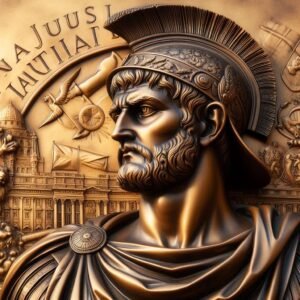
Gnaeus Julius Agricola

In a series of annual military campaigns Agricola put down revolts in north Wales, subdued the Brigantes tribe in the north, extended Roman control over the Scottish lowlands, where he established a string of forts between the Forth and the Clyde, sent troops into Galloway, and made inroads into the eastern Highlands. During the latter campaign his vessels were the first to circumnavigate the islands.

The Border Reivers

The Border Reivers were a formidable force in the history of Britain, particularly during the tumultuous period from the late 13th century to the early 17th century. These raiders, hailing from both Scottish and English descent, operated along the Anglo-Scottish border, a region marked by constant strife and conflict.

Why Vitrify a Fort?

Tap o' Noth - geograph.org.uk - 93164

Originally, it was thought that the forts had become vitrified due to an enemy attack. A theory proposed by Childe in the 1930 thought it was that it was invaders, not the builders, who were assaulting the forts and then setting fire to the walls with piles of brush and wood

L’enigme des forts vitrifies

Wincobank Hillfort, Sheffield

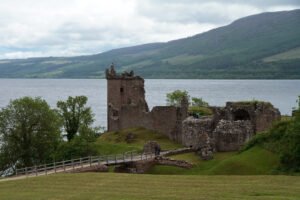
C’est lors d’un voyage en Ecosse, au cours de l’été 1997, que nous avons entendu parler pour la première fois de forts vitrifiés. C’était au château d’Urqhart, au sud d’Inverness. Les monuments historiques fermant tôt, dans ce pays, nous ne pûmes voir que de loin cette impressionnante forteresse en ruine du XIIe siècle qui domine la rive occidentale du Loch Ness. Nous nous contentâmes juste de faire des photos au téléobjectif depuis le parking et de lire les panneaux retraçant l’historique du site.

Mystery of Vitrified Forts

Urqhart Castle

It was during a trip to.Scotland, in the Summer of 1997, that I first heard of vitrified hillforts. It was near Urqhart Castle, south of Inverness. As ancient monuments close early in that country, I could only see from a distance that impressive ruined fortress overlooking the west bank of Loch Ness.

The Vitrified Forts of the British Isles and Europe

Tap O Noth LiDAR 1m - Thanks to the National Library of Scotland

This page is the “collection centre” for our research into vitrified forts, covering the area largely known as the British Isles.

Roman Military Sites in Scotland

English names, Roman names where known, four figure map reference, site type, size, and history, including garrisons and associated military units.

Roman Military Sites – Introduction

Britain was a province of the Roman Empire for 400 years. During that time the Roman army used over 550 sites as forts, temporary camps or depots. Some like the legionary fortresses at York and Chester were occupied for several hundred years, whilst at the other extreme some marching camps may have been used for a single night.

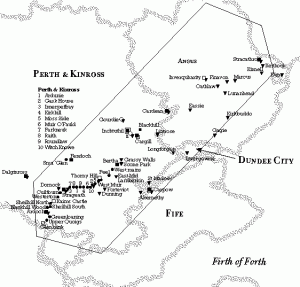
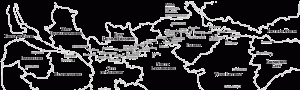
Gask Ridge Map

Timeline 60BC – 138AD This timeline is focussed on the British Celtic culture and those cultures which had influence on the British Celts. It Read more Cerialis Petillius Quintus Petillius Cerialis Caesius Rufus was the son-in-law of Vespasian Cerialis and became Governor of Britain in AD.71; his instructions Read more Julius Caesar Ask anyone to …

Continue reading

Antonine Wall Map

Timeline 60BC – 138AD This timeline is focussed on the British Celtic culture and those cultures which had influence on the British Celts. It Read more Cerialis Petillius Quintus Petillius Cerialis Caesius Rufus was the son-in-law of Vespasian Cerialis and became Governor of Britain in AD.71; his instructions Read more Julius Caesar Ask anyone to …

Continue reading

Contact Us
close slider