Trinovantes

The Trinovantes

Background to the Trinovantes

Location of the tribe
Essex and part of Suffolk.

Background information
It is possible that the Trinovantes were one of only two British tribes knew of Caesar’s intentions to cross the channel to Britain and so sent out ambassadors to the Romans in Gaul in an attempt to ensure they would be well treated should the Roman army invade and take over Britain.

Caesar
‘The Trinobantes, the strongest state, perhaps in those parts, sent deputies to Caesar, promising to surrender to him and to do his commands, and beseeching him to protect Mandubracius from outrage at the hands of Cassivellaunus, and to send him to their state as ruler and sovereign lord.’

Mandubracius was the exiled king of the Trinobantes. His father (name unknown) had been killed by Cassivellaunus, and the Trinovantian prince forced to flee to the continent and the protection of Caesar.

Shortly after the Atrebates tribe were taken into his protection, Caesar defeated the army of Cassivellaunus near Wheathamstead. Seeing all was lost, their ruler, Cassivellaunus surrendered, trusting to the mercy of Caesar.

Caesar waited until all of the British hostages had been delivered to him in Kent, then moved his forces back to the continent where they spent the winter of 54-53BC. Prior to departing, he issued a stern warning to the Catuvellauni

Caesar
He (Caesar) straitly charged Cassivellaunus to do no hurt to Mandubracius or the Trinobantes.’

Julius Caesar never returned to Britain, and the Romans did not come again in force until the invasion of 43AD. But the fear he had instilled into the Catuvellauni assured the Trinovantes there would be no trouble from their neighbours.

When the Roman general Varus lost three legions in the German Teutoberger forest in AD9, it inspired Cunobelin of the Catuvellauni took the opportunity to attack and capture the Trinovantian capital Camulodonum. The situation in Germania was serious, and Cunobelin had chosen his moment with care. The Romans were now heavily committed to defending their borders in Europe, so Britain was put on hold.

The Trinovantes and Boudicca
In 60AD, the Iceni under Queen Boudicca rose up in defiance of their Roman masters and began the rebellion that was to change Britain under the Romans. It is probable that the reasons for their joining the revolt was that because the Romans had not kept their word and forced the Catuvellauni back to their own territory. Also, they had not had their tribal lands returned to them after the defeat of Caratacus and the Catuvellauni. Coupled with the fact the Romans were taking vast amounts of land from in and around Camulodonum to build a Colonia for retired Roman soldiers, the Trinovantes were understandably sympathetic to the Iceni cause.

Tacitus
‘They flew to arms, and incited to rebellion the Trinobantes and others, who, not yet broken by servitude, had entered into a secret and treasonable compact to resume their independence.’
Principal towns and settlements in Trinovantes territory

Caesaromagus – (Widford, nr. Chelmsford, Essex) The Roman Civitas capital of the Trinovantes.

Camulodonum – (Colchester, Essex) – The original capital of the Trinovantes which was taken from they by the Catuvellauni in 9AD. Camulodonum was the site of the first Roman Legionary Fortress in Britain, and was later to become the first Roman colonia colonia in the province. It was this colonisation by the Romans that was a major contributing factor to the Boudiccan rebellion of 60AD..

Canonium – (Rivenhall, Essex) – Settlement.

Combretovium – (Baylham House, nr. Coddenham, Suffolk) – A minor settlement at an important road junction.

Long Melford (Suffolk) – Minor settlement and posting station.

Scole (Norfolk) – Posting station and minor settlement on the road north between Camulodunum and Venta Icenorum..

Sitomagus – (Dunwich, Suffolk) – Settlement, now below sea level.

Stoke Ash (Suffolk) – Posting station on the road north between Camulodunum and Venta Icenorum

Some of the Trinovantes kings and queens

Mandubracius Was regarded by Caesar as the most powerful of the British tribal monarchs. Little is known about him. His possible sucessor, Addedomaros who started his rule around 15BC,may have been his son or grandson, There are no recordings of this. Indeed, it is possible that Mandubracius was the last of his line. If he did not have any children of his own, it would explain why the kingship of the Trinovantes passed to the Addedomaros family. There appears to have been a power struggle in the Trinovantes higher order for the right to rule, with the Addedomaros being victorious. The Catuvellaunian king Tasciovanus later claimed the thone of the Trinovantes and the two tribes became opposing sides in a war won by the Trinovantes, which enabled the Addedomaros to hold the throne.

Addedomaros Was the known ruler of the Trinovantes to follow Mandubracius. Almost immediately after his took the throne, some time between 25 and 15BC, he moved his capital from Braughing ner Hertford to a new site on the east coast which he named Camulodunum which means ‘the fort of the war god Camulos’. .It is possible that the Trinovantes were taken over by the Catuvellauni as the coins of the period from about 15BC, had strong markings indicating Catuvellauni influences. He reigned for about ten years before being succeeded by his son Dubnovellaunus around 10-5BC.

Dubnovellaunus Succeeded Addedomaros to the Trinovantian throne about 10-5BC and ruled for several years before being overthrown by the Catuvellauni under the leadership of Cunobelin. He should not be confused with Dubnovellaunus of the Cantium.

Silures

Silures

Tacitus describes the Silures as a strong and warlike tribe, stubborn, with swarthy faces and curly hair. They inhabited the wooded uplands of southeastern Wales, living in hillforts and fortified settlements, and were Rome’s most determined opponents. That resistance was led by Caratacus, a British chieftan who had sought refuge with the Silures after his father’s tribal capital at Camulodunum was captured in the Claudian invasion of AD 43. After four years, Aulus Plautius, the first governor of Britannia, returned to a triumphal ovation in Rome. But there still was unrest. His successor, Ostorius Scapula, had only just arrived as governor (AD47-52) when there was an attack by hostile tribes from outside the borders of the new province.

Ostorius restored order and determined to disarm all the native tribes, even those who were nominal allies. This ill-advised policy prompted the Iceni to revolt, although they were defeated in their hillfort. Ostorius then advanced into Wales and had nearly reached the sea when, in AD 48, there was an uprising by the Brigantes, the largest tribe in Britain, and he was obliged to break off his campaign to quell the disturbance. “But neither sternness nor leniency prevented the Silures from fighting,” and in AD 49, Legio XX had to be moved forward from Camulodunum to a site near Glevum (Gloucester). Caratacus, in turn, retreated to the territory of the Ordovices deeper in the mountains of northern Wales. There, he prepared for a decisive battle, one “which would either win back their freedom or enslave them forever.” It was fought in AD 51. Caratacus was defeated and sought refuge with the Brigantes, but was given up to Rome.

He probably was one of the eleven British kings declared to have surrendered to Claudius on a triumphal arch dedicated to the emperor that year. Yet, the Romans may have been over confident. There was continued guerrilla warfare and widespread raids. Ostorius died the next year, worn out, says Tacitus, by the struggle. Before his successor could arrive, a legion was defeated by the Silures, who now were plundering the countryside. It was Rome’s greatest defeat in Britain.

Wales was continuing to be a problem.

Didius Gallus, the newly appointed governor (AD 52-57), managed to restore order and turned his attention to the support of Cartimandua in the war against her husband Venutius, “the best strategist,” says Tacitus, since Caratacus and now the leader of British resistance. Nero assumed the throne in AD 54 and, despite some thought of abandoning the province, was determined to conquer the Welsh. Suetonius Paullinus was appointed governor (AD 58-61) and presumably had subdued the southern part of the country and was attacking the Druid stronghold on the island sanctuary of Mona (Anglesey) in the north when, in AD 60, Prasutagus, king of the Iceni, died. The kingdom was forfeited to Rome, and Boudica, his wife, led her people in revolt. Paullinus rushed to Londinium to confront them, and Wales was reprieved.

The destruction of the Boudcian revolt was such that ten years passed before Rome resumed its policy of conquest. Then there came, in Tacitus’s words, “a succession of great generals and splendid armies.” The subjugation of Wales began in earnest with the governors appointed by Vespasian. The first was Petillius Cerialis (AD 71-74), who had nearly lost his life in the rebellion by Boudica. Julius Frontinus (AD 74-77) established a fortress at Isca (Caerleon) for Legio II Augusta in the territory of the Silures and later began the construction of another fortress at Chester in the north. It was Frontinus, according to the single sentence that Tacitus devotes to him, who “subdued by force of arms the strong and war-like nation of the Silures, laboriously triumphing not only over a brave enemy but also over difficult terrain.” What he did not accomplish was completed by Julius Agricola (AD 77-83/84), who had been a military tribune on the staff of Paullinus. In his first year as governor, Agricola defeated the Ordovices and forced the surrender of the island of Mona, when his auxiliaries swam across the strait with their horses in a surprise attack.

Even the Silures, the most famous of the Welsh tribes and the most tenacious of foes, were Romanized. Eventually, they became a self-governing community of non-citizens (civitate peregrina), and had their tribal capital at Caerwent (Venta Silurum) near the fortress at Isca.

It had taken Rome more than thirty years to subdue the Welsh.

Background to the Silures

Location of the tribe
The south east of Wales.

Background information
The tribal name Silures, may itself be one given to the tribes by the Romans. It Latin it means ‘the people of the rocks’, reflecting to the mountainous region in which they lived. The tribe’s people were noted for their aggresive, firey nature and their mass of thick, black curly hair.

Following the short-lived uprisings of the Iceni and the Brigantes in 47, the new governor of Britain, Ostorius Scapula, turned his attention to the Silures.

Legion XX Valeria was probably moved from Colchester to a new legionary fortress at Kingsholm near Gloucester, as the Silures were a volatile race who did not take kindly to the Romans and their incursions into Silures territory. The movement of the XX west left the eastern part of Britain weakened, so a Colonia of veteran soldiers was established at Camulodunum within the confines of the old fortress recently evacuated by the Twentieth Legion

Tacitus
‘Neither severity nor clemency converted the Silures tribe, which continued the struggle and had to be repressed by the establishment of a legionary camp.’

The reason for the Roman desire to invade and quell the Silures once and for all, was because Caratacus of the Catuvellauni had opposed the full invasion and fled to Wales after the defeat of his tribe.

Tacitus
‘The march then proceeded against the Silures, whose native boldness was heightened by their confidence in the prowess of Caratacus.’

Tacitus
‘On this occasion, favoured by the treacherous character of the country, though inferior in military strength, he (Caratacus) astutely shifted the seat of war to the territory of the Ordovices: where, after being joined by all who feared a Roman peace, he put the final chance to trial’

After his defeat in Wales, Caratacus escaped through the lands of the Deceangi in north-eastern Wales and had sought refuge amongst the Brigantes in northern England. Queen Cartimandua had already agreed a treaty with the Romans in return for being allowed to stay in power as a Client King. On arrival, Caratacus taken prsisoner and passed to the Roman governor, Ostorius. For his part in the capture of the renegade British king, Scapula was awarded the Triumphal insignia, which had in the time of the emperors, replaced the Triumphal procession through the streets of Rome, which was the accepted celebration in the earlier Roman republic.

This was not the end of the Silures, as they continued to show their agression to the next three governors of Britain. The first governor was Aulus Didius Gallus who ruled Britain from 52-57AD. His inititaion into the Silures way of life was immediate.

Tacitus
‘On recieving news of the legate’s death, the Caesar, not to leave the province without a governor, appointed Aulus Didius to the vacancy. In spite of a rapid crossing, he found matters deteriorated, as the legion³ under Manlius Valens had been defeated in the interval. In this case, again, the loss had been inflicted by the Silures, and they carried their forays far and wide, until repelled by the advent of Didius’

Gallus was drawn away from the matters of the Silures by an uprising among the Brigantes.. The Briganties monarchy was in turmoil, and as a client of Rome, Queen Cartimandua called upon the Romas to support her cause in the civil war between her own clan and those loyal to her estranged husband, Venutius, who were unhappy with the Queen’s earlier betrayal of Caratacus.

The rule of Gallus was marked by unrest and disorder until he was replaced in 60 AD.

Tacitus
‘Veranius, after harrying the Silures in a few raids of no great significance, was prevented by death from carrying his arms further.’

The Silures could now live with a lessened fear of the Romans, as there was a more pressing matter to attend to. The Boudiccan rebellion.befell the next governor, Suetonius Paulinus. He may well have made prior plans to completely vanquish the Silures and so end their constant nagging war with the Romans. It was not until the arrival of anothe rgovernpr, Julius Frontinus that the Silures finally succumbed the superior might of the Romans in 76AD.

Tacitus
‘Julius Frontinus was, so far as a subject of the emperor could be, a great man, and he shouldered and sustained the burden cast on him: his arms reduced the Silures, a powerful and warlike race; he surmounted not only the valour of the enemy but also the physical difficulties of their land.’

Principal towns and settlements in Silures territory

Venta Silurum – (Caerwent, Gwent)

Other settlements
Blestium – (Monmouth) – Mentioned in the Antonine Itinerary, was probably a fort established in the centre of the iron mining district.

Burrium – (Usk, Gwent) – The only settlement attributed to the tribe by Ptolemy, where it appears as Bullaeum. There was a large fortress here, which was no-doubt accompanied by a settlement.

Cardiff – (Glamorgan) – A settlement outside the Roman fort.

Isca – (Caerleon, Gwent) – A very large settlement was attached to the fortress of the Second Legion.

Llanmelin Wood – (Gwent) – Iron Age camp just north of Venta, may have been the pre-Roman tribal capital of the Silures.

Machen – (Gwent) – Settlement associated with the nearby lead mines under military control.

Redwick – (Gwent) – A small settlement on the Severn estuary, SE of Caerwent.

Parisii

The Parisi

Background to the Parisi

Location of the tribe
North and East Yorkshire

Background information
The Parisi were originally immigrants from Gaul, which is why their share their name with the tribe that occupied modern day France. As can be gathered from their name, they gave the French capital it’s name.

Principal towns and settlements in Parisi territory

Petvaria – (Brough on Humber, Humberside) – The suspected Civitas capital, and the only polis ascribed to the tribe by Ptolemy, its official status was only that of a vicus.

Other Settlements
Delgovicia? – (Millington, Humberside) – Minor settlement included a temple.

Derventio – (Malton, North Yorkshire) – Roman fort with attached minor settlement or vicus.

North Ferriby – nearby Brough, was the site of an old Celtic settlement, and the northern terminus of a ferry over the Humber estuary to South Ferriby, in the territories of the Coritani.

Rudston – (Humberside) – Villa with crude but effective mozaics, on the road to the east coast near Bridlington.

Ordovices

The Ordovices

Background to the Ordovices

Location of the tribe
Central Wales from the coast to the Englsih border. This area is now known as Gwynedd and south Clwyd

Background information
The Ordovices had no self-government and wre not awarded their own Civitas capital by the Romans. During the reign of Agricola, the Ordovices were rule directly from Londinium (London) rather that through a Client King. .

Most of the tribe lived either in the hillforts of which there is archaeological evidence that there were many in existence., or in the immediate surrounding area. This would have enabled the dwellers outside these forts an easy retreat in times of incursion.

Frontinus established several garrison forts in Ordovice territory following his defeat of the the Silures of South Wales

Immediately before Agricola, the Ordovices almost wiped out a regiment of Roman cavalry stationed in their territory. Shortly after his arrival in Britain, Agricola took the XX Legion into north Wales, massacred the Ordovices and conquered the stronghold of the Druids on Mona in a single psuh late in the campaign season of 78AD. The outcome of this Agricola’s campaign was a near total wipeout of the Ordovices, and they did not recover until the third century AD.

Principal towns and settlements in Ordovices territory

Mona – (Anglesey Island, Gwynedd) – Probable Civitas capital.

Brithdir- (Gwynedd) – Minor Settlement.

Caer Gai – (Gwynedd) – Minor settlement and fort.

Caersws – (Powys) – Possible southern border settlement and fort.

Llanfor – (Gwynedd) – Fort.

Llwyn y Brain – (Powys) – Southern Border Fort nearby Caersws.

Magnola – (Pennal, Gwynedd) – Probable southern border settlement and fort.

Segontium – (Caernarfon, Gwynedd) – Settlement and fort.

Tomen y Mur (Gwynedd) – Fort.


Durotriges

The Durotriges

Background to the Durotriges

Location of the tribe
The Durotriges occupied what is now Devon and parts of Dorset and Somerset.

Principal towns and settlements in Durotriges territory

Durnovaria or Dorotrioum – (Dorchester, Dorset) – The civitas capital of the Durotriges. A large walled town.

Other Settlements
Lindinis – (Ilchester, Somerset) – Was the only other walled town apart from the capital and was possibly the centre of a separate tribal capital of the northern Durotriges.

Hengistbury Head – Ancient trading centre of the Durotriges on the south coast of Dorset.

Durnovaria Vindocladia – (Badbury, Dorset) – Small settlement to take the inhabitants of the nearby hillfort of Badbury Rings.

Woodyates – Small settlement or posting station..

Hamworthy – (Poole, Dorset) – Small port serving the campaign fortress of the Second Legion and the later settlement at Badbury.

Radipole – (Weymouth, Dorset) – A small port.

Wareham – (Dorset) – A settlement of unknown extent, perhaps the centre of the extensive stone and Shale quarries near Kimmeridge and Purbeck.

Some of the Durotriges kings and queens

The Durotriges did not keep any records of their rulers, and the coins they issued were unique in that they did not have images of their monarchs on them

Dobunni

The Dobunni

Background to the Dobunni

Location of the tribe
The west of England, taking in Avon and part of Gloucestershire.

Principal towns and settlements in Dobunni territory

Corinium Dobunnorum – (Cirencester, Gloucester) – Established by the Romans at the centre of a network of local roads. At it’s height the town covered more than 230 acres, the fourth largest town in Roman Britain.

Other Sites
Alcester – (Warwickshire) – Small walled town.

Ariconium – (Weston-under-Penyard, Hereford & Worcester) – A major settlement and administrative centre situated near the Forest of Dean.

Asthall (Oxfordshire) – Minor settlement on Akeman Street, between Corinium and Alchester.

Atrebatum – (Silchester, Hampshire) near the border with the Atrebates.

Bagendon – (Gloucestershire) – Notable Oppidum-style pre-Roman settlement near Corinium. Hereford (Hereford & Worcester) – Possible Roman settlement or posting station.

Blackwardine – (Hereford & Worcester) – Minor settlement near border with the Cornovii in the north of the canton.

Bourton on the Water – (Gloucestershire) – Major settlement on Fosse Way NE of Corinium.

Chesterton-on-Fosse – (Warwickshire) – A small walled town near the border with the Coritani in the NE of the canton.

Cricklade – (Wiltshire) – Minor settlement on Ermin Way SE of Corinium.

Dorn – (Gloucestershire) – Romano-British town on Fosse Way NE of Corinium. Lower Lea (nr. Swalcliffe, Oxfordshire) – minor settlement near borders with the Catuvellauni.

Durocornovium – (Wanborough, Wiltshire) – Major settlement on Ermin Way between Corinium and Calleva

Glevum – (Gloucester, Gloucestershire) – The site of at least two large Roman fortresses, a Roman colonia was established here in AD97.

Magnis (Kenchester, Hereford & Worcester) – Small town where a milestone of emperor Numerian was found, suggesting that the Civitas Dobunnorum held sway also on the west bank of the Severn. Separated from the civitas capital Corinium by the territorium of the Roman colony at Glevum, it is possible that Kenchester was the centre of an administrative pagus.

Nettleton Shrub – (Wiltshire) – Rural temple on the Fosse Way between Corinium and Aquae Sulis (Bath), marking the border between the Dobunni and the Belgae.

Salinae – (Droitwich Spa, Hereford & Worcester) – Major town whose important salt industries were worth guarding by the setablishment of an Auxiliary fort.

Sutton Walls – (Hereford & Worcester) – Iron Age hill fort continued to be occupied by a small community into Roman times.

Stretton Grandison – (Hereford & Worcester) – Minor settlement and auxiliary fort.

Tiddington – (Warwickshire) – Minor industrial settlement.

Vertis – (Worcester, Hereford & Worcester) – Town and potteries on the east bank of the Severn, at an important strategic crossing.

White Walls – (Easton Grey, Wiltshire) – Minor settlement on the Fosse Way SW of Corinium.

Wilcote – (Oxfordshire) – Cluster of villas and possible settlement on Akeman Street, near the border with the Catuvellauni.

Some of the Dobunni kings and queens

Anted– Leader of the Dobunnic territories during the first decade of the first century AD. He seemed to have brought together the northern and southern factions of the tribe under a leadership for the first time since the division of the tribe in the latter half of the first century BC. This division was antagonised by their respective successors Catti– and Comux–. Anted– appears to have been succeeded by Eisu–, possibly his own son, 30AD.

Bodvoc It is probable that he ruled over the northern part of the Dobunni tribe. His brother, Corio appeared to have ruled over the southern part of the tribe,. Whether the division of the Dobunnic kingdom was agree by decree or war, is not known. The is evidence shows that Corio ruled over the entire Dobunnic kingdom for a while before Bodvoc took over in the north. It is possible that Bodvoc was succeeded by Catti– in the north, while Corio was replaced by Comux– in the southern territories.

Catti– Possibly inherited the northern Dobunnic lands from Bodvoc around 1BC – 1AD.

Comux– Possibly succeeded Corio as the king of the southern Dobunni around 1BC – 1AD.

Corio King of the southern Dobunni in Gloucester towards the end of the first century BC. . It is possible that the splitting of the Dobunnic territories occurred during his reign. Corio was succeeded at around 1BC – 1AD by Comux–.

Eisu– Successor to the united Dobunnic throne following the re-merger of the tribe by Anted–. He assumed power around 30AD, and was probably chieftain during the Roman invasion, though whether he was leader of the faction of the Dobunni that surrendered to Plautius is unknown.

Inam– Appeared to rule over the entire Dobunnic territory. Whether he ruled the kingdom prior to it being divided and shared by Bodvoc and Corio or after the tribe was reunited under the kingship of Anted–, will probaby never be known.

Deceangli

The Deceangli

Background to the Deceangli

Location of the tribe
Far Northern Wales

Background information
Possibly also known as Decangi, Deceangi, Cangi and Ceangi, the Deceangli had no real governement but they did have a tribal capital, Canovium, which late became the civitas capital

They were probably under military government like their welsh based neighbours, the Ordovices after the campaign of Agricola in 78AD. The extent of their tibal terrirories lay in the extreme northern coastal area of Wales; north west and north east Clwyd and northern Gwynedd.

Like the Ordovician, the Deceangli lived mainly in hillforts, notably in a series of settlements along the entire length of the Clwydian Range in the eastern part of their territory.

From Moel Hiraddug near the mouth of the Clwyd river, they are in a closesly formed chain along the eastern bank of the Moel y Gaer river. Continuing west along the northern Welsh coastline from the mouth of the Clwyd, are Deceanglian forts at Pen y Corddyn, Conwy Mountain at the mouth of the Conwy and Pen y Gaer further inland along the Conway valley, and Dinas Dinorwig overlooking the Menai Straits and Mona Insula.

Some of the writings about the Deceangli

Tacitus
‘By the Icenian defeat all who were wavering between war and peace were reduced to quietude, and the army was led against the Ceangi (Deceangli). The country was devastated, booty collected everywhere, while the enemy declined to risk a battle, or, if he made a stealthy attempt to harrass the marching columns, found his treachery punished. And now Ostorius was within measurable distance of the sea which looks towards Ireland, when an outbreak of sedition among the Brigantes recalled a leader who was firm in his resolution to attempt new conquests only when he had secured the old.’

Principal towns and settlements in Deceangli territory

Canovium – (Caerhun, Gwynedd) – Cavalry fort on the Afon Conwy. The minor settlement outside the fort was possibly the civitas capital of the Deceangi.

Other recorded sites
Prestatyn
– (Clwyd) – Fort and minor settlement.

Llandudno – (Gwynedd) – Roman copper mines on Great Orme’s Head near Aberconwy. There was most certainly a settlement nearby.

Pentre – (Clwyd) – A small settlement serving the Lead/Silver Mines.

Ruthin – (Clwyd) – Fort at the head of the Vale of Clwyd, beside the Afon Clywedog.

Bryn y Gefeiliau (Gwynedd) – Fort on the Afon Llugwy between Betws-y-Coed and Capel Curig.

Kings of the Catuvellauni

Kings of the Catuvellauni

Cassivelaunus Fl 55-4 BC
Andocomius Son of C
Tasciovanus (Tehvant) D cAD 13
Cunobelinus D cAD 40 Son of T 1 Silurian princess 2 Cartimandua, queen of the Brigantes
Togodumnus
Caratacus
Adminius
2 others (Tacitus)
Guiderius (Guidgen)
Belinus
Lou Hen
Aballacos
Canis Scapulatis
Eugen
Eudelin bro of E
Decianus
Brictogenius Dobunni woman
Eliud
Dubu
Outigern Decanti woman
Amguerit
Oudecant
Docilis
Ritigern
Ceionius
Iumetel
Tacitus (Tegid)
Gratus
Paternus (Padarn Beisrudd)
Urbanus
Eternus (Edeyrn
Telpuill
Cunedda Gwledig Gwawi
Tehvant (Tasciovanus)
Coel Hen
Gwawi wife of CG


Catuvellauni

The Catuvellauni

Background to the Catuvellauni

Location of the tribe
The Catuvellauni occupied the central part of England, encompassing London, Hertfordshire , Bedfordshire, Buckinghamshire, Cambridgeshire, Oxfordshire, parts of Essex, Northamptonshire.

Background information
The Catuvellauni were something of an enigma in that they were not recorded by Julius Caesar anywhere in his writings on Britain. Yet when Claudius invaded in 43AD , the Catuvellauni were the most dominant tribe in Britain, having taken control by force of much of South East England. But we do know that Cassivellaunus organised the British resistance against Caesar’s second expeditionary force. There reasons for this may have been:

  • The Catuvellauni were known under a different name
  • Caesar may have considered them too small to mention (Considering the area they occupied this is highly unlikely.)
  • Caesar was known for recording events in a manner that turned defeat into victory, and may have tried to play down the role of the Catuvellauni in their defiance of his forces.

This tribe was known for having strong leadership and a well organised structure with an effective fighting force. Which was how they managed to take over the land occupied by the Atrebates, Trinovantes and the Cantium. The reasons for expanding outwards from their own territory were mainly political rather than just a desire to dominate surrounding areas.

  • The Catuvellauni were very much an inland tribe and wanted to take advantage of the new found wealth that came with European trade.
  • The tribe wanted to have control over the tribes most likely to threaten their superiority of central England.
  • Supplies of goods and produce had to transported through hostile territory.
  • The wanted to have more access to the coastal regions of Britain, thereby enabling them to defend their territory more effectively.

Some of the writings about the Catuvellauni

Caesar
‘by common consent they had entrusted the supreme command and conduct of the campaign to Cassivellaunus, whose territories are divided from the maritime states by the river called Tamesis², about eighty miles from the sea.’

Caesar
‘”Having obtained knowledge of their plans, Caesar led his army into the borders of Cassivellaunus as far as the River Thames, which can be crossed at one place¹ only on foot, and that with difficulty. ..’

Caesar
‘When the Trinovantes had been placed under protection and secured from all outrage at the hands of the troops, the Cenimagni, the Segontiaci, the Ancalites, the Bibroci and the Cassi sent deputations and surrendered to Caesar. …’

It is interesting to note that Caesar does not actually mention the Catuvellauni, just their leader Cassivellaunus.

Principal towns and settlements in Catuvellauni territory

Verulamium – (St. Albans, Hertfordshire). The third largest town in Britain under the Romans. Destroyed during the Boudiccan rebellion. In 50AD, became a municipium, which granted Roman rights to the occupants

Wheathamstead – (Hertfordshire) – Situated just north of St. Alban’s, is reputed to be the site of the decisive defeat of Cassivellaunus by Julius Caesar in 54BC.

The Aubreys – (nr. Redbourn, Hertfordshire) – Posting Station and Settlement

Ravensburgh (Bedfordshire) – Posting Station and Settlement

Sulloniacis – (Brockley Hill, Greater London) – A settlement which was the centre of an important pottery industry.

Durocobrms – (Dunstable, Bedfordshire) – Minor settlement where Watling Street crossed the Icknield Way.

Magiovinium – (Dropshort, Buckinghamshire) – A Major settlement and road station at the crossing of the Ouzel.

Lactodurum – (Towcester, Northamptonshire) – A small town.

Bannaventa.- (Whilton Lodge, Northamptonshire) – A 4th century fortified town.

Durobrivae – (Water Newton, Cambridgeshire) – Town beside the river Nene succeeded an early fort. Centre of the flourishing Castor potteries, and surrounded by a number of rich villas.

Durovigutum – (Godmanchester, Cambridgeshire) – Small walled town and road centre mentioned in the Ravenna Cosmography.

Duroliponte – (Cambridge, Cambridgeshire) – Listed the Antonine Itinerary.

Other settlements listed under the current day name

Alchester – (Oxfordshire) – Walled town, replaced early Roman Fort.

Baldock – (Hertfordshire) – Posting station on Ermine Street.

Billericay – (Essex) – Small settlement.

Bishops Stortford – (Hertfordshire) – posting station on the Camulodunum – Braughing road.

Blacklands – (nr. King’s Sutton, Northamptonshire) – Settlement of uncertain character north of Alchester.

Braintree – (Essex) – posting station on the Camulodunum – Braughing road.

Braughing – (Hertfordshire) – Posting station and major settlement at the focus of several roads.

Duston – (Northamptonshire) – Metal-working centre near Northampton.

Dorchester-on-Thames (Oxfordshire) – Walled town, replacing an earlier native settlement.

Fleet Marston – (Buckinghamshire) – Intermediate posting station on Akeman Street west of Aylesbury, between Alcester and Verulamion.

Great Chesterford – (Essex) – Walled town, succeeding an early military site.

Great Dunmow – (Essex) – posting station on the Camulodunum – Braughing road.

Horseheath – (Cambridgeshire) – Small settlement.

Irchester – (Northamptonshire) – Walled town.

Kettering – (Northamptonshire) – An iron-working settlement of some importance.

Little London – (Chigwell, Essex) – posting station on the Londinium – Great Dunmow road.

Prittlewell – (Essex) – Small settlement.

Sandy – (Bedfordshire) – Ermine Street posting station.

Sawtry – (Cambridgeshire) – minor settlement.

Welwyn – (Hertfordshire) – Small settlement.

Wimpole Lodge – (Cambridgeshire) – Posting station.

Woodeaton – (Oxfordshire) – Shrine and a rural market .

Some of the Catuvellauni kings and queens

Cassivellaunus The main opponent of Caesar in both of his expeditions. Cassivellaunus may have formed the tribe known as the Catuvellauni from a group of smaller tribes of Belgian origin living north of the Thames. The next identifiable ruler of the Catuvellauni was Tasciovanus who took the throne around 20BC, though whether he was the son or grandson of Cassivellaunus is unknown. Cassivellaunus may mean ‘Vellaunus of the Cassi’, when translated (His tribe was the Cassi and his name was Vellaunus.) The name given to the newly unified tribe gathered under his command could mean ‘the Followers, or Smiters, of Vellaunus’.

Andocomius This ruler succeeded when Cassivellaunus died around 30BC, and it is suspected he married a daughter of Mandubracius of the Trinovantes of Essex. This would have made a bond between these two tribes that would enable them to coexist in relative peace. He died about 20BC leaving the Catuvellaunian tribe in the hands of his son Tasciovanus.

Tasciovanus The grandson of Cassivellaunus, and the father of Cunobelin and Epaticcus. He was ruler of the tribe from 20BC, and the first Catuvellaunian king to issue inscribed coins, bearing the VER(ulamium) mint marks. He was also the first to turn against the Trinovantes, ending the long-established treaty between Caesar and his own grandfather Cassivellaunus. Between 10 and 15BC he issued a coins bearing the mint mark CAMU(lodunum). This would indicate that he had either taken the Trinovantes by force, or was claiming the territory for his own. Whether or not he actually ruler the Trinovantes is unclear. He was succeeded by his brilliant son Cunobelin AD10.

Andoco Known only from inscriptions on coins, where his name appears as ANDO or ANDOCO, and on one issue as TAS ANDO in which it is assumed that his name appears with that of his overlord, Tasciovanus. The distribution of these coins suggest that Andocos or Andocoveros ruled over a territory on the western area of the Catuvellauni, and was issuing coin towards the end of the reign of Tasciovanus around 15BC-AD10) at the turn of the first century AD.

Cunobelin Son of Tasciovanus, father of Adminius, Togodumnus and Caratacus. During the last years of his father’s reign, he invaded the territory of the Trinovantes and overwhelmed them. He continued to rule over the Trinovantes from Camulodunum and reigned over both the Catuvellaunian and Trinovantian people by about 10AD

He became ‘the first British statesman’ and through diplomatic means, probably held the thrones of both regions , for some of his later coinage bears the title “REX”. He continued to rule the combined tribes from Camulodunum for many years, and Camulodunum became the focal point of British politics, learning and trade. Suddenly, in about 40AD, he is believed to have suffered a stroke. Subsequent military actions by his sons Togodumnus and Caratacus, swept throughout south-east Britain deposing first their own brother Adminius from Cantium, then their old adversary Verica of the Atrebates. Cunobelin died shortly before the Roman invasion.

Epaticcus A son of Tasciovanus, maybe the younger brother of Cunobelin. It is believed he moved further into Atrebatian territory and deposed king Verica, and installed himself at his capital, Calleva circa 25AD. He continued to take Verica’s lands to west and south until his death, probably on campaign in 35AD, after which his desire to conquer surrounding lands was continued by his nephews Caratacus and Togodumnus in the late 30’s AD.

Adminius A son of Cunobelin, therefore to Togodumnus and Caratacus. He appears to have been given authority over the Cantium towards the end of the reign of Tiberius around 35AD, replacing the old chief Vodenos who may have died. Adminius was driven from Cantium by his two brothers, apparently with the approval of his father at around 40AD. This was presumably because of his leanings towards the Romans, which had resulted from his governing that part of Britain closest to Gaul and so influenced by the Romans across the channel.. He probably had the idea the Romans would invade Britain, and so intended to ensure he kept his position in British society.

He escaped capture and fled to Gaul, moving on to Germany in 41AD. He sought the support of Gaius Caligula and tried to persuade the emperor that Britain was ready to be taken at this time. The attempt of Gaius failed dismally, and Adminius no doubt accompanied the emperor back to Rome where he was subsequently returned to Britain by the emperor Claudius in 43AD, just before the invasion. It is possible that he was installed as the nominal governor of Cantium for his services, and possibly lived in the Villa discovered at Eccles near the crossing of the North Downs Way and the river Medway. Here he most likely spent the remainder of his life.

Togodumnus A son of Cunobelin, and brother to both Caratacus and Adminius. While his father ruled the joint Catuvellaunian/Trinovantian kingdom from Camulodunum, and his brother Adminius governed Cantium from Durovernum. Togodumnus was given administrative authority over the Catuvellaunian tribe and based himself at the old capital of Verulamium around 35AD, following the death of his uncle Epaticcus who had previously secured the western borders of the kingdom by his occupation of the Atrebates capital, Calleva.

When Cunobelin was incapacitated by illness in 40AD, Togodumnus supported the expulsion of Adminius from Cantium by his younger brother Caratacus. Following his fathers death around 42AD and his subsequent taking of the throne, he empowered Caratacus to resume the war against the Atrebates, who eventually forced Verica to flee to the continent. He fought at least two major battles against Aulus Plautius in 43AD and was either killed during the battle of the Medway, or died from his wounds shortly afterwards.

Caratacus Probably the youngest son of Cunobelin, and brother to Adminius and Togodumnus. It is quite possible that he accompanied Epaticcus, his uncle, during his campaigns against Verica of the Atrebates from 25AD until his death about 35AD. Following the death of his father in 40AD, he took the throne from his elder brother Adminius. He then joined forces with his other brother Togodumnus in 41AD to carry on the campaign against the Atrebates.. He fought several battles against Plautius during the invasion of 43AD before retreating to Wales, where he incited the Silures and Ordovices to rise up against the Romans.

During the change in Roman administration in 47AD, Caratacus led the Silures in a well-timed attack deep into Gloucestershire. The new governor, Ostorius Scapula, spent almost the whole of his term of office fighting against Caratacus, finally beating him in a final battle in mid-Wales in 50AD. Caratacus fled to the Brigantes in an attempt to find sanctuary and seek support from Queen Cartimandua.

This was a foolhardy move as Cartimandua had already agreed a pact of non aggression with the Romans. This gave the Brigantes the perfect opportunity to show their loyalty to their Roman masters. He was held prisoner, then handed over to Scapula. He was sent in 51AD under guard to the emperor for punishment. Caratacus was a shrewd man who knew how to manipulate people, and although he had not managed to influence Queen Cartimandua, he so impressed the Senate with his defiant speech that he was allowed to live with his family in Rome.

Cantii

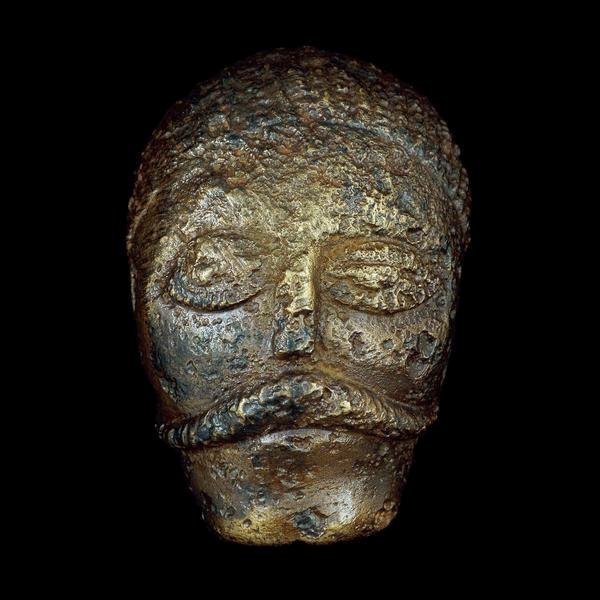
The Cantium

Background to the Cantium

Location of the tribe
Far South East of England, Kent and a smail part of Sussex

Background information
Julius Caesar noted in his writings that this part of Britain was occupied by what he considered to be the most civilised tribe in Britain.

Mostly this attributed to the fact that being the furthest south and east, therefore closest to the continent, they were the tribe most influenced by European ways and innovation, due to their extensive trade with Gaul.

Some of the writings about the Cantium

Caesar
The natural shape of the island (Britain) is triangular, and one side lies opposite to Gaul. Of this side one angle, which is in Cantium (where almost all the ships from Gaul come in to land), faces the east, the lower angle faces south.’

Caesar
‘Of all the Britons the inhabitants of Cantium, an entirely maritime district, are by far the most civilised, differing but little from the Gallic manner of life.’And provides us with further snippets on the political

Caesar
‘Cassivellaunus¹ sent messages to Cantium, a country by the sea, as above set forth, over whose four districts Cingetorix, Carvilius, Taximagulus, and Segovax ruled as kings, and commanded them to collect all their forces for a sudden attempt and assault upon the naval camp.’

Principal towns and settlements in Cantium territory

Durovernum Cantiacorum – (Canterbury, Kent) – Pre-Roman settlement, later Civitas capital served by a port three miles down the Stour at Fordwich.

Pre-Roman Settlements
Durobrivae – (Rochester, Kent) – Pre-Roman native settlement on the Medway. One of only two walled towns in Cantium territory. The other being Canterbury.
Durolitum? – (Ospringe, Kent)
Hastings (Sussex) – This iron port had overland connections with Kent rather than Sussex.
Loose – (near to Maidstone, Kent) – Pre-Roman native settlement on the upper Medway.
Maidstone (Kent) – A Roman settlement of some kind is suspected.
Noviomagus Cantiacorum
-(Crayford, Greater London) – Posting Station on Watling Street
Portus Dubris – (Dover, Kent) – Coastal Station
Portus Lemanis – (Lympne, Kent) – Coastal Station
Rutupiae – (Richborough, Kent) – The main port of entrance to Britain.
Titsey (Kent) – Rural temple may mark the western border of the Canton.
Vagniacis
or Vagniacae – (Springhead, Kent) – Posting Station on Watling Street

Some of the Cantium kings and queens

Dubnovellaunus Perhaps one of several kings of the Cantium in the latter half of the first century BC. He could well have been the second British king mentioned in the Augustan record, but it is not likely.

Cunobelin The coins of Cunobelin of the Catuvellauni appeared throughout Cantium territory during the early part of the first century AD. It is widely beleived that the Catuvellauni became extremely powerful sometime between the second expedition of Caesar and the Roman invasion. There is much evidence to suggest that the Cantium tribe were overrun by the Catuvellauni, as were the Atrebates and the Trinovantes.

Adminius Adminius was probably the eldest son of Cunobelin, who was given the administration of Cantium by his father around 30AD

Contact Us
close slider