Category: Medieval

Flats Hill – Carlton in Coverdale

Flats Hill Mound - Carlton-in-Coverdale - view from road

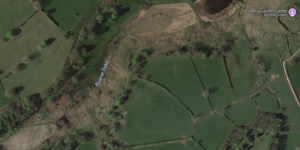
Flats Hill mound is approximately 30 meters in diameter and stands about 3.6 meters high. It has never been excavated, although a dry stone wall seems to have been started, and then stopped, partly over its top. It has been suggested as, and is listed as a probable barrow, with a presumably wide date, likely to be in the Bronze Age or Iron Age date range.

Round Hill Motte at Carlton-in-Coverdale

Motte_at_Carlton_in_Coverdale_-_geograph.org.uk_-_Gordon_Hatton

Carlton Castle, or Round Hill Motte, at Carlton-in-Coverdale is an intriguing historical site that offers a glimpse into the medieval past of the Yorkshire Dales. The structure seems related to an extensive set of linear earthworks that have been interpreted as agricultural, however, their existence asks a question: if these are not older than this medieval interpretation. 

Guide: The Ard – Early Ploughing in English Brigantia

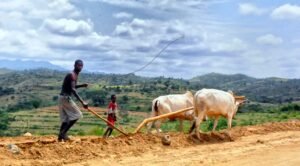
Single Tyne Plough, Arba Minch

The ard, also known as a scratch plough, represents one of the earliest forms of agricultural technology used by the people of ancient Brigantia.

John O’Gaunt’s Castle and Beaver Dyke – Harrogate

John OGaunts Castle - Harrogate 2025-02-06 222818

John O’Gaunt’s Castle, located near Harrogate in North Yorkshire, is a historical site with roots that intertwine myth, history, and medieval legend.

Guide: In Depth – Church Doors and Windows

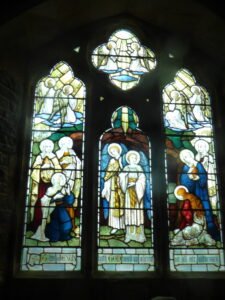
Stanwick St John East window

The placement of church doors and windows, including the absence of eastern doors, reflects both theological symbolism and practical architectural traditions

The names Cambre, Cambria, Cumbria, and Cymru

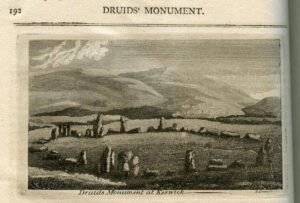
Castlerigg- Hutchinson's History of Cumberland

The similarities between the names Cambre, Cambria, Cumbria, and Cymru (the native Welsh name for Wales) have been noted by linguists and historians, particularly when exploring Indo-European and Celtic roots.

The Border Reivers

The Border Reivers were a formidable force in the history of Britain, particularly during the tumultuous period from the late 13th century to the early 17th century. These raiders, hailing from both Scottish and English descent, operated along the Anglo-Scottish border, a region marked by constant strife and conflict.

Early Christian syncretism and how the old ones hid amongst the new religion

Syncretism is where two or more differing beliefs become merged. In England, this first happened under Roman rule, where many pre-existing Celtic shrines to specific deities were associated with Roman deities of the same qualities or attributes. Based on extensive research, I am now confident that in Britain, the early Christians undertook a similar process and with that knowledge, we should be able to reverse engineer, to some extent, our local Brigantian Celtic pantheons.

St Mary Magdalen the Leper Chapel Ripon

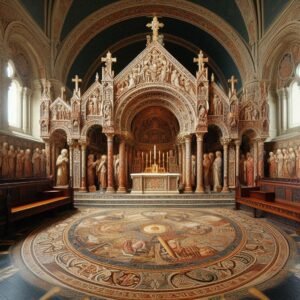
An image illustrating an article about St Mary Magdalen the Leper Chapel Ripon on thealicesyndrome.com

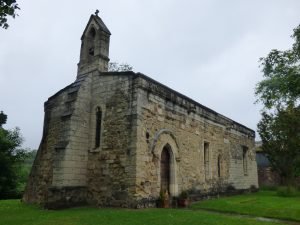
The Chapel of St Mary Magdalen in Ripon, was founded by Archbishop Thurstan in the 12th century, it was initially part of the St Mary Magdalen Hospital, serving as a chapel for lepers and later for blind priests.

The Lawson-Tancred family

The Lawson-Tancred family, with its roots deeply embedded in English history, boasts several notable figures who have made significant contributions to their fields and society. The lineage of the family can be traced back to the Norman Conquest, with Richard Tankard, who owned lands at Boroughbridge in Yorkshire shortly after this pivotal event in English history.

Contact Us
close slider