Category: Iron Age

The Story of Boltby Scar

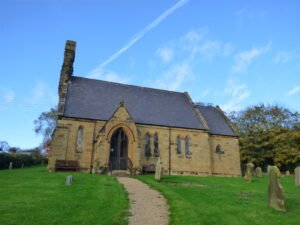
Boltby Church, Yorkshire Moors

Boltby is a very important ancient site IMO. A gold “hair braid”, was found there, linking it to the Amesbury Archer, buried with two similar hair braids. This also provides a link to the founding of Stonehenge, which helps set a potential scene for a possible “zeitgeist”, of the day.
The hero archetype and Lugh

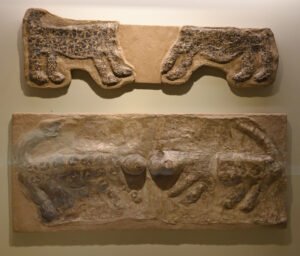
Museum of Anatolian Civilizations Çatalhöyük Leopard reliefs all in 2019 01

At its core the “hero” is the figure who steps out of ordinary society, confronts chaos or a monster, and returns (or dies) having secured order for the group. In Jungian and comparative-myth terms it sits in the “warrior-champion” slot of the collective story-board; evolutionists would say it crystallises the survival value of decisive coalition leadership in small bands.

Snake Iconography in the British Isles

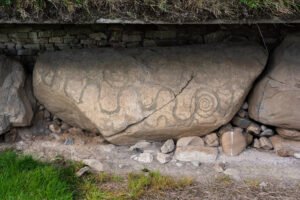
Knowth, Brú na Bóinne (Boyne Valley), Ireland

Syncretism through the ages Syncretism, the amalgamation of different religions, cultures, or schools of thought, has its roots in the ancient world. Thoughts on Celtic Religion – Raimund, Karl To begin with, lets first look at the sources available to us: There are quite numerous sources available, contrary to Read more Hillforts: Defence or Ritual? …

Continue reading

Castro de Trona fort – Pontevedra, Spain

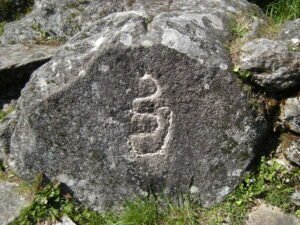
Petroglifo castro Troña

Castro de Trona is an oval enclosure with significant terracing to the west and a large ditch to the east. This castro (a hillfort settlement) has an accepted date of around 600 BCE. Like many others in Galicia, this castro reached its peak during the 1st and 2nd centuries CE. It measures approximately 200 metres east to west by 150 metres north to south.

Templeborough Roman Fort – Rotherham

Templeborough Roman Granary remains at Clifton Park Museum

Templeborough Roman Fort occupies a commanding position on the north bank of the River Don at Rotherham (OS grid SK 410 916), where the Magnesian Limestone ridge drops into the floodplain. Originally constructed in timber and earth in the mid–1st century AD, it was later rebuilt in stone and occupied—possibly intermittently—until the withdrawal of Roman authority in the early 5th century AD

Great Roe Wood (Roe Wood) Enclosure – Woodhouse

Great Roe Wood - Sheffield - OS Series 1

Great Roe Wood (often simply called “Roe Wood”) sits on the Magnesian Limestone ridge that carries the Roman Rig between Sheffield and Doncaster, just northeast of the village of Woodhouse (OS grid SK 450 920). This ridge forms a natural corridor overlooking the Don valley, with shallow soils over limestone giving way to deeper alluvial gravels in the valley bottom.

Wincobank Hill Fort

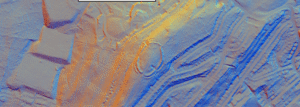
Wincobank Fort – LiDAR – National Library of Scotland 3

This is an oval fort with an internal area of 2.5 acres. A bank, ditch and counterscarp bank are continuous around it except on the N side where ditch and counterscarp have been destroyed.

Scoles Coppice Fort

Scholes (or Scoles) Coppice Camp (sometimes called “Caesar’s Camp”) lies just north-west of Kimberworth in Rotherham, atop the same Magnesian Limestone ridge that carries the Roman Rig. Its grid reference is roughly SE 436 937, placing it only 200–300 m to the north of the Rig’s northern branch

Roman Rig Defensive Works

The Roman Rig is a defensive dyke built to defend against attack from the south. It runs from Sheffield, past Templeborough and carries on almost to Doncaster. If this is a Brigantian dyke it would certainly add weight to Websters definition of the Roman border in the period.

Cleave Dyke Defensive System

The Cleave dyke system is several Dykes which combine to create a boundary of between 9 and 18 kilometres running north south to the west of Thirsk.

Contact Us
close slider