

Boadicea, also known as Boudica, was a queen of the Iceni tribe, a Celtic tribe that lived in what is now Eastern England.
Jul 03
Boadicea, also known as Boudica, was a queen of the Iceni tribe, a Celtic tribe that lived in what is now Eastern England.
Jul 03
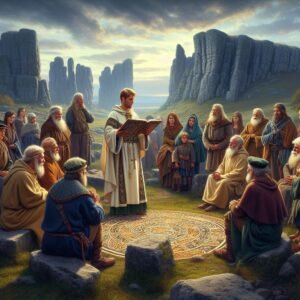
We look at the development of Christianity from 50AD to 1100AD in both the broader European context and also for the people of Brigantia.

The Bronze Age discoveries in Mitchell Laithes Farm, Ossett, West Yorkshire, offer an important glimpse into the region’s ancient past. Archaeological appraisals, particularly the one conducted in 2007 at Mitchell Laithes Rye Royds, have unearthed evidence of short episodes of occupation dating back to 3500-2000 BC.
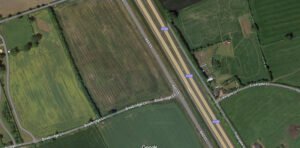
The excavation on the northern side of Bowbridge Lane as part of the A1 expansion revealed a significant archaeological site, with features indicative of Late Bronze Age funerary practices.
Jun 23
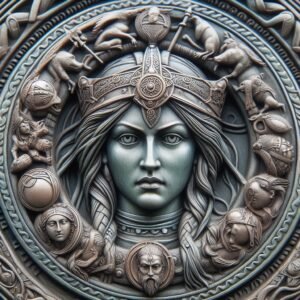
The Iceni tribe, known in Latin as Icēnī, was a powerful and significant group during the Iron Age and early Roman era in what is now eastern Britain.
Jun 19

Prehistoric Yorkshire is a landscape rich with history, revealed through various archaeological finds that offer a glimpse into the ancient past. The oldest evidence of human activity in this region dates back to around 125,000 years ago, but it is the later periods, particularly the Iron Age, that have yielded significant discoveries related to ploughing and farming.
Jun 17

This report introduces walled gardens and the concept that they are an attempt to create a paradise on earth, in accordance with a long history of religious and spiritual thought that played a significant role in shaping our relationship with nature, and the design of high status estates.

Hadrian’s Wall, known to the Romans as Vallum Hadriani, was a grand fortification stretching across the width of what is now Northern England. Constructed on the orders of Emperor Hadrian in AD 122, the wall was a symbol of Roman power and engineering prowess.
Jun 16

Emperor Hadrian, born as Publius Aelius Hadrianus in 76 CE, was a Roman emperor renowned for his substantial contributions to the architectural and cultural heritage of the Roman Empire.

While details about these earthworks are not widely documented, the area is known for its rich archaeological significance. Holly Hill itself is a place of interest, with its Grade II listed status indicating its historical importance.
 NLS Map Explorer
 Google Earth
 Google Maps
 Lidar Finder
 TMA
TMA
 Megalithic Portal
 Yorkshire Arch. Air Mapping
 ADS
ADS
 Brigantian Adventure FB Group
Stone Bothering FB Group
Stone Faces FB Group
Brigantian Adventure FB Group
Stone Bothering FB Group
Stone Faces FB Group
 Heritage Gateway
 ARCHI® MAPS: UK
 Atlas of Hillforts
 Portable Antiquities
 British History Online
Brigantes Nation FB Group
British History Online
Brigantes Nation FB Group

