Tag: Archaeology

Guide – Empathic Archaeology: Building a Strong Straw Man

An object that appears entirely different depending on the perspective of the observer

Celtic Heads Celtic Head from Witham, 2nd c B.C. (British Museum) “Celtic” carved heads are found throughout the Read more Timeline 60BC – 138AD This timeline is focussed on the British Celtic culture and those cultures which had influence on the British Celts. It Read more Heads at St Michael, Kirklington An analysis of head …

Continue reading

Guide – Empathic Archaeology: The Straw Man

A comic illustration representing the laying out of a 'straw man' in an archaeologist's mind.

At first glance, the idea of psychoanalyzing an “imaginary alien” might sound outlandish, but it perfectly mirrors the approach many archaeologists must take when trying to understand ancient cultures. These cultures are far removed from our own in time, and often in social structure, belief systems, and material culture.

Guide – Empathic Archaeology Introduction

An archaeologist’s mind’s eye, representing the chaos of creation.

Empathic archaeology is the practice of immersing oneself in the worldview of the people being studied, allowing archaeologists and researchers to interpret artifacts, structures, and landscapes through the lens of the individuals who created or used them.

Guide – Using the best tools for research

A car broken down on the side of the road, with the driver holding a set of tools.

For amateur researchers who don’t have access to extensive professional resources, there are still several methods and tools they can use to cross-check previous findings and apply a holistic approach. While they may never have access to every piece of data, they can still adopt strategies that lead to more accurate, well-rounded interpretations. Here are some practical approaches:

Guide – Challenging Assumptions with Free Thinking

One of the most powerful tools in archaeology is not just digging deeper into the earth but digging deeper into our own thinking processes. In archaeological research, we often encounter assumptions—either based on prior data, outdated methodologies, or even cultural biases—that shape how we view and interpret the past.

Guide – Introduction to Critical Thinking in Archaeological Research

A car in a river and the driver saying it is a car park

In the world of archaeology, as with all forms of inquiry, the pursuit of truth begins with the ability to think critically and independently. Archaeology is often seen as the science of uncovering the past, but it is equally the art of understanding how we approach and interpret evidence. In the case of the Brigantes Nation, a tribe whose history is riddled with gaps and assumptions, critical thinking is not only useful—it is essential.

Chapter 5 – The Later Neolithic Explosion

The one thousand years between 3,000 and 2,000 BC saw the Vale of Mowbray’s most significant period of development. It is at this time that the area between Boroughbridge and Catterick became the Sacred Vale, a premier ritual landscape, with Thornborough as its heart.

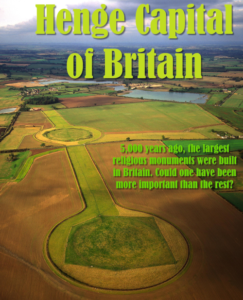
Henge Capital of Britain

This is the cover page for the book, Henge Capital of Britain, written by George. It reviews the larger henges in the UK and proposes that Thornborough is worthy of greater consideration when it comes to our ideas of which ancient places of power have historic importance.

Guide – Visible Remains

A lone researcher stands atop a hill in the Yorkshire Dales

Celtic Heads Celtic Head from Witham, 2nd c B.C. (British Museum) “Celtic” carved heads are found throughout the Read more Timeline 60BC – 138AD This timeline is focussed on the British Celtic culture and those cultures which had influence on the British Celts. It Read more Heads at St Michael, Kirklington An analysis of head …

Continue reading

Guide – Desktop Survey

A lone researcher stands atop a hill in the Yorkshire Dales

Celtic Heads Celtic Head from Witham, 2nd c B.C. (British Museum) “Celtic” carved heads are found throughout the Read more Timeline 60BC – 138AD This timeline is focussed on the British Celtic culture and those cultures which had influence on the British Celts. It Read more Heads at St Michael, Kirklington An analysis of head …

Continue reading

Contact Us
close slider