Period: Dark Ages

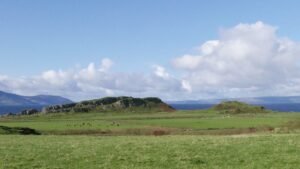
Mote of Mark Hill Fort

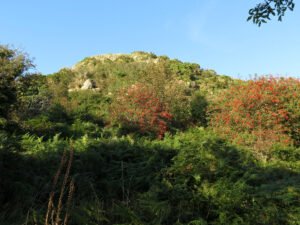
Mote of Mark from sea shore path

The Mote of Mark is a defended hilltop overlooking the Urr estuary. It was the court or citadel of a powerful Dark Age chieftain, possibly one of the princes of Rheged. The site was occupied during the 6th century and appears to have been destroyed by fire in the 7th century.
Barry Hill Fort

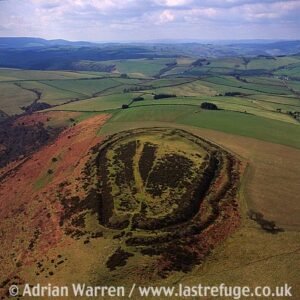
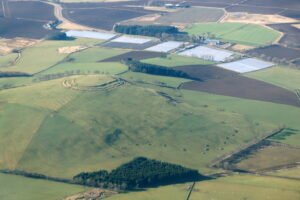
Hillfort on Hill of Barra, near Old Meldrum, from the air

Barry Hill is a textbook “big fort waiting for a small trench”: its spectacular vitrified rampart, enigmatic outer works and Arthurian folklore offer equal attraction to scientists and story-lovers—yet almost everything we know comes from surface survey. A single, well-designed excavation season could pivot the site from picturesque curiosity to a securely dated anchor point in the defensive story of eastern Scotland.

Dunagoil Hillfort, (Isle of Bute, Argyll & Bute)

Dunagoil Hillfort

Dunagoil crowns a 30 m-high columnar-basalt promontory on the south-west coast of Bute, overlooking the Sound of Bute and the Cumbraes. Cliffs on the north and west form natural ramparts; only the gentle ESE saddle gives easy access.

The Legend of Caer Caradoc

Caer Caradoc

Caer Caradoc is often linked to Caradoc (or Caradog), a prominent figure in Welsh mythology and Arthurian legend. Caradoc is considered one of the knights of the Round Table in Arthurian lore, and he is sometimes referred to as Caradoc of the Battle or Caradoc the Brave. He was known for his bravery and his loyalty to King Arthur.

Canute the Great

Canute the Great

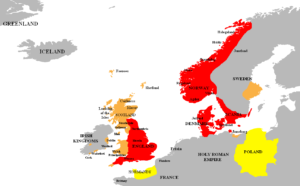
The legend of King Cnut, also known as Canute the Great, is a fascinating tale that highlights themes of humility and the limits of power. King Canute ruled over England, Denmark, and Norway in the early 11th century. He was a powerful Viking king known for his military prowess and political acumen.

Guide: The Ard – Early Ploughing in English Brigantia

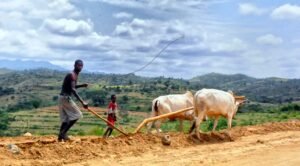
Single Tyne Plough, Arba Minch

The ard, also known as a scratch plough, represents one of the earliest forms of agricultural technology used by the people of ancient Brigantia.

Ingleborough Hill – Yorkshire Dales

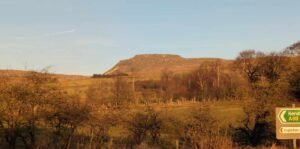
Ingleborough Hill, part of the Yorkshire Dales National Park, is one of the famous “Three Peaks” in the area, alongside Whernside and Pen-y-ghent. It stands at 723 meters (2,372 feet) and has a rich geological and archaeological history.

Ingleton – Yorkshire Dales

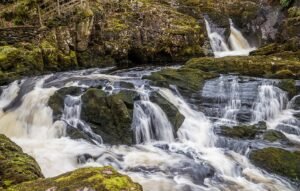
A waterfall

Ingleton, located in North Yorkshire, England, has a rich and diverse history that spans thousands of years. The village is situated in the scenic area of the Yorkshire Dales, which has long been inhabited and influenced by a variety of cultures.

Early Christian syncretism and how the old ones hid amongst the new religion

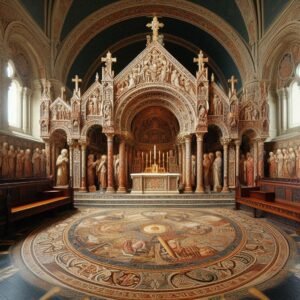
Syncretism is where two or more differing beliefs become merged. In England, this first happened under Roman rule, where many pre-existing Celtic shrines to specific deities were associated with Roman deities of the same qualities or attributes. Based on extensive research, I am now confident that in Britain, the early Christians undertook a similar process and with that knowledge, we should be able to reverse engineer, to some extent, our local Brigantian Celtic pantheons.

Syncretism through the ages

Syncretism, the amalgamation of different religions, cultures, or schools of thought, has its roots in the ancient world.

Contact Us
close slider