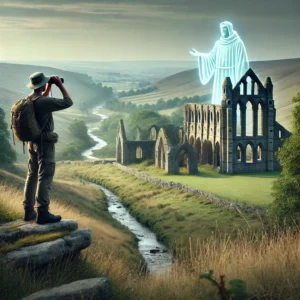
Landscape archaeology is the study of past human interaction with the natural environment. It focuses on understanding how ancient societies perceived, organized, and shaped the land they inhabited, revealing the relationships between people, their settlements, and the broader landscape in which they lived.
Tag: guide
Jan 21
Guide – Empathic Archaeology: Building a Strong Straw Man
Celtic Heads Celtic Head from Witham, 2nd c B.C. (British Museum) “Celtic” carved heads are found throughout the Read more Timeline 60BC – 138AD This timeline is focussed on the British Celtic culture and those cultures which had influence on the British Celts. It Read more Heads at St Michael, Kirklington An analysis of head …
Jan 21
Guide – Empathic Archaeology: The Straw Man
At first glance, the idea of psychoanalyzing an “imaginary alien” might sound outlandish, but it perfectly mirrors the approach many archaeologists must take when trying to understand ancient cultures. These cultures are far removed from our own in time, and often in social structure, belief systems, and material culture.
Jan 21
Guide – Using the best tools for research
For amateur researchers who don’t have access to extensive professional resources, there are still several methods and tools they can use to cross-check previous findings and apply a holistic approach. While they may never have access to every piece of data, they can still adopt strategies that lead to more accurate, well-rounded interpretations. Here are some practical approaches:
Jan 21
Guide – Challenging Assumptions with Free Thinking
One of the most powerful tools in archaeology is not just digging deeper into the earth but digging deeper into our own thinking processes. In archaeological research, we often encounter assumptions—either based on prior data, outdated methodologies, or even cultural biases—that shape how we view and interpret the past.
Jan 21
Guide – Introduction to Critical Thinking in Archaeological Research
In the world of archaeology, as with all forms of inquiry, the pursuit of truth begins with the ability to think critically and independently. Archaeology is often seen as the science of uncovering the past, but it is equally the art of understanding how we approach and interpret evidence. In the case of the Brigantes Nation, a tribe whose history is riddled with gaps and assumptions, critical thinking is not only useful—it is essential.
Sep 25
Guide – Resistivity
Celtic Heads Celtic Head from Witham, 2nd c B.C. (British Museum) “Celtic” carved heads are found throughout the Read more Timeline 60BC – 138AD This timeline is focussed on the British Celtic culture and those cultures which had influence on the British Celts. It Read more Heads at St Michael, Kirklington An analysis of head …