Stonehenge has always been enigmatic, due to its use of those definitive morticed trilithons, all of which where squared of, more like the structures of the Maltese temples and other stone structures closer to Africa, as opposed to those of the rest of Britain and most of the wider North-west European ritual landscape.
Category: Guide
What might Stonehenge Mean? Dartmoor and Carnac add to the Picture
- Filed under Barrow, Bell Barrow, Britain, Bronze Age, France, Funerary Urns, Hair Braid - Ring, Landscape feature, Megalithic, Mining, Neolithic, News, Radiocarbon Dating, Smelting, Stone alignment, Stone Circle, Stone Row, Wales
- amesbury, Anglesey, archer, boltby, Boltby Scar, britain, Bronze Age, Carnac, Dartmoor, France, Gold Tresses, Great Orme, Hill Fort, Kirkhaugh, Llanymynech, Nabta Playa, nenthead, Neolithic, North Yorkshire, Parys Mountain, Powys, Rouslton Moor, Shropshire, Stonehenge, Tabular Hills, wales, Yorkshire Moors
- 4 comments
Jun 27
Prehistoric mounds, cairns and boundary earthworks in Coverdale
- Filed under Archaeology, Barrow, Boundary Marker, Brigantia, Brigantia England, Bronze Age, Burial Mound, Dark Ages, Dark Ages Brigantia, Early Christian, Early Medieval, Guide, Iron Age, Landscape Archaeology, Landscape feature, Motte and Bailey, Mound, New Sites, Roman, Terraces, Visible Remains
A gazetteer of probable prehistoric mounds, cairns and boundary earthworks in Coverdale. It is not complete and is still being researched.
Jun 16
Hillforts: Defence or Ritual? – Part 1
- Filed under Archaeology, Brigantia, Brigantia England, Britain, Critical Thinking, Defensive Structures, Earthworks, Guide, Hill Fort, Univallet Hillfort, Vitrified Fort
Over the last five years Iron-Age specialists have been re-examining what British hillforts were really for. The question is no longer just “fortress or farm?” but whether many of them were built first and foremost as places of gathering, display and ritual.
- Ad Gefrin, Barry Cunliffe, battle, Bowden, Castle Dykes, Ceremony, Debate, Defence, Hill Fort, Hill of Tara, hillfort, Iron Age, Julius Caesar, Maiden Castle, McOmish, Mortimer Wheeler, Northumberland, Paulinus, Ringforts, ritual, Ritual First, tacitus, Thornborough Henges, vitrified, Yeavering Bell
- Leave comment
Jun 15
Guide: Piles of Stones (OS Maps)
- Filed under Agriculture, Barrow, Burial Mound, Landscape Archaeology, Landscape feature, Ring Cairn, Spoil Heap, Visible Remains
On every late-Victorian and early-20th-century OS sheet the surveyors marked any conspicuous heap of stones they could not instantly classify as a tumulus, beacon, trig-point or boundary stone with the catch-all term “Pile of Stones.”
Jun 11
Guide: Ritual/Ceremonial Mounds
- Filed under Anglo-saxon, Bronze Age, Ceremonial Mount, Dark Ages, Early Christian, Early Medieval, Georgian, Guide, Landscape feature, Medieval, Neolithic, New Sites, Norman
These are raised platforms created first and foremost for cult, procession, assembly or conversion—not for fortification or routine boundary-making. They tend to be much more significant and monumental than other mounds and raised platforms. Some are the largest structures known of their type. In Britain, possibly the best known example is Silbury Hill in Wiltshire.
Jun 11
Guide: Spoil Heaps
- Filed under Archaeology, Guide, Industrial Heritage, Landscape Archaeology, Landscape feature, Mining, Spoil Heaps
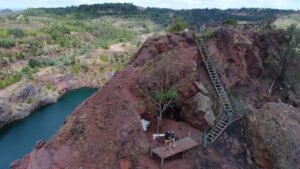
These are artificial hills made from the unwanted rock, shale and tailings that come up with coal, metal ore, stone or clay when it is being mined or quarried. Because extractive industry is both deep and long-lived, single collieries or pits can generate tens of millions of cubic metres of spoil; pushed out by locomotive, conveyor or tippler wagon and dumped in successive layers, the piles quickly become a distinctive landform.
Jun 10
Guide: Hillfort Mounds of Europe
- Filed under Archaeology, Castro Hillfort, Contour/Plateau Fort, Europe, Guide, Hidden Remains, Hill Fort, Landscape Archaeology, Landscape feature, Multivallete Hillfort, New Sites, Oppidum, Promontory fort, Slavic Gord, Univallet Hillfort, Vitrified Fort
Guide: Common Features of Iron Age Hillforts This article attempts to serve as a guide for many of the features of the hillforts found in Britain, in Read more Guide: Iron-Age minting: Ceramic Pellet-mould trays This article explores the most tangible evidence we possess for indigenous minting north of the Humber: the smashed ceramic “pellet-mould” …
Jun 10
Guide: Barrows
- Filed under Archaeobotanical, Barrow, Bell Barrow, Bowl Barrow, Bronze Age, Dark Ages, Disc Barrow, Europe, Guide, Iron Age, Landscape Archaeology, Landscape feature, Long Barrow, Neolithic, Ring Barrow, Ritual Landscape, Roman, Round Barrow, Square Barrow, Steppe Kurgan
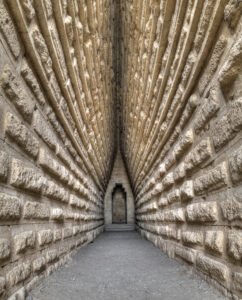
A barrow is a mound of earth and/or stones raised over a grave or group of graves. Used from the Neolithic through to the Iron Age (roughly 4000 BCE to 500 CE), barrows were often constructed to honour elite individuals, such as tribal leaders, warriors, or chieftains. They are frequently found singly or in cemeteries known as barrow fields.
- AngloViking, Arras Culture, barrow, Barrow Timeline, Bell Barrow, Bowl Barrow, britain, Bronze Age, Burial Mound, Disc Barrow, Eastern Europe, Hallstatt, Iberian Peninsular, ireland, Iron Age, la tene, Long Barrow, Neolithc, Nordic Bronze Age, Ring Barrow, Roman, Round Barrow, ScandinaviaUkraineCentral Europe, Square Barrow, Steppe Kurgan, timeline
- Leave comment
Jun 07
Guide: SAR Doppler Tomography
- Filed under Archaeology, Geophysics, Guide, Hidden Remains, New Sites, Remote Sensing and Analysis, Reports
Synthetic-aperture radar (SAR) already relies on Doppler shifts: echoes from scatterers in a side-looking radar beam have slightly different frequencies as the platform flies past, and focusing those micro-shifts yields a two-dimensional image.
- 3-D mapping, Airborne P-band, Archaeology, Back-scatter, Baseline (B⊥), Beam-forming Algorithm, Biomass, Capon, Coherence, coherent stack, Cryosphere, D-TomoSAR, differential processing, Doppler spectral cube, Forests, Height Resolution, Heritage monitoring, Infrastructure, InSAR, Interferometric SAR, Look Angle (θ), MUSIC, Penetration Depth, perpendicular baseline (B⊥), radar wavelength, RIAA, SAR, SAR Doppler Tomography, Satellite X-band stack.TerraSAR-X, Synthetic-Aperture Radar, temporal decorrelation, Tomographic SAR, TomoSAR, topography under vegetation, Voxel, Wavelength (λ)
- Leave comment
Jun 01
Guide – Exploring the Past with LIDAR
- Filed under Archaeology, Guide, Landscape Archaeology, LiDAR, New Sites, Reports
Imagine being able to see the landscape around you in a completely new way—an invisible layer revealing the hidden structures of the past, right beneath the surface.
- Archaeology, coverage, data access, data collection, data processing, elevation model, Exploring, laser pulse, LIDAR, mapping, maps, OpenTopography, Past, point clouds, Project-specific analysis, Quantum Spatial, shaded relief maps, Surdex Corporation, Topcon Positioning Systems, UK LIDAR Data Service, visualisation
- Leave comment
Articles
- Bronze Age
- Iron Age
- Roman
- Dark Ages
- Early Christian
- Viking
- Saxon
- Medieval
- Vitrified Fort
- Archaeology Guide
- Guide – Introduction to Critical Thinking in Archaeological Research
- Guide – Challenging Assumptions with Free Thinking
- Guide – Congruence in Archaeological Interpretation: Holistic Analysis
- Guide – Critical Thinking: Lack of Evidence Does Not Mean Evidence of Lack
- Guide – Critical Thinking: The Simple Assumption
- Guide – Applying critical thinking to historic and archaeological research
- Guide – Empathic Archaeology Introduction
- Guide – Landscape Archaeology Introduction
- Guide – What is Landscape Archaeology?
- Guide – Introduction to Glacial Archaeology
- Guide – The Flora and Fauna of Prehistoric Britain
- Guide – Landscape Archaeology: Post-Ice Age Landscape of Thornborough
- Guide – Archaeological Periods in Western Europe
- Guide – Visible Remains
- Guide – Hidden Remains
- Guide – Getting Started
- Guide – Landscape Features
- Guide – Agricultural practices through time
- Guide – Introduction to Glacial Archaeology
- Guide: In Depth – Church Doors and Windows
- Guide – Mining
- Guide – Archaeological Terms
- Guide – Glossary
- Latin Translation – Choosing the meaning of AUG
- Reports
- An introduction to Brigantian Druidry
- Brigantia during the Dark Ages
- Celtic Heads
- Finding Bardon – An Arthurian Quest
- Early Christian syncretism and how the old ones hid amongst the new religion
- Rome: The Emperors Claim to Divinity
- Syncretism through the ages
- The Border Reivers
- The Gallus Frontier – Brigantia against the Romans
- The growth of Christianity 50AD – 1100AD
- The Kingdom of Venutius
- The use of the word Lady in relation to water related structures
- The walled gardens of Brigantia
- Yorkshire’s “Sacred Vale” – The Dawn of Brigantia
- Brigantia Espania
- Iberian Peninsular
- Galicia
- Biefing – The Myth of Breogán and the Tower of Heracles
- Briefing – Galicia’s Political History and Separatist Sentiment
- Briefing – Geography and Geology of Galicia
- Briefing – Design of Galician Hillforts
- Briefing – Roman Interaction with Galicia and the Iberian Peninsula
- Church of Santa María de Cambre, Cambre near A Coruña
Categories
- Agriculture (6)
- Field Systems (1)
- ploughing (2)
- Angle (2)
- Archaeological Periods (312)
- Anglo-saxon (6)
- Bronze Age (52)
- Late Bronze Age (1)
- Dark Ages (24)
- Dark Ages Brigantia (9)
- Early Christian (37)
- Early Medieval (8)
- Georgian (9)
- Gothic (3)
- Ice Age (1)
- Iron Age (133)
- Late Iron Age (5)
- Jacobite (7)
- Medieval (61)
- Medieval Brigantia (9)
- Mesolithic (11)
- Neolithic (45)
- Early Neolithic (5)
- Norman (40)
- Palaeolithic (6)
- Roman (94)
- Saxon (9)
- Stuart (6)
- Suspect (1)
- Tudor (10)
- Undated (7)
- Viking (4)
- Archaeology (93)
- Archaeobotanical (1)
- Empathic Archaeology (11)
- Free Thinking (7)
- Battle (1)
- Brigantia (147)
- Brigantia England (134)
- Brigantia Espania (11)
- Civil Structure (6)
- Defensive Structures (45)
- Castle (5)
- Defensive Dike (2)
- Defensive Walls (1)
- Fort (20)
- Fortified Barn (1)
- Marching Camp (5)
- Motte and Bailey (6)
- Ring Work (1)
- Class A (1)
- Dialects (1)
- Earthworks (51)
- Dike (8)
- Field Systems (26)
- Enclosure (12)
- Enclosure Acts (1)
- Europe (51)
- Festivals (2)
- Finds (42)
- Altar (10)
- Amphora (1)
- Animal Remains (4)
- Auroch (1)
- Hoof marks (1)
- Antler Pick (2)
- Arrowhead (1)
- Leaf-shaped (1)
- Axe (1)
- Bone Comb (1)
- Celtic Head (8)
- Celtic Head (2)
- Clock (1)
- Curse Tablet (1)
- Flint Scatters (4)
- Gaming Pieces (1)
- Hair Braid – Ring (4)
- Human Remains (2)
- Adult (1)
- Couched Burial (1)
- Juvinile (1)
- Mace Head (1)
- S-curved (1)
- Mosaic (1)
- Polished Stone Adze (1)
- Pottery (8)
- Funerary Urns (2)
- Grooved ware (1)
- Peterborough ware (1)
- Mortlake ware (1)
- Planig‑Friedberg ware (1)
- Samian ware (2)
- Vasi a Bocca Quadrata ware (1)
- Quern Stones (1)
- Statue (1)
- Geography (16)
- Maps (7)
- Geology (13)
- Anthracite – Coal (2)
- Geomorphology (2)
- Gods (9)
- Guide (72)
- Critical Thinking (8)
- Socratic Thought (1)
- Glossary (1)
- Hidden Remains (8)
- Geophysics (5)
- LiDAR (1)
- Radiocarbon Dating (1)
- Remote Sensing and Analysis (1)
- Regional Surveys (13)
- Research Tools (4)
- Visible Remains (12)
- Air Mapping (2)
- Air Photography (2)
- Fieldwalking (2)
- Lithics (1)
- Photography (6)
- Critical Thinking (8)
- Henge (18)
- Hill Fort (61)
- Castro Hillfort (3)
- Contour/Plateau Fort (1)
- Multivallete Hillfort (1)
- Oppidum (1)
- Oppidum (1)
- Promontory fort (4)
- Slavic Gord (1)
- Univallet Hillfort (4)
- Vitrified Fort (27)
- Historic Buildings (20)
- Amphitheatre (1)
- Barn (2)
- Beacon (1)
- Broch (1)
- Coaching Inn/Hostelry (1)
- Folly (4)
- Hall (2)
- Hospital (1)
- House (1)
- Tower (7)
- Walled Garden (1)
- Industrial Heritage (9)
- Chimney (1)
- Mining (9)
- Spoil Heap (1)
- Smelting (2)
- Iron-Age (1)
- Landscape Archaeology (38)
- Glacial Archaeology (2)
- Landscape Legislation (1)
- Mining Landscape (1)
- Ritual Landscape (6)
- Landscape feature (49)
- Barrow (18)
- Bell Barrow (2)
- Bowl Barrow (1)
- Cairn (2)
- Disc Barrow (1)
- Long Barrow (5)
- Ring Barrow (1)
- Ring Cairn (1)
- Round Barrow (1)
- Square Barrow (1)
- Steppe Kurgan (1)
- Boundary Marker (2)
- Burial Mound (9)
- Ceremonial Mount (1)
- Cursus (2)
- Hill Figure (5)
- Linear Earthworks (2)
- Mound (6)
- Passage Tomb (1)
- Ring Cairn (2)
- Snake Mound (1)
- Terraces (3)
- Barrow (18)
- Leaders (33)
- Agricola (2)
- Arthur (1)
- Augustus Caesar (2)
- Breogans (3)
- Caratacus (1)
- Cnut (1)
- Julius Caesar (1)
- Petilius Cerialis (1)
- Liminal Spaces (1)
- Market (1)
- Megalithic (10)
- Rock Art (3)
- Stone alignment (1)
- Stone Circle (7)
- stone circles (1)
- Stone Row (2)
- Myth and Legend (5)
- New Sites (23)
- Publications (21)
- Biographies (2)
- Henge Capital of Britain (10)
- News (4)
- Stories of Brigantia (4)
- Walking Guides (1)
- Rabbit Warren (1)
- Religious Structures (31)
- Abbey (3)
- Church (24)
- Crosses (1)
- Memorial Planting (1)
- Priory (2)
- Religious Orders (3)
- Ritual walkway/pilrimage path (1)
- Reports (148)
- Roman Culture (11)
- Roman army (8)
- Roman baths (1)
- Roman City (1)
- Roman Gods (1)
- Mercury (1)
- Roman navy (1)
- Roman pottery (3)
- Samian ware (2)
- Roman Road (1)
- Roman Roads (2)
- Roman Villa (2)
- The Celtic World (35)
- Celtic Gods (1)
- Lugh (1)
- Celtic Industry (1)
- Celtic Life (9)
- Celtic Trade (1)
- Celtic Tribes (27)
- Celtic Gods (1)
- Trade (4)
- Minting (3)
- Coins (1)
- Spoil Heaps (2)
- Minting (3)
- Translation (7)
- Inscription (4)
- Latin (5)
- Uncategorized (24)
- Water Works (13)
Research Links
Heritage Gateway
Announcing: The Brigantian News!
- Roman Road to the West uncovered under Manchester Street 16 July 2025
- What might Stonehenge Mean? Dartmoor and Carnac add to the Picture 3 July 2025
- Megalithic Stone Monuments in France May Be Europe’s Oldest 1 July 2025
- Drumanagh Promontory Fort – First Ever Intact Roman Pot Found in Ireland 5 June 2025
Portable Antiquities News
Copper alloy handle fragment possibly from a sheet metal vessel, with rivet attaching it to wall of a sheet metal vessel. Suggested date: Early Medieval, 700-850Length: 16mm, Width: 7.3mm [...]
A copper alloy plate. Suggested date: possibly Early Medieval, 410-700Length: 20.2mm, Width: 18.1mm, Thickness: 2mm [...]
Possible comb fragment, as inferred by MF from a source record which fails to give the material of the object, so an interpretation entirely inferred from the source record drawing. Suggested date: probably Early Medieval, [...]
Possible mount fragment [MF]. A cast copper alloy fragment with surface corrosion and linear decoration; back slightly hollow half way from one end. Suggested date: Early Medieval, 410-900Length: 44.4mm, Width: 7mm, Thickness: 4mm [...]
A cast copper alloy strip with traces of four rivet holes and incised possibly zoomorphic decoration. Suggested date: Early Medieval, 410-900Length: 85.1mm, Width: 16.4mm, Thickness: 5.8mm [...]
Post-medieval copper alloy shoe buckle frame, sub-rectangular with the embedded ends of an iron spindle. Cf. Whitehead 2003, no. 661. Weight 5.29g. Length and width 32.7 and 24.5mm. c.1690 - c.1720.Finder's no. POD15F21 [...]
Medieval copper alloy buckle with an annular frame and a wire pin. The frame is of D-shaped cross-section, i.e. rounded externally and flat internally. The pin is intact but only 8.5mm long with its loop [...]
Rim sherd of medieval unglazed pottery jar or bowl, oxidised with buff surfaces, weight 12g. 13th - 14th centuryFinder's no. POD11F67 [...]
Body sherd of medieval unglazed pottery, reduced with oxidised exterior, weight 15g. 12th - 14th centuryFinder's no. POD11F66 [...]
Piece of solidified molten silvery grey copper alloy of unknown but not recent date, shapeless with uneven surfaces. Weight 6.57g.Finder's no. CF4F94 [...]
Post-medieval small nail or tack in pale grey copper alloy, consisting of a flat circular head with a pelleted border and an off-centre tapering square-sectioned shank (now bent). Weight 0.23g. Diameter 5.8mm. Length 11.5mm, of [...]
An Iron Age silver unit of the Regini and Atrebates / Southern region, attributable to Tincomarus and of "Tincomarus Diadem" type dating to 25 BC - AD 10. Obverse: diademed head, left with [TINC]OMARVS around. Reverse: horse, left, lyre [...]
An incomplete copper-alloy radiate of Tetricus I dating to the period AD 271-274 (Reece Period 13). Probably LAETITIA AVG reverse type depicting Laetitia, draped, standing left, holding patera/wreath in right hand and rudder/anchor in left hand. Gallic mint. [...]
An incomplete copper alloy radiate or nummus of Unclear Emperor (AD 260-402). Unclear reverse type. Unclear mint.Diameter: 16.58mm, Weight: 0.86gThe coin is missing minor portions of its outer flan. [...]
An incomplete copper alloy Strap-End of Early-Medieval date (AD 800-925). Thomas Class A, Type 2, geometric and zoomorphic style. The upper end is split with two circular perforations visible within the upper end of the back [...]
Rim sherd of a medieval to post-medieval lathe-finished copper alloy vessel, everted and slightly thickened. Weight 5.99g. Diameter c.150mm. 15th - 16th century.Finder's no. CF4F83 [...]
Rim sherd of a medieval copper alloy chafing dish integral with a dish support which tapers to a blunt rather than pointed end. Lewis 1973, Type A. Weight 27.41g. Diameter c.230mm. External and internal lengths of [...]
A complete copper-alloy Seal Matrix of Medieval date (AD 1200-1400). The object is composed of a circular die stamp and a tapered and faceted hexagonal section handle with a collared oval drilled lozenge shaped loop at its apex.The [...]
An incomplete copy alloy nummus of the House of Constantine dating to the period AD 330-337. Reece period 17. Probably GLORIA EXERCITVS reverse depicting two soldiers with one/two standards. Unclear mintLength: 15.59mm Width: 9.57mm, Weight: 0.75gThe coin is >50% of [...]
Fragment of a post-medieval copper alloy sword belt fitting, one end of a plate with a pair of lateral lobes, remains of an iron rivet and "a circular eye with a cross-shaped aperture and a [...]
Recent Articles and Site Pages
- The Story of Boltby Scar
- Swaledale
- Guide: Parliamentary-walls and the Northern Enclosures
- County Durham
- The hero archetype and Lugh
- Head One – St Michaels Church, Kirklington
- Long Meg and her Daughters standing stone and stone circle
- Cana Barn Henge
- Anciens Arsenaux Neolithic Settlement, Sion – Switzerland
- Gnaeus Julius Agricola
- Snake Iconography in the British Isles
- Wiltshire
- Liverpool Street Roman Road, Manchester
- South Street Long Barrow, Avebury
- Mamucium Roman Fort, Manchester
Locations
- Czechia (1)
- England (198)
- Bedfordshire (1)
- Cumbria (13)
- Dorset (2)
- Durham (9)
- East Yorkshire (1)
- Lancashire (7)
- North Derbyshire (8)
- North Yorkshire (118)
- Yorkshire Dales (4)
- Yorkshire Moors (1)
- Northumberland (9)
- Oxfordshire (2)
- Somerset (2)
- South Yorkshire (10)
- Staffordshire (3)
- West Yorkshire (7)
- Wiltshire (4)
- Europe (8)
- France (3)
- Germany (2)
- Global (3)
- Ireland (4)
- County Dublin (1)
- Scotland (21)
- Dumphries and Galloway (3)
- Grampian (4)
- Highlands (8)
- Perthshire (4)
- Tayside (3)
- Spain (4)
- Switzerland (1)
- Wales (4)