Vitrified Forts Gazeteer

INVENTORY OF THE FORTS VITRIFY (updated August 2000)
by Roland Comte

Translated from the original French version by an Internet Engine – sorry!

– SCOTLAND (10 sites)

1.1. Year Cnap (arran Iles) (source: site internet of the arran Iles);.

1.2. Barry Hill (Allyth, Perthshire) (” All that remains of this vitrified strong are has massive tumbled stone wall and subsidiary ramparts”, site internet alyth);

1.3. Craig Phadrig, inverness department (« Two vitrified walls enclosed year area 75M by 25M. The inner wall
stands 1.2m high one the inside”, site internet easyweb.easynet);

1.4. Dun Deardail (towards Lochaber, west of Scotland) [source: site internet of Lochaber];

1.5. Dun Lagaidh, commune of Ullapool, department of beat up & Cromarty) (« Massive stone rampart of the 1ST millenium BC, now vitrified and so originally timber-laced (…)” [source: HAI];

1.6. Finavon (Angus) [Source: CHILDE, 1935];

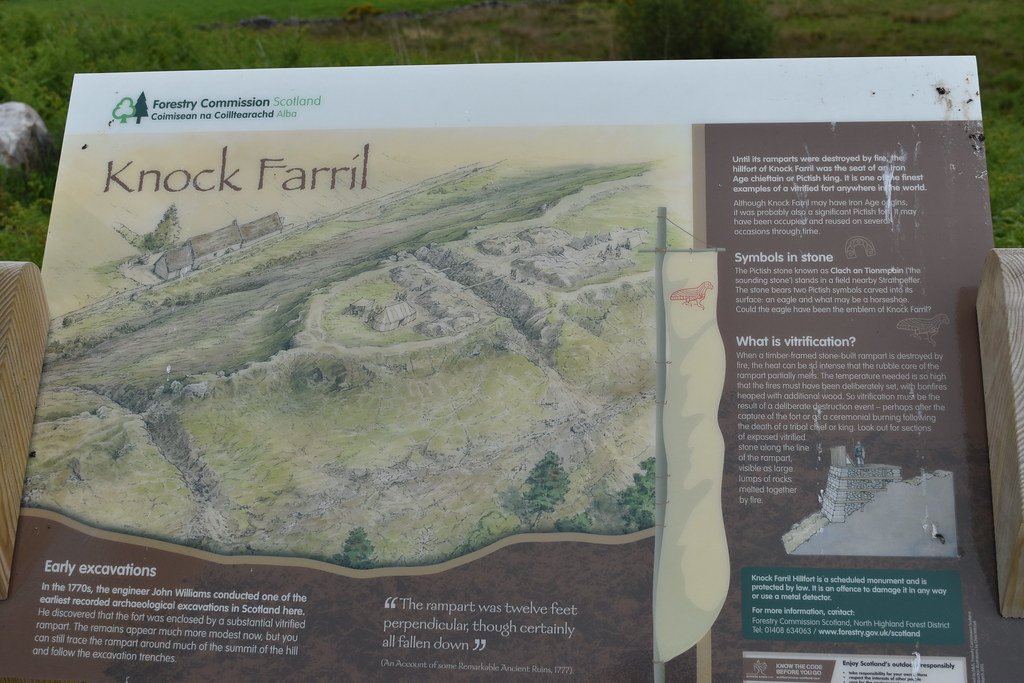
1.7. Knock Farril, commune of Strathpeffer, dépt. Beat up & Cromarty, (Oblong strong hilltop of the 1ST millenium BC, its stone rampart heavily vitrified so presumably originally laced with timber »; Source: HAI);

1.8. Tor a’Chaisteal Dun, arran Ile (Ireland);

1.9. Urqhart Castle (close to Inverness);

1.10. White Caterthun (in passing signaled by RALSTON, 1992 as being vitrified about the French site of the Camp of Caesar to CHATEAUPONSAC, Hte. -Vienne).

2) IRELAND (1 site)

2.1.Tour of Toriniz, Tory Island (Ireland). See this that some is said in the text above..

3) FRANCE (more than 70 inventoried sites, of which at least a 20th vitrified ones)

3.1. Ally (03)

3.1.1. BEGUES: Oppidum of Stutterers (« vitrified Wall », RALSTON, 1992). A visit, in May 2000, we allowed to obtain the proof of the vitrification. Removed Echantillons.

3.2. Cantal (15)

3.2.2. COREN: Puy of the Fage [RALSTON (1992), p. 124]. Possible confusion with The fage-montivernoux (Lozère).

3.2.3. ESCORAILLES: Not any place says. [RALSTON (1992), p. 124].

3.2.4. THE BEND: « The Castle Gontier ». Attention! : Risk confusion with The Bend, close to argentan (Decorates).

3.2.5. MAURIAC (has) : « Old Castle », escoalier hameau* (« Certain indices leave to think that the two communes neighbor can have each a pregnant vitrified one », RALSTON, 1992). * Possible Confusion with Escorailles (to see above).

3.2.6. MAURIAC (b)

3.2.7. MAURIAC (c)

3.3. Charente (16)

3.3.1. MOUTHIERS-ON-BOEME: Not any place says [RALSTON (1992), p. 124].

3.3.2. VOEIL AND GIGET: « Camp of the English or Rock Lasts » (« calcination Tracks on the whole length of the talus, 210 m of long one, 5-6 top m and 25 m of wide one. The surface of this blocked éperon covers 3 hectares env. », RALSTON, 1992). Well that one speaks only of « calcination », the toponyme of « Rock Lasts » could be an index of vitrification.

3.3.3. SOYAUX: « Camp of Recoux ». [RALSTON (1992), p. 124].

3.4. Dear (18)

3.4.1. THE GROUTTE: « Camp of the Murettes » (or « of Caesar »). « SPREADS ITSELF on 4 hectares. » [RALSTON (1992), p. 124].

3.5. Corrèze (19)

3.5.1. Lamaziere-basse: « Field of the Châtelet » to the place says The Bessades (« vitrified Rocks in the éboulement to the eastern extremity of the internal wall. Other vitrified gneiss, not only in the éboulis of the wall but equally to the eastern extremity of the wall to the exterior one. The vitrification seems to be limited to this party of the site », RALSTON (1992), pages. 46-47. In his bibliographie, the author relates back to VAZEILLES: vitrified Station with vitrified wall of the Châtelet, lamazière-basse commune (Corrèze).)

3.5.2. MONCEAUX s/dordogne: « Puy of the Tower » or « Turn » (« A rock pad vitrified », RALSTON (1992), pages. 49-53).

3.5.3. MONCEAUX S/ DORDOGNE: « Puy Grasset » or « Granet » to the place says « The C (h) astel » or « the Chastelou » to the town of Raz. « Some tracks of visible vitrifications in the rocks schisteuses of the summit of the motte (that would be medieval era ». « Desbordes describes the pregnant one as vitrified and, doubtless, medieval ». [RALSTON (1992), p. 53]

3.5.4. ST. GENIEZ-o-BLACKBIRD: « Puy of Sermus » or « Old Sermus ». (« THE principal INDEX of fortifications consisted in a wall section vitrified, high of 1,5 m and long of 3 m, situated on the northwestern side of the site where the access was the easiest one. (…) The defenses reconnaissables consisted in two sections of vitrified walls with an artificial slope to the exterior one. (…) A search on the northwestern side showed that the vitrified
wall was constructed directly on the rock, that presented some signs of a superficial vitrification. », RALSTON, 1992.)

3.5.5. (?) ST. PRIVAT: « Camp of Srmus » (or « Sermus ») [MARCILLE, p. 17]. It must be a matter of a confusion with the preceding one.

3.6. Armor coasts

3.6.1. PLEDRAN: Camp of Péran [MARKALE (1997), pages. 133-135. Visited site in July 1998. The vitrification is obvious on the body of the site, that perfectly was released at the time of our visit. The rock is melted and combined in of big soldered pads together. Removed Echantillons. See this that we some say higher.

3.7. Coast of now (21)

3.7.1. BOUILLAND: « The Châtelet ». Without other precision.

3.7.2. CRECEY-ON-TILLE: « fountain Camp Brunehaut » [RALSTON (1992), p. 124. It does not say if it is vitrified or no].

3.7.3. Chambolle-musigny: « Pregnant of Groniot » (or « Gromiot »). Without other precision.

3.7.4. ETAULES: « The Châtelet » (« Remain charred beams », RALSTON, 1992). One does not speak any vitrification. MARCILLE (1999), p. 17 city « The Easel ». We think that it must be a matter of an erroneous graphie.

3.7.5. FLAVIGNEROT: « Camp of Caesar » says Pregnant so of the Mount Africa. [RALSTON (1992), p. 125].

3.7.6. Gevrey-chambertin: « Pregnant of the Castle Fox » [RALSTON (1992), p. 125].

3.7.7. MESSIGNY: « Pregnant of Rock Castle ». Not any other precisions.

3.7.8. PLOMBIERES-THEM-DIJON: « Pregnant of Wood burnt » [RALSTON (1992), p. 125]. The toponyme of « Drinks Burned », met on of other sites, can be the confirmation of a vitrification.

3.7.9. VAL SUZON: « The Châtelet of Val Suzon or Fountain of the Cat ». « Situated just opposite the etaules Châtelet, on the other side valley » [given as being vitrified by MARCILLE (1999), p. 17]. (« Puts to bed burned », according to RALSTON (1992).

3.7.10. VELARS s/ouche: « Pregnant of Our Lady of the etang ». Given as vitrified by MARCILLE (1999), p. 17.

3.7.11. VIX: « Mount Lassois » (« The ‘raised earth’ southern (…) seems to have been constructed on a burnt level on which one rest rocks sometimes rubéfiées or charred », RALSTON, 1992). One does not speak any vitrification. Thus, maybe, that of other sites according to the studies of Nicolardot (quoted by RALSTON, 1992).

3.8. Hollow (23)

3.8.1. AUBUSSON: « Camp of the Chastres ». Tracks of vitrifications [RALSTON (1992), p. 70].

3.8.2. & 3.8.3. BUDELIERE: « Promontoires of St. Marien » and of « Ste. Radegonde ». We returned ourselves on the promontoire of Ste Radegonde in 1999 from the indications of RALSTON but the site being very overgrown, we were not able to observe vitrifications.

3.8.4. JARNAGES: Pregnant under the name of « Castle ».

3.8.5. PIONNAT: Oppidum to the town* of « Châteauvieux ». [RALSTON (1992), pages. 75-79]. * The hameau of Châteauvieux is distant Pionnat of several km. Oval pregnant of 128 length m axial. Despite the embroussaillement of the site, our visit of the summer 1999 allowed us to confirm the existence of an important one, well visible vitrification and indiscutable: more again than to Péran, the rocks are melted and combined between they. One sees even tracks of drips, as in the case of wash volcaniques. The heat had to be of an extreme intensity. Certain descriptions of the site talk about traces of ovens to limes or of ovens to metals. We think that it is a matter of a bad interpretation of the observations done by persons that never had not seen vitrifications. For us, there is no doubt that Pionnat shows obvious tracks of vitrifications. Removed Echantillons. Another site, « City of Ribandelle (or Ribaudelle ») would face for him.

3.8.6. STE. FEYRE: « Puy of Gaudy ». Visited to the same era. Same observation that to Pionnat but the degradation of the wall and his embroussaillement did not allow us to note evident tracks of vitrifications. [RALSTON (1992); bases Mérimée].

3.8.7. ST. GEORGES OF NIGREMONT: « The Wall ones » (or « the Muraud »). [RALSTON (1992), pages. 80-81. Despite the indications of RALSTON, completed by collected indications on the spot with the inhabitants that knew the existence of the site, we were not able to identify the location of the oppidum of the Wall ones. They counseled us to contact Mister EUCHER to Rouzelie, that had searched the site, this that we were not able to do.

3.8.8. THAURON: Town. Disappointing visit: useless to look for tracks of vitrifications. The site totally was destroyed by the anarchic extension of the town, installed on the oppidum and nothing is not done to preserve this that could some to exist.

3.9. Dordogne

3.9.1. PERIGUEUX: Pregnant of the « Camp of the Boissière » situated on the one of the buttresses of the upright shore of the isle opposite Périgueux. Do not to confuse with Périgneux (Loire).

3.9.2. ST. Excideuil MEDARD: « Castle Sarrazi » to Gandumas (« at least two distinct and deeply vitrified works are preserved (…). The tracks of the original position of the poutrage were recognized in the vitrified mass (…). » [RALSTON (1992)]. Same observation to Péran.

3.10. Doubs (25)

3.10.1. MYON: « Châtelet of Montbergeret » [RALSTON (1992), p. 126].

3.11. Finistère (29)

3.11.1. Ergue-armel: « Berg-ar one-Castle » [RALSTON (1992), p. 126]. Nothing indicates only this site is vitrified.

3.11.2. HUELGOAT: « arthus Camp ». « Secondary massive Wall, dated no, recovering a murus gallicus type Avaricum. » [RALSTON, 1992, p. 132]. Visited site during the course of the summer 1998. Unfortunately it spread of the site, besides very overgrown, did not allow us to study so certain parties showed tracks of vitrifications.

3.11.3. Lostmarc’h (close to CROZON). [the Celts, p. 586].

3.12. Ille-and-Villaine (35)

3.12.1. . 126.

3.13. Jura (39)

3.13.1. SALINE: « Camp of the Castle-on-Saline ». « Charred Material on about 4 m of long one on the side west of the wall préhistorique (…). » [RALSTON (1992), p. 127].

3.14. Loire (42)

3.14.1. PERIGNEUX: « Peak of the Violet » (« A plateau to 650 altitude m is described as partially enclosed by of weak walls and vitrified pads », [RALSTON (1992), p. 127]. Do not to confuse with Périgueux (Dordogne).

3.14.2. ST. ALBAN-THEM-WATERS: « Châtelus » [or « Châtelux », with RALSTON, 1992, obviously erroneous graphie]. (« Vitrified rediscovered Materials on the spot », RALSTON, 1992). Superficial visit of the site in May 1999, the brushlands and the foams recovering the rocks prevented me from identify all trace of vitrification. That does not want to say that it not there in have. On the spot, the people know the site under the name of « glass Castle », name that appears me sufficiently significant for that one can admit this site in the list of the vitrifications (to see MARKALE).

3.14.3. VILLEREST: « The Burnt Castle » to Lourdon. Visit to Villerest in May 1999. I was not able to attain the site but the city hall communicated me the result of searches effectuated by Stéphane Boutet (quoted by MERCHANT, 1991), that confirms the existence of a « vitrified wall » and the comes close to the « glass Castle » of ST. ALBAN-THEM-WATERS; this text indicates in addition: « This wall type vitrified is not unique in our region ». About name « glass castle », even notices that au-dessus, see this that some says MARKALE.

3.14.4. ST. CAP-OF THE-QUARTER (region of ROANNE) : « Oppidum of the Ensconce (or Quarter) ». We returned ourselves on the spot in May 1999, but we were not able to situate the place of the oppidum..

3.15. Batch (46)

3.15.1. CRAS: « Murcens ». [RALSTON (1992), p.127]. 3.15.2. LUZECH: « THE impernal ». [RALSTON (1992), p. 127].

3.16. Lozère (49)

3.16.1. THE fage-montivernoux: « Puy of the Fage ». [RALSTON (1992), p. 127]. Attention: possible confusion with « The Puy of the Fage » in the Cantal (commune of COREN). Often these remarkable sites were taken as limit of several communes, this that can induce granting errors to such or such commune.

3.17. Mayenne (53)

3.17.1. LOIGNE-ON-MAYENNE: « The Caduries ». Vitrified [RALSTON (1992), p. 127].

3.17.2. ST. JOHN-OF-MAYENNE: « Pregnant of Castle meignan ». [RALSTON (1992), p. 127; MARCILLE (1999), p. 17].

3.17.3. STE. SUZANNE: « The Castle ». It seems that we have to deal with two distinct sites: « The Castle » and « The Camp of the English ». According to RALSTON (1992) : « The vitrified material originating of this commune comes from foot of the castle of Ste. Suzanne and no of the Camp of the English ».

3.18. Meurthe-and-Moselle

3.18.1. CHAMPIGNEULLES: « Pregnant of the Fourasse » (or « Tourasse). Tracks of vitrifications according to RALSTON (1992), p. 127. MARCILLE (1999).

3.18.2. ESSEY-THEM-NANCY: « mounds It (or pregnant) Ste. Geneviève » (« fire Tracks of the again observable walls on the side west of the site », RALSTON, 1992). One does not speak any vitrification.

3.18.3. MESSEIN: « The City », or « The affrique Camp » or « the Old Market » (« calcination Tracks », RALSTON, 1992). One does not speak any vitrification.

3.18.4. Sion-couvent: Said Place specified no. RALSTON (1992) talks about « calcination Tracks », no of vitrifications.

3.19. Morbihan

3.19.1. Landevant-kervarhet: « Kervarhet » (« Pregnant of a diameter of 200 Mr. Tracks of vitrification », RALSTON, 1992).

3.20. Moselle (57)

3.20.1. LESSY: Not any place says [RALSTON (1992), p. 128].

3.21. Nièvre

3.21.1. THE MACHINE: « Pregnant of the Old Castle » or « Quoted Barbarity ». Certain Vitrification [MARCILLE (1999), p. 18, with a plan].

3.22. Oise

3.22.1. GOUVIEUX: Camp of Caesar (« calcination Tracks », « massive secondary Wall raised above a wall to internal burnt poutrage: the latter was not dated. » RALSTON (1992), p. 132. One does not speak any vitrification.

3.23. Decorate (61)

3.23.1. ARGENTAN: Strong vitrified. It can himself that it is a matter same site that the following one. 3.23.2. THE BEND: « The Top of the Castle ». (« Spread Tracks of an excessive combustion, notably vitrified pads and rocks of revêtement impaired by the heat », RALSTON, 1992).

3.24. Puy-of-dome (63)

3.24.1. and 3.24.2. CHATEAUNEUF-THEM-BATHS: « Mountain of Villars » (« The vitrified material comes from a long wall of 14 m that forms the one of the sides of a rectangle of 7 m X’S 15 m crowning a mounds rocks », RALSTON, 1992). A visit on the spot in May 2000 did not allow us to find the site but an inhabitant of the hameau of Villars, to that requested us our way, knew the existence of « melted rocks ». It indicated us that it there has not had a single site, on which one one found these rocks, but two. According to its explanations, we understood that it was a matter of two Oppida, near of each one other.

3.25. High rhin (68)

3.25.1. HARTSMANWILLER: « H artmannswillerkopf ». « Traces of a pregnant one vitrified of era protohistorique existed to the Hartmannswillerkopf but were destroyed during the battle of the Old Armand in 1914 and 1915. » [Bases Mérimée of the ministry of the culture].

3.26. High saône (70)

3.26.1. BURGUNDIAN-THEM-MOREY: Not the place says. « Site of 3 hectares. Calcination tracks in a talus of thick rocks of env. 3 meters (One does not speak any vitrification) [RALSTON, 1992, p. 129].

3.26.2. MACHEZAL* : Crêt Chatelard (« vitrified Material but it is not certain that it foolish in report with a vitrification » RALSTON, 1992). * Close to CHIRASIMONT, to the s/e of Roanne. Another source indicates also a « tumulus burgonde and a grave to the vitrified walls ». It is a matter without doubts the same site.

3.26.3. NOROY-THEM-JUSSEY: Not any place says: « Pregnant of 2,5 hectares. Calcination tracks of the fortifications. » [RALSTON (1992), p. 129]. One does not speak any vitrification.

3. 27. Come (86).

3.27.1. ASLONNES: alaric Camp (« Pautreau seems to admit that this fortification was charred », [RALSTON (1992)].

3.27.2. Chateau-larcher: « Site of Thors or Thorus ». « Strong vitrified; the ruins were not searched. »

3.27.3. QUINCAY: « Camp of Séneret (or Céneret) » between Quinçay and Vouillé (« calcination Tracks », [RALSTON (1992) and
MARCILLE (1999)].

3.28. High comes (87)

3.28.1. CHATEAUPONSAC: « Chégurat or Camp of Caesar ». The vitrifications are compared to the one of White Catherhurn (Scotland) [RALSTON (1992), pages. 89-90].

3.28.2. SEREILHAC-IT-LOWERS: Not any place says (« vitrified Rocks that do not seem associated to a fortification ». [RALSTON (1992), p. 129].

3.29. Yonne (89)

3.29.1. ST. MOORISH: « Camp of Cora » [RALSTON (1992), p. 130].

Roland Comte granted a Master’degree in Political Science and is a Doctor of anthropology (EHESS, University of Paris-Sorbonne ). E-mail : rcomte2@wanadoo.fr

Mystery of Vitrified Forts

The Mystery of Vitrified Hillforts

by Roland Comte

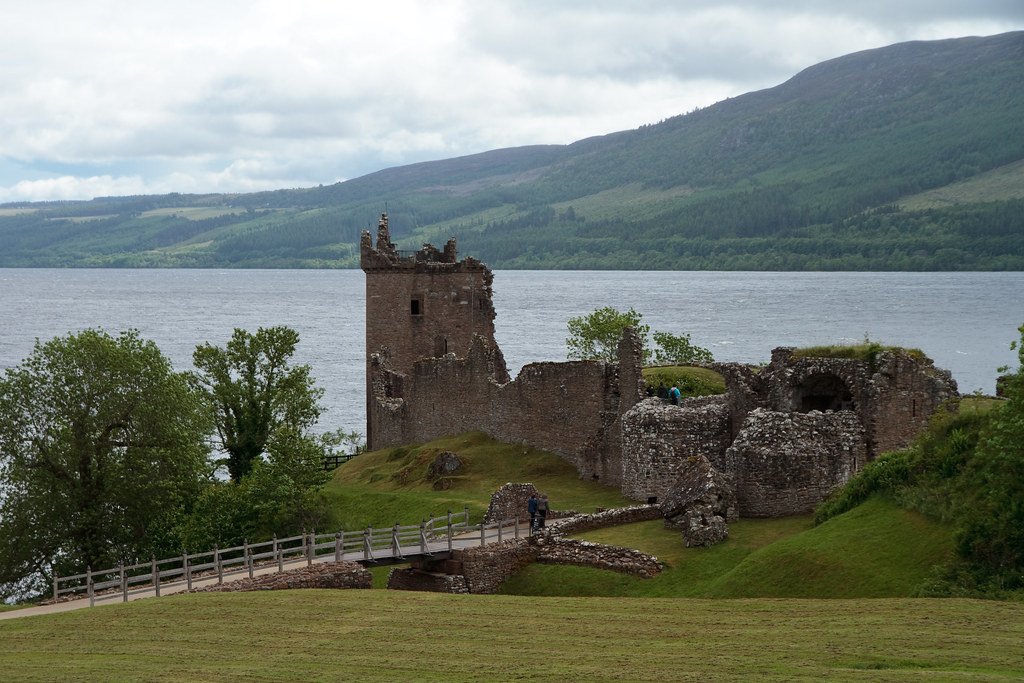
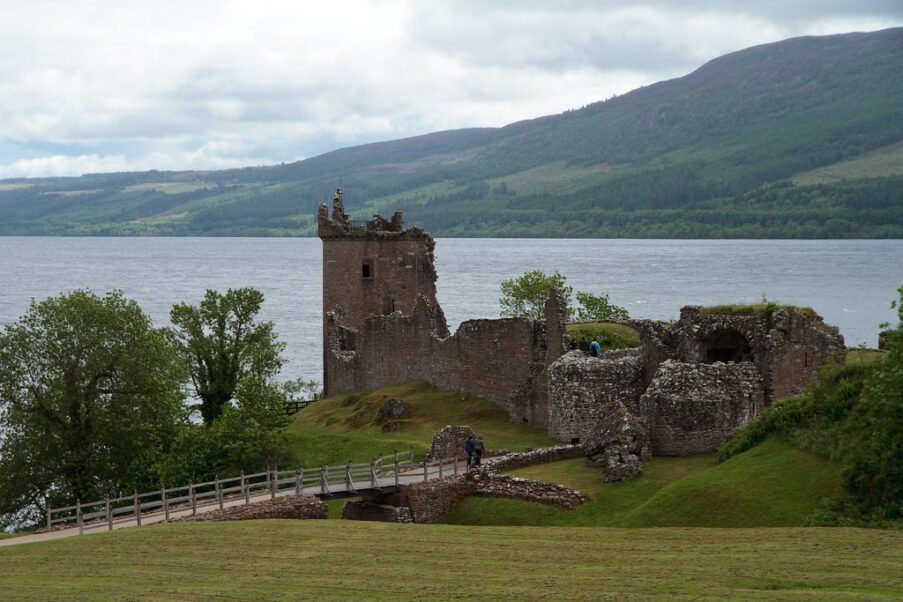
It was during a trip to Scotland, in the Summer of 1997, that I first heard of vitrified hillforts. It was near Urqhart Castle, south of Inverness. As ancient monuments close early in that country, I could only see from a distance that impressive ruined fortress overlooking the west bank of Loch Ness. I had to be content with taking telephotographs from the car park and reading the notices on boards recounting the history of the site. I was intrigued by a sentence on one of them, saying that the castle was part of “the whole group of vitrified hillforts in the British Isles”, but I had no opportunity of studying the phenomenon of vitrification de visu .

Once back in France, the question still puzzled me. I had a vague memory of having heard of vitrified hillforts in the past, but could not find the source of the information. So I tried to learn more on the subject, but soon had to bow to facts : it seemed totally unknown to archaeologists in our country, whereas, on the other side of the Channel, vitrified hillforts are referred to as quite common.

Indeed, just as the notice board by Urqhart Castle, several books I had bought on the spot often mention “vitrified hillforts” without dwelling too much on the subject. It is the case, for instance, of Scotland B.C. , in which a chapter dealing with prehistoric fortresses tackles the question:

When were Scotland’s earliest fortifications built? This is a deceptively simple question – and virtually impossible to answer 1. .Our modern appreciation of what ranks as defences may not match the view of prehistoric people, even if we had a complete record of what they built, and our judgement must depend upon structural traces and discoveries of weapons. On that basis, prehistoric society appears to have been relatively peace-loving until the early part of the first millennium BC, with one possible exception : massively stockated enclosure built in late Neolithic times at Meldon Bridge in the Borders, but even that may have been motivated by prestige rather than defence.

Towards the end of the Bronze Age, however, there are clues to suggest that society was changing and becoming more aggressive. Bronzesmiths began to produce in large quantities items such as swords and shields that can only be weapons and defensive arms rather than equipment for hunting […] At the same time, the first defensive forts were being built. Some of the earliest forts were those built with stone walls laced with timbers to strengthen them; if such a fort were set on fire, either accidentally or by enemy attack, and if conditions were right, the burning timbers caused the stone work to melt and fuse together and the wall to become distorted (these are known as vitrified forts) 2 .

Besides, vitrified hillforts are almost systematically mentioned in an important collection of books drawing up an inventory of the historical monuments of Great Britain (Penguin). Here is, for instance, what the introduction says in the paragraph dealing with the iron age :

An economic revival seems to have begun c.600 BC, with the beginning of the iron age, the working of iron, especially for ploughs, making possible a much improved agriculture. The great majority of iron age settlements now visible have been protected by defences. Some, whose defences enclosed an area up to 375 sq.m., are classified as duns, others, generally similar but larger, as forts.

These usually occupied a promontory, e.g. Brough of Stoal on Yell (Shetland), a hilltop, e.g. Craig Phadrig, Inverness, or sometimes a knoll, e.g. Dun-da-Lamh, near Laggan (Badenoch and Strathspey), or an island, e.g. Dun ant-Siamain ,nearCarinish, on North Uist (Western Isles). Their common feature is the supplementing of the site’s natural defence by a stone rampart that has sometimes incorporated a timber framework, which, if set on fire by accident or an attacker, could burn with such intensity as to fuse the stone into a vitrified mass, as at Craig Phadrig or Dun Lagaidh, near Ullapool (Ross and Cromarty) 3.

But, in France, even among archaeologists, I have met very few people who have heard of vitrification, and still fewer who have been interested by the subject. The first study in which I found the beginning of some thought on the subject was a book aimed at the general public, by Jean MARKALE, the author of many books on the Celts :

Another system is strange enough : it goes back a long way, since it was first used at the end of the bronze age, i.e. around 800 BC. It is the process of vitrification. It was long believed to be a phenomenon brought about by fire in a fortress during a battle, but in fact, this vitrification was deliberately started for tactical reasons. The core of the rampart is made of a very hard and totally solid burnt mass, made up of stones and sand, which gives the final product an aspect very close to that of thick coarse glass. This calcination could only have taken place on the spot, after some wood had been mixed with the heaped up material and set ablaze. Archaeologists admit that this is a difficult technique, but it has the unquestionable advantage of providing a thoroughly reliable rampart, as in the famous Camp de Péran, not far from Saint-Brieuc (Cötes d’Armor), which stands as a perfect example 4.

As I happened to visit Brittany during the Summer of 1998, I seized the opportunity to go to Péran. This site, unlike the numerous Oppida I have visited since, stands on a small hillock, a few kilometres from Plédran village. As one leaves the centre, road signs point either to “Roman camp” , or more strangely to “Viking camp” . On the site itself, explanatory notices, drawn up by the Péran archaeological centre (C.A.P.), refer to a “destruction of the camp by the Vikings”. Actually, several objects attributed to the Vikings were found on the site, “near the rampart”. As these came from Great Britain, especially coins minted in York around the Xth century, it was inferred – a bit hastily I think – that the site had been destroyed by the Vikings in the Xth century. What is more surprising is that none of the notices alludes to vitrification, though the phenomenon is obvious, as will now be shown.

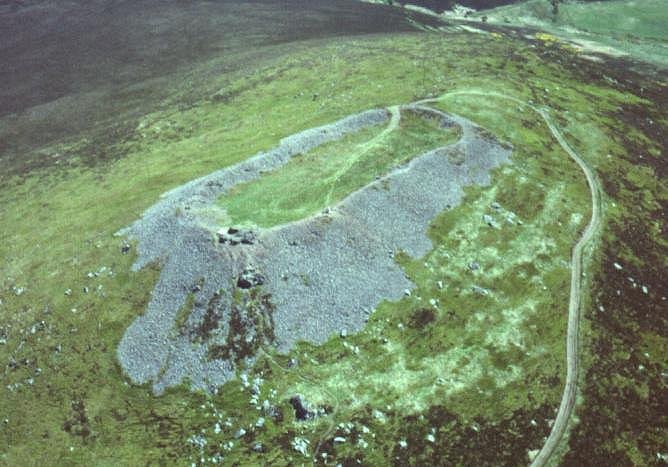
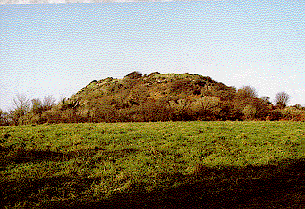
The fort on Finavon HillThe fort on Finavon Hill

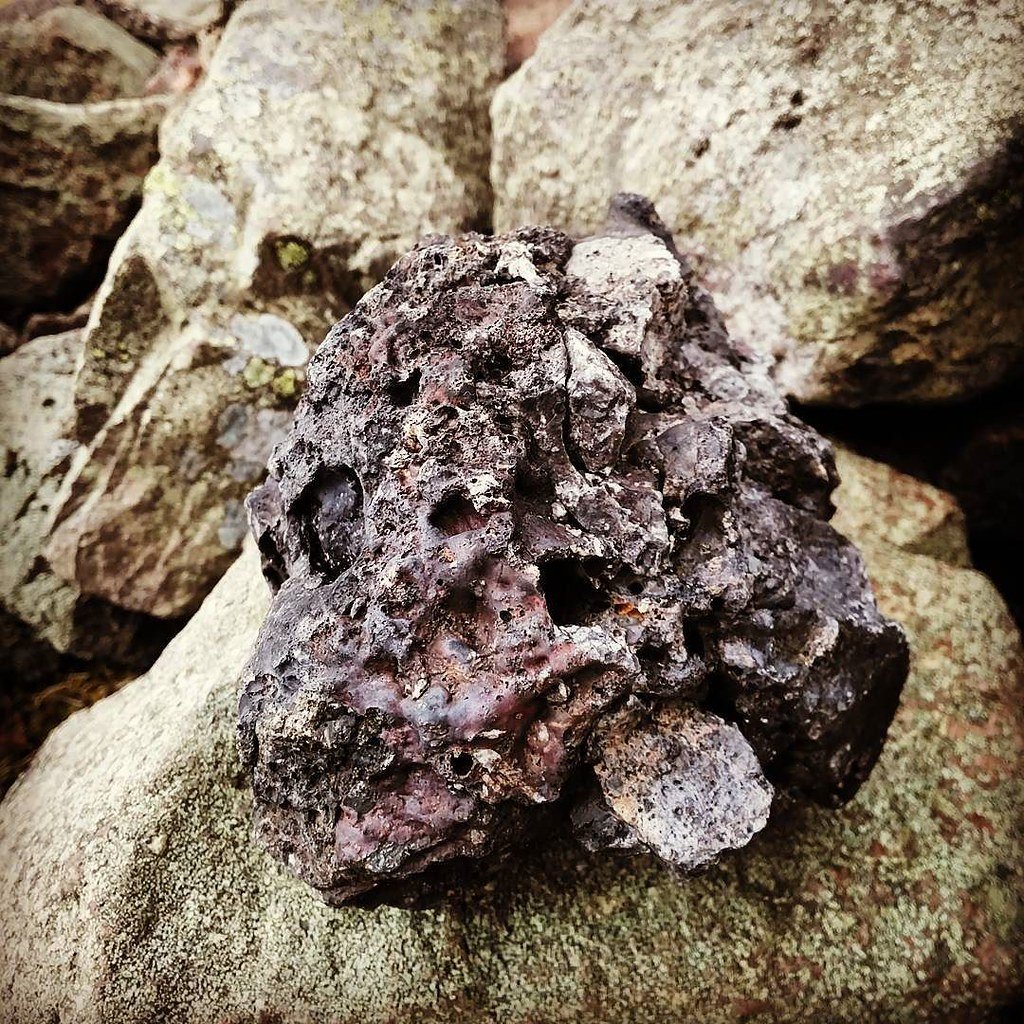
The circular camp extends about 200 metres in circumference. A levee is topped by the remains of a wall whose stones are literally melted together. Péran, in Jean MARKALE’s words, is indeed a “model of the kind”. I can testify to this after seeing other vestiges of much less characteristic hillforts. Here the vitrifying process is obvious, and is to be observed on the whole rampart. Some of the stones, of various geological origins – ‘but all of them hard (quartzites, dolerites, aplites) 5 -have even flowed, and are melted and stuck together, turning into a solidified magma recalling volcanic lava 6 , and forming a dense bulk.

One part of the rampart has been reconstructed by archaeologists using the murus gallicus technique, described by Caesar in De bello gallico, and consisting in alterning timber and stones.The roman general ascribed it to the Gauls, but we now know it dates back, at least, to the iron age M. Jean-Louis PAUTE, chairman of the C.A.P., whom I contacted to obtain further explanations about the site, kindly sent me a booklet, published in 1991, which relates the history of research in Péran and its conclusions. Whereas, as said above, no mention was made of vitrification on the spot, the booklet amply deals with the phenomenon. We must even admit that it aroused the XIXth century archaeologists’ interest in this Oppidum, and also in most of the known vitrified oppida, as I have noted since.

The site dates back to the iron age and was inhabited until the Carolingian period. According to the archaeologists who studied it, the oppidum may have been destroyed by the Vikings about 905-925 AD. They explain the vitrification of the rampart through a classical hypothesis : undoubtedly the fire in the murus gallicus , started during the storming of the oppidum, was the only cause of the vitrification phenomenon 7 . To support this statement, the authors refer to dating through Carbon 14 and archaeomagnetism. Yet it has been known for a few years that, particularly in the case of C14, one cannot totally rely on its information, especially when high temperatures have been at work : indeed it is now acknowledged that under such circumstances, dating goes to a much more recent period 8 .

But another observation causes me to use this dating cautiously. For, if the destroying of Péran dated back to the Xth century, it would be a unique case, indeed the latest vitrification known so far. And saying that what turned the rampart of Péran into a glassy magma was the burning of the inner timber is a groundless statement, certainly very useful to “explain” one of the greatest archaeological riddles, but wholly contradicted by experimentation.

One of the few French studies tackling the question of iron age rampart vitrification, Villes, villages et campagnes de l’Europe celtique 9 reveals that, for more than a century, many archaeologists have been concerned with the problem. Some outstanding ones 10 have even tried to reproduce the phenomenon with a copious supply of technical devices, but most of them had to admit their failure 11.

Toponymy, popular legends, and evenl to-day, archaeological literature profusely deal with “vitrified” or “calcined” walls. In the mass of crumbled stone ramparts, “lime knots” or melted blocks welded by heat have been discovered on about 150 sites. Most of them are to be found in Scotland and in the Massif central 12.They have aroused the research workers’ curiosity, and all kinds of theories have been put forward to explain the phenomenon.

At the beginning of the XIXth century, their origin was believed to be due to fire kindled by watchmen to send news around. Indeed at this period, authors are much preoccupied with the relationships between walled sites, and each description of a site contains reflexions on territory-watching 13. A bolder 14 theory attributes the vitrifications to lightning, which would have evinced a particular preference for prehistoric ramparts. Lastly, some authors imagine that a technique was worked out to increase the cohesion of materials. Even if realising such a project with crystalline rocks implies using a huge quantity of wood, it is easy to understand how profitable would be a process allowing to obtain a rampart stronger than a concrete wall. Conversely, the lime-knots authors like Drioton thought they had discovered inside banks set up in chalky areas, seem to possess a more limited interest.

In 1930, G. Childe managed to melt blocks during some experiment on a reconstruction site, but his choice of materials was criticised . In 1938,Youngblood showed that burning the internal wooden frame of a timbered rampart cannot bring about vitrification if fire has not been deliberately started and kept ablaze for that purpose. I. Ralston renewed the experiment in 1981 on a 9 metre long , 4 metre wide and 2.40 metre high rampart. He furnished the inside of it with horizontal intertwined beams, with their heads sticking out on the front. Several truckloads of wood were stacked in front of the facing wall and set on fire.

The temperature inside the rampart only rose very slowly. It went down every time the wind blew the flames away from the rampart. In the remains of the rampart broken up by the heat, a few vitrified fragments could be gathered. It clearly appears that, in order to obtain vitrification, one must have a strong well-kept up fire, under favourable weather conditions […]

In all the cases studied so far, the action of the fire never leaves regular systematic traces, which alone could be interpreted as proving the use of a building technique based on burning the rock 15 . Observations are always limited in space or traces are irregular. No facing wall is really welded by the fire. Moreover I. Ralston has shown that the map of vitrified or calcined ramparts quite precisely corresponded to the distribution of internally timbered ramparts, from protohistory to the Middle Ages 16 .

Then are the traces those of the attack of fortified dwellings ? The most common besieging technique before the Roman invasion consisted in riddling the rampart with projectiles to dislodge the defenders, then in setting the gates on fire before rushing in. It is hardly likely that, in the middle of the battle, the attackers could manage to keep a strong enough fire to obtain vitrification’s which have been proved to require much fuel and a favourable wind. Some Scottish ramparts are even vitrified all around 17. I am inclined to imagine that vitrification is the result of a systematic destroying of the enemy’s fortification after the place had been captured and often plundered, to emphasise the irreversible nature of the defeat.

One may regret that this interesting analysis, one of the most elaborate we have found on the subject so far, refers to no precise site 18, except in order to deny them the quality of “vitrified” ramparts (e.g. the Camp de Myard and the Châtelet d’Etaules, investigated by J.P. Nicolardot 19 in Burgundy); neither does it mention, in its bibliography, any reference study on the question.

To conclude, it appears that all the attempts made so far at reproducing the phenomenon of vitrification have failed. This is probably due to the fact that the temperature could redden the stones, but was never high enough to vitrify them, except on very small areas.

According to the geologists I have consulted 20, the vitrification of materials like granite cannot be obtained under 1000° C. Such a high temperature cannot be reached in open air, but only inside a furnace. How can we imagine that a furnace was built all around a stone rampart several hundred metres long ( Péran is one of the “small” oppida, but there exist bigger ones…) This de facto excludes any accidental fire.

Let us consider for a moment the theory upheld by some authors 21, that vitrification was deliberately caused to strengthen the whole structure. Indeed… I have myself observed that, if some sections of the ramparts have really been strengthened by vitrification, others, on the contrary, have been weakened, especially when, within the magma, lime-knots are to be found, as a result of burnt chalk. Then, instead of getting stronger, the wall collapses, leaving a wide gap in the defensive structure, thus weakening the whole ensemble .

Another theory, would be the use of a chemical product, spread on the stones, and set ablaze, thus producing a heat higher than 1000°C. There would remain to discover the nature of such a product, and to understand why our iron age forefathers should have been led deliberately to vitrify their oppida or those of their enemies.

So much for facts. No rational explanation can be provided to this day by archaeology. So, remembering that vitrified oppida, through their antiquity and location, belong to the Celtic area (even if they cannot actually be attributed to the Celts), and recalling the interesting observation proposed by Jean MARKALE about Péran , I decided to see if a closer scrutiny of Celtic mythology could reveal any new prospects.

This method of vitrification must be considered as the origin of traditions concerning the Urbs Vitraea, Care Gwtrin and other places like the Kingdom of Gorre, i.e. the “Glass Cities” that are so often alluded to in Arthurian romances, and more generally in all Irish or Breton mythological traditions . The “White Cities” of oral tradition, all of them referring to old dilapidated fortresses, are obvious memories of this otherwise thoroughly forgotten technique 22 .

If Jean MARKALE is right, if all the “glass cities”, “glass castles” and such like in Celtic legends mean ancient “vitrified forts”, then research prospects become vast indeed !

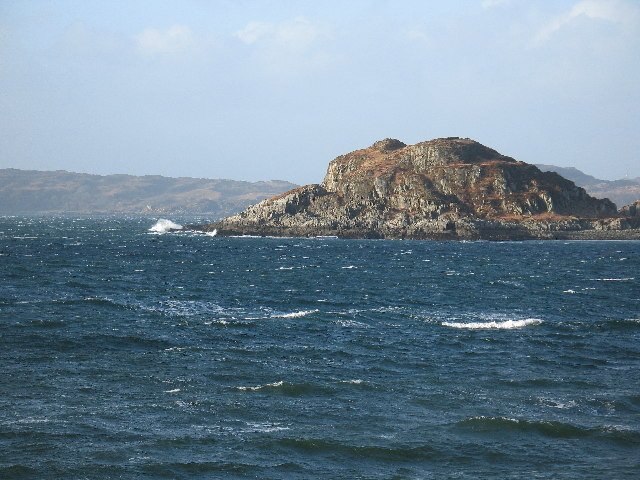
Urqhart CastleUrqhart Castle 3331” by Thorbard is licensed under CC BY-NC-SA 2.0

Let us begin with the farthest western point of the Celtic area where vestiges of vitrification’s have been located : the Isle of Tory , lying off the western coast of Ireland. This island owes its name to a tower, one of the numerous “round towers” still standing in hundreds on the Green Island (and also in smaller numbers in Scotland), and whose real use has not been determined so far. They are generally considered as dating from the earliest times AD, and referred to the creation of the first monasteries. They are supposed to have been used as watch-towers, or as safes for monastery treasures threatened by Viking raids. How, then, have they survived, when the surrounding monasteries were almost completely destroyed ? The outstanding quality of their architecture, made up of wonderfully bonded stones, could partly explain the mystery. Indeed, one of those towers so much bore upon the history of that small island that the latter was called after its name (Tor-Inis meaning “Tower Island”). Here is what I read on the subject :

The tower on Toriniz island – to-day Tory Island – so old and venerable, no longer stands as a building. However, it still survives, or at least survived during the last century, as a ruin. Archaeologists were much amazed to find that those remains were vitrified. What can have caused this vitrification ?23

Now, according to Irish mythological tradition, the Fomoire (or Fomore ) had precisely settled their quarters in that island, and from there launched their raids on Ireland. They were a mythical people of evil giants; they were both the allies of the Tuatha de Danaann (“the goddess Dana or Ana’s children”) , through complex family ties, and their enemies. Neither of those two peoples were natives. They had both come from the World’s Northern Isles, a mythical place in the far North, of which practically nothing is known. Both were endowed with huge powers which our ancestors regarded as magical, but are now familiar thanks to our technical knowledge. One of the Fomore chiefs, the giant Balor, grandfather of the “god” Lug, one of the Tuatha de Danaann lived on Toriniz. From there, he would send a powerfull beam, wich we could call nowadays a “flux of energy” across the channel between Toriniz and Ireland, to blast his enemies. Those descriptions we have of him recall a machine rather than a living creature : he is compared to a Cyclops whose only eye cast out a beam that turned his enemies into ashes. He is a frightening giant whose only eye blasts a whole army when he opens the seven eyelids protecting it 24 . That extraordinary eye had to be kept open thanks to metal hooks held up by several assistants. During one of the three battles at Mag Tured in Ireland between the Fomore and the Tuatha de Danaann, the god Lug managed to put Balor’s evil eye out of order with his own spear, which the texts call “Assal’s spear”, one of the four magical objects brought back from the World’s Northern Isles 25 . That weapon also possessed strange properties : it never missed the mark and had to be cooled down in a cauldron filled with human blood 26 .

In Les Celtes et la civilisation celtique, Jean MARKALE gives some more detail on this fabulous tool :

Lug possesses a magical spear similar to Apollo’s both deadly and healing arrows. It is called Gai Bolga 27 .It is the thunderbolt emblem. It originated from Assal, one of the World’s Northern Isles (an allusion to Hyperborea), where the Tuatha de Danaann came from. That spear possessed a venomous destroying power and, to reduce that power, its point had to be dipped into a cauldron filled with poison and “black fluid”, i.e. blood 28 . After it had been thrown – with the war-cry “ibar” (meaning “yew”) – and it had hit its target, which it never missed (“it is so worthy that it never misses the mark”), it spontaneously flew back to the god’s hand, thanks to another cry, “athibar” : “it comes back to the hand that threw it” 29.

What was that instrument ? What techniques did Balor and Lug use to wage war on each other ? Is it not strange that Toriniz Tower, the very dwelling place of the giant Balor, was vitrified ?

Since the first version of the present paper (10/12/98), I have known of RALSTON’s research on the oppida in Limousin 30 and, during the Summer of 1999, I went to the département of Creuse, to try and see several of the sites referred to in that book as bearing traces of vitrifications. I could observe that RALSTON’s work, one of the most complete inventories on the iron age fortresses in France, copiously deals with the phenomenon of vitrification.

Unfortunately, on the spot, it is often difficult to reach the sites, because of overgrowing vegetation and obvious neglect. I also had to give up visiting a few oppida I had planned to see, because of inaccurate information ( as in the case of Muraux in the village of St. Georges de Nigremont).

Other oppida, where years ago vitrifications had been reported, have been destroyed through wild urbanising and lack of control on the part of the authorities supposed to be in charge : it is already the case of Thauron, which remains wholly unprotected. During our visit, I even saw a fellow blithely demolishing a stone wall on his property which, I was informed, probably was one of the only remains of the oppidum. The other sites I visited, though not urbanised, are not better protected. This is true of the Puy de Gaudy, above Ste Feyre village, south of Guéret, the favourite walking spot of the MAIF old people’s home below, and even more of mountain-bike adepts, who will ride undisturbed over the oppidum walls.

In this département, where archaeological and historical remains are numerous, the authorities seem to do nothing to protect the sites they are in charge of (on no oppidum have I seen any mention “archaeological site”, or any prohibition!) During those visits, which were rather disappointing for the above reasons, I have observed few unquestionable vitrifications.

For instance one of the sites that was not known as the most characteristic, the oppidum of Châteauvieux at Pionnat, facing the Puy de Gaudy. Vitrifications there are remarkably genuine, but the site, besides being unmentioned, is situated in an inextricable wood. Yet I could observe the same phenomenon as at Péran : the stones were literally cemented together on their surface, some of them had melted and turned into real “lava”. On this site, the theory I read or heard about, that those vitrified stones are clinker resulting from the melting of metals in furnaces situated along the rampart, is not valid. For, at Pionnat, I understood how one can confuse certain crumbled sections of the rampart, forming a kind of vault cemented by stone vitrification, with the cul-de-four of a furnace.

This confusion is forgivable in non-specialists who desperately look for an explanation that will satisfy common sense, but it is no longer so when found in the publications of professional archaeologists. One only needs to perceive that what was mistaken for the remains of furnaces possesses none of the necessary structures to make a furnace work (air intake, etc.). We actually have to deal with a “lava bubble”, such as can be found in natural volcanic structures, except that, in the present case, we have an artificially vitrified building and not a natural phenomenon.

Since this trip to Creuse, I have of course carried on investigations which allowed me to trace other genuine vitrified forts , especially two of them in the area of the city of Roanne (May 1999) and another in the Allier department (May 2000).

I found that the extension area of those structures, which I first believed to be limited to Scotland, was much broader, since it covers a great part of the so-called Celtic era, though previous to the coming of the Celts to western Europe, since it dates back to the iron age.

Acknowledgments:

Thank you for helping in this translation to Mmes BOURDEIX, BRIVET et CUVELIER

(1 )LES CELTES (1997) suggest the date of the final Tene, that started about 125-115 B.C. for the building of fortresses with the technique called murus gallicus (p.292)

(2 )RITCHIE (1988), p.61. This hypothesis to explain the vitrification of those works, seems appealing a priori . Indeed it is taken up by most writers on the subject without further critical investigation. We will see later how it should be appraised.

(3) GIFFORD (1992), p.22.

(4) MARKALE (1997), pp.133-34. The author, perhaps because he is no archaeologist, is one of the few who attempted to draw a sincere description, and above all a clear explanation of the phenomenon.

(5) NICOLARDOT (1991), p.7.

(6) Here is yet another absurd “hypothesis” to try and explain the mystery of vitrified hillforts : volcanism. Now, on the site of Péran, as on all those I could see, volcanism provides no explanation, for the geographical areas where they lie show no sign of volcanic activity.

(7) A classical assumption but, as I said, not confirmed to this day.

(8) KOUSNETSOV, IVANOV,VELETSKY (1989).

(9) F.AUDOUZE and O. BUSCHENSHUTZ (1989).

(10) Gordon CHILDE, for ex.

(11) Let us observe that this chapter is strangely headed “Glass Castles”, without any explanation in the following text. I would probably not have noticed this point had I not previously read Jean MARKALE.

(12) My emphasis.

(13) Writers do not comment on these assumptions, and one does not know what they think of them. As for me, I find it hard to believe that one can seriously contemplate such a “hypothesis”.

(14) But, to my mind, equally unlikely.

(15) My emphasis.

(16) Let me be allowed to remark that tha author himself is not as assertive (RALSTON, 1992). Moreover, it seems that no relations of cause and effect should be inferred from this observation, since if the oppida built according to the murus gallicus technique often show traces of fire, we have seen that burning the wooden structure is not enough to vitrify the stone blocks.

(17) Which is also the case of the Camp de Péran, as I could verify.

(18) The Camp de Péran, especially, is neither named nor shown on the map figuring in the book.

(19) The same archaeologist was in charge of the Péran research.

(20) Particularly Georges NAUD, chairman of the Société archéologique d’Ardèche and curator of the Musée de la terre ardéchoise, Privas. Sample analyses are in progress at the Ecole des Mines d’Alès.

(21) MARKALE, op.cit.

(22) MARKALE, op. cit.

(23) KOARER-KALONDAN (1973), p.80.

(24) PERSIGOUT (1980), p. 40.

(25)PERSIGOUT (1980), p.184

(26)MARKALE (1997), p.354.

(27) In bolga one finds the root bolg meaning “lightning” and “sun fire”.

(28) Op.cit., p.395.

(29) MARKALE (1997) quoting R.A.S. MACALISTER, Leabhar na Gabala, poem 66.

(30) RALSTON, (1992).

Roland Comte granted a Master’degree in Political Science and is a Doctor of anthropology (EHESS, University of Paris-Sorbonne ). E-mail : rcomte2@wanadoo.fr

The Vitrified Forts of the British Isles and Europe

The Vitrified Forts of the British Isles and Europe. Mainly Scotland and Brigantia, and Ireland too.

Public fascination with vitrified hill-forts leapt from specialist journals onto living-room sofas on 16 September 1980, when Arthur C. Clarke’s Mysterious World (ITV, episode 3 “Ancient Wisdom”) devoted a seven-minute segment to Tap o’ Noth. Viewers saw archaeologist Ian Ralston ignite an 8 m-long replica rampart on an Aberdeen rubbish tip, recreating the glassy fusion that mystifies scholars. The programme pulled a mid-evening audience estimated at 12–14 million, was repeated twice in 1981, and spawned a best-selling tie-in book. Local newspapers championed “our own prehistoric mysteries”, metal-detector clubs organised fort walks, and Scottish universities reported a surge of student proposals on hill-fort studies in the early 1980s. In effect, Clarke’s show turned an academic curiosity into a mainstream talking-point and set the agenda for a new wave of experimental and survey projects. (Wikipedia, the urban prehistorian)

Where are they?

  • Scotland – the heartland: 70 + confirmed forts from Galloway to Caithness form c. 90 % of the British total.
  • England: a sparse southern fringe, and all of strong Brigantian potential (e.g. Castle Hill, Almondbury; Wincobank, Sheffield).
  • Isle of Man & Ireland: half-dozen examples such as Cronk Sumark (IOM) and Doon Castle (Donegal).
  • Elsewhere in Europe: analogues occur from Brittany to Sweden, showing that the phenomenon is not uniquely Caledonian but is densest in the Atlantic façade. (Wikipedia)

Typological shorthand

Morphological slice Typical examples Note
Contour hill-tops Craig Phadrig, Dun Deardail Walls follow summit edge.
Oblong “gateless” forts (NE Scotland) Tap o’ Noth, Dunnideer Long, straight flanks; entrance uncertain.
Coastal/Promontory forts Castle Point (Pennan), Dunagoil Cliff-edge defences on three sides.
“Nuclear” multi-bailey forts Barry Hill, Burghead Inner vitrified core plus outer earthen curtain, often reused in the Early Medieval period.

Why vitrify? — competing theories

Structural strengthening – 19ᵗʰ-century idea that fusing stones made walls harder; abandoned once tests showed vitrification actually weakens masonry. (Wikipedia)

Accidental battle fire – would need temperatures > 1 100 °C sustained for many hours; unlikely in chaotic warfare.

Deliberate destruction by victors – torching a captured stronghold as a display of dominance.

Ritual “closure” by occupants – dismantling and burning the rampart at the fort’s planned abandonment; fits cases where valuables were first removed and fire carefully stoked. (Stir Academic Repository)

Construction technique – experimental walls (Childe & Thorneycroft 1930s; Ralston 1980) showed partial fusion but proved inefficient and labour-intensive. (the urban prehistorian)

Consensus today favours controlled, end-of-life conflagrations—either celebratory or punitive—rather than day-to-day reinforcement. Ongoing micro-CT, archaeomagnetic and geochemical studies aim to pin down fuel loads, firing duration and social motive.

This page is the “collection centre” for our research into vitrified forts, covering the area largely known as the British Isles.

Close
Get Directions
'; ';
Options hide options
Print Reset
Fetching directions...

Gazetteer and Research Guide

This is the output from an ongoing research discussion aimed at understanding vitrified hill forts in the British Isles, this project is still in its early stages of development. If after reading this document you have additional information not already covered or would like to help contribute to this research by visiting and taking pictures please email our vitrified forts research team – Your input would be most welcome via comments, or our contact form.

Our site was blessed many years ago by a contribution from Roland Comte (France) – The Mystery of Vitrified Forts and a Gazeteer, Here is The original French version.

Scope of this document

This document is intended to be a comprehensive guide to vitrified forts. It attempts to explain the outcome of research to date and to help take these investigations forward. A significant part of this is an attempt on our behalf to clearly state what we believe to be the most likely way that vitrified forts came into existence. This is because to date the subject has suffered from a myriad of partial explanations which in many cases serve to confuse rather than enlighten.

Historic background

John Williams, one of the earliest of British geologists, and author of The Mineral Kingdom first described the phenomenon of vitrified forts 1777. Further reports on vitrified forts were made in 1880 when Edward Hamilton wrote an article entitled “Vitrified Forts on the West Coast of Scotland” in the Archaeological Journal. Since then vitrified forts have received varying levels of attention, there enigmatic and seemingly unexplainable existence has attracted a great many ‘odd-ball’ theories which have had the effect of stifling serious scientific debate. In his article, Hamilton describes several sites in detail, including Arka-Unskel, which he found that the rampart of local Gneiss was covered with imported felspathic sandstone in order to create the vitrified effect. This method found also in the vitrified fort of Dun Mac Snuichan, on Loch Etive.

Questions, questions.

Hamilton and Williams naturally asked a few obvious questions about the forts. Were these a means of defence? Was the vitrification the result of design or accident? How was the vitrification produced? Since that time the subject has been a debating point for Archaeologists around the globe.

Within this research note we have endeavoured to present the most likely explanation of the vitrification process, rather than confuse with a full breakdown of all the possible how’s and why’s which have been suggested. In the past archaeologists have felt themselves duty bound to present all the cases since no single explanation has been accepted by all. However this has had the effect of confusing the amateur enthusiast and has meant professional research has become bogged down with an over large set of conflicting theories.

In order to cut to the salient information, it is useful to separate out particular features of vitrified forts into common theme’s. By doing this we are able to isolate and therefore removed isolated features which would otherwise cloud our analysis.

Types of Vitrified Fort

The first thing that must be said is that the current classification seems to include just about any fort from any period which has evidence of burning. This is not a helpful state of affairs. As will be shown, although it is possible for a fire either by accident or from malicious intent to cause limited vitrification to a forts ramparts, it is clear that common factors tie together a number forts which show a significant and consistent vitrification over a large portion of their ramparts. It is this collection of similar fort types that are of interest for the purposes of this article, it is not that others forts are uninteresting, but that treating all forts the same has weakened the overall discussion.

for the purpose of this discussion we are solely interested in forts which we have categorised as Fully Vitrified since treating all forts the same when there may be a number of origins to the vitrification does not help to add clarity to the discussion.

How do you vitrify a fort?

Summary – Full Details

There have been many theories as to how vitrification has occurred in some ancient forts, ranging from the use of special chemicals to the composition of the rocks used for the forts. As a result of our research we have concluded that the in order to create a “true” vitrified rampart, the heat required is in excess of that that which would normally be the case if the rampart alone was the only fuel. Temperatures in excess of 1000 degrees Centigrade would need to be applied consistently over large areas of the wall, in close proximity for a significant period of time.

To build hot fires, one has to remember two things, it is the combination of the fuel and oxygen that is creating the fire, the best fuels present the maximum surface area to the air. We can understand the difficulty of reaching consistently high temperatures what we consider the effort required to turn iron molten – 1050 degrees, here bellows need to pump gusts of “wind” into a kiln, which is constructed to reflect the heat back into the furnace, the hottest kilns, use coal or coke, their granular composition combined with the forced air flow serve to maximize the air to fuel ratio. Clearly, the concept of a wall constructed with heavy timber beams, separated by layers of rock, reaching such extreme temperatures is difficult to imagine. It has been suggested that the correct wind conditions may serve to “fan” a fire, perhaps after the rampart had been set on fire during an attack, but it must be remember that for a furnace to reach these sorts of temperatures the fire is enclosed and the heat reflected in, an open fire stands little chance of reaching such temperatures without much greater amounts of fuel.

Given this, it is clear that vitrified ramparts are the result of a deliberate and continued effort. Information, it has been suggested that some forts used imported stone vitrified forts involved a specially constructed rampart, its stone is not easily vitrified would be covered with more suitable rock which would melt onto the base rock in a similar way that enamel melts into clay to form pottery. Additional chemicals such as sea salt may have also been used to increase the temperature of the process and to act as a ‘flux’ to help the rock join. Wood was used as the main fuel, perhaps Oak or Yew which were widely available and have a high natural burning temperature.

However, these two factors of there own will not produce vitrification to a satisfactory level. In order to consistently achieve a satisfactory level of vitrification the heat produced by the fire must be concentrated and directed towards the ramparts. It is therefore suggested that during their construction/modification the rampart will have been shrouded by a wood and turf structure, which turned the rampart into the interior of a kiln. To date no evidence of such a structure exists but the limited excavations performed on vitrified sites and the nature of vitrification mean that this is not surprising. In all, the following factors have lead to our conclusion:

(1) Many of the Primary rocks, particularly the schists, gneisses and traps, which contain large quantities of potash and soda, can be readily fused in the open air by means of wood fires—the alkali of the wood serving in some measure as a flux. (2) The walls are chiefly vitrified at the weakest points, the naturally inaccessible parts being unvitrified. (3) When the forts have been placed on materials practically in-fusible, as on the quartzose conglomerates of the Old Red Sandstone, as at Craig Phadraic, and on the limestones of Dun Mac Uisneachain, pieces of fusible rocks have been selected and carried to the top from a considerable distance. (4) The vitrified walls of the Scottish forts are invariably formed of small stones which could be easily acted upon by fire,whereas the outer ramparts where used, are not vitrified and are built of large blocks. (5) Many of the continental forts are so constructed that the fire must have been applied internally, and at the time when the structure was being erected. (6) Daubrée, in an analysis which he made on vitrified materials taken from four French forts, and which he submitted to the Academy of Paris’ in February 1881, found the presence of natron in such great abundance that he inferred that sea-salt was used to facilitate fusion.

Why vitrify a fort?

Summary – Full Details

As we have already seen, vitrification was a deliberate and planned act on behalf of the forts builders, Why did they do it? Fusing rock in this way makes a rampart brittle rather than stronger and we must conclude that vitrification was done for reasons other than to create a more defensible structure.

There have been many theories as to why vitrification has occured. this will probably be a question which can never be totally resolved, however the understanding on how vitrification was achieved enables use to propose the most likely reasons as to why it was done.

Based on the evidence to hand the most likely reason for vitrification must therefore be that it was part of a ceremonial or religious act, perhaps as dedicating the fort to a deity or to inspire the natives in time of war. A further reason could be to commemorate a significant event in the tribes history pertinent to the fort, such as a major defeat or victory.

Further work needs to be done on the classification and understanding of the features of vitrified forts and also the culture and lifestyle of the Scottish pre-historic peoples before a more clear understanding of this aspect can be achieved.

Georgraphic Distribution

Summary – Full Details

One of the great mysteries of classical archaeology is the distribution of vitrified and their apparent concentration in Scotland. Although very limited instances of vitrified forts have been discovered in various locations throughout the world the sheer number of vitrified forts in Scotland indicates the presence of a specific cultural phenomenon rather than a random distribution.

Vitrified ruins have been found Scotland, England, Ireland, France, Turkey, Iran, Germany and elsewhere, however, out of some 100 forts identified throughout the world, more than half are located in Scotland, and most of those are north of the Forth – clearly a highly concentrated feature of sufficient units to indicate a cultural difference rather than an occurrence due to happenstance. Many feel this broadly means that the occurrence of vitrified forts outside of Scotland simply shows evidence of links between Scotland and other area of the world. Another thought is that vitrification was a technique imported to Scotland and adopted on a wide scale.

Attempts to re-create vitrification

So far only limited experimental research has been done to re-create the vitrification process, usually in order to prove a particular theory and often with dubious results. However these albeit limited experiments can give further evidence of the determined effort required to produce a truly vitrified fort.

A team of chemists on Arthur C. Clarke’s Mysterious World subjected rock samples from 11 forts to rigorous chemical analysis, and stated that the temperatures needed to produce the vitrification were so intense–up to 1,100°C–that a simple burning of walls with wood interlaced with stone could not have achieved such temperatures.

Nevertheless, experiments carried out in the 1930s by the famous archaeologist V. Gordon Childe and his colleague Wallace Thorneycroft showed that forts could be set on fire and generate enough heat to vitrify the stone. In 1934, these two designed a test wall that was 12 feet long, six feet wide and six feet high, which was built for them at Plean Colliery in Stirlingshire. They used old fireclay bricks for the faces and pit props as timber, and filled the cavity between the walls with small cubes of basalt rubble. They covered the top with turf and then piled about four tons of scrap timber and brushwood against the walls and set fire to them. Because of a snowstorm in progress, a strong wind fanned the blazing mixture of wood and stone so that the inner core did attain some vitrification of the rock.

In June 1937, Childe and Thorneycroft duplicated their test vitrification at the ancient fort of Rahoy, in Argyllshire, using rocks found at the site. Although this experiment was intended to prove that vitrification was a result of the ramparts catching fire during an attack, in fact it proved the opposite, for it was pointed out that in order to achieve the very limited vitrification in evidence they had to specially design their rampart, used more internal wood than was known to be the case for hill forts and use much more wood than would be normally attached to the ramparts and surrounding area.

Dating of Vitrified Forts

The dating evidence available for vitrified forts covers a very wide spread – 700BC – 900AD. This is not very helpfull in attempting to understand the environment in which vitrification has taken place.

Clearly the practice of classifying all forts with any extent of burning does not help, since a fort could feasibly be subjected to all manner of accidental fire damage at any time after it was first built and does not truly represent the vitrified forts of interest here. In a lot of cases the life of the fort has been much more complex than the single event of vitrification, with occupation evidence occurring possibly many years prior to and/or after the vitrification took place.

In many cases it may be that the act of vitrification itself did much to remove dating evidence at the site and it is likely that a number of dates currently available may be due to MIS-interpretation of earlier or later use of the fort.

Conclusion

It is doubtful that a full explanation of vitrified forts will be obtained, In prehistoric northern Scotland, either invented or imported from elsewhere a way of life developed which meant that the local tribes increasingly saw vitrification as the desirable status for the internal ramparts of some of their fort-like structures. Vitrification took a great degree of planning and involved the collection of a large quantity of wood and other materials in order to create the desired effect. It is likely that a super-structure will have been erected around the rampart which had the effect of concentrating the heat onto the rampart so as to ensure an even application of the extreme temperatures involved. In some cases, where the local rock would not easily vitrify imported rock such as sandstone was brought in and used to provide a melted frontage to the rampart.

Vitrification could have many reasons for being, it is suggested that these forts were created either for ritual or ceremonial purposes rather than for any defensive measure, it may be that a fort could be ‘dressed’ by vitrification ready for battle, but this vitrification was not specifically intended to strengthen the defences of the fort.

The culture which began vitrification in Scotland seems to have spread southwards and it is likely that the few examples in England and Ireland belong to Scottish tribes who either invaded or ‘helped out’ their distant neighbours in times of conflict.

The date that vitrification existed is currently thought to span from 600BC to 100AD however it may be that a narrower timescale can be determined in future.

Classification of Vitrification – Full details

As part of this research exercise, it has been noted that a full classification of the features of vitrified forts has not so far been attempted, this has reduced the extent of analysis that can be done with the information currently available. Here we have begun to identify those features which can be usefully classified. It is hoped that ultimately these can be applied to all vitrified forts.

Vitrified Forts Reports

No post found

Thanks

Many thanks for input from TMA and the other Internet based archaeology forums and sites.

AUTHORITIES.—John Williams, An Account of some Remarkable Ancient Ruins (1877); A. Fraser Tytler, Edin. Phil. Trans. vol. ii.; Sir George Mackenzie, Observations on Vitrified Forts; Hibbert, Arch Scot. vol. iv.; J. MacCulloch, Highlands and Western Islands (1824), vol. i.; Hugh Miller, Rambles of a Geologist (1858), chap. ix.; Sir Daniel Wilson, Archaeology and Prehistoric Annals of Scotland (1851), vol. ii.; J. H. Burton, History of Scotland (1867), vol. i.; R. Angus Smith, Loch Etive and the Sons of Uisneach (1879); J. Anderson, Scotland in Pagan Times (1886); C. MacLagan, The Hill Forts of Ancient Scotland; Thomas Aitken, Trans. Inverness Scientific Soc. vol. i.; Charles Proctor, ‘Chemical Analysis of Vitrified Stones from Tap o’ Noth and Dunideer (Huntly Field Club); various papers in Proceedings of Soc. A ntiq. Scot. (since 1903 The Scottish Historical Review) and Proceedings of Royal Irish A cademy;

R. Munro, Prehistoric Scotland (1899); G. Chalmers, Caledonia (new ed., 7 vols., Paisley, 1887—94); Murray’s Handbook to Scotland (1903 ed.); Leonhard, Archiv für Mineralogie, vol. i.; Virchow, Ztschr. für Ethnologie, vols. iii. and iv.; Schaaffhausen, Verhandlungen der deutsch. anthrop. Gesellschaft (1881); Kohl, Verhand. d. deutsch. anthrop. Gesel/schaft (I883); Thuot, La Forteresse vitrifiée du Puy de Gaudy, &c.; De Nadaillac, Les Premiers Hommes, vol. i.; Mimoires de la Soc. Antiq. de France, vol. xxxviii. Hildebrand, De forhistoriska folken i Europa (Stockholm, 1880); Behla,. Die vorgesch-ichtlichen Rundwalle im östlichen Deutschland (Berlin, 1888) Oppermann and Sehuchhardt, Atlas vorgeschichtlicher Befesisgungen in Niedersachen (Hanover, 1888—98); Zschiesche, Die vorgeschichtlichen Burgen und WaIte im Thuringer Zeniralbecken (Halle, 1889); Bug, Schlesische Heidenschanzen (Grottkau, 1890); Gohausen, Die Befestigungswe-isen der Vorzeit und des Mittelalters (Wiesbaden, 1898).

Guide – Mining Glossary

Mining Terms

Adit or Drift

A tunnel driven from the surface underground or driven between seams. Used for pumping, transport, ventilation and

Afterdamp

Description given to the gases (noxious) remaining in a mine after an explosion, usually with a high content of Carbon Dioxide

Anvil Stone

In early mining activities, ores were crushed by placing them on a flat anvil stone and hitting them with a hammer stone.

Air gate

The return roadway for stale air from the face to the surface.

Anthracite

Coal which is high in carbon with a small percentage of volatile matter

Bank

The surface of the mine, usually referring to the entrance to the pit shaft.

Banksman

The colliery official responsible for overseeing the loading and unloading of the pit cage at the surface (see Bank). The banksman was also in charge of signalling

Barrier

A portion of coal seam left intact between two collieries

Basset or Basset Edge

The place where a seam surfaces usually as a result of geological action on the strata.

Bell Pit

As the name suggests the mining operation produced a bell shaped pit. This was an early form of mining comprising of a shallow shaft into a seam. Coal was extracted and pulled up to the surface in baskets via a rope. A bell pit was complete when the pit was in immanent danger of collapse. A new shallow shaft would be sunk and the process started again. There will be many bell pits in an area.

Blackdamp

A mixture of carbonic acid gas and nitrogen

Blower

A discharge of firedamp under extreme pressure. (see firedamp)

Bords

The ‘gap’ left by mining coal in a ‘bord and pillar’ method. Describes the gap between pillars left to support the roof after mining. (see pillar)

Bords or stalls were a rectangular area of coal excavation and the pillars were the square columns of coal left for support. Usually worked in the shallow wet seams. The pillars were removed many years later by further mining operations.

Brattice

A division created in a mine shaft or tunnel which is used to control or direct the airflow in the mine. One side of the brattice would be the air flow intake and the other, the return

Broken (in the..)

Working ‘in the broken’ was a term used to describe actions in an existing (open) section of the mine as opposed to working on a new face or seam

Checkweighman

This was a very important job as he represented the interests of his fellow workers to the colliery management by checking the weight of the tubs of coal coming out of the mine. It was his job to keep a check on minerals extracted and to negotiate the true weight of coal coming out of the mine for which the men got paid. Management claiming a ton of coal could be between twenty one and twenty five hundredweight dependent on the amount of slack and small coals it contained, which they would not pay the miners for. The Checkweighman was elected by and financed by the miners.

Corf

A large wicker basket used to transport mined coal to the pit head and then to the surface. Term also sometimes used to describe the wheeled ‘tubs’

Datallers

Term used to describe workers paid strictly on a ‘Day rate’ basis

District

A number of working areas close together but in a separate portion of the coal to be worked

Downcast

The shaft down which fresh air passes into the workings of the mine. Most commonly also used as the winding shaft

Firedamp

The Miner’s description for the naturally occurring ‘marsh gas’ (methane) which results from the decay of vegetable matter. In certain critical volumes, mixed with air, firedamp is highly explosive.

Fire Setting

A very early extraction technique involving setting fires against ore laden rocks then rapidly cooling them with water. The rock fractures and is easily hammered off.

Furnace

A fire placed at the foot of the upcast shaft, the gas laden air from the mine would rise with the heat and create a circulatory ventilation process. Replaced in later years with powerful fans

Gob, Goaf or Goave

An area of the mine which has been previously mined and then used as a depository for waste from the workings. Such areas were normally left to collapse under the natural pressure of the roof

Gate

An underground roadway. From Old English ‘gate’ meaning path or footpath.

Hammer Stone

The earliest type of hammer, a hand size stone cobble perhaps 15cm long used to hit a wedge or chisel in order to separate rocks.

Hutch

Term used for a box container, later fitted with wheels, for the transportation of the coal to the surface (predominately a Scottish term)

Inbye

Direction of travel towards the centre of the mine

Main gate

The intake roadway taking fresh air through the mine and housing the conveyors for supplying the shaft with coal.

Onsetter

The official whose duty it is to ensure that the cage is properly loaded and unloaded at the foot of the shaft

Outbye

Direction of travel away from the centre of the mine

Overman

The Underground Manager (Oversman in Scotland)

Pillar

A pillar of coal left to support the roof above the workings

Putter

A man (or boy) who conveyed the tubs of coal from the face

Road

A main underground thoroughfare

Royalty

An area of coal leased to a colliery by the landowner

Shaft

Vertical entry to a mine latterly using powered winding gear and cages to supply, ride men and materials and take out coal. Formerly using a windlass or other manual means of winding. Usually sited in pairs. (Upcast and Downcast). Since Hartley Colliery Disaster 1862.

Staple Shaft

A vertical shaft in a mine which does not connect with the surface, usually between seams to prove coal measures.

Stoopings

Regional term for pillars

Supply gate

The roadway used to transfer materials to be used in mining operations.

Tail gate

As air gate.

Timbermen

The men employed to cut and install support timbers

Trapper

Person employed to open and close ventilation doors to ensure uninterrupted flow of air

Upcast

The shaft used, in conjunction with a furnace (or later, a fan) through which the expelled air (and gases) from the mine travel to atmosphere

Viewer

A mining engineer

Waste

Another term for Gob or Goaf

Whimsey Engine, Engine, Whim. Whim Gin.

Was a term first applied to a windlass and then to whim gins (Horse driven winding device). By the early 19th Century it was usually applied to steam winding engines (Fire Engines).

Guide – Bronze Age Mining

Mining in the Bronze Age

In the last twenty years or so, some thirty copper mining sites of Bronze Age date have been identified. This has allowed us to create a reasonably accurate picture of the tools and techniques used during the extraction of copper ores in this distant prehistoric period.

It is only recently the date of such “old Man’s” workings has been verified with carbon dating, prior to this, antiquarians of the past tended to point to a Roman origin for these works.

One of the key sites has been the Munster mines in north central Wales. Here carbon dating of charcoal deposits found in mining spoil in galleries and surface dumps proved the Bronze Age date, these were the remains of Fire Setting.

It appears that Bronze Age miners exploited visible outcrops of ore. These non ferrous ores where subjected to fire setting, this technology was still in use in the nineteenth century, fires were lit against the surface of the ore, which was then rapidly cooled by the application of water, this caused the rock face to crack so allowing the easier reduction of the ore by hammering.

Hammer stones are often the only visible remains from these very early mines, here natural hard stone cobbles of a handy size are bruised at the ends from use, often they have shallow pecked grooves around their central girth either to secure rope or as a result of hammering. Such cobbles can acquire percussion bruising at any date and on their own cannot form conclusive proof of early mining activities.

The natural occurrence of copper ores, along with tin, lead and zinc in the British Isles tend to be restricted to the Pre Triassic date strata, these are today well known and mapped, although there os also the probability of an even larger number of ore sites available to the Bronze Age peoples, sites that may have been worked out by the time historic mining activity allowed the mapping of ore deposits.

Process

Resources Used

Evidence Remains
Mining Activities
Extracting ore: Fire setting.
Fire wood stocks.
Charcoal.
Hammering: Breaking off ore fragments.

Hard stone cobbles, bone and antler points and wedges.

Discarded hammer stones.
Removal of rock from mine.
Wood for tools and containers.
Organic items in suitable condition.
Surface processing activities close to mines
Ore Dressing: Crushing and selecting copper minerals.
Hammer stones and anvil stones.
Waste Heaps of non-copper minerals and rock fragments.
Ore Concentration: Fine crushing of copper minerals.
Hammer stones and anvil stones.
Discarded hammer stones and anvil stones.
Roasting: to reduce sulphide ores only.
Fire wood stocks.
Hearths, charcoal.
Smelting: Ore mixed with charcoal, heated in furnace producing metallic copper.
Charcoal prepared from selected wood, clay for furnace wall.
Charcoal, slag, burnt and fused clay, run-copper.
Workshop activity, close to or distant from mine.
Casting: Collected metallic copper in crucible melted in a furnace and poured off to produce a ‘cake’ or ingot.
Hardwood charcoal, refractory clay for crucible and furnace.
Charcoal, furnace and crucible fragments, metal splashes.

Guide – Mining

Guide to Mining

This section illustrates the history of mining and aims to give sufficient information for a researcher to be able to recognise mining features and to be able to identify the periods of working on a site. Mine works are an extensive subject, complicated by the use of different terms for similar features, depending on the type of mine and the region under review.

Guide – GPR

Archaeology Techniques

Ground Penetrating Radar (GPR)

Ground Penetrating Radar (GPR) is a variation on conventional radar, rather than into the air, a radio signal is directed into the soil and this is reflected by underground structural variations. It can be very good at detecting the structures of buried masonry structures as well as pits and in some cases artefacts.

Radar was famously developed for military purposes during world war two, and has been adapted for a variety of other purposes, including location of defects in concrete structures. GPR has proven very useful to archaeology where there are voids and substantial deeply-stratified masonry remains. It is particularly valuable on urban sites, ditches, cave structures, ancient mines or large landscape features such as dry river channels, but it is generally of less use in the softer and more finely-differentiated types of deposit encountered on many rural archaeological sites.

Description

High frequency pulsed electromagnetic waves (generally 10 MHz to 2,000 MHz) are used to provide information on buried features and remains. The wave energy is directed into the ground is reflected back to the surface from the edges of the features being scanned. The echoed signals are collected by the GPR equipment and the resulting data can be interpreted to show a map of the buried features and artefacts. The resolution of the scan and the depth of penetration vary depending on the wavelength used.

Integration of the GPR data with other surface geophysical methods, such as seismic, resistivity, or electromagnetic methods can provide a detailed map of the buried features, and a skilled interpreter can often conclude the exact size, nature and composition of the archaeological feature prior to excavation.

Increasingly, archaeological investigations use a combination of geophysical methods to improve the overall accuracy of the survey. Ground penetrating radar is a widely accepted technology for characterizing and imaging subsurface conditions.

Operation

A GPR survey is carried out by pulling a radar scanner across the ground, typically on a wheeled trolley. Readings are taken across a survey grid and then downloaded and plotted.

GPR uses high frequency pulsed electromagnetic waves typically from 10 MHz to 2,000 MHz. The electromagnetic wave is radiated from a transmitting antenna which is generally placed in direct contact with the ground and is designed to focus all the waves into the ground. The waves travel through earth at a rate which is determined by its electrical properties. The wave spreads out and travels downward, if it hits a buried object or change in soil composition, then part of the wave is reflected back to the surface, the extent of the reflection is proportional to the change in electrical characteristics of the buried materials. The rest and the wave energy continues to travel downward, further reflections may be generated as other objects or boundaries are passed through.

The wave reflection is captured by the GPS antenna, and can be recorded on a storage device for later interpretation. Often, the GPR data is one shown as signal versus amplitude, and is referred to as a trace. A single GPR trace consists of the transmitted energy pulse followed by pulses that are received from reflected waves, these are known as layers. A scan is a trace where a colour or grey scale has been applied to the amplitude. As the antenna(s) are moved along the survey line, a series of traces or scans are collected at discrete points along the line. These scans are positioned side by side to form an underground display profile.

GPR Components

GPR equipment consists of a radar control unit, transmit and receive antennas, and a suitable data storage device. The radar control unit generates trigger pulses to the transmitter and receiver electronics in the antennas. These pulses allow the antenna electronics to generate a sampled waveform of the reflected radar pulses.

The transmit antenna generates the pulsed wave and directs it into the ground, the receive antenna picks up the reflected pulses and passes these back to the control unit, which converts this information into signals suitable for logging.

Use of a specific antenna is determined by the required results. A GPR will normally come with a range of antenna, which allow for a range of frequencies to be used, typically these will range from 10 to 2000 MHz. Higher frequency means better resolution, but with more significant electromagnetic wave attenuation in the environment, resulting in lower sounding depth; and vice versa – lower frequency may lead to a larger Penetration Depth at the sacrifice of poorer resolution. Lower frequency operation produces larger initial insensitivity area (“blind” zone) of a GPS.

Comparison of frequencies used and typical responses

Frequency range
2 GHz
900 MHz
500 MHz
300 MHz
150 MHz
75 MHz
38 MHz
Resolution, m
0.06-0.1
0.2
0.5
1.0
1.0
2.0
4.0
“Blind” zone, m
0.08
0.1-0.2
0.25-0.5
0.5-1.0
1.0
2.0
4.0
Depth, m
1.5-2
3-5
7-10
10-15
7-10
10-15
15-30

GPR systems are digital devices and logging is done with digital devices for post survey analysis. Many data loggers also come with display electronics and allow in the field data manipulation. Often this is done with a laptop computer. In order to display the data for interpretation, it must first be filtered to remove noise, it is normal to store the raw data so that a variety of filter options can be tried later.

Operating Modes

The most common way of using a GPR as the reflection profiling method. Here, a radar wave is transmitted, received and recorded each time the antenna has been moved a fixed distance across the ground. It should be noted that GPR can also be used on other surfaces such as water.

Another way of using GPR is in three-dimensional operation, which collects data samples at closer intervals of less than 1 meter. This result in very large amounts of data which can be manipulated to three dimensional model of the survey area.

Transillumination is a rare but sometimes effective way of using GPR, it involves placing the transmitter and receiver on opposite sides of the material to be surveyed and can provide very accurate measurements of mines and other shafts.

Data Display and Interpretation

Three buried objects in a two dimensional display

In order for the correct interpretation of underground features it is essential that the data is displayed in a way that easily facilitates this. There are three of displaying the results of a GPR survey – 1) a one-dimensional trace, 2) a two dimensional cross-section, and 3) a three-dimensional display.

One-dimensional traces

The wiggle trace (or scan) is the building block of all GPR survey data. A single trace can be used to detect objects (and determine their depth) underground. By moving the GPR antenna over the ground and recording traces at a fixed spacing, a recording of several sections is obtained.

Two-dimensional cross sections

Wiggle trace displays are often impractical to display due to the number of traces required to make up meaningful data and scan displays have become the standard form of two dimensional display of GPR data. A scan display is created by assigning a colour to amplitudes displayed on the trace.

Three-dimensional displays

Three dimensional displays are created when the GPR traces are recorded at different positions ground surface. Data can be recorded along profile lines, in the case of continuous recording, or at discrete points along the surface in fixed-mode recording. Once 3D block views have been produced, they can be observed from a variety of viewpoints and ways, including solid block or block slices.

Creating a good three dimensional view is a very useful way of analysing the results of a GPR survey, but takes the most processing power and time. Careful choice of colour coding scheme and noise filtering is an important part of the image generation process.

Guide – Resistivity

Introduction to Resistivity in Archaeology

Resistivity is one of the primary geophysical methods used to explore archaeological sites. By measuring the electrical resistance of the soil, resistivity surveys can help identify buried features such as walls, ditches, and foundations, even if those features are not visible from the surface.

This technique works on the principle that different materials in the ground have different resistive properties. For instance, materials like stone or brick typically have lower electrical resistance than the surrounding soil, making them detectable through resistivity measurements.

How Resistivity Surveys Work

During a resistivity survey, two or more electrodes are placed on the surface of the soil. A current is passed between the electrodes, and the resistance of the soil is measured. Variations in resistance can be used to infer the location of buried features.

  • Wenner Array: This is the most common setup for resistivity surveys, using four electrodes in a linear array. It’s especially useful for detecting linear features like ditches or roads.
  • Dipole-Dipole Array: This configuration uses two pairs of electrodes, helping to detect more complex features like buried structures or walls.

Advantages of Resistivity in Archaeology

  • Effective for large areas: Resistivity surveys can cover large areas quickly, making them ideal for surveying extensive sites.
  • Detection of structural features: It’s particularly effective for detecting buried walls, foundations, and ditches, which are often difficult to see through other geophysical methods.
  • Complementary to other methods: Resistivity surveys can be combined with magnetometry and GPR for a more complete picture of the site.

Limitations of Resistivity

  • Soil conditions: The effectiveness of resistivity surveys is highly dependent on soil moisture. Very dry or waterlogged soil can significantly affect the accuracy of measurements.
  • Depth limitations: Resistivity can struggle with deep or heavily compacted features, especially in areas where the buried objects are deeply buried or in heterogeneous soils.
  • Interpretation challenges: Like magnetometry and GPR, resistivity data requires careful interpretation and a deep understanding of the specific conditions of the site.

Key Resources and Further Reading

In depth exploration

The electrical resistance of the Ground is almost entirely dependant upon the amount and distribution of moisture within it. Buried remains affect this distribution and can be detected with instruments. Stone, for example, is more moisture resistant than a clay subsoil or the filling of a ditch. These resistivity differences can be detected and when overlaid on a map will often give a plan of buried remains.

Resistivity survey methods have been used to detect both natural and archaeological features since the techniques discovery in 1946.

When one encounters a soil resistivity survey in progress, several thoughts spring to mind. How can objects deep under the ground be detected by electrodes inserted only a few centimetres? And why are four (sometimes five) electrode probes needed? Do differing types of soil affect the precision of the readings?

This guide aims to provide sufficient background information to allow the lay person to understand the basic principles of resistivity survey for archaeology.

First Principles

Those who remember physics lessons in school may remember that when an electrical voltage is applied between the ends of an electrical conductor such as wire, a current flows through it; the size of the current depending on the resistance of the conductor. The symbol for resistance is R, measured in ohms (often represented by the Greek letter omega).

Water, in its natural state, is an insulator. However, with a little salt added, it soon allows current to flow. Chemicals which have this effect on water are known as electrolytes. The resistance of soil is almost entirely dependant on its water content and the electrolyte “mix” it contains. Most of its other components, such as stone, are largely insulators. Buried wood generally tends to attract water and so reduces the resistance in that area.

Resistivity is a uniform measure which allows the resistance of different substances to be compared. It is defined as the resistance of a cubic meter of material when a 1 volt charge is applied between the two opposite faces of the cube. The unit of resistivity is the ohm metre, its symbol is the Greek letter rho.

The resistivity of soil can vary from 1-10 ohm-metres; porous rocks 100-1,000 ohm-metres and non porous rocks anything from 10k to 10m ohm-metres.

Contrary to how it may first appear, current does not flow through soil as a direct path. Current flowing between two electrodes in soil will spread out into a myriad of paths rather like the force bands surrounding a magnet. The total resistance is a sum of the resistance offered down each path. It can be seen therefore that a ditch cut through a rock base will show lower resistance in surface measurements than the natural soil and rock layer around it. In fact, the lower the resistance the deeper the current will travel – due to the like charged particles repelling each other, thus causing a wider spread of current.

Technically, resistivity measurements could be made using a household resistance meter. A calculation would be required to work out the resistivity and indeed some of the first resistivity devices used by archaeologists were based on an electrician’s “Megger” – a device normally used to certify domestic electricity circuits. However, due to design limitations these devices are generally unsuitable for soil resistivity measurement.

Measuring Soil Resistance

Measuring the resistance of soil presents us with problems. The electrodes applying the current have a small contact area compared to the volume of ground to be measured. At its surface soil tends to be dry, thus providing a poor contact medium. These effects create a much higher resistance in the immediate area of the electrodes, which would tend to cancel out any reading from the ground in between.

The solution to this problem was found by creating a probe with four electrodes. Known as the Wenner system, these are placed at equal distance in a line – the outer two apply the current, the inner two measure the voltage of the ground. These two measurements – voltage and current – are used to calculate the ground resistance (R=V/I).

In addition to this a high impedance measuring circuit helps take into account variations in surface contact conditions. An AC circuit is used as DC current would effectively turn the soil into a battery and mess up the readings. A further refinement uses a phase-sensitive rectifier to cancel out other interference.

Types of instruments

Manual Balance Instruments

These early instruments used an on-board dial to allow the resistance to be matched and noted; often the probes were pushed in individually. In some cases a rotary switch and a five probe design allowed a measurement to be taken each time a single probe was moved. Often two skilled operators were required.

Automatic Instruments

In general, manual balance systems have been consigned to the past, thanks to electronic devices such as data loggers which automatically sample and store the measurements, and the creation of a probe ‘cradle’ which allows an individual to survey a field at near walking speed.

Data Loggers

With a data logger, every time the probe cradle is inserted into the soil, a button is pressed to take a sample. The data logger – an electronic device attached to the cradle – takes the resistance readings and stores them in sequence.

Later, either on site or in the office, these samples can be plotted against a map to provide a clear picture of the resistivity changes of the subsoil, often giving feature markings so clear that little confirmation excavation is needed.

Laptop Computers and Beyond

The advent of the laptop and sub-laptop computer, together with the ability to provide data logging and sampling onboard, will ultimately create a cradle capable of giving a “live” display of the underground resistance topology. The technology for this advance exists currently, but will need a little development before it can be realised.

Resistivity for Archaeology

A feature of high resistance buried in the ground will cause the resistance of the overall local area to increase, this is known as a “positive anomaly”. Conversely, a feature such as a rock cut ditch will lower the overall resistance and is known as a “negative anomaly”.

In the early days it was assumed that based on the above, features such as stone foundations and walls would always give high resistivity readings and therefore be positive anomalies. However experience has shown that whilst this can be the case, often other factors such as the features geometry, associated deposits, soil moisture content and electrode configuration can cause complications to this rule.

However, a significant amount of research effort has created a range of designs which offer a robust and reliable surveying tool.

Electrode Configurations

The first experiments with soil resistance were carried out by Frank Wenner in 1916. His original four electrodes in a line configuration with two current electrodes to apply power (C1,C2) and two potential electrodes to measure resistance (P1,P2) has been adopted and modified by archaeologists based on the results of extensive testing.

During testing, it became clear that for some features the Wenner and related probe configurations were not effective at detecting some types of underground features. Narrow features were found to show double or even treble readings.

As a result of this a wide range of electrode configurations have been evaluated giving archaeologists the option of a range of electrode configurations to suit the ground and type of feature.

The Wenner configuration is still a commonly used configuration, as it offers good all round functionality for most types of submerged features. The wenner configuration can sometimes exaggerate the width of the anomaly and is susceptible to misinterpret some high resistance features.

C1 P1 P2 C2

Wenner electrode configuration

For very shallow features, the Double Dipole configuration has been shown to give particularly good results, this configuration, also known as the Wenner beta configuration is created by taking the Wenner configuration and swapping on current electrode for a potential electrode.

C1 C2 P2 P1

Double dipole electrode configuration

A more recent development, the Twin Electrode configuration sees the Wenner design cut in half and provides for a half size cradle as well as almost eliminating some of its inaccuracies. With the twin electrode configuration, two probes are fixed at a static point to one side of the test area. The other two probes are attached via a long lead and are moved around the survey site. This design helps to eliminate the exaggeration of high resistance features.

C1 C1 – – – – – – – – – – – – – – – – – – – -C2 P2

Fixed Mobile probe

Twin electrode configuration

One other electrode configuration worthy of mention is the Square Array, this was developed as a solution to the poor response given by the Wenner configuration to small buried objects. With this configuration the probe looks like a small table and tends to be used in more specialist circumstances.

C1 C2

P1 P2

Square Array configuration

The Impact of Soil

Now that we have a better understanding of the relationship between the buried feature and the types of probes used for resistivity, it is important to understand the effect different soils and moisture levels with readings.

The structure of soil

Generally, when we are talking about soil, we are considering several different factors, each of which are inter-related. Firstly, the top layer of soil is usually a loam type material with varying amounts of other materials either due to natural deposition or related to the natural bedrock. The actual resistivity of this soil is a combination of this soil composition and the retained moisture at the time of the survey. The level of moisture retained by soil is a result of that particular soils natural drainage, and the drainage provided by the underlying bedrock.

In some times of the year, the soil effectively becomes waterlogged and this will result in many features being hidden by the overall low resistance of the soil

The following section illustrates the impact of bedrock on a features resistivity and discusses the impact of rainfall in order to identify the likely results for a particular feature as well as proposing the best time of year to survey for each bedrock type.

Bedrock type
Feature
Dimensions
Anomaly type
“Season”
Best
Sandstone
Ditches
W1-4m D3m
Low
Jun-Sept
July
Clay
Rubble Wall
W10m D1m
High
Jun-Nov
Sept
Limestone
Stn Coffin
W.5m D1.5m
High
Jul-Oct
Oct
Chalk
Ditch
W18m D6m
Low
Dec-Jun
Mar-Apr
Chalk
Ditch
W2.5m D1m
High
Jul-Nov
Sept
Chalk
Ditch
W6m D2m
Low/High
Dec-June
Mar-Apr

The Best “Season”

The above table gives example responses for types of anomaly and time of year. The first point to note is that features provide differing levels of response throughout the year. The main reason for this is the amount of rain held in the soil. As soil becomes soaked its resistance lowers until the readings from many features become “swamped” or hidden by this low resistance (low resistance features will disappear once the surrounding soil reaches the same resistance. Also hi resistance features may go by unnoticed when surrounded by very low resistance soil).

The amount of moisture retained by the soil is largely dependent on two things – amount of rainfall and drainage. Rainfall is typically seasonal, thus over the winter months many sites became waterlogged and unreadable.

The drainage for a particular site is dependent on many localised factors such as slope of the land. The underlying bedrock however commonly plays a significant role in determining the soils water content. An impervious rock such as sandstone will typically retain moisture for longer and therefore the resistivity “season” is shorter. By the same reasoning each local area will have a best time to survey depending on the local drainage and recent rainfall.

The size and nature of the buried feature also has an impact on the definition shown by a resistivity survey. Stone tends to have a higher resistance than the low resistance soil and even with relatively high resistance bedrock such as clay. Ditches generally always show a low resistance, the deeper the ditch the lower the resistance since deep ditches cut through the bedrock, lowering the depth of the low resistance fill.

Chalk can give conflicting results due to its structure. When it is dry, small ditches will tend to show a low resistance reading. However, chalk can act like a sponge when waterlogged, changing its resistance “form” from damp chalk to that of chalky water. In these conditions the bedrock becomes very low resistance and the ditch reads as a high resistance anomaly. Furthermore it has been found that in some cases due to the local water table the anomaly can fluctuate between high – neutral – low readings throughout the year and it is with this in mind that in chalk areas two resistivity surveys approximately. six months apart are recommended (spring and autumn).

Guide – Hidden Remains

Hidden Remains

Identification of features is simplified when the full extent of remains such as Earthworks, can be easily seen. However, once the roof has gone, the walls perished or robbed, the interior burnt and the wreck left to perish for hundreds of years, the remainder flattened and used as a field for crops, the job of recognition is made all the more difficult. Fortunately, even without specialist equipment, there are a number of techniques that can be used to shed further light on features under investigation.

Introduction to Geophysics in Archaeology

Geophysics in archaeology refers to the use of various non-invasive techniques to study the subsurface of archaeological sites. These techniques allow archaeologists to detect and map buried features, structures, and materials without the need for excavation. Geophysics is a vital tool for modern archaeological research as it helps create detailed maps of sites, offering insights into the layout and extent of buried remains.

Geophysical surveys have become increasingly important in recent years, with advancements in technology enabling more accurate and detailed surveys. The most commonly used methods include magnetometry, ground-penetrating radar (GPR), and resistivity surveys, each of which is best suited to different types of archaeological sites and objectives.

Common Geophysical Methods Used in Archaeology

  1. Magnetometry: This method measures variations in the Earth’s magnetic field caused by buried materials like iron-rich soils or fired clay. It’s particularly useful for locating features like kilns, hearths, or defensive ditches. Magnetometry can detect disturbances in the magnetic properties of soil, which often indicates human activity.
  2. Ground-Penetrating Radar (GPR): As described in detail on our GPR page, GPR is used to send high-frequency electromagnetic waves into the ground. The waves are reflected back to the surface by subsurface features, providing detailed images of the underground structure. This method is invaluable for identifying walls, caves, burials, and other structures.
  3. Resistivity: Resistivity surveys measure the electrical resistance of the soil, which can vary depending on the moisture content, soil type, and the presence of materials such as stone or wood. This method is particularly useful for detecting features like buried foundations, pits, and walls.

Advantages of Geophysics in Archaeology

  • Non-invasive: Geophysical methods allow researchers to map archaeological features without disturbing the site, ensuring that no physical evidence is lost in the process.
  • Cost-effective: Compared to excavation, geophysics is a more affordable way to survey large areas and gain detailed insights.
  • Time-efficient: It allows for the rapid identification of areas worth excavating, helping to prioritize efforts and avoid unnecessary excavation of areas that are not archaeologically significant.
  • High-resolution data: Geophysics provides high-quality, detailed information about buried structures, making it easier to understand the layout of ancient sites and the spatial relationships between features.

Limitations of Geophysics

  • Soil conditions: The success of geophysical surveys can be affected by soil conditions. Very wet or very dry soil can reduce the accuracy of some methods, especially resistivity and magnetometry.
  • Depth limitations: While geophysical methods can provide detailed surface data, they can struggle to detect deeper features or those buried under very thick deposits of soil.
  • Interpretation: While geophysics can help identify features, the data is not always conclusive. The interpretation of results often requires experience and knowledge of the local context to avoid false positives.

Key Resources and Further Reading

Field Markings

Ray Selkirk

Old foundations of walls are often found buried, gods creatures as well as the elements can accumulate a lot of soil, given the right ground conditions. The rate of burial will differ in open country to that in towns, where each generation flattens buildings and starts again on top of the rubble, the ancient habitation-layers can be twenty or thirty feet below the modem surface.

It is well known that under certain conditions, tell-tale marks manifest themselves in open country and if viewed from above, the shapes of these marks often reveal the location and identity of buried features. These give-away marks can be seen as differential colouring of vegetation above buried features (crop marks); white-outlined shapes produced by a thin dusting of snow collecting in slight hollows, or drifting along ridges (Snow marks); shapes visible in bare ground where the farmer has filled in an old ditch with a different coloured soil (soil marks); and shadowy shapes produced by low angle sunlight outlining undulations almost imperceptible at ground level (shadow marks).

These manifestations were observed long before the development of aeroplanes: about 1740, the antiquarian, William Stukeley was ridiculed when he said that from a hilltop, he could see the distinctive shape of a Roman temple in a field of corn. Pioneer balloonists also reported similar sightings but it was not until the tremendous expansion of aviation in the 1914-18 World War that serious notice was taken of the phenomena. The various types of marks are explained as follows:

Crop marks

For crop marks to show, two conditions must be met. Firstly, the right type of crop must be planted in the field which contains the hidden archaeological site (cereal crops give the best results by far), and secondly, a drought or period of dry weather be experienced. The ancient peoples were enthusiastic ditch-diggers and even though infilled, these deep cuttings in the subsoil retain water, and during dry weather, the roots of a cereal easily penetrate the loose infill with the result that the crop over the ditch grows taller, thicker and of a deeper shade of green. This is known as a “positive crop mark.” Where the hard subsoil has not been disturbed, the crop’s roots reach the level of the subsoil and stop, resulting in a uniform shade of medium green.

Over old foundations or road metalling, the crop grows stunted and of a yellow-
green colour. This is a “negative crop mark.” When a cereal crop is ripe, the positive crop mark is still visible as a deeper gold colour and the negative mark as a more watery yellow.

What Stukeley had seen from his hilltop was the crop mark of a Roman temple. About the same period, negative crop marks were reported in France over the ploughed-out remains of circular burial mounds. On these, plant growth was sparse and they were known locally in northern France as danses defees (fairy dances).

Even after the crop is harvested, the thick growth over the infilled ditch can be seen as a deeper colour in the remaining stubble and a suitable name for this would be a “stubble mark.” Crop marks can show up in plants other than cereals, such as peas and beans or sugar beet, but the contrasting marks in these, and other crops are much inferior to those produced by wheat, oats and barley.

Soil marks

These marks are useful in winter and do not rely on a combination of cereal crops and a drought. Quite often, when a farmer has infilled an old ditch, the soil he has used is of a different colour and is easily visible from an elevated position. Sites which show-up as soil marks in bare fields in winter invariably produce crop marks in the other seasons if the right conditions are met.

Shadow marks

Many fields are in permanent pasture and have not been cultivated for hundreds of years or even longer. If the surface of such a field contains very slight undulations such as the last remnants of ancient earthworks and ditches, these may be invisible to the observer at ground level, but when viewed from an aircraft in low-angle sunlight in early morning or late evening and especially in winter and spring when the grass is short and the Sun’s altitude small, the shape of the whole habitation appears as if by magic. One side of the almost flattened Earthwork is highlighted and the other is in shadow. The almost invisible ditch likewise has one side highlighted with the other in shadow. Thus the whole shape of the site is revealed.

The marks show best when viewed from above, down-sun of the site, so surrounding hills would be an advantage, more determined searches for shadow marks done by air should be conducted with the aircraft being flown in a series of advancing circles.

The British archaeologist Sir Leonard Woolley (1880-1960), who excavated Ur in 1922-9 had been attempting earlier to locate an ancient Egyptian cemetery below the Second Cataract of the Nile near Wadi Haifa. This site had eluded Sir Leonard and the expedition leader, D R Maclver. but one evening, after a hard day’s search, the two men climbed a hill to view the sunset. In the low-angled sunlight, strange circles, invisible at ground level, appeared at the base of the hill. As Sir Leonard descended, the circles disappeared, but Maclver, who had remained behind was able to direct him to the positions with hand signals. Sir Leonard marked them with small Cairns. Next day, workers excavated the marked positions and found a tomb at every one.

When crop mark conditions are present, the corn or barley grows higher over the infilled ditch and in low-angle sunlight, this casts a shadow, and an excellent combination of crop marks and shadow marks is obtained.

During the nineteenth century, soldiers who had served at Gibraltar said that when they looked from the top of the rock, towards the Spanish border to the north, they could see the remains of the old Spanish lines which were invisible at ground level.

Snow and frost marks

Snow marks are rather like shadow marks etched with a white paint brush. Faint traces of earthworks are necessary, and in a light dusting of snow, the ditch is painted with a bright white band. A bank, even a slight one, causes drifting, and a combination of snow marks and low-angle-sun shadow marks can produce a most striking result.

Heavy snow obliterates all signs of the site. During the thaw, the snow remains in the ditch long after the remainder of the field is clear. Possibly the latter would be better called “melt marks.” Closely related to melt marks are “frost marks”: when a field is covered with frost, ancient stonework below ground level retains heat better than the surrounding soil and the line of the foundation is revealed by the absence of frost, and shows as a dark line.

Parch marks

Crop marks do not normally show up in grassland, but during a period of hot dry weather, lawns and pastures which hide buried roads or stone foundations, reveal their secrets when the grass above the stonework or metalling becomes scorched and turns brown.

Plant marks

Some wild flowers and weeds like to grow over old stonework, and quite often, a field with a buried line of stone develops a prominent line of flowering weeds above invisible foundations. Poppies have an affinity for wetter infilled ditches outside the ramparts of Iron Age British hillforts.

Similarly, nettles like highly fertile, deep soil and have a tendency to cluster in ditch fillings and locations rich in nutrients, such as waste sites and areas with large amounts of buried decaying wood. In moorland areas the difference in soil depth can be easily seen as heather gives way to ferns.

Trees can also be good indicators, many boundaries have been lined with thorn trees since Iron Age times, the presence of these can sometimes help confirm earlier boundaries, in some cases, the enclosure walls of hillforts may have been lined with thorn. One tree – the Yew can be particularly useful in dating a site, this is an extremely long lived tree, which also has highly poisonous leaves. It is reckoned that for every foot around it’s girth a Yew may have lived 30-40 years. Another adage is that it grows a bough for every thousand years.

Wind marks

When positive crop marks are present, the cereal growth above the ditch is higher than that over the rest of the field. Strong winds can strike the projecting tops, and the end result is that the corn is flattened along the lines of the ditches.

Spurious marks

Where horses or goats have been tethered, they may have grazed circles of grass which can look like the marks of Iron Age huts when viewed from an aircraft.

Circular bands of dark grass caused by fungi (fairy rings) can also look like the marks left by ancient rondavels.

A straight track of stunted grass across a field need not be evidence of an ancient road. It may be an animal path, the cattle having been kept in a straight line by a thin electrified wire, invisible to the airborne searcher.

Guide – Visible Remains

Visible Remains

“The identity of an Earthwork can be determined to a certain extent by the shape of the field marking that is left. If it is square or rectangular with rounded comers, it is highly likely that the constructors were from the Roman army. If it is an irregular quadrilateral with a gateway on the eastern side, then the originators were Roman-period British (Celtic) farmers. Circular ditches usually surrounded the defended pre-Roman Iron Age Celtic settlements. Other archaeological sites such as prehistoric religious monuments (Henges) and burial mounds (Barrows) had their own distinctive shapes.” Ray Selkirk.

There are a large number of earthwork types which are related to the Iron Age, some include stonework or ditches but all can be included as Earthworks. The major feature types are identified here, a full index of feature types is available in our [su_button url=”https://brigantesnation.com/guide-glossary”]Glossary[/su_button] of prehistoric features.

Houses

Typically circular in plan, some square and rectangular buildings have also been found.

On upland soils where nothing has been built since the huts disappeared, the ring grooves or stone foundations may still be seen on the ground, or by the outline of an earth bank or ditch.

Hut circles may contain a central hearth or hearths, and in others, examples have been found of drains, sumps and paved stone floors.

In lowland areas, sites of homesteads may be detected on grassland by circular or rectangular ground impressions, and by the sharper outline caused by rings of lusher (ditch) or less lush (stone) grass.

Houses can sometimes be identified by an area of leveling on a slope.

Enclosures

Some settlements were surrounded by a stone wall, some were enclosed by a palisade bank and ditch, others were undefended. Other enclosures, such as above, may have been animal enclosures.

Within the interior of the enclosure there may be visible signs of storage or refuse pits.

Linear depressions may indicate the position of a former protective ditch or ditches.

Old trackways and routes to the fields may be detected on the surface of the ground. The lines may show up more clearly in certain lighting conditions.

Some settlement areas seem to have been simply delineated on one or more side with a wall and ditch, in an alignment more likely to have been for boundary definition than defensive purposes.

Celtic fields and lynchets

The Celtic fields and settlements of Grassington.

These are squarish to rectangular plots ranging in size, usually, from .25 to 2 acres (0.1 – 0.8ha).

The field boundaries are usually marked by ditches, low banks or walls of stone.

The fields may have a few circular hut foundations scattered among them.

The strip lynchets of Reeth.

After constant ploughing, even on gentle slopes, the soil would creep down forming terraced banks or lynchets.

These are commonly confused with medieval fields which have ridge and furrow also.

Hillforts and Defended Enclosures

A hillfort is an enclosure, apparently fortified, sited in a position to achieve the ultimate defensive advantage, and usually not less than .5 acre (.2Ha) in enclosed area.

Mam Tor

Although the general perception is that all Iron Age fortifications are called hillforts, in actuality hillfort is a single category under the general term classification of Defended Enclosures. Often a fort can fall into several categories.

Univallate hillforts are defended by a single rampart of earth and / or stone rubble, with or without a trench or ditch, and following the contours or the hill. These hillforts have one or two entrances.

Carl Wark

Promontory forts are dramatically situated on headlands or on hill spurs protected by ramparts as well as by the existing natural features, such as cliffs and steep slopes.

Almondbury

Multi vallate hillforts developed two or more ramparts with accompanying ditches, and with elaborately defended entrance points.

Multiple Enclosure forts were built on hill-slopes with widely spaced earthworks.

Some of the hillforts were established in the Bronze Age, and continued as a characteristic feature of the Iron Age.

Many of the earthworks and ditches are still massively impressive, despite the ravages of time, weather and farming operations. In other examples the earthworks have been levelled.

Wincobank

Where there where no hills, or for other tactical reasons, some forts were built on low ground with particularly strong ramparts.

Some hillforts show evidence that the defensive walls have been vitrified, the stone facing melted by incredibly high temperatures.

In areas where stone was available, the ramparts were constructed of stone or a core of rubble faced with stone blocks.

Although hill forts were a significant feature of the Iron Age, very few have been shown to have continued use, many were abandoned after a few generations of use, some after only a few years. The manner of construction of the hillfort is more indicative of the circumstances of it’s building, rather than an indicator of its date (i.e. univallate forts are not necessarily and early design).

Contact Us
close slider