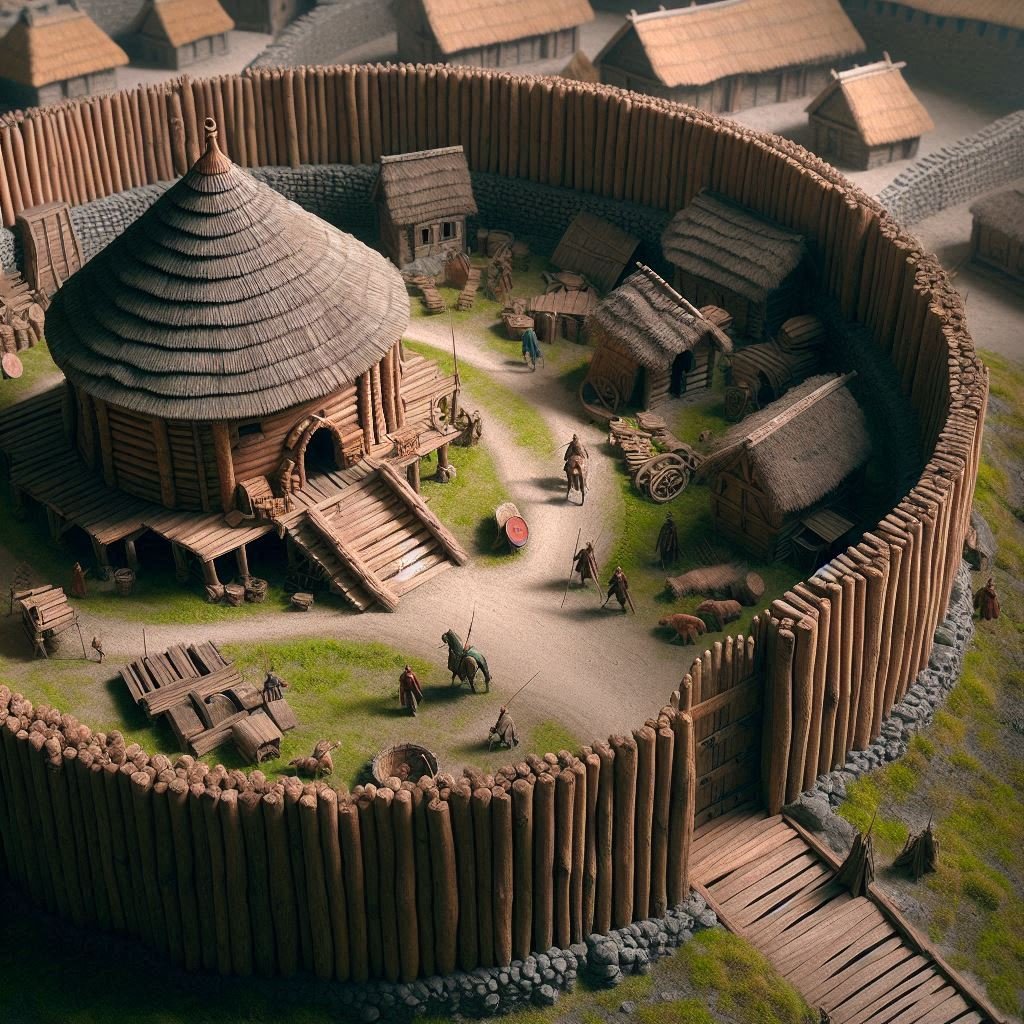
Malham Marching Camp, North Yorkshire

Malham Roman marching camp

Around 70 AD Cerialis the new Governer of Britain ordered two of his legions advance on the Brigantes of Yorkshire. From the South west (North Wales?) came the XX legion commanded by Agricola. Their mission was to meet the IX legion at Stanwick to attack King Venutius. Was this legionary marching camp at Malham part of their advance?

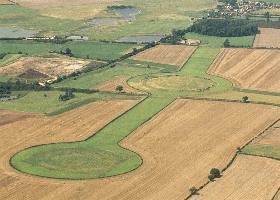
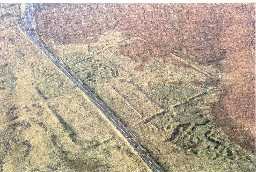
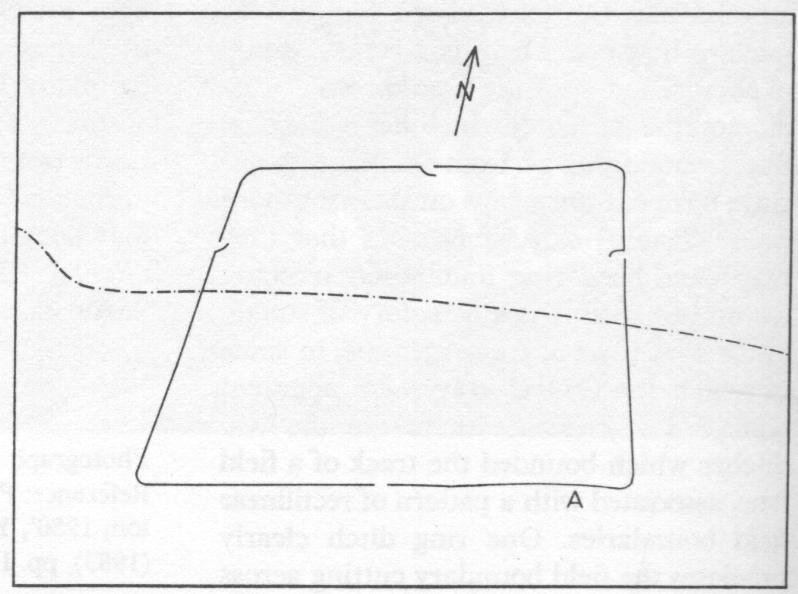
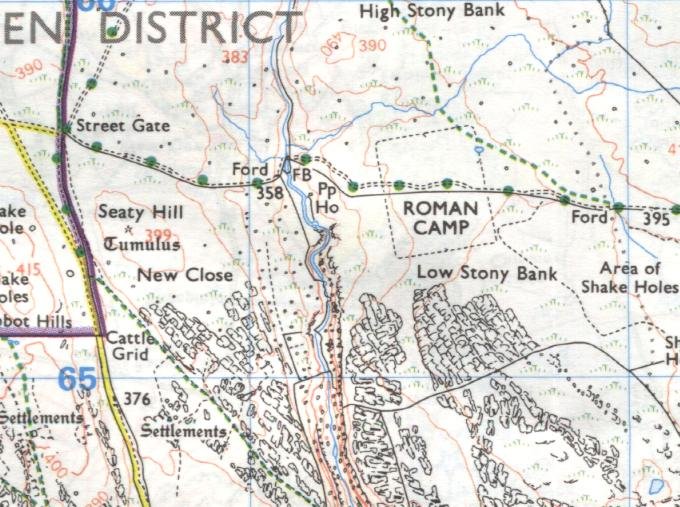
Plan and satellite image of Malham marching camp. This was a legion size marching camp deep into Brigantian territory, possibly built by the XX legion on their way to Stanwick. The same legion may also have built Ray Cross west of Stanwick. The camp has four entrances, three of which are inturned. Close by was Tor Dyke, some six miles to the north east.

OS Map entry for Malham

Click HERE for a map of the area.

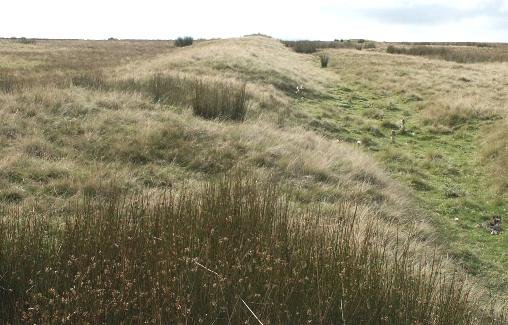
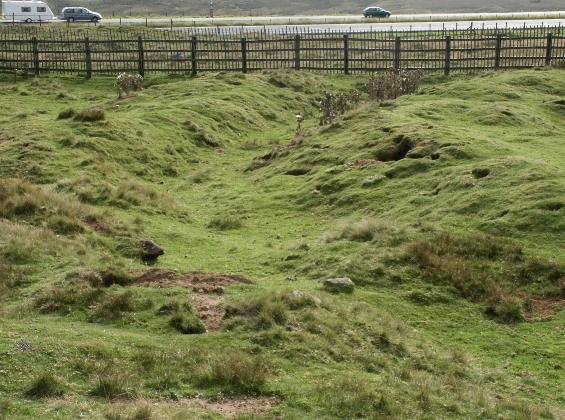
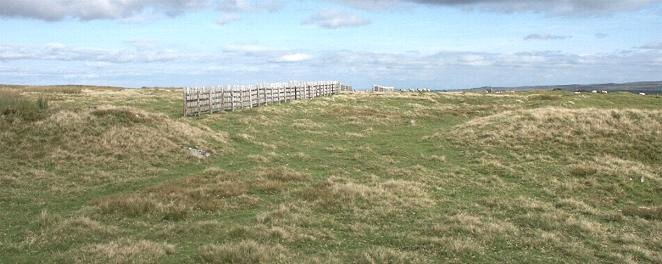
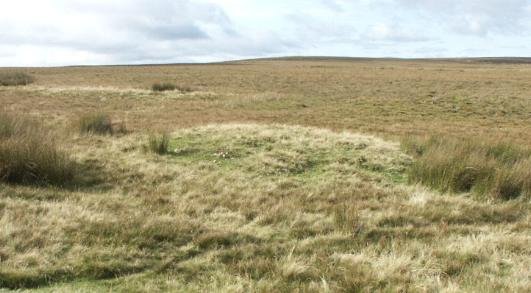
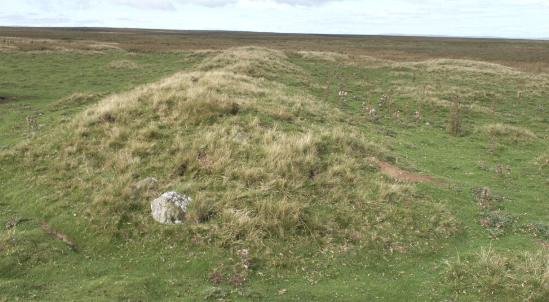
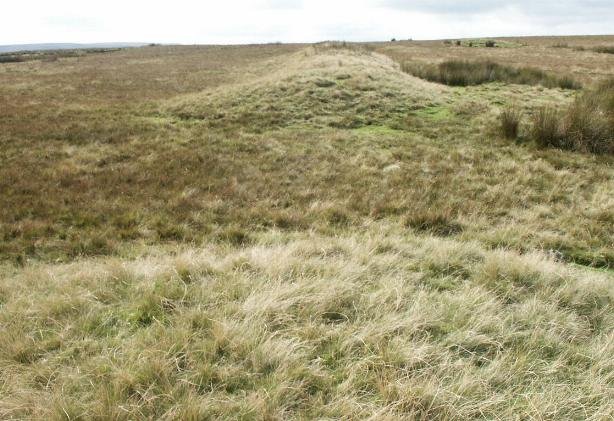
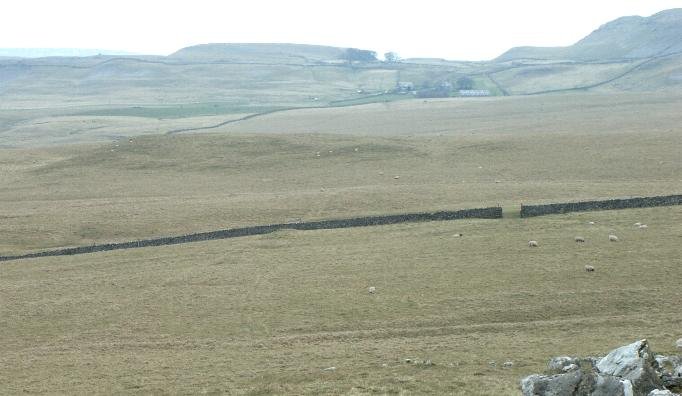
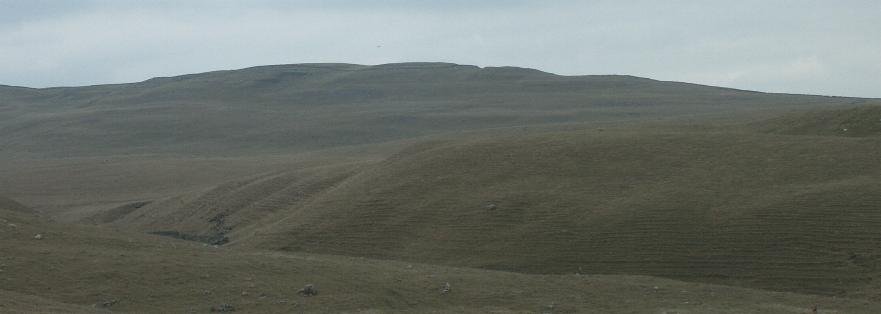
Above, A possible lookout hill nearby to the west (top). Malham fort south west corner (bottom). The sheep in the foreground give an indication as to the scale of the fort. In a few more years the forts outline will not be visible. The hill close by would give this fort good strategic advantage. To the south of the fort a craggy gorge prevents an easy attack from the rear.

To the North West about a mile off from this peak many Brigantian eyes would be watching the Roman encampment.

Dundon Hill, Somerset

Dundon Hill – Somerset

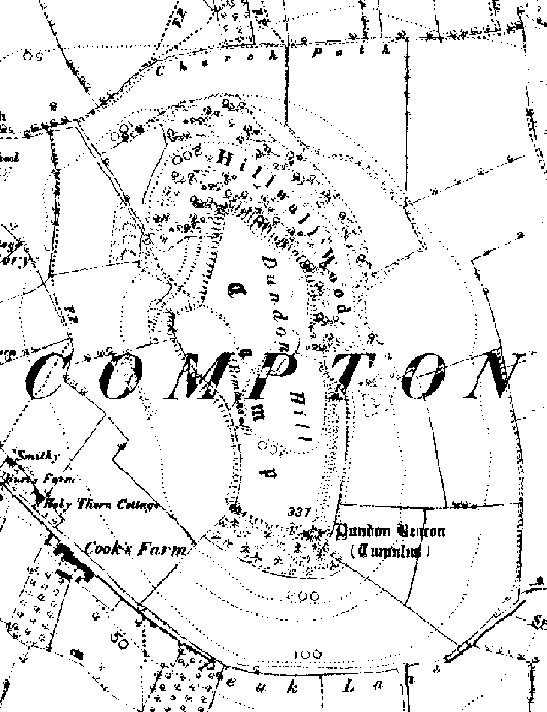
Dundon Hill as it appears on the 1850 OS map.

There is a plan and short description in volume 2 of the Victoria County History for Somerset (pages 490-1).

Ian Burrow’s Hillfort and Hill-top Settlement in Somerset in the First to Eighth Centuries has a more recent (but less detailed) description at p 214.

It’s about 4.8 ha in area and univallate. No excavations seem to have been carried out though before the First World War flint and pottery scatters were found there.

Dr Robert Dunning – the editor of the Somerset volumes of the VCH – may be able to tell you when the parish is likely to be covered; when published there may be more detail available. He works at County Hall Taunton. As does Bob Croft the county archaeologist who may know of recent work at the site.

Scheduled Monuments
OBJECTID 43789
Reference SO22076
Name COMPTON DUNDON HILLFORT WITH DUNDON BEACON, EAST OF DUNDON
Suffix
OBJECTID 43789

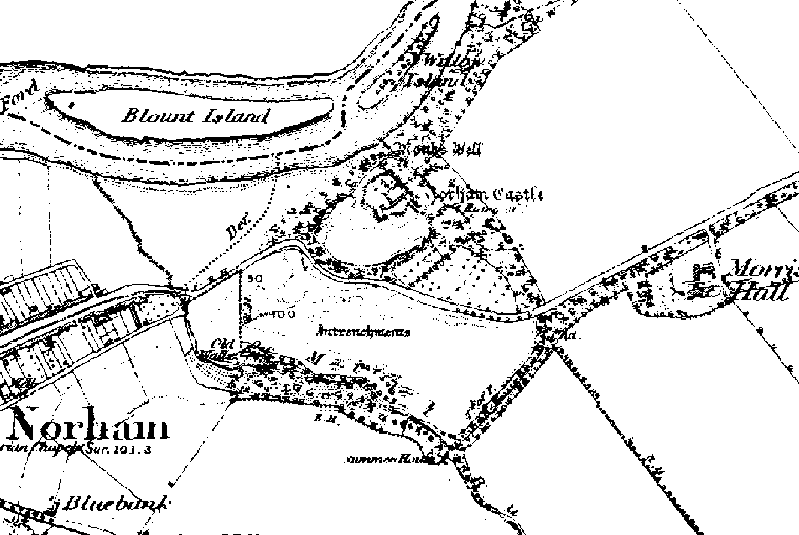
Norham, Northumberland

Norham Fort – Northumberland

1850 map showing the entrenchments recently ‘discovered’.

Iron Age ramparts unearthed Aug 7 2002


By The Evening Chronicle

Startling new evidence of an Iron Age hillfort has been unearthed in Northumberland with the help of satellite technology.

Experts examining land at Norham Castle, on the south bank of the River Tweed, say the remains could be up to 3,000 years old and the fort may have been the biggest in the county in its time.

Evidence of the prehistoric fort was found during an Earthworks survey at the castle, which was built in medieval times.

A team of archaeologists used a satellite positioning system to produce a digital map of the area and, after careful examination of the results, now believe that an isolated stretch of rampart in a field south of the existing castle is evidence of a much older fortification.

They think that the rampart is most likely to be a remnant of an earlier defence cutting off the side of the hill that is most exposed to attack.

English Heritage archaeologist Trevor Pearson said: “All the evidence points to settlement in the area much earlier than anyone previously believed.”

Stanwick Hill Fort, Forcett, North Yorkshire

Stanwick Iron Age Hill Fort

This note describes a partial perimeter walk of the largest hill fort in England. This walk covers some six miles and takes in the major extend of the fort and covers the two stages in it’s development.

Location:: O/S 1:50,000 map 92 ref, 178123

Stanwick is very close to the Scotch Corner junction of the A1, close to Darlington. From Scotch Corner, take the A66 towards Barnard Castle for a couple of miles then take the right turn towards Forcett. The road will take you past part of the defenses, at which point a left turn will take you to Stanwick St John Church, which is a suitable starting point for any visit.

The original Enclosure dates from around 400 BC, so far this has not been mapped but it appears to have been a small settlement.

Around 50AD this original enclosure was then replaced with a 650 acre “super fort”. The building of this stage has been widely attributed to Venutius, given the period in history and was abandoned before the end of the 1st century AD. Much later in medieval times a further fortification was “butted up” to its southern outer wall.. The history of this remarkable place is still being pieced together but all indications are that this fort was the most important site for the Brigantes in the immediate run up to the Roman conquest of Brigantia in AD. 69-70. Recent excavations by Colin Haselgrove have to a certain extent conflicted with Sir Mortimer Wheeler’s original evaluation and also in part with the authors. Haselgrove extends the chronology to the middle Iron age and claims that the largest outer wall (Wheeler Phase III) was built first in a growth stage in the mid 1st century AD. This was then subdivided with a smaller better fortified area within. Evidence of high status has been found in the form of a building of a significant and unusual size, accompanied with high status Roman artifacts. Our own site visits indicate that there are significant areas of interest yet to be excavated and it is certain that Stanwick has more secrets to tell. Also certain is that the history of Stanwick holds the key to the story of the Roman conquest of Brigantia in 69-70AD.

In his evaluation Haslegrove seems to conclude that an Earthwork so large was not defensible and it was therefore built as an impressive trading post by Cartimandua just prior to the Romanisation of Brigantia, and fell out of use shortly afterwards.

Recent early days investigations linked with Carl Wark indicate that Venutius may have been responsible for a dike running from Sheffield to Rotherham, possibly on to Doncaster and following the Don up to the Humber. Alongside this at regular intervals are a series of fortified Iron Age camps, of which Carl Wark may be a member. If proven this would indicate that long fortifications were considered defensible, and if this line did show Venutius’ south eastern border, it is unlikely that Cartimandua will have been establishing a trading post at Scotch Corner at the same time.


Map of Stanwick, Haslegrove’s outline of the fort in blue.

General description of walk

Approx. Length: 6Miles.

Difficulty: Moderate. Liable to Mud.

Time taken: 5 hours

The Walk

The Walk starts at the Church of Stanwick St John which can be traced back to 850AD, the church and churchyard itself are well worth a second look, the church has in many places reused older carved stone showing weapons, shears and other items. In the oval churchyard there is a Celtic Cross which dates to 850 AD.

Church of Stanwick St John, together with part of the reused carved stone in its interior.

From the Church of Stanwick St John walk along the road down towards Tofts Hill across the Mary Wild Beck and to a footpath into the hill on the right hand side of the road. Take the footpath up through the center of ‘The Tofts’ hill area, this allows a view of what Wheeler regarded as the first phase of the building of Stanwick however Haslegrove with a much more recent excavation has proposed a different chronology and thinks that this was the final phase of building at Stanwick, adding the high status area.

Haslegoves interpretation of his findings at Stanwick indicate that this point is were a small defended settlement was built around 400 AD. The fort occupied broadly the same proportions as can be seen by the current visible enclosure, but had its northern defense closer to the Mary Wild Beck, this is now a 1-2 ft dip around the northern perimeter of the hill fort. Our primary interest is the use of the fort during the middle of the 1st Century AD, at the time when Venutius and Cartimandua ruled a Brigantes split by civil war and ultimately subdued by the advancing Roman army.


The high status enclosure on Tofts Hill.

The Inner Fort

The earlier fort was completely swallowed by a much larger fortification (original fort 27 Acres, new fort 850 acres) in the middle of the first century AD. The inner sanctum for this new fort was placed directly on top of the original fort, the sight being flattened before hand. Running down the inside of Tofts Hill The Northern the southern defensive wall can be seen, Haslegrove has confirmed the authors earlier opinion that the wall originally continued down the hill to join the Mary Wild Beck, evidence of this can be seen towards the end of the visit. At the top of The Tofts the Southern rampart of the enclosure are very well preserved, but shrouded by undergrowth and trees.

The Southern outer defenses

The footpath continues down into the southern heart of the massive main enclosure and eventually turns a sharp right up a prominent hill towards Hill House Plantation. This hill is the obvious focus for a command and control point as it has clear view of the entire southern perimeter.

At the end of the track a road junction appears, continue straight-ahead to meet up with the western defense earthwork at Forcett Park. Although the perimeter has a modern wall, the outer rampart of the fort is still quite tall and can be seen, with what looks like a two meter mound and a four meter ditch.

A point to note about Iron Age walls of this manufacture, typically a third of the mound height will have eroded away and two thirds of the ditches depth would be lost to in-fill, thus a defense which is 9m high in modern times could have easily reached 18m in height when originally built, furthermore it is highly likely that the Brigantian builders would have built a six foot dry stone wall on top of the mound as is evidenced later in the visit.

At the end of the road a further road junction appears, here turn left to walk parallel with Forcett Quarry. It is possible that Forcett Quarry was originally built by the Brigantes as both a defensive measure and as a source for Stone, evidence of an entrance exists at this southwestern corner of the fort. About two hundred metres from the road junction the clear line of the Southern Defense can be seen coming from the direction of Park House. Follow the road past the defenses then turn right, just past the farm building then head Eastwards across Carkin Fields to walk in parallel with the Southern rampart and to approach the medieval intrusion.

Prior to turning it should be noted that one kilometer up this road on the right can be seen what is marked as a moat. Often moats were build over existing earlier fortifications and further investigation may prove worthwhile.

Following the Southern Defensive line, the impressive extent of the defenses becomes apparent, the huge mound that remains of the rampart clearly gives this site its importance. Wheeler estimated that this entire 4.5 mile stretch of was erected within a year or thereabouts, giving credit to the degree of organisation the Brigantes were able to exert.

Whilst crossing Carkin Fields the path crosses from the end of the original field over to the field closer to the ramparts and continues, skirting the right hand side of the field an on to the road junction at the end.

At the B6274 turn left to meet up with the rampart and then turn right to carry on just inside the defenses, heading towards a plantation North West of Park House.

From the road turn right to the interior of the defensive wall. The massive size of the remaining Rampart and Ditch are awe inspiring. Still more impressive is the thought that the rampart, currently about 4m high in places was originally over 30% higher, probably with a 2m dry stone wall on top. The ditch, now some 2m deep, was originally up to 6m deep.

How many occupied Stanwick?

As part of his Maiden Castle excavations Wheeler calculated that a typical occupied hill fort (one which people actually had homes in) could hold up to 100 people per acre, this indicates that Stanwick could have held 85,000 inhabitants. However it has been suggested that Stanwick may have had a significant amount of space for animal enclosures, this has not been proven.

About half way along this stretch of the wall, (OS 182107) there is a circular tower, which was obviously a much later folly. Also at this point and more prominent, is a half-sunken water tank, which looks very interesting, but isn’t.

An interesting point to note is that much of the stone face of the wall has been recently (last 150yrs) used to create much of the deer (HaHa) wall that follows the rampart line. Apart from the obvious destruction of a major piece of archaeology, the fact that the original dry stone topping was close enough to the surface to allow its re-utilisation in the 19th century indicates that it was left intact across this entire stretch and was not therefore a point of incursion by enemy forces (Haslegrove has also made the point that Stanwick does not seem to have been defeated, although Wheeler felt that there were signs of deliberate collapse at the northern rampart, discussed later). This was one factor which led Haselgrove to conclude that it must have been a Roman friendly fort (Cartimanduan) which simply fell out of use rather than being slighted. Given that less than 1% of the rampart area has been excavated this conclusion should not be given a significant amount of weight at this time. Certainly there are large areas of the fort which do not seem to have been slighted.

The Later – medieval? extension

After following the track for about a mile and a half the defenses travel through a plantation, and the track follows the rampart through the wood along a clear track in an easterly direction. Further along this stretch the rampart diminishes to a slight mound and ditch – no more than a 1.2m total drop. Clear evidence that the ramparts at this stage have been collapsed for some time. This however does not look to be due to activity in the Iron or Roman ages. More likely is that this is due to the medieval ‘extension’ which, if Sir Mortimer Wheeler was right, is due to a much later Saxon work, linked to the nearby Scots Dyke.

At the southeastern corner of the fort, the path crosses the defenses and continues in a northern direction immediately outside the eastern perimeter. The entire length of the eastern defense seems to be intact and in much the same condition as the majority of the southern defenses

Stanwick eastern rampart

Note. About a mile east of this point is the closest point of Scots Dyke.

Half a mile up the eastern defense the footpath swings northeasterly to join with a nearby road, here turn left and head towards the bridge over Mary Wild Beck, at this point the eastern defense that is being followed disappears into the Beck.

The undefended western defenses?

Both Haslegrove and Wheeler has conjectured that the Mark Wild Beck was used as part of the outer defenses, although Haselgrove has also conjectured that the eastern defense originally continued northwards to encompass Henna hill but there is virtually no evidence of this and given the obvious size and extend of the defenses seen so far this particular stretch is a real conundrum and could be said to add weight to the notion that the fort was not built for defensive purposes, just to impress.

The Mary Wild Beck itself is a couple of foot wide and is very shallow, it is unlikely to have presented a formidable obstacle.

A little way up the road, just over the bridge is a stile on the left which should be taken to follow the Mary Wild Beck towards the start of the southern sweep of the defensive works. Note that OS Pathfinder Series NZ 01/11 goes horribly wrong at this point, stick with Landranger map 92.

The Walk along the Beck is delightful, in the distance the start of the southern rampart can be seen. It has been suggested that dam across the Mary wild beck, would have created a large lake in this whole area, possibly creating a defensive moat around Henah Hill. This lake could have also extended within enclosure, possibly as far as the church but these suggestions are untested.

The ‘Inner Sanctum’ taken from the south, close to the Mary Wild Beck. In the foreground the ditch left by a possible extension to the beck can be seen.

The interior of the fort

The first point of the this part of the defense looks to be a small entrance of some sort. This is the best site on the walk for the partaking of ones packed lunch. To the north is the great furrow that remains of the eastern stretch of the southern sweep of the rampart, curving up the incline at the back of Henah Hill, in its far corner the North Eastern entrance excavated by Wheeler (not visited this trip) can be seen.

Towards the south and south west the northern defenses can be seen curving round to the Beck in all their glory. To the East The Tofts Hill ‘Inner Sanctum’ can be seen. Note that wide furrows in the field to the west of the beck show that the enclosing rampart for the ‘Inner Sanctum’ may have originally extended down to the beck.

Part of the South eastern, from the interior.

The footpath continues along the Beck, through the eastern side of the outer defenses and passes through a very interesting area of ridges, furrows and mounds which so far do not seem to have been excavated. It should be noted that the modern footpath has deviated from that referenced on the OS maps and crosses the beck at a point some 200m before the beck meets the main road.

This is a good point to see the furrows left by the two sets of parallel Earthworks which extend the ‘Inner Sanctum’ to meet the Beck. The first travels from the point of the small bridge up to the nearest house in a northwesterly direction, here it seems to meet the interior forts south eastern defensive wall. The second starts much closer to the church, and is an obvious extension to the line made by the northern rampart.
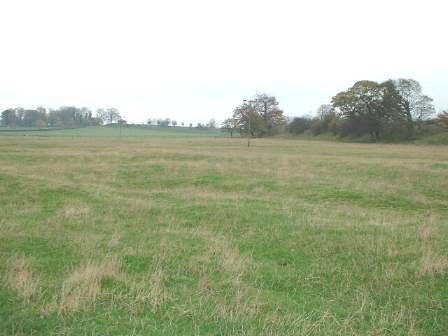
View from The Mary Wild Beck to The Vicarage

In line with the footpath, the walk continues down the road past the church, and on towards The Vicarage to the north east to turn left onto the main road to Forcett through the center of the southern enclosure and on to the area of the wall that was re-erected by the late Sir Mortimer Wheeler, more than 50 years ago.

Command and Control

At this point it is worth discussing the areas of command and control within the fort. Being so large no single line of sight position exists and therefore it is possible that there would have been a number of command points from which to view and direct activities. The inner fort of Tofts Hill has its most obvious command and control point at the top of the hill close to where the footpath crosses the field. For the Northern defenses a zone of command seems to establish itself at some point central to that part of the enclosure, probably close the middle of this stretch of road.

The southern defenses could not have had a single point of command, and possibly having two. The main control point could have been on the hill heading to Hillhouse Plantation, and a further command post to the south between Hergill Quarry and the unfinished southern entrance would have been required. Obviously a high level of communication will have been required to correctly command a possible defense of the fort.

During his excavation in 1988 Haslegrove came across a high status building with several very deep post holes to one side, suggesting a very tall structure. A further possibility is that this was the central command point, deliberately elevated so as to provide better line of sight communications.

The reconstructed Wall

After about a mile along the road a signpost indicates “Stanwick Fort” and points to a short path to the right of the road, at the end of which is one of the most impressive sights of the visit – Wheelers reconstructed wall.

It was here that Sir Mortimer Wheeler excavated and rebuilt a section of the north western defensive wall, and even though he did not rebuild the mound to its original height the structure is certainly impressive.

An interesting aspect of this area of rampart is the hidden nature of much of the northern rampart. Since it is built on flat ground, from even a short distance away the defenses look like a normal dry stone wall, a couple of meters above the ground. A would be invader would not see the true size of the defenses until they were within 100 yards or so. At that point the huge 20-30 foot deep trench would open up before them, with a sheer wall some 4m higher at the other side.

However, it also raises a small problem. Historical evidence of Roman siege tactics show that commonly they would surround the Fort, sometimes building and outer rampart around the besieged fortress (fifteen mile circumference outer valets were known in France). They would then use projectiles to remove the defending soldiers from the ramparts and would fill the ditch and use siege towers in order to gain entry to the fort interior.

Stanwick was built some years after the Roman invasion commenced; Venutius had witnessed many sieges as part of his earlier southern campaigns and had a fair degree of success with his Roman engagements prior to the main advance north. Yet Stanwick seems to do half of the Romans job for them, impressive though they are, surely it would not take the Romans long to throw a few ladders across this section, thus gaining entry. Indeed Wheeler comments that this section of wall had obviously been deliberately collapsed very soon after the unfinished southern entrance had been abandoned. It is therefore likely that this was one of the Roman attack points.

This same point is could be used to strengthen the argument that Stanwick was simply a large trading town, which fell out of use and had no specific anti Roman defensive purpose.


“Wheelers Wall” with a colleague standing at the foot of the ditch.

On departing the Wheeler Wall you will have to retrace the path back to the start of the visit to end the tour.

Conclusions

Given the variance between Wheeler’s notes and those of Haselgrove it is difficult to provide a firm conclusion without running into serious argument However our initial best guess is:

1. The main Stanwick fort was built by Venutius and had a very short life, perhaps no more than ten years, or much less. By AD 75 Stanwick was deserted.

2. It is not clear as to whether Stanwick was defeated by the Roman’s or abandoned, however most of the excavation work has centered within the Tofts Hill area and this is not likely to show signs of siege activity or weaponry used. Stanwick does not appear to have had a large scale incursion, unless the ‘undefended’ south eastern section hides an outer rampart which was completely slighted. There is partial evidence of attack on the South western side.

3. The high status Roman artifacts represent Venutius’ ‘spoils of war’ after his defeat of Cartimandua and may have been captured from her ‘palace’. Another, wilder explanation is that Roman goods found their way to Venutius as payment for his help and support of a losing faction during the civil war of 69AD.

 

Dunmallard Hill, Cumbria

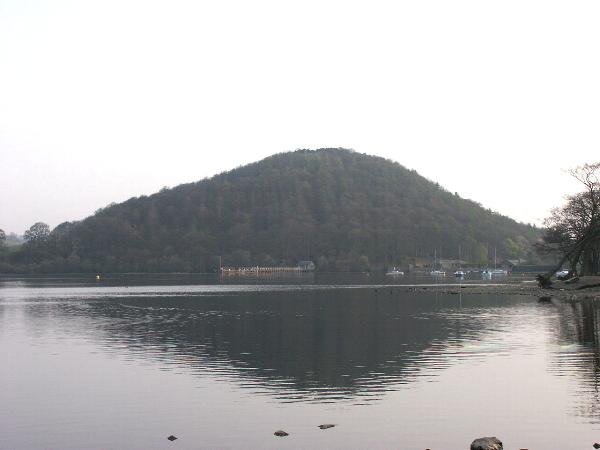
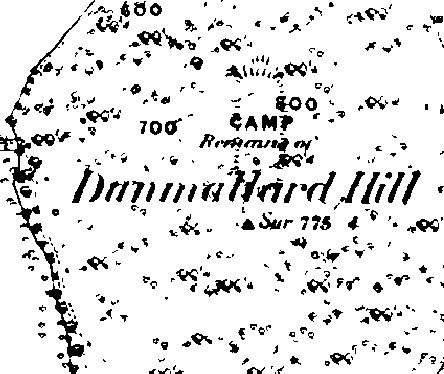
Dunmallard Hill – Pooley Bridge, Cumbria

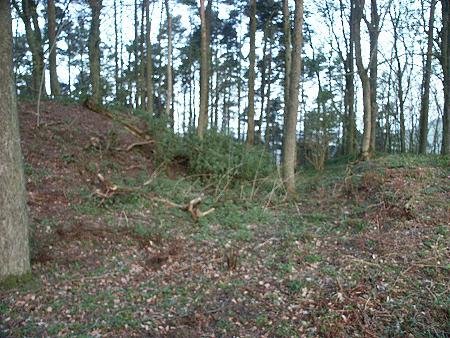
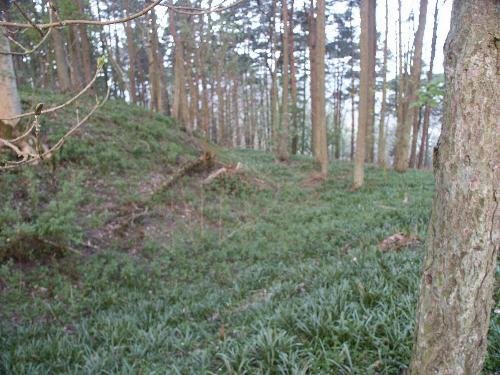
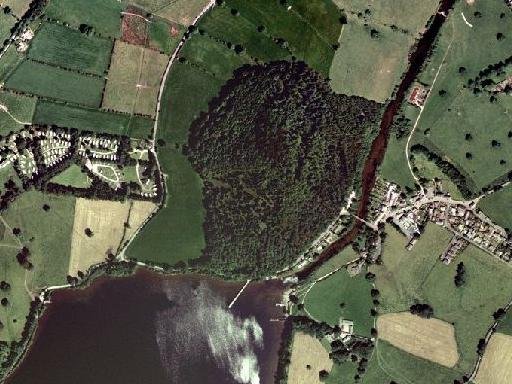
Dunmallard Hill, shrouded in trees, hides a true hill-fort. It uses the steed slopes of the hill to good effect, adding to the defence with a deep ditch and rampart within.

The ramparts are up to 10m in height from the base of the ditch, which is still 2-3m deep in places. The rampart is apparently of dump construction.

The rampart is very variable in size, in someplaces it almost non existent.

Air view from multimap. Dunmallard Hill is in the upper centre.

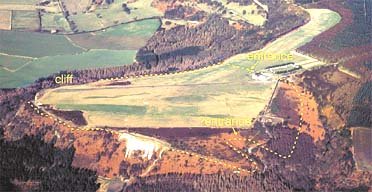
Roulston Scar, North Yorkshire

Roulston Scar – Thirsk


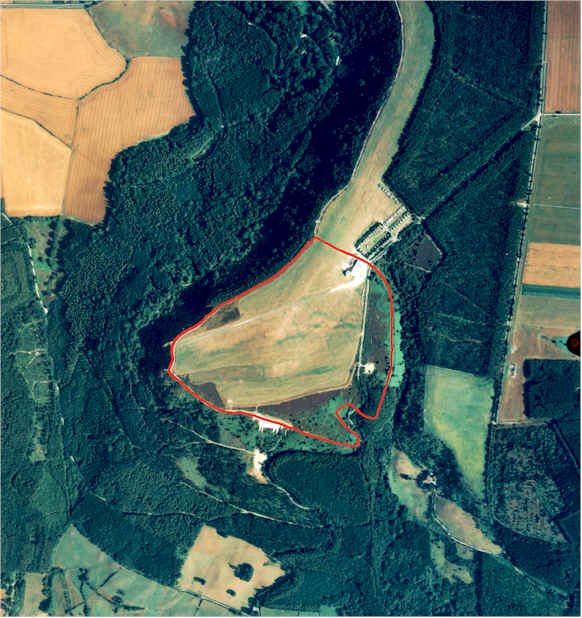
[caption id="attachment_1150" align="aligncenter" width="372"] Handout photo of Roulston Scar Fort, North Yorkshire, one of the biggest prehistoric hillforts ever found in Britain, which was unearthed by archaeologists at a popular beauty spot. The defences surround the entire promontory (some 24 hectares or 60 acres) making it the largest and strongest prehistoric enclosure in Yorkshire. The monument at Sutton Bank, near Thirsk, North Yorkshire, is thought to have been surrounded by 1.3 mile long rampart, topped with a walkway and to date back to about 400BC. The fort, which is built against a steep escarpment giving it views for miles across the Vale of York, was discovered by English Heritage archaeologists who spent this summer surveying the site. See PA story HERITAGE Fort. Photo: Crown Copyright

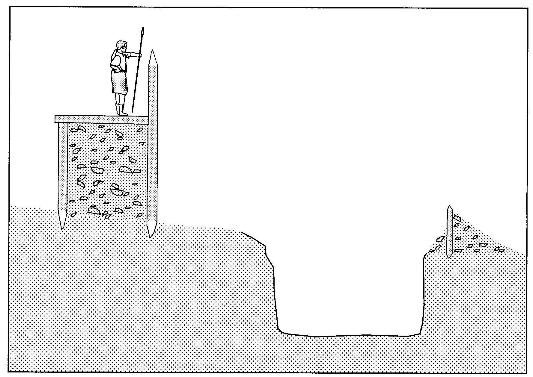
“”We were shocked to discover such a huge complex,” said Alastair Oswald, archaeological field investigator for English Heritage. Preliminary examinations of the remains suggest it was more than twice the size of most other prehistoric strongholds. Built of Timber palisades and girdled by a 1.3 mile circuit of ramparts, 60 per cent of which are cut out of solid Limestone, the fort has been provisionally dated at 400BC.

As well as its defensive function, archaeologists think it may have been a “statement of power”, possibly housing the Iron Age equivalent of a regional assembly. “Such a large fort would have taken a vast amount of timber and labour to build, which poses many more intriguing questions,” said Mr Oswald. The fortress must have taken several years – and more than 10,000 cubic metres of earth and rock, and 3,000 trees – to build, but nobody seems to have lived there for any length of time. Most hillforts were more akin to fortified villages or walled towns, often with substantial permanent populations.

The evidence so far from Roulston Scar suggest it never was a permanent settlement.

Roulston’s colourful history has been one reason for the fort’s elusiveness; the famous White Horse of Kilburn, carved in the chalk, obliterated a stretch of rampart with its head.” – English Heritage press statement 2000.

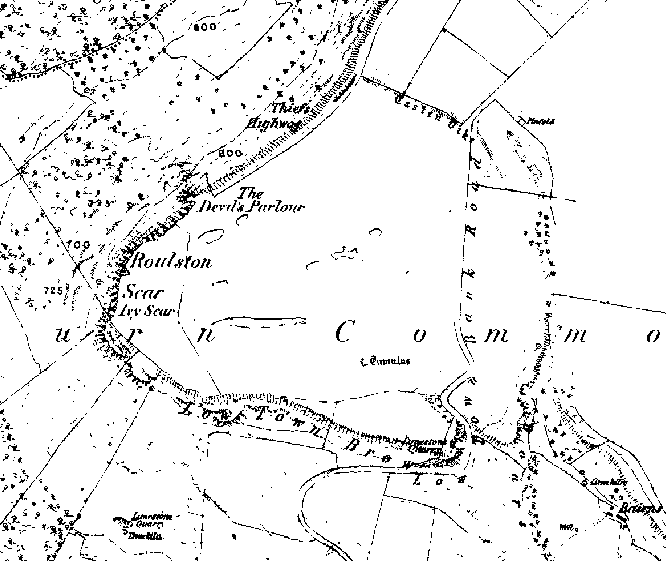
Roulston Scar hill fort was ‘lost’ temporarily by an error on an OS map, here is the 1850’s map entry.

Roulston Scar is of a size almost comparable to Stanwick. Its apparent short period of use also adds to the notion that it was built by Venutius as part of his anti Roman defences. If this were to be assumed then the possibility that it served a part of an overall defensive system in conjuction with Cleave Dyke and possibly Boltby Scar would immediately spring to mind.

However, the cleave dyke system is complex and definately multi-period. There is immediately another explanation for this fort if it is taken in relationship with Casten Dykes and Double Dykes, which oppose each other and tend to suggest a localised tribal conflict, especially with the fort of Studford Ring – immediately to the south east of the Double Dykes.

Giant Prehistoric Hillfort Discovered at Sutton Bank

A chance discovery by the National Park has led to a major archaeological investigation in partnership with English Heritage: the new research and fieldwork have revealed that the whole plateau at Roulston Scar was once occupied by a massive hillfort believed to date back to around 400BC. Covering an area of 60 acres and defended by a perimeter 1.3 miles long, this is the largest Iron Age fort of its kind in the north of England and one of the top 20 in size in the whole country.

Located on the western boundary of the North York Moors National Park, near Thirsk, the site occupies a naturally strong position, defended to the west, south-west and south-east by cliffs or steep valley sides and commands breathtaking views over the Vale of York and further afield to the Yorkshire Dales. The fort encloses much of the promontory currently occupied by the Yorkshire Gliding Club. Part of its southern defences were unknowingly cut through in 1857 by construction of the famous Kilburn White Horse.

Suspicions that a hill fort existed on the site date back to the mid-19thcentury, when the Ordnance Survey mapped a short stretch of Earthworks. These came to be understood as a defence which cut off the promontory of land to the south but interpretation was confused by their supposed association with a nearby boundary (Casten Dyke South), now thought likely to be of much later origin.

Detailed examination by English Heritage field investigators of the humps and bumps visible to the naked eye on the surface identified a series of ancient ditches and banks, together with an artificial steepening of the natural Scarp, extending much further than anyone had previously thought, around the full circuit of the promontory. Some stretches of the defences survive to a height of nearly three metres. The team from English Heritage have used Global Positioning equipment to map the traces they have found.

Hill forts are uncommon in Yorkshire, so it was a particular surprise to discover such a huge complex. Over the years there had been tantalising clues that such a monument existed but until recently no-one had carried out a comprehensive survey to settle the question. It is thought possible that the fort was constructed by the Brigantes or Parisi tribes, perhaps as much as a statement of power than as a defensive bastion or temporary refuge in times of trouble. Such a large fort would have taken a vast amount of labour to build, together with vast quantities of timber, which poses further intriguing questions about social organisation as well as purpose.

Excavations in 1969 and 1970 had previously indicated that the main northern Earthwork comprised a two metre deep trench and a “box rampart” – fronted by a timber palisade, thought to be up to four metres high, and topped by a defended walkway. The survey has now traced the full extent of the remainder of the defensive circuit which consists of scarps, created by steepening the natural slope around the edge of the promontory, fronted by a ditch with a low outer bank. Originally it is thought that this perimeter would have been surmounted by a timber palisade. Entrances are thought to have existed in the centre of the main northern rampart and also in the south-eastern corner of the fort, where the defences turn in on themselves – a place marked by a series of later trackways and close to the line of the present road.

Roulston Scar Ramparts

“The largest and strongest of NE Yorks. Promontory forts, Roulston Scar enclosed about 53 acres. In places its rampart, which cuts of the spur to the SW, still stands 11ft. high. There is a ditch on the NE side. Air photo’s show that the E end of the rampart continues SE, along the side of the valley in the quarter. This appears, on the ground, as a terrace. Not dated.” Guide to Prehistoric England, Nicholas Thomas, 1960.

Barwick in Elmet, West Yorkshire

Barwick-in-Elmet, a village steeped in history, traces its origins back to the Iron Age, as evidenced by the ancient fortifications on Hall Tower Hill. This site, which later served as the foundation for a Norman motte-and-bailey castle, is a testament to the village’s long-standing strategic importance. The name ‘Barwick’ itself is derived from Old English, meaning ‘barley farm’, which reflects the area’s agricultural roots.

Recorded in the Domesday Book as ‘Bereuuith’, the village was an established community by the 11th century. It is one of the few places explicitly linked to the Romano-British kingdom of Elmet, suggesting a rich tapestry of cultural and historical significance. Over the centuries, Barwick-in-Elmet has evolved, with the Gascoigne family playing a notable role in its development during their tenure as lords of the manor. Today, while retaining its rural charm, Barwick-in-Elmet has transformed into a commuter village, bridging its illustrious past with a modern lifestyle.

The Gascoigne family, a name synonymous with the rich tapestry of English history, has its roots deeply embedded in the medieval soil of both England and France. The surname, a nod to the family’s origins in the picturesque region of Gascony, France, was brought to England following the Norman Conquest of 1066. This family, originally hailing from the seigneurie of Garidech, established their presence in the West Riding of Yorkshire, where they became prominent landholders and influential figures.

The Gascoigne’s legacy in Yorkshire began to solidify in the early 14th century when William Gascoigne married the heiress of Gawthorpe, integrating into the local gentry and setting the stage for centuries of prominence. Their estate at Gawthorpe would later become the site of the renowned Harewood House, a few miles north of Leeds. Over time, the Gascoigne’s expanded their holdings, intertwining their fate with the region’s history and its people.

Notable among the Gascoigne’s was the formidable Chief-Justice William Gascoigne, who served under King Henry IV. His commitment to justice was so profound that he famously sent Prince Henry (later King Henry V) to prison, a testament to his unwavering principles. This act not only cemented his reputation as a courageous and fair judge but also highlighted the family’s significant role in the governance and judicial landscape of the time.

The Gascoigne family’s influence extended beyond the legal realm, with several members serving in military and political capacities. Their contributions to the social and cultural fabric of Yorkshire are evident in the numerous records, buildings, and artifacts that bear their name. The family’s heraldic symbols, such as the demi-luce or fish head, are still recognized today, a reminder of their enduring legacy.

Despite the grandeur and prestige associated with the Gascoigne name, the family’s history is not without its myths and uncertainties. For instance, the claim that they arrived as companions of William the Conqueror and were rewarded with lands in Harewood for their service is widely circulated but lacks concrete evidence. Such stories, while adding to the family’s mystique, are often challenged by historians seeking to separate fact from fiction.

The Gascoigne family’s narrative is a complex one, woven through the centuries with threads of power, ambition, and resilience. Their story reflects the broader saga of England’s aristocracy, marked by alliances, marriages, and the ebb and flow of fortune. As custodians of their heritage, the Gascoignes have left an indelible mark on the historical landscape, their name forever etched in the annals of British history.

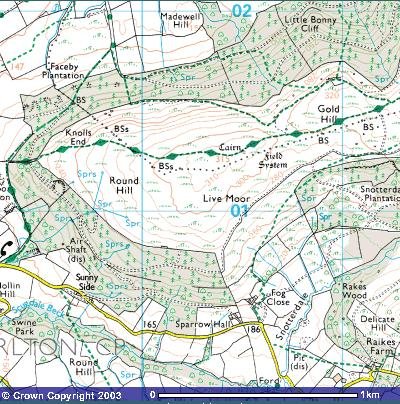
Live Moor, Whorlton, North Yorkshire

Live Moor – Whorlton – North Yorkshire Moors

“Whorlton, Live Moor, (NZ 496012) A previously unrecorded Promontory fort was identified by D. Smith on air photographs and later surveyed by him and G. W. Goodall. A single rampart with external ditch extends across the west-facing spur of Live Moor to enclose an area of approximately 2 acres known as Knolls End. Where best preverved the rampart is 7.5 m wide and 2.3 m high externally and 0.5 m internally, while the ditch is up to 1.5 m wide and 0.6 m deep with a fragmentory counter Scarp bank. The work has been mutilated by quarrying and associated trackways, but a gap in the rampart and ditch at NZ 49640126 probably represents an original entrance.” YAJ Vol 51, 1979. P.3.


Staple Howe, West Hesterton, North Yorkshire

Staple Howe – West Hesterton, North Yorkshire

“This small farmstead was established on top of the small chalk hills on the northern edge of the Yorkshire Wolds. The chosen site was a good defensive position with a level oval shaped platform about 54.7m long and 12.2m wide. A timber stockade encircled the site which at first contained a single oval hut 9.1m long and 6.1m accross; probably contructed of chalk rubble walls and a thatched gabled roof. Inside the dwelling were the remains of a hearth and clay oven. At a later date, two other huts were constructed, and also one small square structure placed on the highest point of the enclosure, that may have been used as a granary. The round huts were constructed of timber post walls each having a central load bearing support for their conical thatched roofs. Both dwellings appear to have south east facing porches, and the one at the western end of the enclosure had a diameter of 9.1m. On excavation, large amounts of burnt grain, animal bones, (both wild and domesticated), bone gorges for fishing, pottery, iron and bronze objects were found on the farm site.” Understanding the Countryside – Ron Scholes.

Thornborough Henges, North Yorkshire

Thornborough Ancient Monument Complex – North Yorkshire

Page Under Development – come back for more info!

A site that spans several thousands of years from the Stone Age to at least the Iron Age, the ancient people of the area built one of Britain’s largest ancient sites in Yorkshire, in what was to become the heart of Brigantia.

Location Details.

Thornborough TimeLine

Mesolithic – c. 8,000 to 4,000BC

The Mesolithic period was the end of the Stone Age “hunter gather” times, before the widespread development of agriculture. During this time Thornborough appears to have been one of Britain’s earliest “ritual” locations. To the north of the village of Nosterfield, on the quarry in 2002/3 there was discovered an extensive double pit alignment that has been proven by carbon dating to be of Mesolithic date.

This is a very important discovery, since there are no known double pit alignments from this period anywhere else in the world and shows is potentially Britain’s first communal religious structure.

Mid-Neolithic Age – 4,000BC to 3,500 BC

In the Mid Neolithic period, accross Britain farming practices were beginning to be established and the old hunter gatherer ways were giving way to a more settled existence. In addition the first communal ritual monuments were being built.

At Thornborough, the ritual activities begun in the Mesolithic were dramatically expanded as large areas of land were cleared in order to make way for long cigar shaped cursus enclosures. These were built by digging a ditch to define the cigar shaped space, the earth from the ditch was then heaped outside the ditch to create an enclosing earth bank.

Whilst only one cursus has been confirmed, it would appear that Thornborough had three cursuses, two close to the Henges and another to the west at Upsland.

The largest cursus at Thornborough runs beneath the central Henge and stretches for 1.2 km. This ceremonial avenue, was discovered from the air. It appears to be bent, travelling in two directions roughly NE/SW. The western section, now mostly quarried out has recently been announced as being aligned to the setting point of the constellation Orion. This is another important part of the Thornborough Complex for it means this cursus may be the oldest known major monument aligned to the constellation Orion in the world.

Late Neolithic Age – c. 3,500 BC to 2,400BC

It was during this period that Thornborough saw a massive expansion of ritual activities, on a scale that indicates manpower was being drawn from far beyond to local area. Whilst it is probably that the construction work lasted for most of the Late Neolithic period and had many stages, it can be divided into two phases.

Phase I – the first henges.

Of these, the central one is the most accessible, the northern one is the best preserved (because it is protected from the plough by trees). Each circle, like those east of Ripon, has a maximum diameter of about 800 ft. They are all nearly circular, with entrances NW and SE. Each has a massive bank, originally about 10ft high, with a ditch inside and outside it, about 65ft. wide and 8 – 10ft deep. The outer ditch of each circle is now filled up by the ploughing. Broad spaces about 40ft wide separate the banks from their ditches – an architectural refinement nowhere else in England. On such a scale. These circles have been built in a straight line orientated NW/SE they are ½ mile apart.

Phase II – The creation of the henges we see today

Excavation in 1952 suggested that when first built each bank had been coated with a deposit of gypsum crystals in an attempt to whiten it. This may have been inspired by the blazing white if similar circles built in the chalk country of Wessex or the Wolds. The gypsum occurs in large deposits a few miles down the Ure.

Bronze Age

Iron Age Square Barrow uncovered close to a four horse burial from the same period, part of the ritual activities at Thornborough taking place in later times.

Iron Age

Roman and later

The Vale of Mowbray “super” monument complex

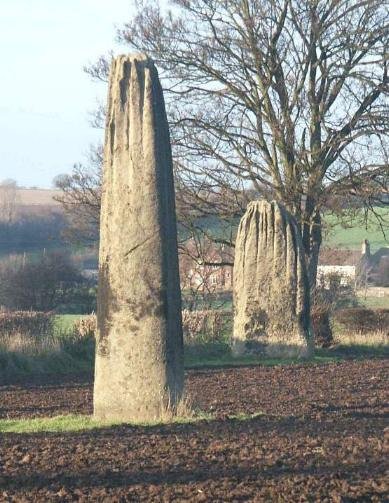
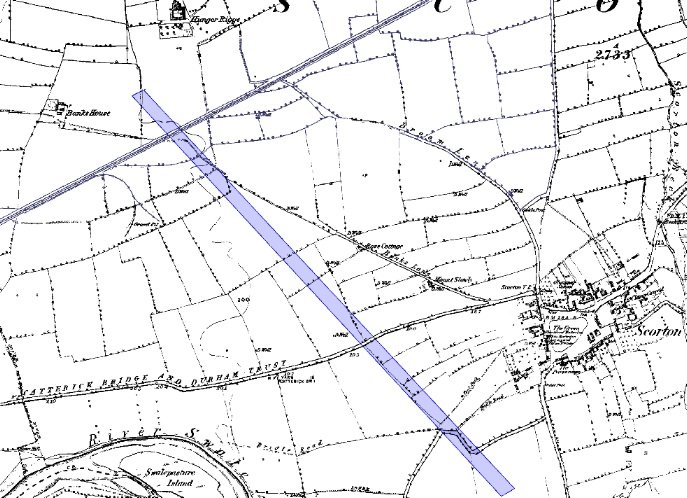
Whilst the Thornborough Complex is impressive enough, it is actually only one part of a much larger monument complex. In the Vale of Mowbray, from Borroughbridge to Catterick, Eight enormous sacred sites were built in an area over 20 miles long; among them at least 28 Barrows were accumulated, together with seven henges, five cursuses and a very impressive alignment of standing stones. The most impressive henge monuments are the 3 Thornborough Circles.

The circles on Hutton Moor and at Cana are less impressive because they have been reduced by ploughing. They should be seen nevertheless, since they are part of a concentration of sacred sites unmatched in the N of England. Recently aerial photographs have revealed the remains of a third circle here, at Nunwick, still visible on the ground about SE/323747. This appears to be a smaller circle with no outer ditch, aligned on the 3 Thornborough Circles. Its diameter is 300ft. These sites must be contemporary with the Thornborough Circles. They are identical in design but their entrances are orientated N/S.

Many barrows can be found close to the circles – the resting places of those chiefs whose people worshipped there. Most are now sadly reduced by ploughing and their surrounding ditches cannot be seen. The Centre Hill barrow (SE/287791), between the central and southern Thornborough Circles is 90ft in diameter and 3ft high. A skeleton was found at its centre, buried in a wooden coffin and furnished with a food vessel and flint knife. There are 3 barrows close together (SE/286801) E of the northern Thornborough circle, S of B6267. One is 80ft in diameter and 31/2ft high, the others are 60ft across and 1ft high. They covered cremation burials. There are 3 badly damaged mounds NW of Hutton Grange (on A61), about SE/347755. These covered cremations, associated with incense cups and larger pots.

Contact Us
close slider