This is a hill fort of unproven origin, best thought to be Iron or Dark age in date. Bronze Age artifacts are also close by and show a long general occupation of the area. The primary purpose for this visit was to investigate the possibility that it was used by the Brigantes during the period of Cartimandua and, if so, to try to assess its role between 43 and 70 AD.
Site Section: The Brigantes of Britain
East Yorkshire
East Yorkshire’s Middle-Iron-Age story stands out in Britain because the communities who farmed the chalk of the Yorkshire Wolds developed what archaeologists call the Arras culture: a distinctive blend of continental La Tène fashions and local invention that is visible above all in their cemeteries. Three elements make it special.
Devil’s Arrows
This Bronze Age site comprises of three large standing stones, it is thought originally there were as many as five stones in this alignment. Being Bronze Age little is known about the origin of the Devil’s Arrows, the name reflecting a more recent myth. The monument is strongly linked with an alignment with several others covering a line of over 50 miles and heading north south through North Yorkshire.
Catterick Henge
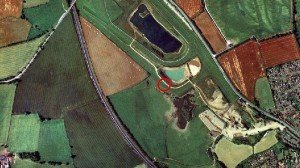
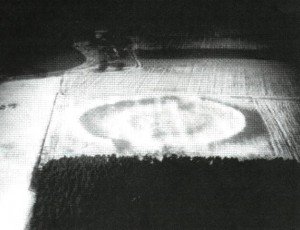
The henge at Catterick racecourse is an intriguing prehistoric site. Initially thought to be a Roman amphitheatre, it is now believed to be a henge, a type of Neolithic earthwork. Crop-mark mapping defined the henge, the 1990s rescue dig explained its mixed bank and cairn fabric, Roman-town excavations showed how much of it was levelled in antiquity, and the motorway programme set the site back into a much larger prehistoric landscape.
Roulston Scar Hill Fort
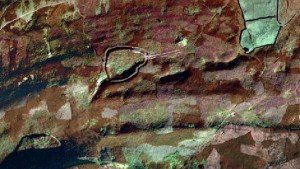
“We were shocked to discover such a huge complex,” said Alastair Oswald, archaeological field investigator for English Heritage. Preliminary examinations of the remains suggest it was more than twice the size of most other prehistoric strongholds. Built of timber palisades and girdled by a 1.3 mile circuit of ramparts, 60 per cent of which are cut out of solid limestone, the fort has been provisionally dated at 400BC.
Maiden Castle Fort Pooley Bridge
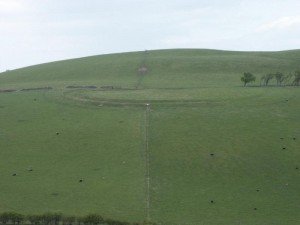
A superbly circular “fort”, built on the side of the hill, which seems to be a Brigantian fashion (see below). This is built with two rampart walls and a very narrow ditch between – 1-2m. If these were defences, they seem pretty slight. In it’s way, a miniature version of Wandlebury, but only about 200m circumference.
East Witton Camp
The earthwork known in the National Trust inventory as East Witton Camp lies on the north-facing slope of Braithwaite Banks, only a couple of hundred metres uphill from Braithwaite Hall. It is a small, roughly oval Iron-Age enclosure that covers about two and a quarter acres (just under a hectare). We call Braithwaite Wood Fort Iron Age, but it’s actually undated, but its typology indicates a potential Iron Age origin.