Category: Neolithic

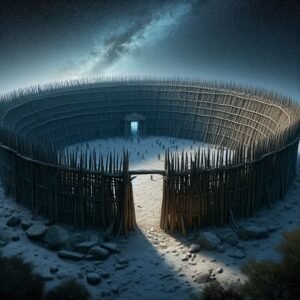
Marne Barracks Neolithic palisaded enclosure

The recent discovery at Catterick has unveiled a significant Late Neolithic palisaded enclosure, shedding light on the prehistoric landscape of North Yorkshire. Excavations revealed two concentric sub-circular palisades, with the outermost having a diameter of up to 200 meters.
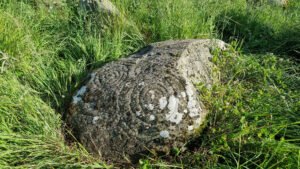
Little Meg Stone Circle

An image of a carved rock, part of the Little Meg stone circle in Cumbria. Part of a site report on brigantesnation.com

Little Meg Stone Circle, also known as Maughanby Circle, is a small and ancient monument located near the village of Little Salkeld in Cumbria, England. It consists of eleven large kerb stones that probably surrounded a Bronze Age kerb cairn, a type of burial mound

Castlerigg stone circle

An aerial view of Castlerigg Neolithic stone circle, in Cumbria. Part of a site visit report on brigantesnation.com

Castlerigg stone circle is one of the oldest and most scenic megalithic monuments in Britain, dating back to the late Neolithic period, around 3000 BC

Mayburgh Henge

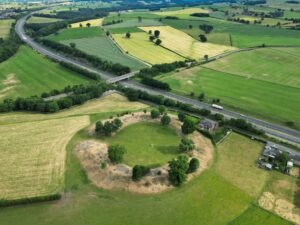
An aerial photo of Mayburgh Henge in Penrith, Cumbria. Part of a site report on brigantesnation.com

Mayburgh Henge is a remarkable prehistoric monument located near Eamont Bridge in Cumbria, England. It consists of a massive circular bank of river cobbles, enclosing a flat area with a single standing stone near the centre.

Newton Kyme Henge

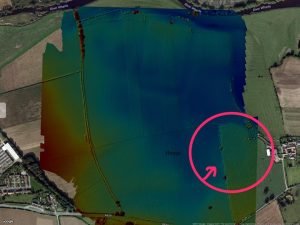
With kind permission of YAAMAPPING

Newton Kyme Henge occupies a slight rise on the south bank of the River Wharfe immediately west of the village of Newton Kyme (OS grid SE 45945 44982), its maximum external diameter extending to around 250 m (heritagegateway.org.uk). The monument is best understood as a Class IIa henge of Late Neolithic–Early Bronze Age date, defined by three concentric ditch circuits with a turf-and-earth bank wedged between the inner and middle ditches.

Sinderby Henge

With kind permission of YAAMAPPING

Although all the existing literature assures us that the Great Henge Alignments of North Yorkshire are now covered by – The Langthorpe Earthwork, Cana Barn Henge, Nunwick Henge and Hutton Moor, finishing with the astounding triple Henge alignment at Thornborough, this may not necessarily be the case.

Maidens Grave – Burton Fleming, North Yorkshire

With kind permission of YAAMAPPING

A henge located north of Rudston,The henge was discovered as a cropmark on an aerial photograph in the early 1960s, although subsequent field investigation showed it to survive as an earthwork, albeit badly plough-damaged.

Nunwick Henge

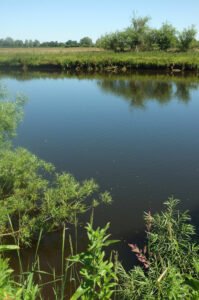
River Ure southwest of Nunwick

A henge at Nunwick visible both as a low bank and shallow internal ditch and as a cropmark. A berm was originally present between ditch and bank.

Rudston Standing Stone

An image illustrating an article about Rudston Standing Stone on thealicesyndrome.com

Rudston is England’s tallest Standing Stone and it’s presence gave the name to the village that it’s located in. It’s presumed to be of Neolithic origin. It’s just over 25ft high.

East Yorkshire

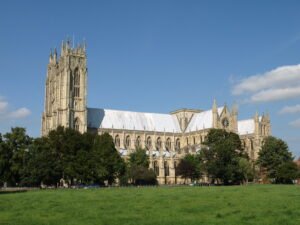
Beverley Minster

East Yorkshire’s Middle-Iron-Age story stands out in Britain because the communities who farmed the chalk of the Yorkshire Wolds developed what archaeologists call the Arras culture: a distinctive blend of continental La Tène fashions and local invention that is visible above all in their cemeteries. Three elements make it special.

Contact Us
close slider