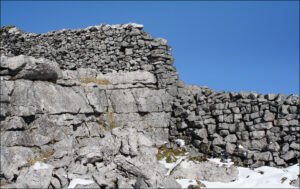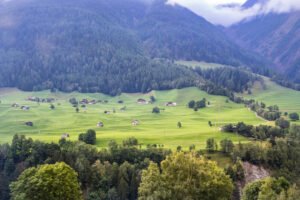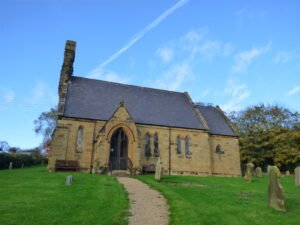
Boltby is a very important ancient site IMO. A gold “hair braid”, was found there, linking it to the Amesbury Archer, buried with two similar hair braids. This also provides a link to the founding of Stonehenge, which helps set a potential scene for a possible “zeitgeist”, of the day.
Site Section: Global Heritage
Nov 23
The Story of Boltby Scar
- Filed under Brigantes, Brigantia, Brigantia England, Britain, Bronze Age, Celtic Tribes, Defensive Dike, Defensive Walls, Dike, Europe, Fort, Hair Braid - Ring, Hill Fort, Iron Age, Landscape Archaeology, Linear Earthworks, Mining Landscape, Promontory fort, Stories of Brigantia
Swaledale
- Filed under Brigantia, Brigantia England, Britain, Cairn, Europe, Flint Scatters, Geology, Geomorphology, Hill Fort, Iron-Age, Megalithic, New Sites, Promontory fort, Ring Cairn, Rock Art, Univallet Hillfort
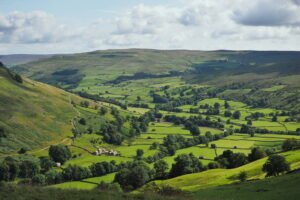
Swaledale occupies the long, sinuous valley carved by the River Swale on its 45-kilometre descent from Nine Standards Rigg (662 m) on the Pennine watershed to Richmond in lower Teesdale. The dale narrows between rough gritstone scarps near Keld, broadens to a patchwork of hay-meadows around Muker and Gunnerside, then opens into a tree-fringed flood-plain west of Reeth before the river cuts through the Carboniferous escarpment to meet the Vale of Mowbray.
- Arkengarthdale, Bainbridge, Barns, Benedictine, Blakethwaite Smelt Mine, Brigante, Brigantes, Brigantia, Bunton, Buttertubs, cairn, Cateractonium, Catterick, Cistercian, Corpse-way, Crackpot, Craclpot, Cup-mark, Deer Park Wood, Downholme, Dyke, Dykes, East Gill Force, Ellerton Abbey, Enclosure Acts, field-barns, Fort, Fountains Abbey, Franciscan, Fremington Edge, Fremmington, Friary, Gangs Flats, Gill, Great Pinseat, Great Scar, Great Scar Limestone, Great Shunner, Greyfriars, Grinton, Grinton Moor, Gunnerside, Gunnerside Gill, Harkerside Moor, Hay-meadow, hay-meadows, Healaugh, Herkersdie Moor, Hill Fort, Hind Rake, How Hill, Humber-Flanders export route, Hunter Gatherer, Hush, Hushes, Iron Age, Ivelet Bridge, Keld, Keldside, Kisdon Force, Kisdon Hill, Lead Mining, Lead-veins, Lower Teasdale, Lower Teesdale, Maiden Castle, market, Marrick Priory, Marske, Marske Deer Park, Marske Hall, Meadow, Mine, Mining, monk, Monks, Muker, Norse, North Yorkshire, nun, Nuns, Old Gang, Packhorse Bridge, Parliamentary Walls, Penine Watershed, Pennine watershed, Reeth, Richmond, Rievaulx Abbey, Ring Cairn, River Swale, Rock, rock-art, Roman, Sheep, Shunner Fell, Skeb Skeugh, Smelt, smelting, St Martin's Priory, Stainmore, Standards Rigg, stone, Swale, Swaledale, Tan Hill, Tan Hill Pub, terraces, Thwaite, Trajanic Lead Pig, vale of Mowbray, Walburn, White Rigg, Wool, Yorkshire Dales
- Leave comment
Aug 04
Guide: Parliamentary-walls and the Northern Enclosures
- Filed under Britain, Enclosure Acts, Europe, Landscape Archaeology, Landscape Legislation
Between the mid-18th and late-19th centuries the British Parliament passed almost 5,000 local “Inclosure Acts.” Each Act authorised a team of appointed commissioners to survey one specific township or parish, divide its open-field strips, common pastures, and “wastes” into new, privately owned parcels, and lay out straight roads and boundary walls or hedges. The commissioners issued a legal award map and schedule that became the new title deeds.
County Durham
- Filed under Brigantia, Brigantia England, Britain, Europe
County Durham’s landscape is often described as a “three-belt county.” To the west rise the high, windswept Pennines; in the middle lies a sheltered coal-bearing vale that funnels every main road and railway; and to the east stands the pale Magnesian-Limestone escarpment ending in low cliffs above the North Sea.
Aug 02
The hero archetype and Lugh
- Filed under Breogans, Britain, Bronze Age, Castro Hillfort, Celtic Gods, Celtic Life, Celtic Tribes, Dark Ages, Dragons, Early Christian, Early Medieval, France, Giants, Ireland, Iron Age, Lugh, Medieval, Mercury, Mesolithic, Myth and Legend, Neolithic, Palaeolithic, Portugal, Roman, Roman Culture, Roman Gods, Spain, The Devil, Viking, Wales
At its core the “hero” is the figure who steps out of ordinary society, confronts chaos or a monster, and returns (or dies) having secured order for the group. In Jungian and comparative-myth terms it sits in the “warrior-champion” slot of the collective story-board; evolutionists would say it crystallises the survival value of decisive coalition leadership in small bands.
- !Kung, Ache, Achiles, Arjuna, Arthur, Balor's Eye, Bee, Bees, Bhagavad Gita, britain, Buffalo, Castro, Catalhoyuk, Cattle, Cúchulainn, Deity, Divinity, Egypt, Embodiment, France, Galicia, gaul, Geryon, Gilgamesh, Giraffe, Gobeki Tepe, god, Greogans, Haasi, Hadza, Hector, Heel, Heracles, Hercules, Hero, Hero Archetype, Hoan, Hunter Gatherer, Hydra, Integration, Inuit, ireland, Iron Age, Ivory, Kalahari Desert, Kudu, la tene, Lagash, Legend, Lion-Man, Lugh, mammoth, Mercury, MeriamTurtle, Mesopotamia, Monotheistic, myth, Narmer, Naro, Nuliajuk, pagan, Paraguay, Pharoh, Poigs, Proto-Hero, Raven, religion, Roman, Salish, Salmon, San Culture, Seal, Sedna, Serpent, Snake, Sockeye, Sorcerer, Spain, spear, St Michael, Sumer, Synchronicity, T-Pillars, Ulster, Zebra
- Leave comment
Head One – St Michaels Church, Kirklington
- Filed under Celtic Head, Celtic Head, Church, Gothic
This head is one of thirteen “Celtic”, or archaic heads that are located within the interior of the church. Twelve of those heads, including this one, are located in four rows of three, which run down either side of the churches arched columns. The thirteenth head is located in the bell tower.
Long Meg and her Daughters standing stone and stone circle
- Filed under Agriculture, Archaeology, Medieval, Neolithic, ploughing, Stone Circle
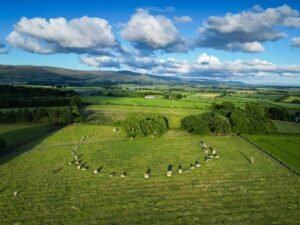
Long Meg and her Daughters is a remarkable Neolithic monument located near Penrith in Cumbria, England.
Cana Barn Henge
- Filed under Brigantia, Brigantia England, Britain, Class IIa, Europe, Henge, Liminal Spaces, Neolithic, New Sites
The stats for this Neolithic monument are astounding: 200m across, once a great circle of earthen banks and deep ditches. Today, almost lost: 5,000 years of plough and neglect have flattened the banks and filled the ditches, and Cana Henge is now nothing but a smoothly undulating grassy field on the moor overlooking Ripon.
Anciens Arsenaux Neolithic Settlement, Sion – Switzerland
- Filed under Animal Remains, Augustus Caesar, Civil Structure, Dragons, Early Neolithic, Enclosure, Europe, Field Systems, Hamlet, Hoof marks, Julius Caesar, Myth and Legend, Neolithic, New Sites, Planig‑Friedberg ware, Polished Stone Adze, Pottery, Quern Stones, Roman army, Roman baths, Roman City, Roman Culture, Roman Villa, Switzerland, The Devil, Vasi a Bocca Quadrata ware, Witches
Sion lies midway along the upper Rhône Valley, an east‑west trench gouged by repeated Pleistocene glaciers and now flanked by the Pennine and Bernese Alps. The settlement area sits on the alluvial fan of the Sionne torrent, a cone of well‑sorted sands and gravels that projects onto the wider Rhône flood‑plain.
- adze, Ard, Bronze Age, Causewayed enclusure, Chambered tombs, Cross Cut ploughing, cross ploughing, Early Neolithic, Europe’s oldest plough furrows, Flintbek LA, Guldager-Nygård, Iron Age, Les Arsenaux, Long Barrow, Mesolithic, Neolithic, Oppida, Oppidum, palaeolithic, Planig‑Friedberg ware culture, Pleistocene glaciers, ploughing, polished adze, Pottery, Quern, Rhône Valley, Roman, Seduni, Sedunum, South Street Long Barrow, Stone Tools, Torsted-Langagergård, Vasi a Bocca Quadrata culture, Vasi a Bocca Quadrata ware, VBQ
- Leave comment
Jul 21
Gnaeus Julius Agricola
- Filed under Agricola, Articles, Leaders, Roman, Roman army, Roman navy
In a series of annual military campaigns Agricola put down revolts in north Wales, subdued the Brigantes tribe in the north, extended Roman control over the Scottish lowlands, where he established a string of forts between the Forth and the Clyde, sent troops into Galloway, and made inroads into the eastern Highlands. During the latter campaign his vessels were the first to circumnavigate the islands.
- Agricola, Antoninus Pius, Barochan, Barwick in Elment, Brigantia, britain, Camelon, Carlisle, Cartimandua, Clyde, Fifeshire, Forth, Gask Ridge, ireland, Iron Age, Lake District, Lancaster, Legion XX, Littlechester, Lune, Maryport, Mersey, Mollins, Ribble, Roman, scotland, Stainmore, Stanegate, Tay, Venutius, Wilderspool, Wrotexeter
- Leave comment
Articles
- Bronze Age
- Iron Age
- Roman
- Dark Ages
- Early Christian
- Viking
- Saxon
- Medieval
- Vitrified Fort
- Archaeology Guide
- Guide – Introduction to Critical Thinking in Archaeological Research
- Guide – Challenging Assumptions with Free Thinking
- Guide – Congruence in Archaeological Interpretation: Holistic Analysis
- Guide – Critical Thinking: Lack of Evidence Does Not Mean Evidence of Lack
- Guide – Critical Thinking: The Simple Assumption
- Guide – Applying critical thinking to historic and archaeological research
- Guide – Empathic Archaeology Introduction
- Guide – Landscape Archaeology Introduction
- Guide – What is Landscape Archaeology?
- Guide – Introduction to Glacial Archaeology
- Guide – The Flora and Fauna of Prehistoric Britain
- Guide – Landscape Archaeology: Post-Ice Age Landscape of Thornborough
- Guide – Archaeological Periods in Western Europe
- Guide – Visible Remains
- Guide – Hidden Remains
- Guide – Getting Started
- Guide – Landscape Features
- Guide – Agricultural practices through time
- Guide – Introduction to Glacial Archaeology
- Guide: In Depth – Church Doors and Windows
- Guide – Mining
- Guide – Archaeological Terms
- Guide – Glossary
- Latin Translation – Choosing the meaning of AUG
- Reports
- An introduction to Brigantian Druidry
- Brigantia during the Dark Ages
- Celtic Heads
- Finding Bardon – An Arthurian Quest
- Early Christian syncretism and how the old ones hid amongst the new religion
- Rome: The Emperors Claim to Divinity
- Syncretism through the ages
- The Border Reivers
- The Gallus Frontier – Brigantia against the Romans
- The growth of Christianity 50AD – 1100AD
- The Kingdom of Venutius
- The use of the word Lady in relation to water related structures
- The walled gardens of Brigantia
- Yorkshire’s “Sacred Vale” – The Dawn of Brigantia
- Brigantia Espania
- Iberian Peninsular
- Galicia
- Biefing – The Myth of Breogán and the Tower of Heracles
- Briefing – Galicia’s Political History and Separatist Sentiment
- Briefing – Geography and Geology of Galicia
- Briefing – Design of Galician Hillforts
- Briefing – Roman Interaction with Galicia and the Iberian Peninsula
- Church of Santa María de Cambre, Cambre near A Coruña
Categories
- Agriculture (6)
- Field Systems (1)
- ploughing (2)
- Angle (2)
- Archaeological Periods (312)
- Anglo-saxon (6)
- Bronze Age (52)
- Late Bronze Age (1)
- Dark Ages (24)
- Dark Ages Brigantia (9)
- Early Christian (37)
- Early Medieval (8)
- Georgian (9)
- Gothic (3)
- Ice Age (1)
- Iron Age (133)
- Late Iron Age (5)
- Jacobite (7)
- Medieval (61)
- Medieval Brigantia (9)
- Mesolithic (11)
- Neolithic (45)
- Early Neolithic (5)
- Norman (40)
- Palaeolithic (6)
- Roman (94)
- Saxon (9)
- Stuart (6)
- Suspect (1)
- Tudor (10)
- Undated (7)
- Viking (4)
- Archaeology (93)
- Archaeobotanical (1)
- Empathic Archaeology (11)
- Free Thinking (7)
- Battle (1)
- Brigantia (147)
- Brigantia England (134)
- Brigantia Espania (11)
- Civil Structure (6)
- Defensive Structures (45)
- Castle (5)
- Defensive Dike (2)
- Defensive Walls (1)
- Fort (20)
- Fortified Barn (1)
- Marching Camp (5)
- Motte and Bailey (6)
- Ring Work (1)
- Class A (1)
- Dialects (1)
- Earthworks (51)
- Dike (8)
- Field Systems (26)
- Enclosure (12)
- Enclosure Acts (1)
- Europe (51)
- Festivals (2)
- Finds (42)
- Altar (10)
- Amphora (1)
- Animal Remains (4)
- Auroch (1)
- Hoof marks (1)
- Antler Pick (2)
- Arrowhead (1)
- Leaf-shaped (1)
- Axe (1)
- Bone Comb (1)
- Celtic Head (8)
- Celtic Head (2)
- Clock (1)
- Curse Tablet (1)
- Flint Scatters (4)
- Gaming Pieces (1)
- Hair Braid – Ring (4)
- Human Remains (2)
- Adult (1)
- Couched Burial (1)
- Juvinile (1)
- Mace Head (1)
- S-curved (1)
- Mosaic (1)
- Polished Stone Adze (1)
- Pottery (8)
- Funerary Urns (2)
- Grooved ware (1)
- Peterborough ware (1)
- Mortlake ware (1)
- Planig‑Friedberg ware (1)
- Samian ware (2)
- Vasi a Bocca Quadrata ware (1)
- Quern Stones (1)
- Statue (1)
- Geography (16)
- Maps (7)
- Geology (13)
- Anthracite – Coal (2)
- Geomorphology (2)
- Gods (9)
- Guide (72)
- Critical Thinking (8)
- Socratic Thought (1)
- Glossary (1)
- Hidden Remains (8)
- Geophysics (5)
- LiDAR (1)
- Radiocarbon Dating (1)
- Remote Sensing and Analysis (1)
- Regional Surveys (13)
- Research Tools (4)
- Visible Remains (12)
- Air Mapping (2)
- Air Photography (2)
- Fieldwalking (2)
- Lithics (1)
- Photography (6)
- Critical Thinking (8)
- Henge (18)
- Hill Fort (61)
- Castro Hillfort (3)
- Contour/Plateau Fort (1)
- Multivallete Hillfort (1)
- Oppidum (1)
- Oppidum (1)
- Promontory fort (4)
- Slavic Gord (1)
- Univallet Hillfort (4)
- Vitrified Fort (27)
- Historic Buildings (20)
- Amphitheatre (1)
- Barn (2)
- Beacon (1)
- Broch (1)
- Coaching Inn/Hostelry (1)
- Folly (4)
- Hall (2)
- Hospital (1)
- House (1)
- Tower (7)
- Walled Garden (1)
- Industrial Heritage (9)
- Chimney (1)
- Mining (9)
- Spoil Heap (1)
- Smelting (2)
- Iron-Age (1)
- Landscape Archaeology (38)
- Glacial Archaeology (2)
- Landscape Legislation (1)
- Mining Landscape (1)
- Ritual Landscape (6)
- Landscape feature (49)
- Barrow (18)
- Bell Barrow (2)
- Bowl Barrow (1)
- Cairn (2)
- Disc Barrow (1)
- Long Barrow (5)
- Ring Barrow (1)
- Ring Cairn (1)
- Round Barrow (1)
- Square Barrow (1)
- Steppe Kurgan (1)
- Boundary Marker (2)
- Burial Mound (9)
- Ceremonial Mount (1)
- Cursus (2)
- Hill Figure (5)
- Linear Earthworks (2)
- Mound (6)
- Passage Tomb (1)
- Ring Cairn (2)
- Snake Mound (1)
- Terraces (3)
- Barrow (18)
- Leaders (33)
- Agricola (2)
- Arthur (1)
- Augustus Caesar (2)
- Breogans (3)
- Caratacus (1)
- Cnut (1)
- Julius Caesar (1)
- Petilius Cerialis (1)
- Liminal Spaces (1)
- Market (1)
- Megalithic (10)
- Rock Art (3)
- Stone alignment (1)
- Stone Circle (7)
- stone circles (1)
- Stone Row (2)
- Myth and Legend (5)
- New Sites (23)
- Publications (21)
- Biographies (2)
- Henge Capital of Britain (10)
- News (4)
- Stories of Brigantia (4)
- Walking Guides (1)
- Rabbit Warren (1)
- Religious Structures (31)
- Abbey (3)
- Church (24)
- Crosses (1)
- Memorial Planting (1)
- Priory (2)
- Religious Orders (3)
- Ritual walkway/pilrimage path (1)
- Reports (148)
- Roman Culture (11)
- Roman army (8)
- Roman baths (1)
- Roman City (1)
- Roman Gods (1)
- Mercury (1)
- Roman navy (1)
- Roman pottery (3)
- Samian ware (2)
- Roman Road (1)
- Roman Roads (2)
- Roman Villa (2)
- The Celtic World (35)
- Celtic Gods (1)
- Lugh (1)
- Celtic Industry (1)
- Celtic Life (9)
- Celtic Trade (1)
- Celtic Tribes (27)
- Celtic Gods (1)
- Trade (4)
- Minting (3)
- Coins (1)
- Spoil Heaps (2)
- Minting (3)
- Translation (7)
- Inscription (4)
- Latin (5)
- Uncategorized (24)
- Water Works (13)
Research Links
Heritage Gateway
Announcing: The Brigantian News!
- Roman Road to the West uncovered under Manchester Street 16 July 2025
- What might Stonehenge Mean? Dartmoor and Carnac add to the Picture 3 July 2025
- Megalithic Stone Monuments in France May Be Europe’s Oldest 1 July 2025
- Drumanagh Promontory Fort – First Ever Intact Roman Pot Found in Ireland 5 June 2025
Portable Antiquities News
A post-Medieval copper-alloy Nuremberg 'Lion of St Mark' jetton issued by Hans Schultes I, dating to the period 1553-1584. The reverse has a lys initial mark. [...]
A corroded silver Roman denarius of Carausius dating to c. AD 286-293 (Reece Period 14). PAX AVG reverse type depicting Pax standing left, holding olive branch and vertical sceptre. Uncertain mint. Cf. RIC V, part 2, p. 525, [...]
A complete silver Halfpenny of Edward I (AD 1272-1307). Withers type 1c. Long cross reverse with three pellets in each quadrant. Dublin mint. AD 1280-1284. Diameter: 14.89mm, Thickness: 0.50mm, Weight: 0.65g [...]
A complete silver Penny of John (AD 1199-1216). Class 6b1. Short cross reverse with quatrefoil in each quadrant. Minted by Ra[l]vf in London. AD 1213-1215.Diameter: 18.65mm, Thickness: 0.96mm, Weight: 1.33g North Vol I, P 222, No 975/1 [...]
An incomplete silver Denarius of Julia Mamaea dating to the period AD 225-235. Reece period 11. IVNO AVGVSTAE reverse type, depicting Juno, draped, seated left, holding flower in right hand and swathed infant in left [...]
An incomplete copper alloy radiate of Unclear Emperor (AD 260-296). Unclear reverse type. Unclear mint.Diameter: 17.18mm, Weight: 1.55gThe coin is missing minor portions of its outer flan. [...]
Eight body sherds of Roman greyware, two joining, old breaks, probably from one vessel, sandwiched-fired with reduced core, oxidised and very thin margins, pale grey brown interior and dark grey exterior, weight 25g, found on beach, [...]
Body sherd of medieval unglazed pottery jar, probably hand-built, perhaps Early Medieval Ware, reduced with oxidised and partly sooted exterior, weight 10g, 12th - 13th century, found on beach, site 2. [...]
Rim sherd of hand-built Iron Age pottery jar or bowl, dark reduced, profusely micaceous, thickness 11mm, weight 17g, 8th century BC - mid 1st century AD, found on beach, site 2. [...]
Two body sherds of hand-built Iron Age pottery found on beach, 8th century BC - mid 1st century AD:- dark reduced with burnished or smoothed surfaces, micaceous, some sand, thickness 6.5mm, weight 5g, from 'entrance' [...]
An incomplete copper alloy nummus of Constantius II dating to the period AD 345-361. Reece period 18. FEL TEMP REPARATIO reverse type depicting soldier spearing fallen horseman. Unclear mint.Diameter: 16.23mm, Weight: 1.00g [...]
A complete copper alloy sestertius of Marcus Aurelius dating to the period AD 176-177. Reece period 12. IMP VIII COS III P P DE GERMANIS S C reverse type, pile of Arms. Mint of Rome. [...]
A complete lead alloy Seal Matrix of Medieval date (AD 1200-1300). The matrix is pointed-oval or 'vessica' shaped in plan, with an integral loop projecting from the upper end of the back of the object. [...]
An incomplete copper alloy Knife handle of Medieval to early Post-Medieval date (AD 1400-1600). The object is composed of a sub-rectangular pommel is rectangular which is decorated with an openwork quatrefoil and rounded upper knop [...]
A complete copper alloy thimble of Medieval date (AD 1300-1500).It is a dome or 'bee-hive' shaped (hemispherical). The rim is unthickened and the sides are straight. At the shoulder the sides turn more sharply inwards towards the top. [...]
A cast copper-alloy medieval decorated openwork mount (possibly dress, furniture or harness related)The object is broadly cross‑shaped, formed from four rectangular lobes, each pierced by a circular hole for attachment. The lobes are concavo‑convex, with the front [...]
An incomplete cast copper-alloy medieval harness pendant dating to c. AD 1300 - 1400The pendant is concavo‑convex in form, with the convex face decorated with a scallop‑shaped motif composed of oblique linear grooves. These grooves create narrow banded [...]
An incomplete clay post-medieval smoking pipe dating to c.1580-1610. Oswald 1961 no. 3 (in Oswald 1975, fig. 3g, p.37)A bulbous, curvilinear bowl decorated with a fine border of short, closely spaced ridges around the rim. [...]
A medieval lead vessel repair, pot mend or lid.An oval cast plug, possibly used to repair a hole in a vessel wall. It is broadly circular in plan with a rounded, projecting reverse. Pale cream patina.Diameter: 24 [...]
A complete cast lead spindle whorl dating from the late early medieval to medieval period dating from the 10th-14th century (c.AD 900-1400)The object is plano-convex with an oval flat base. There is a central oval aperture [...]
Recent Articles and Site Pages
- The Story of Boltby Scar
- Swaledale
- Guide: Parliamentary-walls and the Northern Enclosures
- County Durham
- The hero archetype and Lugh
- Head One – St Michaels Church, Kirklington
- Long Meg and her Daughters standing stone and stone circle
- Cana Barn Henge
- Anciens Arsenaux Neolithic Settlement, Sion – Switzerland
- Gnaeus Julius Agricola
- Snake Iconography in the British Isles
- Wiltshire
- Liverpool Street Roman Road, Manchester
- South Street Long Barrow, Avebury
- Mamucium Roman Fort, Manchester
Locations
- Czechia (1)
- England (198)
- Bedfordshire (1)
- Cumbria (13)
- Dorset (2)
- Durham (9)
- East Yorkshire (1)
- Lancashire (7)
- North Derbyshire (8)
- North Yorkshire (118)
- Yorkshire Dales (4)
- Yorkshire Moors (1)
- Northumberland (9)
- Oxfordshire (2)
- Somerset (2)
- South Yorkshire (10)
- Staffordshire (3)
- West Yorkshire (7)
- Wiltshire (4)
- Europe (8)
- France (3)
- Germany (2)
- Global (3)
- Ireland (4)
- County Dublin (1)
- Scotland (21)
- Dumphries and Galloway (3)
- Grampian (4)
- Highlands (8)
- Perthshire (4)
- Tayside (3)
- Spain (4)
- Switzerland (1)
- Wales (4)