
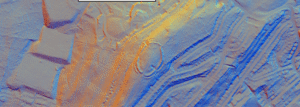
This is an oval fort with an internal area of 2.5 acres. A bank, ditch and counterscarp bank are continuous around it except on the N side where ditch and counterscarp have been destroyed.
Category: Brigantia
Scoles Coppice Fort
- Filed under Brigantia, Brigantia England, Fort, Hill Fort, Iron Age
Scholes (or Scoles) Coppice Camp (sometimes called “Caesar’s Camp”) lies just north-west of Kimberworth in Rotherham, atop the same Magnesian Limestone ridge that carries the Roman Rig. Its grid reference is roughly SE 436 937, placing it only 200–300 m to the north of the Rig’s northern branch
Roman Rig Defensive Works
- Filed under Brigantia, Brigantia England, Britain, Dark Ages, Dark Ages Brigantia, Defensive Dike, Defensive Structures, Dike, Europe, Iron Age, Late Iron Age, Linear Earthworks, Medieval, Petilius Cerialis
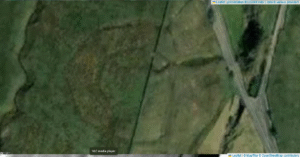
The Roman Rig is a defensive dyke built to defend against attack from the south. It runs from Sheffield, past Templeborough and carries on almost to Doncaster. If this is a Brigantian dyke it would certainly add weight to Websters definition of the Roman border in the period.
- Adwick-le-Street Roman Fort, Carl Wark, Cartimandua, Danes Camp, Defensive Earthwork, Defensive Works, Doncaster Roman Fort, Dunum, Dyke, Linear earthwork, Mam Tor, Petilius Cerialis, Roe Wood, Roman Rig, Scoles Coppice, South Yorkshire, Sutton Common, Templeborough Roman Fort, Venutius, Wincobank
- Leave comment
Dryburn Henge, Cumbria
- Filed under Brigantia, Brigantia England, Bronze Age, Class I, Enclosure, Henge, Late Bronze Age, Neolithic, Ritual Landscape
Dryburn Henge lies on Alston Moor in Cumbria, within the North Pennines Area of Outstanding Natural Beauty. It occupies a strategic nodal point on the high moor, roughly at NY 760 430, where routes across the Pennine watershed converge. The surrounding terrain is underlain by Carboniferous Great Scar Limestone and interbedded Yoredale shales, with scattered fluvioglacial gravels in valley bottoms.
Kirkhaugh Cairns – Cumbria
- Filed under Barrow, Brigantia, Brigantia England, Britain, Bronze Age, Cairn, Europe, Finds, Funerary Urns, Hair Braid - Ring, Megalithic, Mining, New Sites, Rock Art
This mound is 22ft. in diam. and about 3ft high. It has been built upon a natural knoll which makes the barrow look larger than it is. Excavation showed that the mound has an earthy core with a rubble capping.
Oval Barrow east of Ulshaw Bridge
- Filed under Brigantia, Brigantia England, Burial Mound, Landscape feature, Long Barrow
This unexcavated and undated barrow matches many of other Late Neolithic / Early Bronze-Age round barrows (c. 2400–1500 BC) dotted along the flanks of the Yorkshire Dales.
Cleave Dyke Defensive System
- Filed under Brigantia, Brigantia England, Britain, Defensive Structures, Dike, Iron Age, Landscape feature
The Cleave dyke system is several Dykes which combine to create a boundary of between 9 and 18 kilometres running north south to the west of Thirsk.
Black Dike – Coverdale
- Filed under Boundary Marker, Brigantia, Brigantia England, Dark Ages, Dark Ages Brigantia, Dike, Iron Age, Landscape feature, New Sites
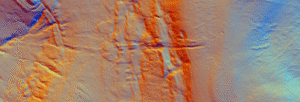
Black Dike is the diminutive counterpart to the great Tor Dike, rising from its western arm and climbing to the watershed between Great and Little Whernside. Beginning at roughly SD 988 756—where Tor Dike cleaves the limestone scarp—the Black Dike pursues a steep, sinuous course uphill for nearly 0.6 km, finally spilling onto the ridge crest at about 675 m above sea level
Jun 27
Prehistoric mounds, cairns and boundary earthworks in Coverdale
- Filed under Archaeology, Barrow, Boundary Marker, Brigantia, Brigantia England, Bronze Age, Burial Mound, Dark Ages, Dark Ages Brigantia, Early Christian, Early Medieval, Guide, Iron Age, Landscape Archaeology, Landscape feature, Motte and Bailey, Mound, New Sites, Roman, Terraces, Visible Remains
A gazetteer of probable prehistoric mounds, cairns and boundary earthworks in Coverdale. It is not complete and is still being researched.
Jun 16
Hillforts: Defence or Ritual? – Part 1
- Filed under Archaeology, Brigantia, Brigantia England, Britain, Critical Thinking, Defensive Structures, Earthworks, Guide, Hill Fort, Univallet Hillfort, Vitrified Fort
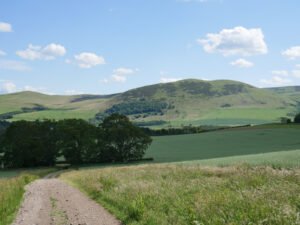
Over the last five years Iron-Age specialists have been re-examining what British hillforts were really for. The question is no longer just “fortress or farm?” but whether many of them were built first and foremost as places of gathering, display and ritual.
- Ad Gefrin, Barry Cunliffe, battle, Bowden, Castle Dykes, Ceremony, Debate, Defence, Hill Fort, Hill of Tara, hillfort, Iron Age, Julius Caesar, Maiden Castle, McOmish, Mortimer Wheeler, Northumberland, Paulinus, Ringforts, ritual, Ritual First, tacitus, Thornborough Henges, vitrified, Yeavering Bell
- Leave comment
Articles
- Bronze Age
- Iron Age
- Roman
- Dark Ages
- Early Christian
- Viking
- Saxon
- Medieval
- Vitrified Fort
- Archaeology Guide
- Guide – Introduction to Critical Thinking in Archaeological Research
- Guide – Challenging Assumptions with Free Thinking
- Guide – Congruence in Archaeological Interpretation: Holistic Analysis
- Guide – Critical Thinking: Lack of Evidence Does Not Mean Evidence of Lack
- Guide – Critical Thinking: The Simple Assumption
- Guide – Applying critical thinking to historic and archaeological research
- Guide – Empathic Archaeology Introduction
- Guide – Landscape Archaeology Introduction
- Guide – What is Landscape Archaeology?
- Guide – Introduction to Glacial Archaeology
- Guide – The Flora and Fauna of Prehistoric Britain
- Guide – Landscape Archaeology: Post-Ice Age Landscape of Thornborough
- Guide – Archaeological Periods in Western Europe
- Guide – Visible Remains
- Guide – Hidden Remains
- Guide – Getting Started
- Guide – Landscape Features
- Guide – Agricultural practices through time
- Guide – Introduction to Glacial Archaeology
- Guide: In Depth – Church Doors and Windows
- Guide – Mining
- Guide – Archaeological Terms
- Guide – Glossary
- Latin Translation – Choosing the meaning of AUG
- Reports
- An introduction to Brigantian Druidry
- Brigantia during the Dark Ages
- Celtic Heads
- Finding Bardon – An Arthurian Quest
- Early Christian syncretism and how the old ones hid amongst the new religion
- Rome: The Emperors Claim to Divinity
- Syncretism through the ages
- The Border Reivers
- The Gallus Frontier – Brigantia against the Romans
- The growth of Christianity 50AD – 1100AD
- The Kingdom of Venutius
- The use of the word Lady in relation to water related structures
- The walled gardens of Brigantia
- Yorkshire’s “Sacred Vale” – The Dawn of Brigantia
- Brigantia Espania
- Iberian Peninsular
- Galicia
- Biefing – The Myth of Breogán and the Tower of Heracles
- Briefing – Galicia’s Political History and Separatist Sentiment
- Briefing – Geography and Geology of Galicia
- Briefing – Design of Galician Hillforts
- Briefing – Roman Interaction with Galicia and the Iberian Peninsula
- Church of Santa María de Cambre, Cambre near A Coruña
Categories
- Agriculture (6)
- Field Systems (1)
- ploughing (2)
- Angle (2)
- Archaeological Periods (312)
- Anglo-saxon (6)
- Bronze Age (52)
- Late Bronze Age (1)
- Dark Ages (24)
- Dark Ages Brigantia (9)
- Early Christian (37)
- Early Medieval (8)
- Georgian (9)
- Gothic (3)
- Ice Age (1)
- Iron Age (133)
- Late Iron Age (5)
- Jacobite (7)
- Medieval (61)
- Medieval Brigantia (9)
- Mesolithic (11)
- Neolithic (45)
- Early Neolithic (5)
- Norman (40)
- Palaeolithic (6)
- Roman (94)
- Saxon (9)
- Stuart (6)
- Suspect (1)
- Tudor (10)
- Undated (7)
- Viking (4)
- Archaeology (93)
- Archaeobotanical (1)
- Empathic Archaeology (11)
- Free Thinking (7)
- Battle (1)
- Brigantia (147)
- Brigantia England (134)
- Brigantia Espania (11)
- Civil Structure (6)
- Defensive Structures (45)
- Castle (5)
- Defensive Dike (2)
- Defensive Walls (1)
- Fort (20)
- Fortified Barn (1)
- Marching Camp (5)
- Motte and Bailey (6)
- Ring Work (1)
- Class A (1)
- Dialects (1)
- Earthworks (51)
- Dike (8)
- Field Systems (26)
- Enclosure (12)
- Enclosure Acts (1)
- Europe (51)
- Festivals (2)
- Finds (42)
- Altar (10)
- Amphora (1)
- Animal Remains (4)
- Auroch (1)
- Hoof marks (1)
- Antler Pick (2)
- Arrowhead (1)
- Leaf-shaped (1)
- Axe (1)
- Bone Comb (1)
- Celtic Head (8)
- Celtic Head (2)
- Clock (1)
- Curse Tablet (1)
- Flint Scatters (4)
- Gaming Pieces (1)
- Hair Braid – Ring (4)
- Human Remains (2)
- Adult (1)
- Couched Burial (1)
- Juvinile (1)
- Mace Head (1)
- S-curved (1)
- Mosaic (1)
- Polished Stone Adze (1)
- Pottery (8)
- Funerary Urns (2)
- Grooved ware (1)
- Peterborough ware (1)
- Mortlake ware (1)
- Planig‑Friedberg ware (1)
- Samian ware (2)
- Vasi a Bocca Quadrata ware (1)
- Quern Stones (1)
- Statue (1)
- Geography (16)
- Maps (7)
- Geology (13)
- Anthracite – Coal (2)
- Geomorphology (2)
- Gods (9)
- Guide (72)
- Critical Thinking (8)
- Socratic Thought (1)
- Glossary (1)
- Hidden Remains (8)
- Geophysics (5)
- LiDAR (1)
- Radiocarbon Dating (1)
- Remote Sensing and Analysis (1)
- Regional Surveys (13)
- Research Tools (4)
- Visible Remains (12)
- Air Mapping (2)
- Air Photography (2)
- Fieldwalking (2)
- Lithics (1)
- Photography (6)
- Critical Thinking (8)
- Henge (18)
- Hill Fort (61)
- Castro Hillfort (3)
- Contour/Plateau Fort (1)
- Multivallete Hillfort (1)
- Oppidum (1)
- Oppidum (1)
- Promontory fort (4)
- Slavic Gord (1)
- Univallet Hillfort (4)
- Vitrified Fort (27)
- Historic Buildings (20)
- Amphitheatre (1)
- Barn (2)
- Beacon (1)
- Broch (1)
- Coaching Inn/Hostelry (1)
- Folly (4)
- Hall (2)
- Hospital (1)
- House (1)
- Tower (7)
- Walled Garden (1)
- Industrial Heritage (9)
- Chimney (1)
- Mining (9)
- Spoil Heap (1)
- Smelting (2)
- Iron-Age (1)
- Landscape Archaeology (38)
- Glacial Archaeology (2)
- Landscape Legislation (1)
- Mining Landscape (1)
- Ritual Landscape (6)
- Landscape feature (49)
- Barrow (18)
- Bell Barrow (2)
- Bowl Barrow (1)
- Cairn (2)
- Disc Barrow (1)
- Long Barrow (5)
- Ring Barrow (1)
- Ring Cairn (1)
- Round Barrow (1)
- Square Barrow (1)
- Steppe Kurgan (1)
- Boundary Marker (2)
- Burial Mound (9)
- Ceremonial Mount (1)
- Cursus (2)
- Hill Figure (5)
- Linear Earthworks (2)
- Mound (6)
- Passage Tomb (1)
- Ring Cairn (2)
- Snake Mound (1)
- Terraces (3)
- Barrow (18)
- Leaders (33)
- Agricola (2)
- Arthur (1)
- Augustus Caesar (2)
- Breogans (3)
- Caratacus (1)
- Cnut (1)
- Julius Caesar (1)
- Petilius Cerialis (1)
- Liminal Spaces (1)
- Market (1)
- Megalithic (10)
- Rock Art (3)
- Stone alignment (1)
- Stone Circle (7)
- stone circles (1)
- Stone Row (2)
- Myth and Legend (5)
- New Sites (23)
- Publications (21)
- Biographies (2)
- Henge Capital of Britain (10)
- News (4)
- Stories of Brigantia (4)
- Walking Guides (1)
- Rabbit Warren (1)
- Religious Structures (31)
- Abbey (3)
- Church (24)
- Crosses (1)
- Memorial Planting (1)
- Priory (2)
- Religious Orders (3)
- Ritual walkway/pilrimage path (1)
- Reports (148)
- Roman Culture (11)
- Roman army (8)
- Roman baths (1)
- Roman City (1)
- Roman Gods (1)
- Mercury (1)
- Roman navy (1)
- Roman pottery (3)
- Samian ware (2)
- Roman Road (1)
- Roman Roads (2)
- Roman Villa (2)
- The Celtic World (35)
- Celtic Gods (1)
- Lugh (1)
- Celtic Industry (1)
- Celtic Life (9)
- Celtic Trade (1)
- Celtic Tribes (27)
- Celtic Gods (1)
- Trade (4)
- Minting (3)
- Coins (1)
- Spoil Heaps (2)
- Minting (3)
- Translation (7)
- Inscription (4)
- Latin (5)
- Uncategorized (24)
- Water Works (13)
Research Links
Heritage Gateway
Announcing: The Brigantian News!
- Roman Road to the West uncovered under Manchester Street 16 July 2025
- What might Stonehenge Mean? Dartmoor and Carnac add to the Picture 3 July 2025
- Megalithic Stone Monuments in France May Be Europe’s Oldest 1 July 2025
- Drumanagh Promontory Fort – First Ever Intact Roman Pot Found in Ireland 5 June 2025
Portable Antiquities News
A complete cast copper-alloy bell, probably of the Medieval period. The body is sub-conical with tapering sides and a flat upper surface. Projecting from the centre of this is a circular-sectioned bar extending into a [...]
A cast copper-alloy Medieval strap fitting or belt mountA corroded Medieval copper-alloy bar mount c. AD 1350-1400. The mount is18.26mm in length and has a convex, hemispherical cross section. At each end is a tapering arm with a [...]
A copper-alloy single-loop buckle of Medieval date, circa AD 1350-1400The buckle is trapezoidal in shape (now crushed inward) and rectangular in cross section. A small knop projects centrally from one of the outer sides of the frame The buckle [...]
Tertiary semi-hard hammer struck flake from a small, multi-platform core. One lateral edge has the remnants of a thermal (frost) fractured surface, notable by its matt surface. The dorsal face is covered with small, overlapping [...]
Tertiary, semi- hard hammer struck flake, of slightly orange/brown patinated dark flint. Sub-triangular in plan, natural and irregular platform, no bulbar scar though the hertzian cone is well pronounced. Both lateral edges are very finely [...]
A small copper alloy ring of uncertain date and function. The object is undecorated, circular, with a sub-rectangular cross-section.Dimensions: Diameter: 11.60 mm; Thickness: 1.3 mm, Weight 0.26g [...]
Possible mount fragment. Straight-sided sheet of copper alloy with incised herringbone decoration. Suggested date: Early Medieval, 700-850Length: 47.1mm, Width: 10.8mm, Thickness: 0.6mm [...]
Cast copper alloy fragment decorated with ring dot. suggested date: Early Medieval, 700-1000Length: 27.7mm, Width: 12.6mm, Thickness: 1.5mm [...]
Cast copper alloy fragment with a bulbous bottom topped with a double grooved strip. No surface treatment but good preservation. Suggested date: Early Medieval, 700-1000Length: 35.6mm, Width: 21.2mm, Thickness: 4.1mm [...]
Cast copper alloy strap end, front surface originally gilt overall but this only survives in recesses of design; no gilding on back. suggested date: Early Medieval, 850-1000Length: 46.4mm, Width: 14.3mm [...]
An incomplete Roman copper-alloy umbonate disc brooch, dating to c. AD 75 - 200. It is of Mackreth (2011) British Plate Type 6.a. Roughly 80% of the brooch remains. The brooch is circular with broken and worn edges from which there [...]
Circular copper alloy linked pin head with a plain cross dividing into 4 sections; each is decorated differently. Three rivet holes have been drilled from the front to attach the pin (now broken). Suggested date: [...]
A worn and heavily corroded copper-alloy Post-Medieval farthing of Charles I (AD 1625-1649), dating to AD 1636-1644. Unclear rose type. Mint of London. Unclear initial mark. North (1991: 165) nos. 2290-2292. The object is mostly obscured by corrosion. [...]
Small medieval sheet copper-alloy mount with an in-situ rivet and rove, also made of copper-alloy. The mount has five edges: two longer and parallel, one short and perpendicular, and two shorter still, oblique and forming a [...]
Cast copper alloy pin head with four holes. Between the holes is a braided cross. Pin appears to have broken off and the head was possibly attached to another pin; the remnant of an attached [...]
An incomplete copper-alloy of unclear function and date.The object is curved and cylindrical with worn breaks terminating both ends. It is formed from rolled copper-alloy sheet divided by three irregularly located copper-alloy knops or collars. Each knop is formed [...]
A worn and heavily corroded copper-alloy Post-Medieval farthing of Charles I (AD 1625-1649), dating to AD 1636-1644. Unclear rose type. Mint of London. Unclear initial mark. North (1991: 165) nos. 2290-2292. The object is mostly obscured by corrosion. [...]
Fragment of heavily gilded cast copper alloy that resembles a crown, curved in profile. The source record is annotated: 'Schleswig Holstein Landesmuseum, Hedeby Boat, 10th-century, Danish'. Suggested date: Early Medieval, 900-1000Length: 16mm, Width: 26.2mm, Thickness: [...]
A worn Roman copper-alloy nummus of the House of Constantine dating to the period AD 335 to 341 (Reece Period 17). GLORIA EXERCITVS reverse type depicting two soldiers and one standard. Mint is not legible. [...]
Almost-complete early-medieval to medieval copper-alloy hooked tag of Read’s (2008) Class B, Type 2. The plate its circular and flat, with a small fragment missing at the edge. There are two circular attachment holes situated [...]
Recent Articles and Site Pages
- The Story of Boltby Scar
- Swaledale
- Guide: Parliamentary-walls and the Northern Enclosures
- County Durham
- The hero archetype and Lugh
- Head One – St Michaels Church, Kirklington
- Long Meg and her Daughters standing stone and stone circle
- Cana Barn Henge
- Anciens Arsenaux Neolithic Settlement, Sion – Switzerland
- Gnaeus Julius Agricola
- Snake Iconography in the British Isles
- Wiltshire
- Liverpool Street Roman Road, Manchester
- South Street Long Barrow, Avebury
- Mamucium Roman Fort, Manchester
Locations
- Czechia (1)
- England (198)
- Bedfordshire (1)
- Cumbria (13)
- Dorset (2)
- Durham (9)
- East Yorkshire (1)
- Lancashire (7)
- North Derbyshire (8)
- North Yorkshire (118)
- Yorkshire Dales (4)
- Yorkshire Moors (1)
- Northumberland (9)
- Oxfordshire (2)
- Somerset (2)
- South Yorkshire (10)
- Staffordshire (3)
- West Yorkshire (7)
- Wiltshire (4)
- Europe (8)
- France (3)
- Germany (2)
- Global (3)
- Ireland (4)
- County Dublin (1)
- Scotland (21)
- Dumphries and Galloway (3)
- Grampian (4)
- Highlands (8)
- Perthshire (4)
- Tayside (3)
- Spain (4)
- Switzerland (1)
- Wales (4)


