
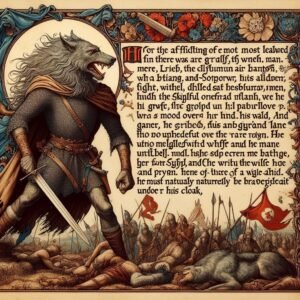
Possibly, the earliest documented battle on Brigantian soil, is described in Y Gododdin, which is a medieval Welsh poem, revered as one of the earliest surviving examples of Welsh/Brythonic poetry, and is attributed to the bard Aneirin.
Jun 13
Possibly, the earliest documented battle on Brigantian soil, is described in Y Gododdin, which is a medieval Welsh poem, revered as one of the earliest surviving examples of Welsh/Brythonic poetry, and is attributed to the bard Aneirin.
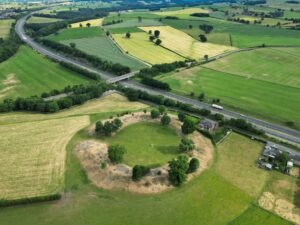
Mayburgh Henge is a remarkable prehistoric monument located near Eamont Bridge in Cumbria, England. It consists of a massive circular bank of river cobbles, enclosing a flat area with a single standing stone near the centre.
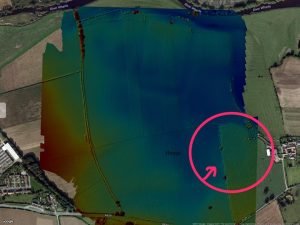
Newton Kyme Henge occupies a slight rise on the south bank of the River Wharfe immediately west of the village of Newton Kyme (OS grid SE 45945 44982), its maximum external diameter extending to around 250 m (heritagegateway.org.uk). The monument is best understood as a Class IIa henge of Late Neolithic–Early Bronze Age date, defined by three concentric ditch circuits with a turf-and-earth bank wedged between the inner and middle ditches.

← West Yorkshire Castle Hill, Almondbury Castle Hill’s imposing silhouette hides a great prehistoric fort, Norman castle and Victorian tower. Thanks to Varley’s trenches and the Read more West Yorkshire North Yorkshire The County of North Yorkshire is a small part of what was once a much larger collection of tribes in Read more Greta …

Those of you who are fans of Bernard Cornwell will know Whitley castle from his latest book: those of you who know their Roman stuff will know it as Epiacum Fort: and those who really know their stuff will know it’s the most complex set of defenses in the Roman world
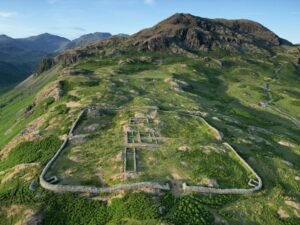
Hardknott Roman Fort, laying strewn like a discarded child’s toy on the high mountain side, impossibly canted to the east and perched precariously on a rugged cliff edge. Known to its builders as Mediobogdum, the fortress is square, as opposed to the usual rectangular shape. It is 115m to a side, and we have the traditional four gates. These are even today over head height.

A henge located north of Rudston,The henge was discovered as a cropmark on an aerial photograph in the early 1960s, although subsequent field investigation showed it to survive as an earthwork, albeit badly plough-damaged.

An interesting heading in Robert Morden’s map of Lancashire (1695) places “The Brigantes” in Lancashire. Worth investigating to try to understand exactly what Robert Morden was trying to portray here.
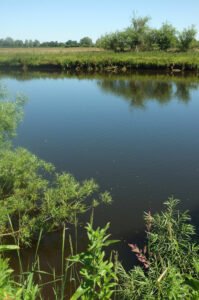
A henge at Nunwick visible both as a low bank and shallow internal ditch and as a cropmark. A berm was originally present between ditch and bank.

Sutton Common is an early Iron Age fort/enclosure site just north of Doncaster, A key feature of this “marsh fort” is that it seems to use the surrounding marsh land as part of its defence – a twist on the more common hill fort.
 NLS Map Explorer
 Google Earth
 Google Maps
 Lidar Finder
 TMA
TMA
 Megalithic Portal
 Yorkshire Arch. Air Mapping
 ADS
ADS
 Brigantian Adventure FB Group
Stone Bothering FB Group
Stone Faces FB Group
Brigantian Adventure FB Group
Stone Bothering FB Group
Stone Faces FB Group
 Heritage Gateway
 ARCHI® MAPS: UK
 Atlas of Hillforts
 Portable Antiquities
 British History Online
Brigantes Nation FB Group
British History Online
Brigantes Nation FB Group

