
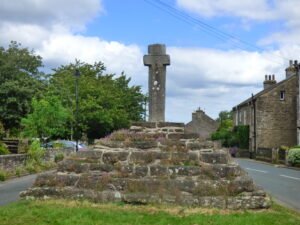
The Carperby Market Cross is a historic monument located in the village of Carperby, Wensleydale, England.
The Carperby Market Cross is a historic monument located in the village of Carperby, Wensleydale, England.

The tall chimney on the moor near Redmire is connected to the Cobscar Smelting Mill, which was part of the lead mining industry that once thrived in the area. The chimney served a crucial role in the smelting process by exhausting poisonous lead gases away from the mill.
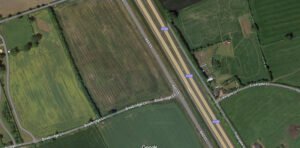
The excavation on the northern side of Bowbridge Lane as part of the A1 expansion revealed a significant archaeological site, with features indicative of Late Bronze Age funerary practices.

St Martin’s Priory in Richmond, North Yorkshire, was a beacon of religious devotion and community life in medieval England. Founded around 1100, it was established as a cell of St. Mary’s Abbey in York, with the initial settlement consisting of nine or ten monks.
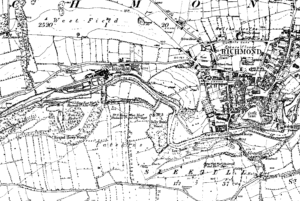
Richmond, a market town in North Yorkshire, England, boasts a rich history that dates back to the Norman Conquest of England. Founded in 1071 by Alan Rufus, a Breton nobleman, on lands granted by William the Conqueror, Richmond originally bore the name Hindrelag.
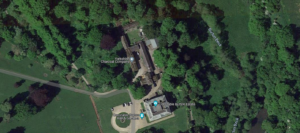
Constable Burton Hall, a Grade I-listed Georgian country house, stands as a testament to the architectural and social history of North Yorkshire. Designed by the renowned John Carr of York in the Palladian style, the hall was constructed between 1762 and 1767 for Sir Marmaduke Wyvill.
← Wensleydale Arka Unskel hillfort, Highlands Arka Unskel is 2½ miles ESE of Arisaig at NM693839 and has also been known as Arisaig Fort, Ard Ghaunsgoik Read more Castle Hill, Almondbury Castle Hill’s imposing silhouette hides a great prehistoric fort, Norman castle and Victorian tower. Thanks to Varley’s trenches and the Read more West Yorkshire …
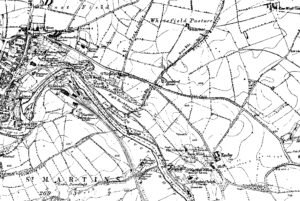
Scott’s Dyke, also known as Scots Dyke or Scots Dike, is a significant linear earthwork stretching approximately fourteen kilometres from the River Swale to the River Tees, this ancient structure is believed to date back to the period between the first century BC and the first century AD.

There is an earwork, approximately 300m east of the entrance to swinton castle. It is a small elongated hill, with three terraces on either side of it. It sit along in the landscape as such a feature, and the terraces seem impractactacle and redundant for crops in what is otherwise a flat landscape. It looks like a garden feature, a work of art, but it is outside of the castle grounds, and I have seen similarly carved hills elsewhere, far from stately grounds.
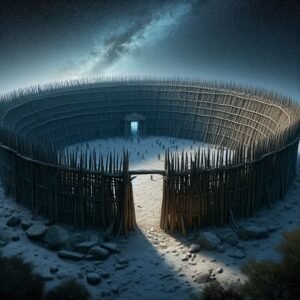
The recent discovery at Catterick has unveiled a significant Late Neolithic palisaded enclosure, shedding light on the prehistoric landscape of North Yorkshire. Excavations revealed two concentric sub-circular palisades, with the outermost having a diameter of up to 200 meters.
 NLS Map Explorer
 Google Earth
 Google Maps
 Lidar Finder
 TMA
TMA
 Megalithic Portal
 Yorkshire Arch. Air Mapping
 ADS
ADS
 Brigantian Adventure FB Group
Stone Bothering FB Group
Stone Faces FB Group
Brigantian Adventure FB Group
Stone Bothering FB Group
Stone Faces FB Group
 Heritage Gateway
 ARCHI® MAPS: UK
 Atlas of Hillforts
 Portable Antiquities
 British History Online
Brigantes Nation FB Group
British History Online
Brigantes Nation FB Group

