Venutius

Author's posts

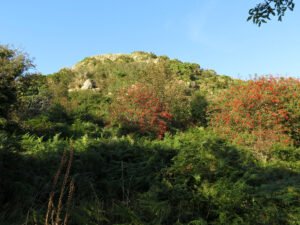
Mote of Mark Hill Fort

Mote of Mark from sea shore path

The Mote of Mark is a defended hilltop overlooking the Urr estuary. It was the court or citadel of a powerful Dark Age chieftain, possibly one of the princes of Rheged. The site was occupied during the 6th century and appears to have been destroyed by fire in the 7th century.

Guide – Exploring the Past with LIDAR

A scene showing a Roman archaeologist in the field, holding a tablet displaying LIDAR data.

Imagine being able to see the landscape around you in a completely new way—an invisible layer revealing the hidden structures of the past, right beneath the surface.

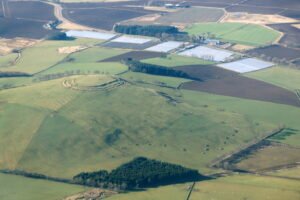
Barry Hill Fort

Hillfort on Hill of Barra, near Old Meldrum, from the air

Barry Hill is a textbook ā€œbig fort waiting for a small trenchā€: its spectacular vitrified rampart, enigmatic outer works and Arthurian folklore offer equal attraction to scientists and story-lovers—yet almost everything we know comes from surface survey. A single, well-designed excavation season could pivot the site from picturesque curiosity to a securely dated anchor point in the defensive story of eastern Scotland.

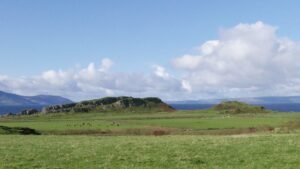
Dunagoil Hillfort, (Isle of Bute, Argyll & Bute)

Dunagoil Hillfort

Dunagoil crowns a 30 m-high columnar-basalt promontory on the south-west coast of Bute, overlooking the Sound of Bute and the Cumbraes. Cliffs on the north and west form natural ramparts; only the gentle ESE saddle gives easy access.

Vitrified Forts: Glossary of Terms

Glossary

This page holds our Glossary of Terms for Vitrified Forts.

Guide: Common Features of Iron Age Hillforts

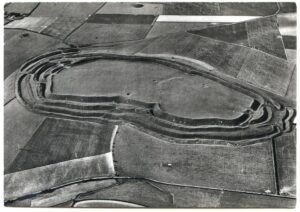
Maiden Castle, Dorchester, Dorset

This article attempts to serve as a guide for many of the features of the hillforts found in Britain, in particular. It explains the basic elements of the design and architecture of a hillfort.

Tap O’Noth Hill Fort

Tap O Noth Hillfort

This is one of the best examples of a vitrified fort, it is near the village of Rhynie in northeastern Scotland. This massive fort from prehistory is on the summit of a mountain of the same name which, being 1,859 feet (560 metres) high, commands an impressive view of the Aberdeenshire countryside.

Guide: Iron-Age minting: Ceramic pellet-mould trays

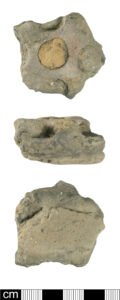
Iron Age coin mould fragment (Box 3, no. 40: showing capped pellet hole)

This article explores the most tangible evidence we possess for indigenous minting north of the Humber: the smashed ceramic ā€œpellet-mouldā€ trays recovered in quantity at Scotch Corner and, in lesser numbers, at Britain’s southern oppida.

How Hill Hillfort, Swaledale

How Hill Downholme LIDAR

How Hill, near Downholme in North Yorkshire, is the site of a large univallate hillfort.

Brigantes Tribe

Thornborough Henges c.2004

The name Brigantia represents three separate concepts: a goddess, a people, and a tribal federation. By the Roman period, the name represented a tribal federation compromising all of what would become the Roman province of Britannia Secunda, except for the Parisi territory, east of the River Derwent.

Contact Us
close slider