Venutius

Author's posts

Snake Iconography in the British Isles

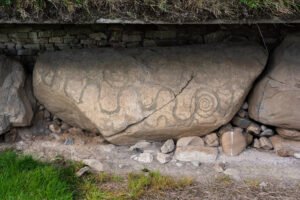
Knowth, Brú na Bóinne (Boyne Valley), Ireland

Syncretism through the ages Syncretism, the amalgamation of different religions, cultures, or schools of thought, has its roots in the ancient world. Thoughts on Celtic Religion – Raimund, Karl To begin with, lets first look at the sources available to us: There are quite numerous sources available, contrary to Read more Hillforts: Defence or Ritual? …

Continue reading

Wiltshire

Silbury Hill, Wiltshire

Lying across the spine of southern England, Wiltshire offers a textbook cross‑section of chalk downland, greensand vales and clay lowlands. Its long archaeological record – from 10 000‑year‑old spring‑side camps to modern military landscapes – is inseparable from that underlying geology and from the climatic swing that ended the last Ice Age.

Liverpool Street Roman Road, Manchester

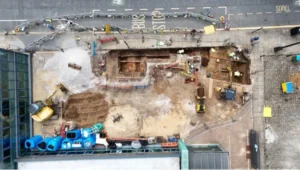
Liverpool Street Excavations - Roman Road - Manchester University

Archaeologists have exposed a well-preserved cambered Roman road surface in Manchester’s Castlefield area (Liverpool Road/Liverpool Street reporting), astonishingly only c. 15 inches (≈38–40 cm) below modern tarmac, with an assemblage of Romano-British pottery and other small finds broadly dating its active use to the 1st–3rd centuries AD.

South Street Long Barrow, Avebury

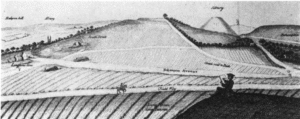
South Street Long Barrow - Stukely plate including South Street Long Barrow

South Street long  barrow once lay 1 km south‑west of Avebury village, midway between the Kennet spring‑line and the Windmill Hill plateau (OS grid SU 090 678; 165 m OD). From its crest the ground falls gently north‑east toward the henge and west toward Beckhampton, so the mound would have been visible from all Early‑Neolithic foci in the area yet lay on good grazing that could be tilled by the first farming groups.

Mamucium Roman Fort, Manchester

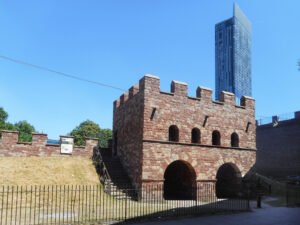
Roman Gatehouse at Mamucium

Mamucium occupies a low sandstone promontory at the junction of the Rivers Medlock and Irwell. The bedrock is the Triassic Sherwood Sandstone Group, a firm, well‑drained red sandstone that gave Roman engineers a stable platform for earthworks and timber palisades, while nearby river gravels supplied road‑making aggregate.

Millbarrow long barrow (Winterbourne Monkton)

Tumulus on Millbarrow

Millbarrow once stood on a low chalk spur 2 km north‑west of Avebury, just above the spring‑line where the Kennet valley opens onto the Marlborough Downs (NGR SU 0943 7221). From its east–west‑aligned crest the ground falls gently south to Windmill Hill and east  into the Kennet valley, giving the mound clear sight of the Avebury monument complex, and easy access to water and pasture.

Horslip (Windmill Hill) Long Barrow, Avebury

Horslip Barrow - AI Recreation

Sitting on the south‑east shoulder of Windmill Hill (grid ref. SU 086 070), 140 ft (43 m) above the Kennet valley, the Horslip long barrow commands the same chalk ridge that carries the famous Early‑Neolithic causewayed enclosure 400 m upslope.

Bubeneč Neolithic Farm, Prague

Bubenec excavations - Institute of Archeology of Academy of Sciences

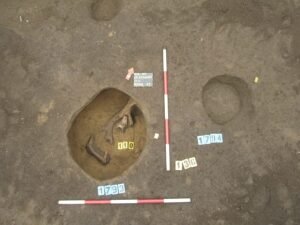
Quite recently, initial excavation evidence from Bubenec, close to Prague was first announced to the public, pending full publication. As part of that media activity, the head archaeologist for the dig, Petra  Maříková  Vlčková explained that the excavation; below the future Canadian Embassy, in Prague’s Bubeneč district, cut through almost two metres of undisturbed deposits – a rarity in Central Europe.

Castro de Trona fort – Pontevedra, Spain

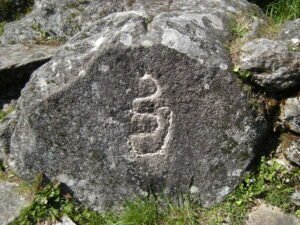
Petroglifo castro Troña

Castro de Trona is an oval enclosure with significant terracing to the west and a large ditch to the east. This castro (a hillfort settlement) has an accepted date of around 600 BCE. Like many others in Galicia, this castro reached its peak during the 1st and 2nd centuries CE. It measures approximately 200 metres east to west by 150 metres north to south.

Roman Road to the West uncovered under Manchester Street

Sections of a Roman road can be seen in this trench

A stretch of Roman road just 38-40 cm (15 in) below Liverpool Road in Castlefield. The trench shows the classic Roman construction sequence – a cambered rubble core surfaced with tightly packed cobbles – and runs on a north-east/south-west alignment that leaves Mamucium’s north gate and heads towards modern Salford.

Contact Us
close slider