
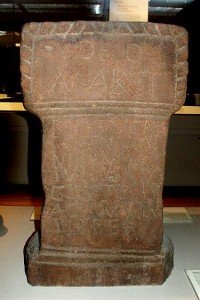
“To eternal Jupiter of Doliche and to Caelestis Brigantia and to Salus Gaius Julius Apolinaris, centurion of the Sixth Legion, at the command of the god (set this up).”
“To eternal Jupiter of Doliche and to Caelestis Brigantia and to Salus Gaius Julius Apolinaris, centurion of the Sixth Legion, at the command of the god (set this up).”
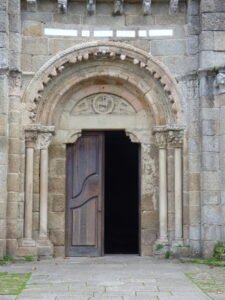
The Church of Santa María de Cambre, located in Cambre near A Coruña, is a significant Romanesque monument dating back to the 12th century. It was built on the foundations of a Benedictine monastery, which itself was founded during the early medieval period.
Oct 29

These small, delicate gold objects are highly significant, they offer insight into the social status, trade connections, and cultural practices of early Bronze Age societies in Britain.

The Roman Ford at Barnard Castle, located on the River Tees, is a fascinating historical site. It is believed to have been part of a Roman road connecting Bowes (Lavatrae) and Binchester (Vinovium), indicating the area’s significance during the Roman era.

Aldborough Hall, nestled in the picturesque village of Aldborough in North Yorkshire, England, is a testament to architectural evolution and historical significance. The origins of the hall can be traced back to the early 17th century

Egglestone Abbey, nestled on the southern bank of the River Tees, is a testament to the spiritual and architectural endeavours of the Premonstratensian canons. Founded between 1195 and 1198 by the de Moulton family, the abbey was established during a period of monastic expansion in England.
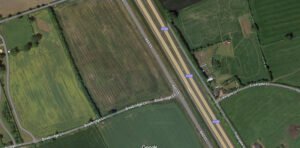
The excavation on the northern side of Bowbridge Lane as part of the A1 expansion revealed a significant archaeological site, with features indicative of Late Bronze Age funerary practices.

There is an earwork, approximately 300m east of the entrance to swinton castle. It is a small elongated hill, with three terraces on either side of it. It sit along in the landscape as such a feature, and the terraces seem impractactacle and redundant for crops in what is otherwise a flat landscape. It looks like a garden feature, a work of art, but it is outside of the castle grounds, and I have seen similarly carved hills elsewhere, far from stately grounds.

While details about these earthworks are not widely documented, the area is known for its rich archaeological significance. Holly Hill itself is a place of interest, with its Grade II listed status indicating its historical importance.
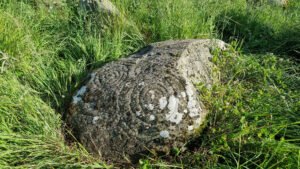
Little Meg Stone Circle, also known as Maughanby Circle, is a small and ancient monument located near the village of Little Salkeld in Cumbria, England. It consists of eleven large kerb stones that probably surrounded a Bronze Age kerb cairn, a type of burial mound
 NLS Map Explorer
 Google Earth
 Google Maps
 Lidar Finder
 TMA
TMA
 Megalithic Portal
 Yorkshire Arch. Air Mapping
 ADS
ADS
 Brigantian Adventure FB Group
Stone Bothering FB Group
Stone Faces FB Group
Brigantian Adventure FB Group
Stone Bothering FB Group
Stone Faces FB Group
 Heritage Gateway
 ARCHI® MAPS: UK
 Atlas of Hillforts
 Portable Antiquities
 British History Online
Brigantes Nation FB Group
British History Online
Brigantes Nation FB Group

