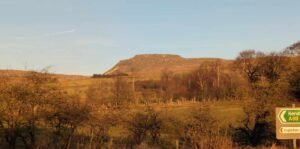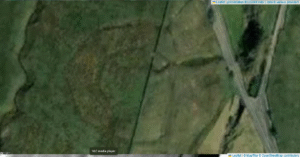
Dryburn Henge lies on Alston Moor in Cumbria, within the North Pennines Area of Outstanding Natural Beauty. It occupies a strategic nodal point on the high moor, roughly at NY 760 430, where routes across the Pennine watershed converge. The surrounding terrain is underlain by Carboniferous Great Scar Limestone and interbedded Yoredale shales, with scattered fluvioglacial gravels in valley bottoms.
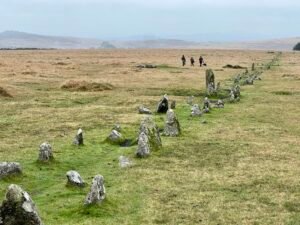
Period: Neolithic
Jun 11
Guide: Ritual/Ceremonial Mounds
These are raised platforms created first and foremost for cult, procession, assembly or conversion—not for fortification or routine boundary-making. They tend to be much more significant and monumental than other mounds and raised platforms. Some are the largest structures known of their type. In Britain, possibly the best known example is Silbury Hill in Wiltshire.
Moulton Henge
Archaeologists now recognise a true Neolithic henge lying immediately south-west of Moulton village, roughly midway between the Swale and Dere Street. The monument is almost 200 m across, with a low earthen bank encircling an inner ditch and a central platform about 110 m wide; the ditch lies inside the bank—the classic “Class II” henge arrangement.