Period: Any Period

East Witton Camp

The earthwork known in the National Trust inventory as East Witton Camp lies on the north-facing slope of Braithwaite Banks, only a couple of hundred metres uphill from Braithwaite Hall. It is a small, roughly oval Iron-Age enclosure that covers about two and a quarter acres (just under a hectare). We call Braithwaite Wood Fort Iron Age, but it’s actually undated, but its typology indicates a potential Iron Age origin.

North Yorkshire

The County of North Yorkshire is a small part of what was once a much larger collection of tribes in a confederation, called the Brigantes, and it is likely that they collectively followed a tribal system that recognised the deity Brigantia, and their supreme being.

West Yorkshire

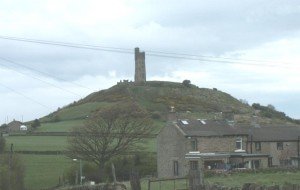
← World Heritage Castle Hill, Almondbury Castle Hill’s imposing silhouette hides a great prehistoric fort, Norman castle and Victorian tower. Thanks to Varley’s trenches and the Read more North Yorkshire The County of North Yorkshire is a small part of what was once a much larger collection of tribes in Read more Maiden Castle Fort …

Continue reading

Why Vitrify a Fort?

Tap o' Noth - geograph.org.uk - 93164

Originally, it was thought that the forts had become vitrified due to an enemy attack. A theory proposed by Childe in the 1930 thought it was that it was invaders, not the builders, who were assaulting the forts and then setting fire to the walls with piles of brush and wood

The Vitrified Forts of the British Isles and Europe

Tap O Noth LiDAR 1m - Thanks to the National Library of Scotland

This page is the “collection centre” for our research into vitrified forts, covering the area largely known as the British Isles.

Guide – Mining

A lone researcher stands atop a hill in the Yorkshire Dales

This section illustrates the history of mining and aims to give sufficient information for a researcher to be able to recognise mining features and to be able to identify the periods of working on a site. Mine works are an extensive subject, complicated by the use of different terms for similar features, depending on the type of mine and the region under review.

Guide – Resistivity

A lone researcher stands atop a hill in the Yorkshire Dales

Celtic Heads Celtic Head from Witham, 2nd c B.C. (British Museum) “Celtic” carved heads are found throughout the Read more Timeline 60BC – 138AD This timeline is focussed on the British Celtic culture and those cultures which had influence on the British Celts. It Read more Heads at St Michael, Kirklington An analysis of head …

Continue reading

Guide – Glossary

A lone researcher stands atop a hill in the Yorkshire Dales

Celtic Heads Celtic Head from Witham, 2nd c B.C. (British Museum) “Celtic” carved heads are found throughout the Read more Timeline 60BC – 138AD This timeline is focussed on the British Celtic culture and those cultures which had influence on the British Celts. It Read more Heads at St Michael, Kirklington An analysis of head …

Continue reading

Guide – Archaeological Terms

A lone researcher stands atop a hill in the Yorkshire Dales

Celtic Heads Celtic Head from Witham, 2nd c B.C. (British Museum) “Celtic” carved heads are found throughout the Read more Timeline 60BC – 138AD This timeline is focussed on the British Celtic culture and those cultures which had influence on the British Celts. It Read more Heads at St Michael, Kirklington An analysis of head …

Continue reading

Yorkshire’s Holy Wells & the Severed Head

well, traditional, nature, chengdu, historical, water

The cult of the severed head is important in Celtic tradition; and most of Yorkshire was once occupied by the Celtic tribe of the Brigantes, a confederacy of Celtic tribes subservient to an overruling royal dynasty. The reign of their queen Cartimandua was contemporaneous with that of Boadicea.

Contact Us
close slider