Location: North Yorkshire

Castle Dykes Roman Villa

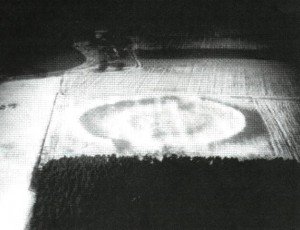
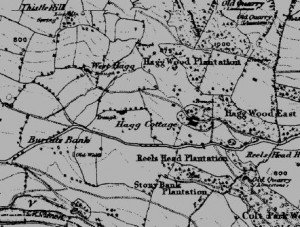
This earthwork was partially excavated in 1870, these revealed the foundations for a Roman villa of obvious opulence. It’s final Roman owners were believed to have suffered a grisly death as the villa burnt around them. It is likely that future excavations will reveal that the villa was built over of an earlier tribal centre. Probably replacing the shrine to the “Light Water” with a more Mediterranean alternative.

Thornborough Henges

With kind permission of YAAMAPPING

A site that spans several thousands of years from the Stone Age to at least the Iron Age, the ancient people of the area built one of Britain’s largest ancient sites in Yorkshire, in what was to become the heart of Brigantia.

Pickhill Mound

A large artificial mound here, apparently raised for defensive purposes, bears the name of Picts’ Hill, and an improbable belief prevails that the Picts defeated the Romans in battle at a spot, not far off, called Roman Castle. This mound is also known as Money Hill, but, though partially cut away for the construction of the railway, the traditionary hidden treasure was not found

Near Moor

At SE48090 98917 this Neolithic Pointer lay’s close to a Bronze Age Field System. I have explored this area several times and find that much more time is needed as it is a vast area called Near Moor and was due in pre-history connected to Scratch Wood Moor to the north west.

Malham Roman Marching Camp

← The Yorkshire Dales Greta Bridge Roman Fort The fort lies between the River Greta and the Tutta Beck, just south of their junction, while the Rom,an Road Read more Fremington Hagg Kilgram Bridge Ford Kilgram bridge itself is of known ancient construction, and is believed to date from the early 12th century – probably …

Continue reading

Live Moor Hill Fort

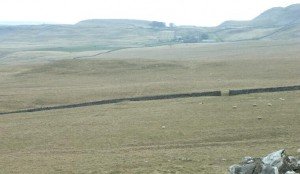
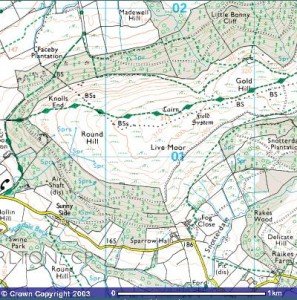
“Whorlton, Live Moor, (NZ 496012) A previously unrecorded promontory fort was identified by D. Smith on air photographs and later surveyed by him and G. W. Goodall. A single rampart with external ditch extends across the west-facing spur of Live Moor to enclose an area of approximately 2 acres known as Knolls End.

Kirklington Tumulus

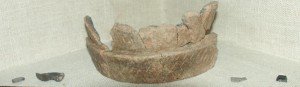
“Prehistoric vessels dug out of the mound at Stapely Hill, Kirklington, in 1903. Fragments of several pottery urns of the Bronze Age, C. 1,000 B.C., one containing cremated human bones” Description and photo’s from Kirklington Church.

Kilgram Bridge Ford

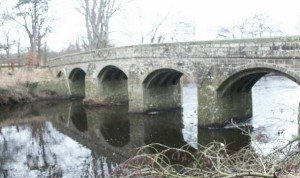
Kilgram bridge itself is of known ancient construction, and is believed to date from the early 12th century – probably built around 1145 AD by the Cistercian Monks who founded Jervaulx Abbey nearby. Local myth tells how the bridge was built by the Devil after a pact made with the local population. Kilgram Bridge is first mentioned in literature in 1301, however Kevin Cale, in his assessment of the bridge suggests an early 12th century date to be appropriate (4).

Hutton Moor Henge

Hutton Moor Henge is almost identical the the henges at Thornborough and Nunwick. It’s been proposed that these henges form part of a large scale ritual landscape created in the area, linked to the Rivers Ure and Warfe.

Fremington Hagg

← The Yorkshire Dales Greta Bridge Roman Fort The fort lies between the River Greta and the Tutta Beck, just south of their junction, while the Rom,an Road Read more Kilgram Bridge Ford Kilgram bridge itself is of known ancient construction, and is believed to date from the early 12th century – probably Read more …

Continue reading

Contact Us
close slider