Category: Ritual Landscape

Dryburn Henge, Cumbria

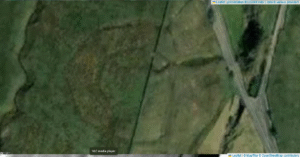
Dry Burn enclosure - Satellite

Dryburn Henge lies on Alston Moor in Cumbria, within the North Pennines Area of Outstanding Natural Beauty. It occupies a strategic nodal point on the high moor, roughly at NY 760 430, where routes across the Pennine watershed converge. The surrounding terrain is underlain by Carboniferous Great Scar Limestone and interbedded Yoredale shales, with scattered fluvioglacial gravels in valley bottoms.

Megalithic Stone Monuments in France May Be Europe’s Oldest

Carnac

The recent University of Gothenburg–led excavations at Le Plasker, and their startling radiocarbon dates of 4600–4300 BC for the Carnac alignments, deserve both applause for methodological rigor and a measured dose of critical scrutiny before we rewrite Neolithic Europe’s storybook.

Castle Dykes Henge, Thoralby – North Yorkshire

With kind permission of YAAMAPPING

Castle dykes it is a small class one henge, 90m across, perched on the high ground up in the North Yorkshire dales. The bank survives up to 1.5 m high in places, and the ditch up to 3 m deep. Early 20th-century reports (1908) noted its intact form, and recent LiDAR-based surveys have confirmed its classic henge profile with minimal later disturbance.

Guide: Barrows

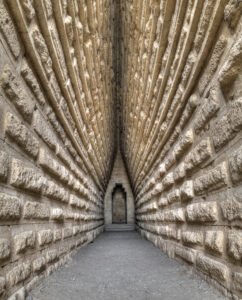
royal kurgans barrow, interior

A barrow is a mound of earth and/or stones raised over a grave or group of graves. Used from the Neolithic through to the Iron Age (roughly 4000 BCE to 500 CE), barrows were often constructed to honour elite individuals, such as tribal leaders, warriors, or chieftains. They are frequently found singly or in cemeteries known as barrow fields.

Moulton Henge

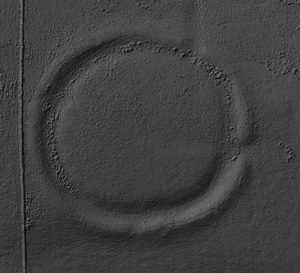
Moulton Henge - 1m Lidar

Archaeologists now recognise a true Neolithic henge lying immediately south-west of Moulton village, roughly midway between the Swale and Dere Street. The monument is almost 200 m across, with a low earthen bank encircling an inner ditch and a central platform about 110 m wide; the ditch lies inside the bank—the classic “Class II” henge arrangement.

Marne Barracks Neolithic palisaded enclosure

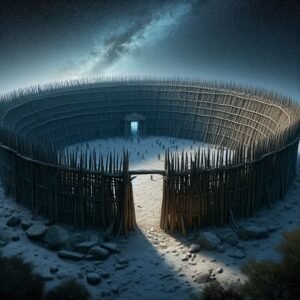
The recent discovery at Catterick has unveiled a significant Late Neolithic palisaded enclosure, shedding light on the prehistoric landscape of North Yorkshire. Excavations revealed two concentric sub-circular palisades, with the outermost having a diameter of up to 200 meters.

Contact Us
close slider