Category: Europe

Wellhill, Dunning Early Neolithic Farm – Perthshire

Dunning Perthshire - Satellite view of Wellhill prehistoric settlement

The village of Dunning in Perthshire, Scotland,  has been revealed through excavation as having traces of human activity dating back 10,000 years. This included evidence of what could be the earliest farming activity recorded in Scotland so far, and also remains of hunter-gathering activity dating back to the Mesolithic period.

Doncaster Roman Fort (Danum)

Dunum Roman Fort artistic impression

← South Yorkshire Roman Rig Defensive Works The Roman Rig is a defensive dyke built to defend against attack from the south. It runs from Sheffield, past Read more Templeborough Roman Fort – Rotherham Templeborough Roman Fort occupies a commanding position on the north bank of the River Don at Rotherham (OS grid SK Read …

Continue reading

Adwick-le-Street Roman Fort (Derventio)

Adwick-le-Street Roman Auxilliary Fort - Artistic Impression

Derventio was an auxiliary fort, it probably housed a mounted ala or an infantry cohort. It is located immediately west of modern Adwick le Street (OS SE 553 008), astride Ermine Street (the Roman Ridge).

Templeborough Roman Fort – Rotherham

Templeborough Roman Granary remains at Clifton Park Museum

Templeborough Roman Fort occupies a commanding position on the north bank of the River Don at Rotherham (OS grid SK 410 916), where the Magnesian Limestone ridge drops into the floodplain. Originally constructed in timber and earth in the mid–1st century AD, it was later rebuilt in stone and occupied—possibly intermittently—until the withdrawal of Roman authority in the early 5th century AD

Wincobank Hill Fort

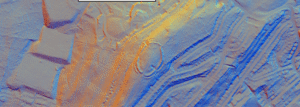
Wincobank Fort – LiDAR – National Library of Scotland 3

This is an oval fort with an internal area of 2.5 acres. A bank, ditch and counterscarp bank are continuous around it except on the N side where ditch and counterscarp have been destroyed.

Roman Rig Defensive Works

The Roman Rig is a defensive dyke built to defend against attack from the south. It runs from Sheffield, past Templeborough and carries on almost to Doncaster. If this is a Brigantian dyke it would certainly add weight to Websters definition of the Roman border in the period.

Kirkhaugh Cairns – Cumbria

Kirkhaugh cairn gold ornament

This mound is 22ft. in diam. and about 3ft high. It has been built upon a natural knoll which makes the barrow look larger than it is. Excavation showed that the mound has an earthy core with a rubble capping.

What might Stonehenge Mean? Dartmoor and Carnac add to the Picture

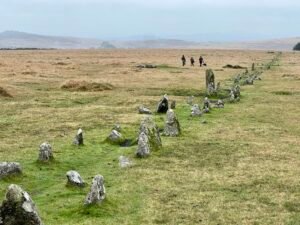
Dartmoor Stone Rows

Stonehenge has always been enigmatic, due to its use of those definitive morticed trilithons, all of which where squared of, more like the structures of the Maltese temples and other stone structures closer to Africa, as opposed to those of the rest of Britain and most of the wider North-west European ritual landscape.

Megalithic Stone Monuments in France May Be Europe’s Oldest

Carnac

The recent University of Gothenburg–led excavations at Le Plasker, and their startling radiocarbon dates of 4600–4300 BC for the Carnac alignments, deserve both applause for methodological rigor and a measured dose of critical scrutiny before we rewrite Neolithic Europe’s storybook.

Cleave Dyke Defensive System

The Cleave dyke system is several Dykes which combine to create a boundary of between 9 and 18 kilometres running north south to the west of Thirsk.

Contact Us
close slider