Category: Europe

Galicia

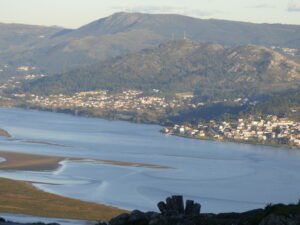
A Coruna Bay

The region of Galicia, located in the northwest of the Iberian Peninsula, has a history that stretches back to prehistoric times. Known for its Celtic roots, rolling hills, rugged coastlines, and rich folklore, Galicia is a place steeped in ancient traditions and mystery.
Briefing – Galicia’s Political History and Separatist Sentiment

Castro de Santa Trega Terracing

Galicia’s Celtic origins have long played a significant role in shaping the region’s cultural and political identity. Historically, Galicia was inhabited by Celtic tribes, and this heritage is still celebrated today in Galician culture, language, and folklore.

Iberian Peninsular

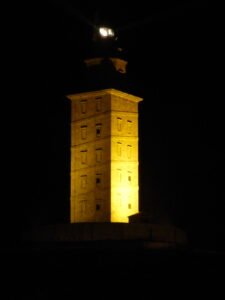
Tower of Hercules

Spain, located on the Iberian Peninsula in the southwestern corner of Europe, is a country of rich contrasts—mountains, beaches, valleys, and vast plains. It shares borders with France and Portugal and is surrounded by the Mediterranean Sea to the east and south, and the Atlantic Ocean to the north and west.

Nunwick Henge

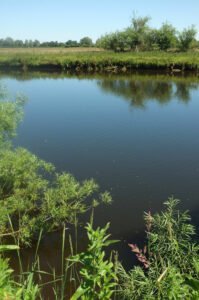
River Ure southwest of Nunwick

A henge at Nunwick visible both as a low bank and shallow internal ditch and as a cropmark. A berm was originally present between ditch and bank.

Eileen na Goar Fort

Eilean nan Gobhar

This island, locally termed Eilean na Goar, is the most eastern and is bounded on all sides by precipitous gneiss rocks; it is the abode and nesting place of numerous sea birds. The flat surface on the top is 120 feet from the sea level, and the remains of the vitrified fort are situated on this, oblong in form, with a continuous rampart of vitrified wall five feet thick, attached at the SW end to a large upright rock of gneiss

Dunnideer Fort

The Medieval Castle, the most prominent feature in the hill, stands inside, and is built from the debris of, an oblong vitrified fort, a maximum length approximately 70 m, which crowns the summit. Outworks, most clearly marked on the E, may be associated with this phase.

Clickhimin Broch

Clickhimin Broch, Shetland Islands

This site was occupied in several periods, originally late Bronze age between 700 – 500BC. Firstly a simple farmstead which expanded to a blockhouse (fort) and then by a huge circular broch. A population of around 60 lived in this little fortress. Later, 2nd century occupation is shown when a wheelhouse was added.

East Yorkshire

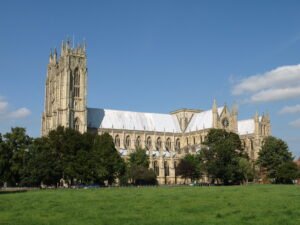
Beverley Minster

East Yorkshire’s Middle-Iron-Age story stands out in Britain because the communities who farmed the chalk of the Yorkshire Wolds developed what archaeologists call the Arras culture: a distinctive blend of continental La Tène fashions and local invention that is visible above all in their cemeteries. Three elements make it special.

Catterick Henge

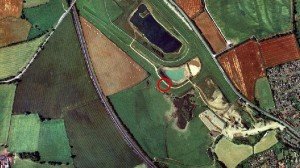
The henge at Catterick racecourse is an intriguing prehistoric site. Initially thought to be a Roman amphitheatre, it is now believed to be a henge, a type of Neolithic earthwork. Crop-mark mapping defined the henge, the 1990s rescue dig explained its mixed bank and cairn fabric, Roman-town excavations showed how much of it was levelled in antiquity, and the motorway programme set the site back into a much larger prehistoric landscape.

Maiden Castle Fort Reeth

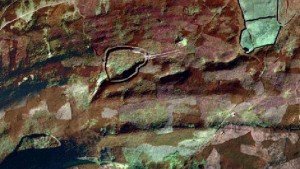
For over five hundred years, the miners and smelters of Reeth produced mountains of precious lead. The lead ores from Reeth had high concentrations of Silver, Lead itself became and important ingredient in bronze. Maiden Castle, deep in the Swaledale lead mining territory a unique piece of Iron Age architecture. It is the only known fort with what seems to be a processional entrance.

Contact Us
close slider