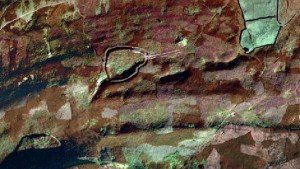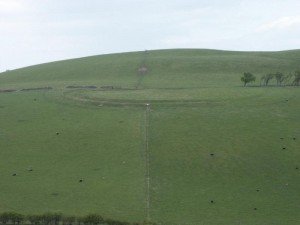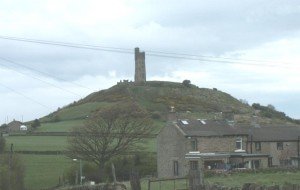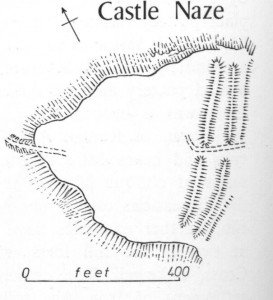
This is a promontory fort of probable Iron Age date. It uses the natural cliffs of the hill that it stands to protect its northern and western sides. It is triangular in form, and to protect its south-eastern face, a very impressive double rampart of possibly later Iron Age construction has been thrown up.
Category: Brigantia England
East Yorkshire
East Yorkshire’s Middle-Iron-Age story stands out in Britain because the communities who farmed the chalk of the Yorkshire Wolds developed what archaeologists call the Arras culture: a distinctive blend of continental La Tène fashions and local invention that is visible above all in their cemeteries. Three elements make it special.
Catterick Henge
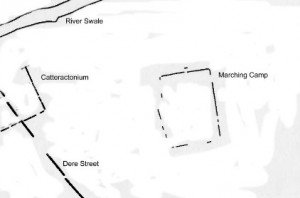
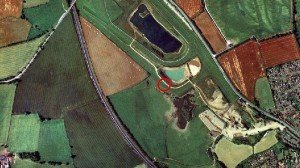
The henge at Catterick racecourse is an intriguing prehistoric site. Initially thought to be a Roman amphitheatre, it is now believed to be a henge, a type of Neolithic earthwork. Crop-mark mapping defined the henge, the 1990s rescue dig explained its mixed bank and cairn fabric, Roman-town excavations showed how much of it was levelled in antiquity, and the motorway programme set the site back into a much larger prehistoric landscape.
Maiden Castle Fort Pooley Bridge
A superbly circular “fort”, built on the side of the hill, which seems to be a Brigantian fashion (see below). This is built with two rampart walls and a very narrow ditch between – 1-2m. If these were defences, they seem pretty slight. In it’s way, a miniature version of Wandlebury, but only about 200m circumference.
West Yorkshire
← World Heritage Castle Hill, Almondbury Castle Hill’s imposing silhouette hides a great prehistoric fort, Norman castle and Victorian tower. Thanks to Varley’s trenches and the Read more North Yorkshire The County of North Yorkshire is a small part of what was once a much larger collection of tribes in Read more Maiden Castle Fort …
Castle Hill, Almondbury
Castle Hill’s imposing silhouette hides a great prehistoric fort, Norman castle and Victorian tower. Thanks to Varley’s trenches and the 1995 RCHME survey we have a solid structural framework, yet key chronological pins, remain to be driven. It is therefore both a celebrated landmark for Huddersfield and a live research asset for Iron-Age, and medieval research.