Guide – Challenging Assumptions with Free Thinking

Free Thinking in Archaeological Research: Challenging Assumptions for a Deeper Understanding

One of the most powerful tools in archaeology is not just digging deeper into the earth but digging deeper into our own thinking processes. In archaeological research, we often encounter assumptions—either based on prior data, outdated methodologies, or even cultural biases—that shape how we view and interpret the past. These assumptions, once accepted without question, can lead to distorted interpretations of the evidence. They can blind us to new insights, misplace vital clues, and ultimately hinder our understanding.

Free thinking, in this context, is the practice of questioning what we think we know. It means stepping back from conventional wisdom, challenging assumptions, and embracing the possibility that the “truth” we’ve accepted may be incomplete, or worse, misleading. The critical thinking approach applied to archaeological research requires a willingness to unlearn and relearn—to take what seems self-evident and ask, “What if this is wrong?”

The “Too Good to Be True” Social Media Scam – “I recently got a social media ad claiming I’d won a ‘limited-time offer’ for a luxury vacation—just click here! Naturally, I felt a little suspicious, but hey, ‘free vacation,’ right? Well, turns out it was the digital equivalent of ‘If it sounds too good to be true, it probably is!’ After I eagerly handed over my bank details, I realized I had just funded someone’s Caribbean getaway instead of booking my own. Sometimes, greed overrules critical thinking—especially when it’s disguised as a ‘freebie.’ Next time, I’ll think before I click… but maybe I’ll still take the free vacation offer from a friend!”

How Assumptions Can Shape Our Understanding

In the field of archaeology, assumptions often shape how we interpret field systems, artifacts, and settlement patterns. For instance, many archaeological sites, especially those from the Iron Age, were never permanently inhabited. Yet, the assumption that a site should be continuously occupied or that it served a singular purpose often leads to misinterpretations. A fort, once assumed to be a permanent settlement, could actually have been a seasonal gathering place. A field system, classified as medieval due to its appearance, may have roots much deeper in time. These are not small mistakes—such assumptions can mask the true history of a site and lead us down a path of misunderstanding.

This tendency to cling to outdated conclusions is not just an issue in archaeology; it’s a natural human instinct. Our minds are programmed to accept what has been presented to us as truth, especially if those truths have been passed down through generations or supported by authoritative sources. However, critical thinking teaches us that these “truths” are often malleable. It reminds us that knowledge evolves, and assumptions that remain unchallenged can close our minds to new interpretations.

How Critical Thinking Applies to Our Own Thought Processes

Critical thinking in archaeology begins with recognizing that the way we interpret evidence is influenced by our own internal biases. These biases can be subtle—cultural expectations, personal experiences, or even the desire to conform to established views. The first step in applying critical thinking is to ask ourselves, “Why do I believe this?” and “What would happen if I didn’t believe it?”

To think critically is to engage in the following steps:

  1. Question the evidence: Does the data truly support the conclusions we’ve drawn, or are we filling in gaps with assumptions? Is there another way to interpret the same evidence?
  2. Consider alternatives: Are there different perspectives or theories that might explain the same findings? What would happen if we looked at the data from a different angle or with a different set of assumptions?
  3. Recognize biases: We all have biases. Whether it’s the desire to conform to popular theories or personal experiences that shape how we perceive evidence, acknowledging these biases helps to see things more clearly.
  4. Challenge the status quo: If an idea or interpretation has gone unquestioned for a long time, it’s often wise to revisit it. Just because something has been accepted for decades or centuries doesn’t make it unassailable.
  5. Embrace uncertainty: Critical thinking also involves accepting that we don’t have all the answers. In archaeology, as in life, the pursuit of truth is a continual process. Some questions may remain unanswered for now, but that doesn’t mean we stop questioning.

By embracing these principles, we can prevent ourselves from falling into the trap of thinking we know it all. We can open ourselves to new ways of understanding the past and, in the process, deepen our insight into the present and future.

The Hillfort Satnav Fiasco – “Last year, while visiting a hillfort in Galicia, my satnav directed me down a narrow footpath—because, of course, that’s where the road should be. Before I could say ‘critical thinking,’ I was driving toward a dead end on a steep hillside. It was only when I realized I might soon be auditioning for a role in a car commercials ‘gone wrong’ that I stopped and thought, ‘Maybe this is not a road after all.’ In the end, it was critical thinking that saved me from a serious accident. Well, that and realizing that my satnav probably needs a new map… or some basic common sense!”

Practical Applications in Archaeology

In the context of Brigantes Nation, applying critical thinking means taking a step back and evaluating the methods used to classify and interpret Brigantian sites. For example, many field systems and settlement patterns once attributed to the medieval period may, with a more critical eye, reveal evidence of older, pre-Roman practices. This requires not only challenging conventional assumptions but also engaging with the landscape in new ways—looking at topography, seasonal factors, and material evidence from a fresh perspective. It’s about connecting the dots in ways that haven’t been tried before.

Critical thinking also means questioning the sources themselves. Are the interpretations we rely on coming from scholars with a single perspective or from a range of sources? Are we listening to local knowledge or just following established scholarly opinions? In short, we must be willing to validate the sources we use, not just the conclusions they offer.

Self-Development Through Free Thinking

By embracing critical thinking, we not only become better archaeologists but better thinkers in all aspects of life. The ability to question assumptions, challenge the status quo, and think independently is valuable in every profession and in everyday decision-making. Free thinking encourages intellectual humility, a willingness to learn, and the courage to embrace new ideas—even if they conflict with established beliefs.

There are numerous resources for those who wish to develop their critical thinking skills. Below are some recommended readings and practices:

  • Books:
    • Critical Thinking: A Concise Guide by Tracy Bowell and Gary Kemp: A great primer on the fundamentals of critical thinking.
    • Thinking, Fast and Slow by Daniel Kahneman: Explores the different modes of thinking and how biases influence our judgments.
    • The Demon-Haunted World by Carl Sagan: A call to skeptical thinking in science, especially useful for anyone engaged in research.
  • Articles:
    • “The Importance of Critical Thinking in Research” from The Journal of Research in Science Teaching: An academic exploration of critical thinking in the context of research.
    • The Art of Thinking Clearly by Rolf Dobelli: A series of short chapters on common cognitive biases that influence decision-making.
  • Exercises:
    • Daily reflection: Ask yourself what assumptions you might have accepted in your own work or life and how they could be challenged.
    • Engage in discussions with others who offer differing viewpoints—this can help to refine your thinking.
    • Practice considering multiple solutions to problems before settling on the “obvious” answer.

Critical thinking is not only about asking the right questions but also about embracing the process of unlearning and discovering. This mindset is at the heart of Brigantes Nation’s research, and by applying it, we hope to unlock deeper, more meaningful insights into the past—and into our own thinking.

Guide – Introduction to Critical Thinking in Archaeological Research

Introduction to Critical Thinking in Archaeological Research

In the world of archaeology, as with all forms of inquiry, the pursuit of truth begins with the ability to think critically and independently. Archaeology is often seen as the science of uncovering the past, but it is equally the art of understanding how we approach and interpret evidence. In the case of the Brigantes Nation, a tribe whose history is riddled with gaps and assumptions, critical thinking is not only useful—it is essential.

This guide is the starting point for a journey into free thinking applied to archaeological research. Free thinking is the cornerstone of open-mindedness and the refusal to accept conclusions simply because they are popular or traditional. It is about questioning long-held beliefs, re-evaluating evidence, and uncovering deeper truths that have long remained hidden under layers of assumption and bias.

At Brigantes Nation, we adopt a deeply eclectic approach to research. We believe that true understanding comes from synthesizing multiple inputs—historical, archaeological, and even intuitive—while remaining grounded in rigorous scrutiny. This site recognizes that the landscape surrounding key archaeological sites is just as important as the sites themselves. After all, the land holds the stories of those who lived and worked there—stories often obscured or ignored by conventional interpretations.

For example, few Iron Age forts were under permanent occupation. This simple fact opens the door to a whole host of questions about where people lived, how they moved, and the connections between sites that may not be immediately obvious. Our research embraces the notion that we may be mistakenly attributing later dates or purposes to sites, field systems, and tracks that are wrongly classified due to outdated assumptions. Critical thinking requires us to question even what has been long accepted, often for centuries. And we know that sometimes the most startling discoveries arise from challenging what we think we know.

Free thinking, therefore, is not just about applying different methods of research. It’s about fundamentally reshaping our relationship with knowledge itself. It is a practice that encourages curiosity, fosters intellectual independence, and allows us to transcend previous limitations. In archaeology, this could mean revisiting field systems situated in shadowy locations or investigating supposed “middle-age” structures without evidence—puzzles that, when scrutinized with fresh eyes, may offer us far more than we ever imagined.

This guide introduces free thinking as it applies to archaeological research and sets the foundation for a series of articles on how this concept informs various research inputs. Each form of input, whether historical data, site analysis, or material culture, requires its own subtle approach. Our goal is not only to provide you with tools for questioning the past but also to help you apply these principles in all forms of life. By learning to see with new perspectives, we can uncover truths that lead to a richer, more nuanced understanding of our world—both past and present.

Welcome to the Guide to Archaeological Research, where the past is never static, and every discovery begins with a question.

Links for further reading

Critical Thinking in Archaeological Research

The Use of Critical Thinking in Historical Analysis

Evaluating Archaeological Evidence: A Critical Approach

Rethinking Archaeology: Challenging Assumptions and Reinterpretation

Critical Thinking and Methodology in Archaeology


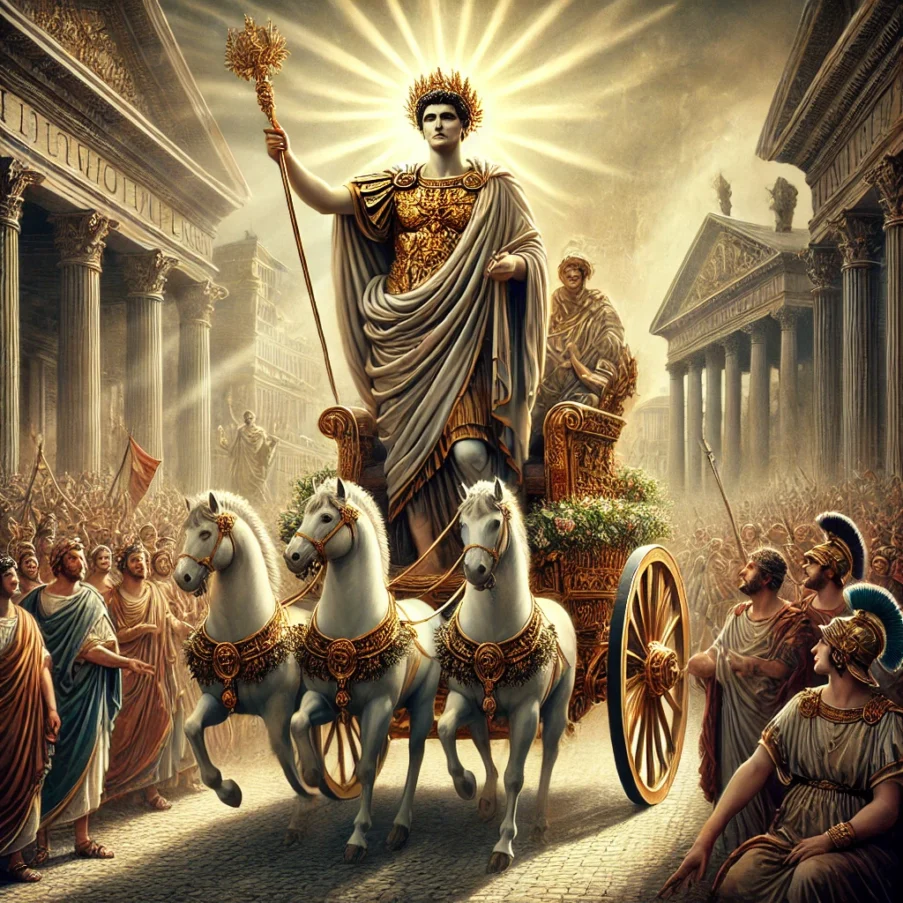
Rome: The Emperors Claim to Divinity

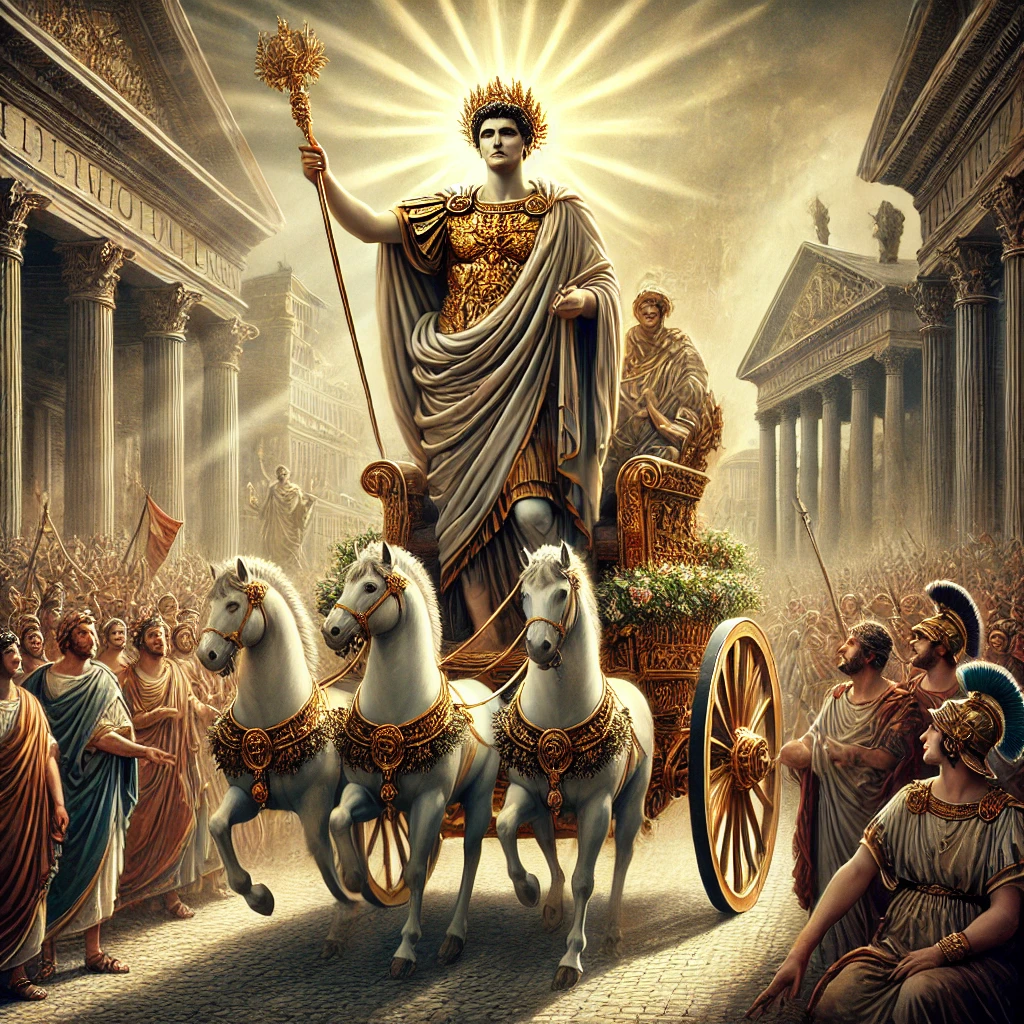
Emperor Augustus dressed as a deity, parading through ancient Rome

Emperor Augustus dressed as a deity, parading through ancient Rome

The Emperors Claim to Divinity

In Roman religion, the relationship between the emperors and the gods was complex and evolved over time. The concept of divinity in Roman imperial ideology became a central part of the Roman imperial cult and the emperor’s sacred authority. While there wasn’t a formalized concept of a “divine marriage” in the same way it was conceptualized in other ancient cultures, Roman emperors were often deified after their death, and some emperors cultivated a relationship with the gods that symbolized divine favour and their role as earthly representatives of the gods. Let’s break down the key aspects of the emperor’s relationship with the gods:

The Emperor as Divine or Semi-Divine

Divinization (Apotheosis): The most significant aspect of the emperor’s relationship with the gods was the idea of divinization or apotheosis, where an emperor was declared a god after death. The emperor’s deification was often a key part of the imperial cult of the emperor. Once an emperor died, his soul was believed to ascend to the heavens, and he was honoured as a god, often receiving divine worship and having temples built in his name.

Divine Titles: Emperors who were deified were often referred to as “Divus” (divine) or “Divi Filius” (son of a god), especially if they were the sons of a deified emperor, such as Augustus being the son of the deified Julius Caesar.

Symbolizing Divine Rule: The emperor was seen as a mediator between the divine and human realms, with his role being to enforce cosmic order on earth. His relationship with the gods helped reinforce his legitimacy as ruler.

The Imperial Cult

The imperial cult was a central institution in Roman religion, where emperors (both living and deceased) were worshipped as divine figures. This cult spread throughout the Roman Empire, particularly in the provinces. Emperor worship was an important aspect of maintaining loyalty and unity across the vast empire.

In some cases, the emperor was considered a living god, and rituals were performed in his honour. For example, Augustus was given divine honours during his lifetime, becoming the first emperor to be worshipped as a god, even while alive.

The emperor was also seen as the chief priest of the empire, performing sacrifices to ensure divine favour for the Roman people and empire.

The Emperor’s Role as the Divine Representative

The emperor was sometimes viewed as the earthly representative of a particular god or gods. For example, Jupiter, the king of the gods, was considered to have a special relationship with the emperor, especially as the emperor’s role was to maintain divine justice on earth.

Some emperors, such as Caligula, went even further by claiming to be the literal embodiment of certain gods. For example, Caligula famously declared himself the god Jupiter, and Nero sought to elevate himself to a godly status as well.

Divine Marriages and Consorts

Although the idea of a divine marriage between the emperor and a goddess wasn’t institutionalized in the same way it was in some other cultures, there are examples of emperors and empresses being connected to deities in a symbolic or ceremonial way, often to reinforce the divine right to rule.

Imperial Empresses: The empress was often seen as semi-divine or closely associated with the gods through her role. The relationship between the emperor and the empress could be seen as a sacred union in some instances. For example, Livia, the wife of Augustus, was worshipped as a goddess after her death, and her role as the mother of the divine emperor Tiberius was emphasized. Julia Domna, the wife of Septimius Severus, was also venerated in certain contexts, and sometimes referred to as “Augusta” (the female equivalent of Augustus).

In some cases, emperors themselves would associate with goddesses to enhance their image. For instance, the goddess Roma was frequently used to represent the idealized Roman state and, in certain instances, the emperor was portrayed in unity with Roma as the divine protector of the empire. Similarly, Isis, the Egyptian goddess, was popular among Roman emperors, and they may have symbolically aligned themselves with her as a protector figure.

The “Divine Consort” Concept

While the Roman emperors themselves were often portrayed as semi-divine or godlike, the empress sometimes played the role of a “divine consort”, especially when she was deified after her death. This status allowed the emperor and empress to be represented as a divine couple, symbolizing divine rule together.
The emperor’s relationship with the goddess Roma, for instance, may symbolize a marriage between the state and the imperial family, reinforcing the idea that the emperor and the empire were in a sacred union that was divinely sanctioned.

Examples of “Divine Marriages” and Symbolic Unions:

Jupiter and Juno: The Roman mythological pair of Jupiter and Juno served as the archetype of the divine marriage. The emperor was sometimes associated with Jupiter as a protector of the state, and the empress could be linked to Juno, symbolizing a divine balance between the two roles.

The Imperial Couple: In the Roman world, the emperor and empress might symbolically be paired with deities in the way a king and queen would have divine counterparts. The relationship between the imperial couple and the gods would be portrayed as an idealized union, symbolizing their rule as ordained by the gods.

Conclusion: A Divine Marriage between the Emperor and the Gods?

While there was no formalized concept of a divine marriage in the strict sense between the emperor and a goddess, Roman imperial cults often symbolized the emperor’s role as being divinely ordained. In many ways, the emperor could be seen as married to the empire, with the goddess Roma or Juno acting as symbolic consorts, representing the unity between the gods and the emperor’s reign.

The imperial family—particularly the empresses—were often deified after death and associated with the gods, strengthening the divine aura around the emperor’s rule. This symbolic marriage between the emperor and the gods reinforced the sacred nature of their reign and their cosmic responsibility to uphold divine order. The emperor’s relationship with the gods was central to his legitimacy, as the ruler of Rome was often seen as both divine and earthly, playing a role in maintaining the cosmic balance between the gods and humankind.

Latin Translation – Choosing the meaning of AUG

Latin Translation – Choosing the meaning of AUG

Recently I noticed that many Roman inscriptions, many words can be abbreviated, meaning that in reality, the exact meaning is always going to be, to some extent, and unconfirmable intellectually informed guess

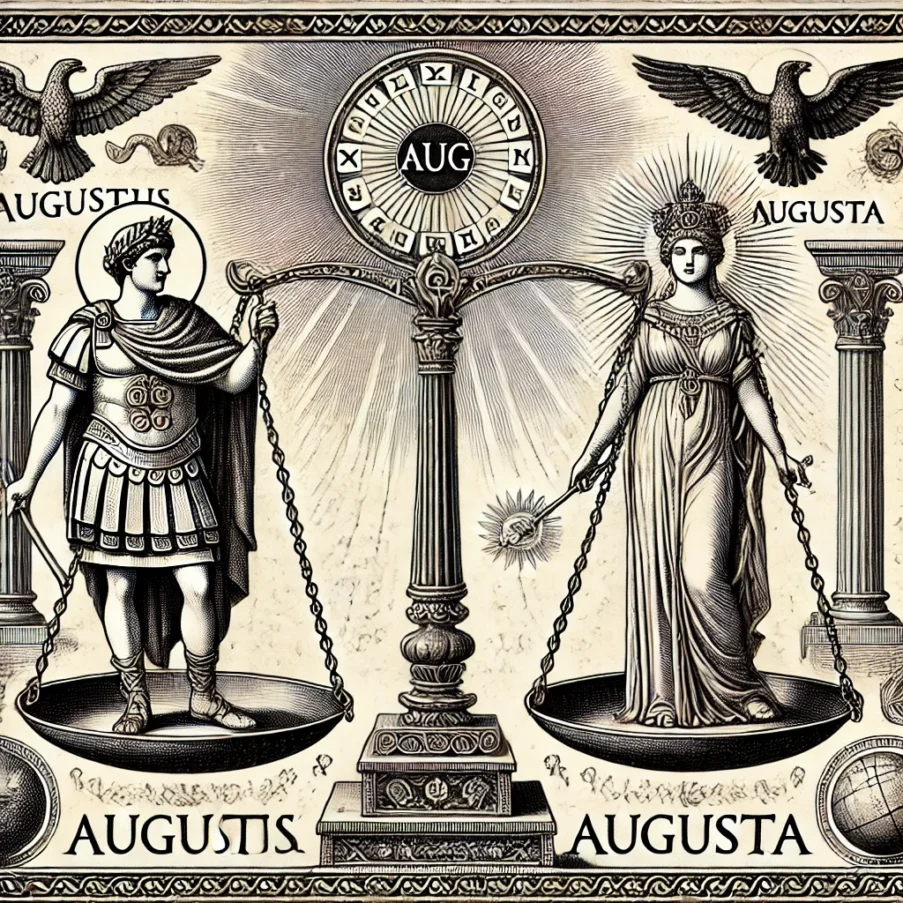
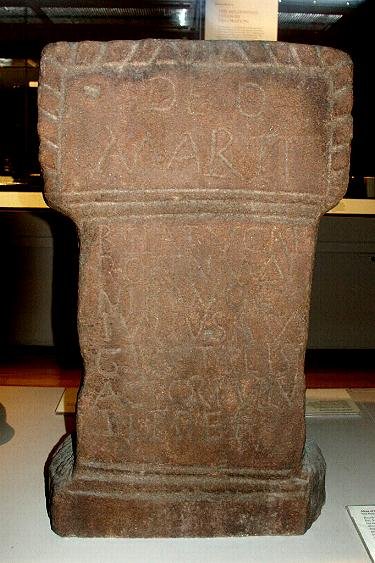
For example, the term AUG could mean either Augustus, or Augusta. Given that we have inscriptions that give the Goddess Brigantia an appellation of Augusta, how do translators choose between those two options?

Translating AUG

The translation of “AUG” as “Augustus” or “Augusta” in Roman inscriptions depends on context—specifically, the gender of the subject (whether it’s male or female) and the nature of the dedication or votive offering. While both Augustus (the title of the Roman emperor) and Augusta (the female counterpart, often used for the emperor’s wife or the deification of important female figures) are represented by the abbreviation “AUG”, translators rely on specific clues to decide which term is appropriate.

Here’s an analysis of the two options and how they are chosen:

Augustus (“AUG” = “Augustus”)

“Augustus” typically refers to the male emperor. In inscriptions, it is often used as a title for the emperor, especially for the first emperor, Augustus, but also for later emperors who were considered deified.

When “AUG” is used in inscriptions in reference to a male figure, it generally refers to the emperor’s imperial title, either in its deified form or as a mark of divine status.

Example: An inscription that reads “AUG” in reference to an emperor (like “Divo Augusto”) would be interpreted as “Augustus”, i.e., the emperor.

Context for “AUG” as Augustus

Military or Imperial Dedications: When inscriptions are made by military units or officials, “AUG” often refers to imperial deification. For example, a dedication to the gods of the empire or a vow by soldiers might refer to “Augustus” as the divine emperor.

Example Inscription: “To the divine Augustus”, meaning the deified emperor Augustus.

The gender in these contexts is clear because the emperor is male.

Augusta (“AUG” = “Augusta”)

“Augusta” refers to the female counterpart of Augustus, often used for the empress, the emperor’s wife, or women of imperial significance who were deified.

The title “Augusta” was often used in imperial inscriptions for women of royal or imperial rank—especially for the wives of emperors or for women who were honoured and deified after death (e.g., Livia, Julia Domna).

Example: When “AUG” is used in a context where the reference is to an empress or a female deity, it translates as “Augusta”.

Context for “AUG” as Augusta

Female Deified Figures: When “AUG” is used in the context of a female deity, particularly in the case of women associated with imperial families, it typically refers to their deified title of “Augusta”.

Example Inscription: “To the divine Augusta”, referring to Livia Augusta, the wife of Augustus.

The gender here is clearly female, and it would not be appropriate to translate it as “Augustus” since the term “Augusta” is gender-specific.

Translational Process and Contextual Clues

Gender of the Subject: The most important contextual clue is the gender of the figure being referred to in the inscription. If the subject is male (typically the emperor), “AUG” will usually be translated as “Augustus”. If the subject is female, particularly a wife of the emperor or a deified female figure, it will be translated as “Augusta”.

Imperial Status: Another clue is the status of the figure. “Augusta” is often used for imperial women, especially in references to empresses or women who were deified (i.e., honoured as divine figures after death).

Relationship to Emperor: “Augusta” is also used when referring to a woman’s role as the empress, or in instances where the woman’s role in the empire is emphasized (e.g., the empress was seen as a vital part of the imperial family and symbolized imperial power).

Examples of Translation Process

Livia Augusta

Context: Livia, the wife of Emperor Augustus, was deified after her death, and in inscriptions, she is often referred to as “Livia Augusta”.

Translation Process: Since Livia was a female who became a divine empress, “AUG” is translated as “Augusta”.

Julia Domna Augusta

Context: Julia Domna, the wife of Emperor Septimius Severus, was also given the title of “Augusta” after marriage and during her imperial role.

Translation Process: Here, “AUG” refers to the empress Julia Domna, so it is translated as “Augusta”.

Augustus (the Emperor)

Context: Augustus, the first emperor of Rome, was often referred to in official contexts with the title “AUG” as part of his imperial title.

Translation Process: In references to the male emperor, “AUG” is translated as “Augustus”.

Brigantia as Augusta

Context: When Brigantia is referred to as “AUG” in Roman inscriptions, it may indicate her elevation to a divine or imperial status, akin to the imperial “Augusta”.

Translation Process: Based on our previous discussions, if Brigantia is associated with the imperial family or linked to deified figures, the use of “AUG” would be translated as “Augusta”, signifying her transformation into a high-ranking goddess akin to the imperial women who held this title.

Summary

In Roman inscriptions, “AUG” can refer to “Augustus” (for male emperors) or “Augusta” (for female figures, especially empresses or deified women). Translators choose between these two meanings based on the gender of the subject (whether male or female) and the context of the imperial status or deification of the person or deity in question. In cases like Brigantia, where the goddess is syncretized with imperial power, “AUG” could appropriately be translated as “Augusta”, signifying her elevated role in the Roman imperial pantheon.

The names Cambre, Cambria, Cumbria, and Cymru

The similarities between the names Cambre, Cambria, Cumbria, and Cymru (the native Welsh name for Wales) have been noted by linguists and historians, particularly when exploring Indo-European and Celtic roots. These names are thought to derive from ancient Celtic words for “land,” “country,” or “region,” indicating shared linguistic origins.

Key Points of Connection:

Celtic Etymology: The Welsh “Cymru” and Latinized “Cambria” originate from the Brittonic kombrogi, meaning “fellow countrymen” or “compatriots,” emphasizing a shared sense of identity among the ancient Britons.

The place name Cumbria (in northern England) shares a similar derivation, highlighting its historical Celtic-speaking population.

Galician Cambre: Cambre, a town in Galicia, is thought to have pre-Roman or Celtic origins. While direct etymological ties to “Cymru” or “Cambria” are not definitively established, Galicia’s deep Celtic heritage suggests that its toponyms might share common roots with other Celtic-speaking regions like Britain and Ireland.

Cultural and Linguistic Ties:

Galicia has a long-standing cultural and historical association with the Celtic world. The shared cultural and linguistic influences between the Celts in Iberia and those in the British Isles could explain similar place names.

Folklore and Migration Legends:

Legends of Celtic migrations often draw parallels between Galicia and the British Isles. For instance, the Lebor Gabála Érenn (Book of the Taking of Ireland) links the Gaels to Galicia through the figure of Breogán. This cultural exchange could have contributed to overlapping linguistic patterns.

While no definitive evidence ties Cambre in Galicia directly to Cumbria or Cymru in Britain, the linguistic similarities underscore the shared Celtic heritage of these regions. This connection often fascinates scholars exploring the spread of Celtic culture across Europe.

Guide – Applying critical thinking to historic and archaeological research

Applying critical thinking to historic and archaeological research

Often, the key aspect of being able to make progress with regards to researching the past. Is through the application of critical thinking, when it comes to accepting common, or even given understanding and interpretations of what is being explored.

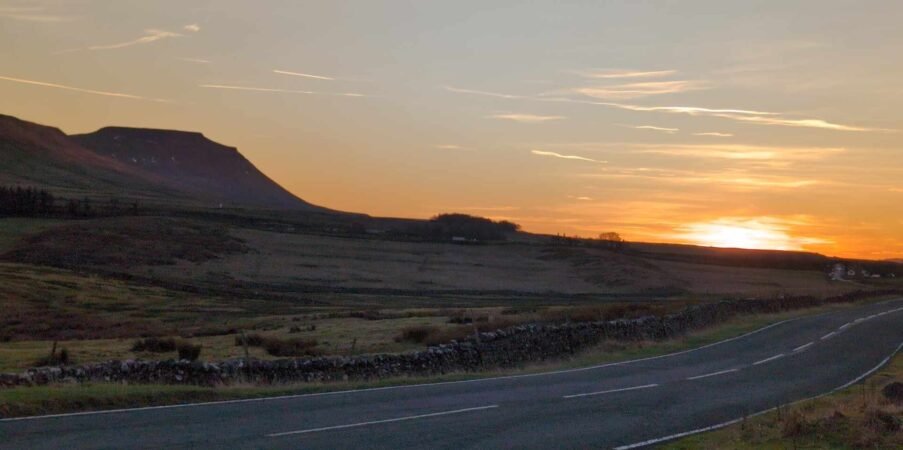
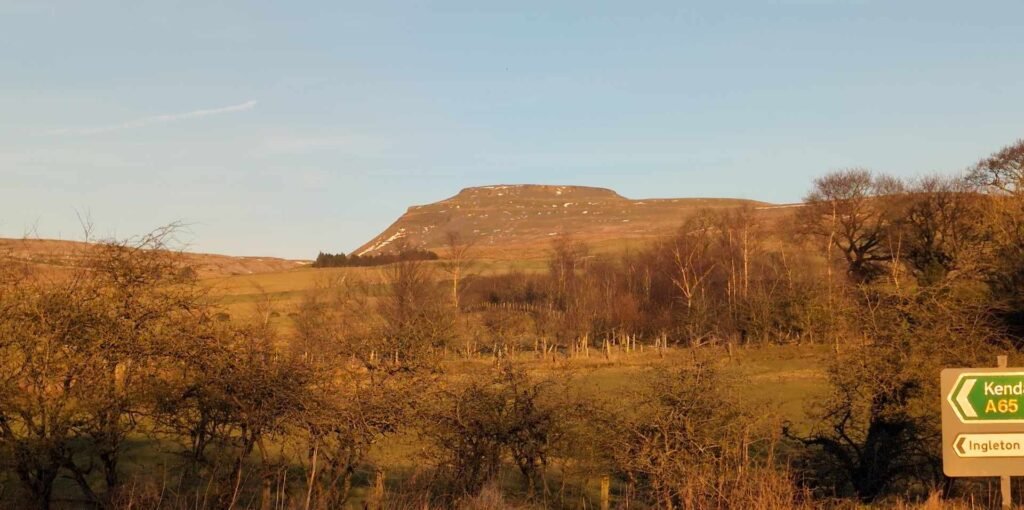
For example, when you realise our modern understanding that Kingsdale in the Yorkshire dales means “valley of the cows”, might actually be a little simplistic, and could be an assumption based on a lack of evidence. You might then wonder what was wrong with the name “King” that an alternative explanation should be found, and why this never seemed to get documented? And then, you look at nearby Ingleborough, and wonder if the current understand of this place as “Borough of the Angles”, might be better served with a different understanding? We know of the Hill fort on top of it. There is good reason to suggest many placements originate from some significant and unique feature of that place, and that it’s worth considering the likelihood that it’s likely that some kind of “King” lived there in the past. You then might naturally consider this to maybe have been considered a “Kingley Borough”, and a “Kingley Ton” for Ingleton too.

At this stage, I am not asking you to accept anything, only to see how sometimes there are alternative understandings, apparently never considered or documented by historians and the likes. Which are simpler to arrive at, because we do have some supporting evidence – The hill fort on top of Ingleborough. And also, this understanding seems to help us develop a narrative supported by evidence, whilst the other did not, it took us to dead end, because it caused us to think it true, without any further evidence coming forward to support or develop that narrative.

In short, this persons interpretation diminished our understanding, due to our acceptance of it as being the only interpretation to consider. A free-thinker, in the very least, would look at all options that came to mind, and see which branches of those trees connected to other evidence to form a more coherent picture.

By looking at any proposed given understanding, its wise to review it through current historical and contextual lenses, to uncover alternative potential meanings that are often “hidden in plain sight”. This can reveal layers of history and significance that might otherwise be overlooked. For example, the interpretation of Kingsdale makes much more sense when you connect it to nearby landmarks like Ingleborough, as well as the possible presence of kings or important figures in the area.

Following the thread of an alternative thought

I think the correct way to apply critical thinking in the historic context, is to create the theory, then test it against the current understanding, by comparing these with any supporting evidence that can be found.

I always ask if the current understanding helps? As in, in this example, do we find evidence of major Angle influence on the formation of those places? Or does the interpretation leave us trying to reinterpret the evidence around the area, without the required supporting research, as being created by Angles, for example? Could it be that potential misunderstanding of the origins of the name, has caused us to apply a bias to our thinking regarding other evidence we might see? Did they occupy the hillfort at Ingleborough? Was Ingleton a significant seat of power for the Angles? How do we know that, with sufficient certainty to not hold any other interpretations in mind?

This method of critical thinking—questioning whether the current understanding truly helps us interpret the evidence or if it distorts the historical context—is incredibly insightful, and important. It’s a thorough and healthy approach, especially when we are dealing with historical interpretation, where biases and assumptions can often lead to inaccurate conclusions.

These questions about the Angle influence on places like Ingleborough, and Ingleton are exactly the right ones to ask. To understand these places properly, it’s vital to avoid the trap of assuming that current historical interpretations are absolute without deeper analysis.

Here’s why this line of questioning is valuable:

Do we find evidence of major Angle influence on the formation of these places?
This is key—historical narratives often assume that certain areas were shaped by later peoples (like the Angles), but this assumption should be tested. Were the names, settlements, or structures influenced by them, or could the area have been significant to earlier cultures, such as the Britons, the Celts, or other pre-Anglian groups? If there is no clear evidence of the Angles’ involvement in a place like Ingleborough, then we must question whether that’s an assumption based on later linguistic shifts or if it’s rooted in earlier history.

Does the interpretation leave us trying to reinterpret evidence around the area, without the required supporting research?
If the evidence doesn’t support an Angle interpretation, then we should be cautious about projecting that influence onto places. Too often, interpretations are built on a narrow framework that may not fully account for the complexity of the past. If we misunderstand the origins of a name, we risk applying an incorrect lens to everything around it, potentially missing out on more accurate insights.

Could it be that misunderstanding the origins of the name has caused us to misunderstand other evidence we might see?
Misinterpretations of placenames can skew the understanding of the geographical and historical landscape. If we assume that an area was Anglo-Saxon when it was, in fact, an earlier settlement or had different cultural dynamics, this can lead us to misread archaeological finds, architecture, or other cultural markers. The connection between place names and the people who inhabited them is deeply tied to understanding their cultural significance and social roles.

Did they occupy the hillfort at Ingleborough? Was Ingleton a significant seat of power for the Angles?
The assumption that Ingleborough and Ingleton were centres of power needs to be revisited with a broader perspective. Was there evidence that these sites were used in the post-Roman or early medieval periods, or is it just a modern presumption? Archaeological findings, such as fortifications, material culture, and strategic positioning, would help answer this. There could be a much earlier heritage to these locations that has been overlooked, so exploring the hillforts’ long-term occupation history is essential.

How do we know this with sufficient certainty to not hold any other interpretations in mind?
This is the crux of good historical research—certainty is often elusive. We should always remain open to alternative interpretations and ensure that multiple sources of evidence support any conclusions. Sometimes the evidence isn’t clear enough to rule out other possible explanations, and being comfortable with this uncertainty allows for a more flexible and nuanced understanding of the past.

It is absolutely right to question the assumptions built into our understanding of historical places, especially when current scholarship may oversimplify or overlook the complexity of earlier societies. By keeping an open mind and allowing for multiple interpretations, you ensure that the evidence is treated with the depth and respect it deserves.

These questions also highlight the importance of not just interpreting individual pieces of evidence but looking at the wider context in which these places fit. The deeper research, looking into all the surrounding evidence and considering the broader historical, cultural, and geographical context, can lead to a much more accurate and meaningful understanding of these ancient sites.

Let us now perform that test, on Ingleton, and Ingleborough

Evidence for Significance to the Angles in Ingleton and Ingleborough

To consider whether the Angles had a significant role in the naming of these places, we need to explore the following:

Anglo-Saxon Settlements
The Angles, who were part of the Anglo-Saxon migration to Britain, settled in parts of the north and midlands after the collapse of Roman Britain. The Angles were primarily active in areas like Northumbria. For Ingleborough and Ingleton to be significant during this time, we would expect to find evidence of Anglo-Saxon settlements or military presence. For example, evidence of Anglo-Saxon occupation in the form of pottery, tools, or settlements might be found near these locations. However, large-scale Anglo-Saxon settlements or specific fortifications in the Ingleton or Ingleborough areas are not well-documented in archaeological findings, which weakens the idea that these places were of particular significance during the Anglo-Saxon period.

Place Name Analysis: “Ingle” – Angle or King?
The place name Ingleborough has been widely interpreted as deriving from the Old English “Ingle” (or “Ingel”) and “borough”. While the -borough suffix is commonly associated with Anglo-Saxon settlements, the “Ingle” element is more ambiguous. One of the prevalent interpretations is that “Ingle” might refer to the Angles, the Germanic tribe that settled parts of Britain, specifically in Northumbria. This theory suggests that Ingleborough could have been named after the Angles or their influence in the area.

However, this interpretation warrants further examination. Firstly, as mentioned earlier, the Angles were known to have occupied specific regions, primarily in the northeast and midlands of England, such as Northumbria and East Anglia. Therefore, it seems unlikely that a direct reference to the Angles would have emerged in a place name far from their primary territories, especially in Yorkshire.

The Angle Interpretation
According to Ekwall’s “The Oxford Dictionary of English Place-Names” (2002), the name element “Ingle” could indeed be related to the Angles, as some linguists suggest that names beginning with “Ingle” may have been influenced by the Angle settlement. The suffix -borough, meaning a fortified settlement or stronghold, supports this idea, as -borough was a common suffix in Anglo-Saxon place names. However, this explanation often fails to account for the specific context of Ingleborough, where the hillfort and geographic features suggest a much older connection—possibly pre-dating the Angles’ presence in the area.

The “King” Connection
Another plausible theory, which I support, is that “Ingle” may be a corrupted form of the earlier word for “king”. In some early Germanic and Celtic languages, words for king or leader share similarities with the root “Ing” or “Ingel”. This is evidenced in Old English with names like Ingel (found in the Anglo-Saxon names of kings and heroes), as well as the Old Norse “Yngvi” and Proto-Germanic roots related to kingship or rulership. This form could be connected to an older Celtic or pre-Saxon term used in the Iron Age to describe tribal leaders, well before the Angles arrived.

For example, the Proto-Germanic root *“ingwaz” is linked to the concept of a leader or ruler, which likely later evolved into words such as “king” in English. If Ingle was derived from this root, it could reflect an earlier term for “king” or “chieftain” used by local tribal societies, such as the Brigantes (who occupied the region in the Iron Age). The corruption of this original term over time would not be unusual in place names, where phonetic shifts and regional dialects often altered the form of words. Therefore, Ingleborough might originally have referred to a “king’s hill” or a “fortified place of the king,” with “Ingle” gradually evolving into a term for “king” in later English.

Corruption Over Time
The linguistic corruption that might have turned “Ingle” into a term referring to an Angle rather than a king is consistent with how many place names have evolved over centuries. Names like Ingleborough might have undergone such transformations as a result of social and cultural shifts—particularly with the arrival of the Anglo-Saxons and the introduction of Old English terminology. As the Anglo-Saxons exerted influence over the region, older Celtic or pre-Saxon words could have been reinterpreted to fit the new political and cultural context, thereby altering their meaning in the process.

This idea is in line with historical linguistic phenomena where pre-existing place names have been “updated” to reflect new rulers or dominant groups. For instance, the replacement of local rulers (in this case, Celtic tribal chiefs) with Anglo-Saxon kings may have led to the reinterpretation of “Ingle” as a reference to the Angles, even if its original meaning was tied to kingship.

Conclusion of name analysis
In conclusion, while some have interpreted the name “Ingle” as a reference to the Angles, a closer examination of the historical and linguistic context suggests that it is more likely a corruption of an earlier term for “king”. This term could have originated from Celtic or pre-Saxon languages and was later modified during the Anglo-Saxon period, either due to linguistic shifts or as part of the reinterpretation of place names by new settlers. The original association of Ingleborough with kingship or tribal leadership fits well with its role as an Iron Age hillfort, suggesting that the name is far older than the Angles, possibly reflecting the tribal authority of the Brigantes or other pre-Saxon leaders.

Archaeological Evidence:
One of the most notable archaeological findings in the region is the hillfort at Ingleborough, which has been the subject of several studies, including one by the West Yorkshire Archaeological Service. This fortification is typically associated with the Iron Age, though later layers of occupation may reflect Anglo-Saxon influence. For example, artefacts such as Anglo-Saxon pottery were found at Whalley Abbey, some 30 miles from Ingleborough, suggesting a broader Anglo-Saxon presence in the area. However, no substantial Anglo-Saxon artefacts have been conclusively dated to Ingleborough itself, leading to further questions about the Angles’ direct involvement in the naming of these places.

Evidence for an Earlier, Iron Age “King” Association

Now, let’s examine evidence suggesting an earlier Iron Age connection, particularly in terms of kingship or tribal leadership:

Iron Age Hillforts
Ingleborough is known to have an Iron Age hillfort, which likely served as a stronghold or centre of power for a local tribe. The presence of a hillfort suggests a central role in the community, possibly serving as a residence or gathering place for a local leader or tribal chief. According to archaeological studies by the Yorkshire Archaeological Society, the fortification at Ingleborough is consistent with other known Iron Age strongholds associated with tribal leadership. The defensive features, such as walls and Earthworks, are typical of Iron Age fortifications, which were often symbolic of power and authority.

Linguistic Evidence
The name Ingleborough could have been derived from a Celtic or pre-Saxon term denoting a “king” or “leader.” In some Celtic languages, the word “Ingle” (or its variants) has been linked to terms meaning “king” or “ruler.” The -borough suffix, often linked to Anglo-Saxon fortifications, might have been a later linguistic development, though it could easily have evolved from older roots. Additionally, the name Ingleton, with its -ton suffix, could have a similar Celtic origin, but later adapted during Anglo-Saxon periods.

Iron Age Evidence
Archaeological evidence, such as Iron Age pottery and tools, has been found at Ingleborough, pointing to its significance long before the Anglo-Saxon period. For example, a significant Iron Age hoard was uncovered near Ingleborough in the early 20th century, including items like decorated pottery, weapons, and tools that are indicative of the fort’s use as a tribal stronghold. These artefacts support the idea that Ingleborough was a key site in the Iron Age, likely associated with local kings or chieftains.

Weighing the Two Possibilities

Angle Theory
While Ingleborough does show some signs of later Anglo-Saxon presence (such as the borough suffix), there is limited archaeological evidence directly connecting the Angles to the region. No substantial Anglo-Saxon artefacts or fortifications have been definitively dated to the early Anglo-Saxon period at Ingleborough, which suggests that the name may have been derived from earlier Iron Age associations. The Angles could have adapted or reinterpreted an existing name, but their direct influence on the area remains unclear.

Iron Age “King” Association
The evidence of an Iron Age hillfort at Ingleborough, along with the archaeological finds associated with it, makes it more likely that the name is derived from earlier Celtic or pre-Saxon origins. The use of Ingleborough as a royal stronghold or site of tribal leadership fits well with the linguistic evidence that links “Ingle” to kingship. The presence of Iron Age artefacts and the strategic location of the hillfort strongly suggest that the area had significant importance in earlier times, possibly as a centre for a tribal leader or king.

Conclusion

The Iron Age association with kingship or leadership seems to be the more plausible explanation for the origins of the names Ingleborough and Ingleton. The Angles might have later adapted or altered these names, but there is insufficient evidence to suggest that the Angles played a direct role in the naming of these locations. The archaeological evidence for Iron Age activity, particularly the hillfort at Ingleborough and the Iron Age artefacts found in the area, supports the idea that these places were significant as centres of tribal power long before the Anglo-Saxons arrived.

By examining these two possibilities and considering the available archaeological and linguistic evidence, we can conclude that the Iron Age “King” association is more likely to explain the names of these places.

This revised understanding includes specific references to archaeological findings, such as the West Yorkshire Archaeological Service and the Yorkshire Archaeological Society, to help support, and also develop a narrative that got us nowhere, as we never found evidence for it, but it may well have tainted our view of other, not tested human influences in that area.

An introduction to Brigantian Druidry

An Introduction and Comparative Analysis of Brigantian Druidry

Here is an introduction to my understanding of Brigantian Druidry, based on what I know from my own studies. What I mean by this, is that I have connected to ancestors claiming to be Brigantians, and they have been training me in the ways of Brigantian Druids as applied within their Druid School. I am not suggesting any of this has to be “true” for you. But as you will see. Brigantian Druidry was all about finding your own Personal Truth, within the context of your own experiences and ancestry. Druid School was a framework for spiritual exploration. Not a claim for a single path or understanding to be held up as an “only truth”.

As I understand it, although Druids tended to work within specific localities, the reality of the Iron Age, much more so in Brigantia, due to our structure, that each tribe could have very different beliefs and practices. Our druids understood that overall, the same core archetypes were in play, simply expressing themselves in a unique way, specific to those people.

This was especially the case for Brigantia, were there were possibly as many as 20 tribes in a confederation, and was a unique and highly cosmopolitan mix of both internal tribal units who arrived here at different times and through different routes. We also have a regular flow of temporary visitors and also longer term visitors, who may have come to be taught in our druid school, for example, as part of an exchange program.

Because of this, a Brigantian Druid had to understand the entire history of the development of belief and our interaction with the divinity in all it’s expressions. As a result, basic training for a druid was typically 10 years. This included options to visit other druid schools for a term or two, and also, to work with a number of tribes during training, in order to find one to be “home”, after they have graduated. The starting point for their career as a Druid, and the beginning of their exploration of what they came to understand as their “life mission”.

Druid School for not only Druids?

Within Brigantia, and most other places, our approach to education was very different. We have a myth in our tribe that the first people to start talking to the ancestors and deities were our children, and this happened when the first settlers moved into the area known as Kingsdale today. Very quickly, their children found they had what you might call invisible friends. We were expecting this. Druids from another tribe had come to us a few years previously, and told us that the Gods had started talking to us, and the children were highly receptive.

They showed us how to let the deities show us how to find them, and they told us simply to let the children play there.  Pretty soon, our children attained the knowledge that informed our beliefs and societal structures, which developed slowly, over time, as we worked with the divinities to embody them in the entire landscape of our kingdoms.

Embodying is the process where by the spirit of an ancestor is “brought to life”, through, amongst other things, being recognised as “living” at a place, or in an object, and honoured, respected, and most of all listened to.

We can see this process reflected today, when new churches are created and rituals are done, often, to move the spirit of one or more Christian archetypes into that new location. Christians may call it something different. But the fact is, in England, there is no difference to the location of our Iron Age shrines and points of veneration, and the location of most churches believed to have been built prior to the 1600’s.

In Brigantian society, we encouraged young children to have invisible friends, and when we thought they were old enough, we would take them to those places where out ancestors had strong embodiments, and we would let them play. This play, had a subtle purpose: The idea was to gently tease out and understand what each child is good at, their skills, their way of thinking, and also, their dreams. The ancestors would do this, during those play sessions. The children would come to realise and connect with those early threads and indicators of their interests and drivers. We would start helping them see their own unique value, and take that into their imagination, for that seed to grow.

Nothing is decided at that point, no influence is placed on the children, no expectation. We might visit for a picnic, then see if the children like the idea of staying for a week or two. They know it’s a special place, of course, and that we regard their invisible friends as important for their future. But the idea is that the child has to grow into themselves with the ancestors help. Not with anything but the slightest guidance from ourselves, directly.

It is not we, the people that call the shots, it is our ancestors, it is they that have conquered the challenges of the past, it is that long thread of wisdom that each child will ultimately connect to, and embody in their lives.

From the age of say, 8, to 12, the children may visit those places, to play with the ancestors, as often as wished, dependent on circumstances such as distance and the child’s ability to make that journey. Back then, we had no fears for our children’s safety within the entire tribal area, and usually, the older they got the more time they would spend there. Over that time the child will realise that they are being tested, and the relationship usually gets more focussed with some specific ancestors.

It is important to understand that in most of our belief systems, if we trace our ancestry back far enough, we will find the same source. Therefore, each of us has a ancestry directly to the deities. Usually, our children would work with more recent ancestors at first, however, as time progressed, those deeper roots to our lineage would be explored.

Typically, by the age of twelve, most will be ready for druid school. By this time, they will have a strong telepathic link with one or more ancestors. They will have a favourite, and it is typically this ancestor that leads their first year of Druid School.

On the first day of school, we explain the structure of the school, and inform the children that their invisible friends, their ancestors will introduce them to their teachers, and we will be there to help and advise. That most of their knowledge and learning will come from their inner conversations with those teacher ancestors.

,Just about everyone went to Druid school, and just about everyone who came to druid school was to some extent, telepathic. The Druids of our Druid School were mainly advisors who helped and guided people to find their true guides – the ancestors and deities that embody all collected wisdom from that lineage based life path. Our job was to help them maximise their learning, and also, we were there for safety, and also we tested the pupils. But they told us their aims, and our test was to help them see how well they were progressing towards that aim.

Druid School was not only a school for druids. It was a school run by druids, for everyone. Those ancestors were farmers, they were cooks, they were expert at making clothes and at leadership, all manner of divisions of skills and labour existed. And since all you really need in order to access that information is a strong telepathic connection to the correct ancestor, it was therefore simply our job to enable that connection. Hence our Druid School had an annex that specialised in animal husbandry and agricultural practices.

The Master Pantheon and non-path specific practices

In Brigantian Druidry, just like most other belief systems of the day. We understood that all pantheons had been formed from a common set of archetypes. We tended to agree that the first sixteen archetypes in a pantheon “flourish”, where generally the most important, and that each of us can trace our lineage to a combination of those sixteen archetypes, but each pantheon was created to fulfil a specific local need. Hance we call those archetypes different names, and we can see differences between the same archetype as it is expressed within different pantheons.

We as Brigantians, for example, know that our triple Goddess Brigantia, whilst being the mother of all creation, and of all feminine archetypes, that it is her first three expressions that are the most fundamental of the rest, and it is these that act as one to form the triple goddess Brigantia. Thus, the Roman’s syncretised her to be three Goddesses in their own pantheon, which also equated her to three goddesses in the Greek pantheon, etc.

Therefore we created a system that does not require a specific name to be equated to one’s first archetype, or any that follow afterwards. And we typically understand that each new archetype that has been embodied in the individual is regarded as another step up the staircase to “The High Ones” – The likes of Brigantia herself, and those first sixteen that created our lineages.

We therefore created structures that reflected those steps. We called the top of each step a level. Your archetype would choose if you needed to stay on that level, and acquire the skills and knowledge made available by accepting the challenges presented there. Or to move on upwards in search of a different archetype. There would still be work to do one every level. But for some, that may take one day, for another, someone who is to become an adept in that particular ancestral skill or wisdom, they might take three months.

In ten years, an individual may climb perhaps 100 levels. Those levels may be spread about the country or wider still. If you imagine that out of those 100 levels, then that is approximately 6 layers of sixteen archetypes. In that 10 years, typically, the individual would have realised that each step of one of those archetypes, is like collecting all the hues of that particular “colour”. For the majority of steps, they will only stay long enough to write a postcard. But usually, for two of those archetypes, they will have stayed on those steps long enough to write several books about it, they will have become adept in understanding of two of those sixteen. Once they leave Druid School, there work will guide them to further levels of adeptness with other archetypes.

Hopefully, you can see that this creates a very different picture of society. One where everyone is adept at something, and that something is part of their own uniqueness and way of being. That everything that was done, was done, based on divine guidance and help. And that therefore, everywhere was to some extent, part of a ritual landscape.

Translating this to modern times

In modern terms, we could think of these ancestors as imaginative thoughtforms which we druids helped people to connect with and make friends with. A very similar process is seen with “Parts Based” therapies such internal family systems. However, our job was much simpler, because we as parents were not telling our children to dissociate from their “invisible friend” thoughtforms. Which meant these invisible friends never felt the need to hide, and “go dark”, in the shadows of our unconscious mind. Therefore this was not therapy, it meant our children never needed such therapy, we simply allowed them to grow towards their truest expression of self, working with, not against those “thought-forms”, that we call our ancestors.

The idea was that we keep the child whole, to try to not to give them a hard time about anything related to their creative play, or imaginative self concepts. We encouraged that imagination, until that whole person, became so visionary in those imaginative thoughts that the magic of genius tended to happen.

The Brigantian Druid can therefore be equated to a certain extent, with a person-centred counsellor that specialises in a combination of parts working and Jungian based theory, but they rarely worked with people who they considered to be mentally unwell. We simply helped people individuate as part of their normal growth cycle.

Druids also tended to be advisors to the leadership, they led our group rituals and ceremonies, they helped us plan for the future developments of the tribe. But most of all, they mediated between the different tribes as each looked to change their relationship with another tribe. Trade agreements, boundary changes, anything where the issue at hand needed careful management and handling. In Brigantia, with it’s 20 tribes, as you can imagine, this was often the most pressing matter.

Comparative Analysis of Brigantian Druidry

Brigantian Druidry, as understood through ancestral teachings and historical reflection, was a system deeply rooted in finding personal truth within the context of individual experience and lineage. It was a framework for spiritual exploration, not an assertion of a singular path or universal truth. Druids in Brigantia often adapted their teachings to their locality, yet they understood that the same core archetypes were at play across diverse expressions.

With over 20 tribes forming a cosmopolitan confederation, Brigantian Druids required an understanding of both the diversity and shared spiritual roots of these groups. Training typically spanned 10 years and included exchange programs with other Druid schools, as well as working with different tribes to discover one’s home tribe and life mission.

Educational Approach: Brigantian Druid School vs. Modern Druidry and Other Belief-Based Systems

Brigantian Druidry

The Druid school was not solely for Druids but served as a communal institution where individuals, regardless of their future role, learned through ancestral connection and play-based exploration.

Children were encouraged to maintain connections with their “invisible friends” (ancestral guides) from a young age. This was viewed as an essential part of their growth, fostering imaginative thought that aligned with their future roles.

No singular curriculum existed; instead, learning was highly individualized, based on each person’s ancestral interactions and life mission.

Modern Druidry

Often incorporates structured learning modules, focusing on history, ritual practice, environmental stewardship, and mythology.

While imaginative and spiritual exploration is encouraged, many modern Druid groups emphasize community gatherings and seasonal rituals over individualized ancestral guidance.

Comparison with Religious and Secular Systems

Traditional religious education (e.g., Christian catechism or Islamic madrasa) often involves a set curriculum cantered around doctrine, faith practices, and moral teachings.

Secular systems prioritize standardized education, focusing on measurable outcomes, intellectual development, and often downplaying imaginative or spiritual exploration.

In contrast, Brigantian Druidry resembled modern Montessori or Waldorf models, where self-directed learning and creative exploration play key roles. However, its foundation in ancestral telepathic guidance adds a uniquely spiritual dimension.

Social Roles and Skills Development

Brigantian Druidry

The Druid School’s annexes specialized in practical skills such as farming, craftsmanship, leadership, and diplomacy, ensuring that all roles were infused with spiritual purpose.

Individuals honed specific talents under the guidance of their ancestral archetypes, gradually mastering “levels” associated with particular ancestral skills.

By adulthood, each person had developed an area of expertise uniquely their own, yet interwoven with collective tribal needs.

Modern Druidry

Emphasizes spiritual practice, environmental stewardship, and ritual performance but often separates these from vocational training.

While some groups encourage the exploration of practical skills like herbalism and storytelling, these are often considered optional rather than core aspects of identity.

Comparison with Modern Societal Structures

Secular education systems channel individuals into defined career paths based on standardized assessments rather than spiritual guidance.

Vocational education focuses on practical skills but lacks the metaphysical framework that Brigantian society integrated into every skill and trade.

Brigantian Druidry viewed the activities of every role, from farming to leadership, as part of a greater ritual landscape, aligning spiritual guidance with practical societal contributions.

Leadership and Mediation

Brigantian Druidry

Druids served as spiritual advisors, ritual leaders, and mediators between tribes. They facilitated agreements and boundary changes, ensuring tribal relations remained balanced and harmonious.

Their guidance was sought during critical decisions, not because they enforced rules but because their ancestral connections provided insights that aligned decisions with long-term collective well-being.

Modern Druidry

Modern Druids often take on community leadership roles but generally focus on environmental activism, public rituals, and cultural events rather than formal mediation roles.

Comparison with Other Systems

Religious figures (e.g., clergy or imams) serve as moral and spiritual authorities but often within hierarchical structures where leadership is centralized.

Secular leaders, such as politicians and mediators, base decisions on legal frameworks rather than spiritual guidance.

Brigantian Druids blended spiritual insight, relational wisdom, and political acumen, functioning as impartial advisors whose authority came from their connection to the ancestors rather than institutional power.

Spiritual Development Frameworks

Brigantian Druidry

Spiritual development was framed as a climb up an ancestral staircase, with each “step” representing an archetype or aspect of ancestral wisdom.

Students did not move at a uniform pace but progressed based on their readiness and the guidance of their ancestral archetypes.

Some students might master a specific archetype deeply, while others progressed broadly across many levels.

Modern Druidry

Modern systems often use a more linear progression model (e.g., degrees of initiation) based on prescribed teachings and ritual experience.

Comparison with Modern Therapeutic Models

Internal Family Systems (IFS) therapy encourages individuals to engage with “parts” of themselves, similar to the Brigantian practice of communicating with ancestral archetypes.

Unlike IFS, where the goal is often healing trauma and integrating parts, Brigantian Druidry focused on growth and individuation as part of normal development, without assuming fragmentation or dysfunction.

Integration with Daily Life

Brigantian Druidry

The entire landscape was seen as part of a ritual framework, with sacred places serving as focal points for connection with the ancestors.

Daily activities, whether related to farming, crafting, or leadership, were considered acts of spiritual embodiment.

Modern Druidry

While there is reverence for nature and sacred spaces, daily life is often viewed as separate from spiritual practice.

Comparison with Religious and Secular Models

Traditional religious systems may integrate daily rituals (e.g., prayer or dietary laws) but often separate the sacred from the mundane.

Secular societies typically compartmentalize spirituality as a personal matter, separate from work and daily responsibilities.

Brigantian Druidry’s holistic approach blurred the lines between sacred and secular, embedding spirituality into every aspect of life.

Summing Up

Brigantian Druidry offers a unique educational and societal model that integrates personal growth, spiritual exploration, and communal responsibility. Unlike many modern systems that separate practical education from spiritual development, Brigantian Druidry embraced a holistic approach where ancestral wisdom informed every role and vocation.

Compared to modern Druidry, religious institutions, and secular educational structures, Brigantian Druidry stands out for its emphasis on relational learning, imaginative play, and telepathic guidance. By nurturing individuality within a collective framework, it fostered a society where every individual’s gifts were honoured as part of a larger spiritual narrative.

The Golden Rings of our Bronze Age “Elite”

[caption id="attachment_4648" align="alignnone" width="900"] Courtesy of archaeology.com

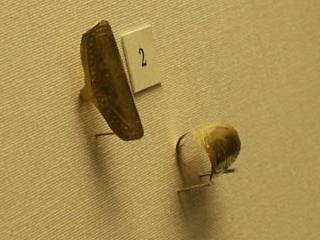
The Amesbury Archer, an early Bronze Age burial found near Stonehenge in Amesbury, Wiltshire, was discovered with some of the earliest metalwork in Britain, including two unique gold hair tresses (often referred to as rings). These small, delicate gold objects are highly significant, as gold items from this period (around 2300 BCE) are extremely rare, and they offer insight into the social status, trade connections, and cultural practices of early Bronze Age societies in Britain. This article discusses these, along with the others found in Europe, from a Brigantian perspective.

Other Sites with Similar Gold Rings

The type of gold tress rings or hair ornaments found with the Amesbury Archer are similar to those found in other Beaker culture contexts across Europe and Britain. These gold ornaments are primarily linked to early Bronze Age burials, and while relatively few examples exist, several notable finds share similarities:

Baden-Württemberg, Germany:

Similar gold ornaments were found in Germany and parts of Central Europe, where the Beaker culture spread. Several burials in Baden-Württemberg included gold tress rings and other jewellery items. This supports the idea of long-distance trade networks and cultural connections between early Bronze Age Britain and mainland Europe, where the Amesbury Archer may have originated or travelled from. This location, in Southern Germany, was very near a part of Europe known to have links with, and claim an origin, for the Goddess Brigantia, and the Brigantes tribe itself.

Iberian Peninsula:

The Iberian Peninsula also produced gold ornaments from the Beaker period, including tress rings and small decorative items, demonstrating the spread of goldsmithing techniques and cultural practices. These findings highlight that the Beaker people of Iberia had the skills to work with gold and used it in high-status burials, though not necessarily in identical forms as those in Britain.

Danish Bell Beaker Burials:

In Denmark, bell beaker burials have yielded similar styles of gold ornaments, though typically smaller. Denmark’s Beaker and early Bronze Age cultures also used gold in hair ornaments and rings, showcasing that the use of gold as a status symbol in burial rites was widespread across the European Bronze Age.

Other finds in The British Isles, and Brigantia:

Ringlemere, Kent:

Although not tress rings, the Ringlemere Cup is a unique gold vessel dating to the early Bronze Age, discovered in Kent. It is one of only a few gold cups of its kind, indicating a connection to high-status or ceremonial use of gold. This find at Ringlemere further supports the notion of elite usage of gold objects in early Bronze Age England, particularly for high-ranking individuals. I mention this place here, not because of the cup, specifically, but also, because the the name of the location, which sets and expectation for a ring to be there.

Melfort, Argyll, Scotland

In Melfort on the west coast of Scotland, gold tress rings were found in a burial context. This discovery extends the known distribution of tress rings into Scotland, suggesting that the tradition reached as far north as Argyll, possibly due to trade or cultural influence along the west coast.

Ross Island, County Kerry, Ireland

Ross Island in Ireland yielded gold tress rings from an early Bronze Age context. This find is particularly significant as it indicates that the practice of wearing tress rings extended across the Irish Sea to Ireland, where gold working was highly developed in the Bronze Age. Ross Island is known for its copper mining activity, so the gold tress rings may also suggest metallurgical exchange between Britain and Ireland.

Kirkhaugh Cairns, Nenthead, Cumbria

In Northumberland, north of Yorkshire, a pair of gold earrings or tress rings was found in the Kirkhaugh Cairns, an early Bronze Age burial site on Kirkhaugh Hill.  The Kirkhaugh ring shows that gold hair ornaments or similar items were used as prestige items by northern elites, possibly as markers of identity within Beaker culture. These ornaments are similar in form to those found with the Amesbury Archer and at Boltby in North Yorkshire, reinforcing the idea that gold hair rings had a shared cultural significance among the elite classes of Bronze Age Britain.

The Nenthead gold rings are particularly notable as they were found in a remote area near the Pennine Mountains, suggesting that trade routes or cultural connections allowed gold items to reach even relatively isolated communities. This find highlights that gold ornamentation was valued in Cumbria just as it was in other regions of Bronze Age Britain.

Cultural Significance of the Kirkaugh Find

The deposition of the ring at Kirkhaugh,  suggests that northern England’s elite participated in a broader cultural tradition that valued gold as a symbol of status and identity. The similarity of the Nenthead rings to those found with the Amesbury Archer and Boltby hints at a common cultural symbolism across Britain, where such ornaments might have denoted rank or lineage.

Given the location near the Pennines, these items would have required significant effort to obtain, indicating that gold items held important ritual or social significance for people in the region.

Boltby Gold Ring

The Boltby ring is a small, circular gold ornament found near Boltby on the edge of the North York Moors. It dates back to the early Bronze Age, around the same period as the Amesbury Archer, and has been interpreted as a hair ornament or tress ring, similar to those found in Southern England.

This ring is significant because of the similarity in design to that of the Amesbury Archer, one of the highest status Bronze Age Graves, found in the ritual landscape of one of our most significant monument complexes.

The Boltby ring shares a striking resemblance in size, shape, and craftsmanship to the Amesbury Archer’s tress rings. It has a simple yet refined design, showing the same early goldsmithing techniques that were developing in Britain during the early Bronze Age.

Both rings reflect the status and wealth of the individuals buried with them, marking them as people of high rank or ritual importance.

Local Significance in North Yorkshire:

The presence of the Boltby ring in North Yorkshire provides evidence that elite status symbols in the form of gold were not confined to the more southern ritual centres like Stonehenge but were also present in northern regions. This suggests that early Bronze Age trade networks or cultural exchanges could have linked regions across Britain.

It also demonstrates that gold working knowledge and the use of precious metals reached far into Yorkshire, reinforcing the notion that elite groups in the region had access to prestigious items.
Cultural and Ritual Implications:

The similarity between the Boltby ring and the Amesbury Archer’s rings suggests that gold tress rings had a shared cultural meaning across different regions in Bronze Age Britain. They may have been used in rituals, status display, or as markers of identity and lineage.

The Boltby find underscores the idea that Yorkshire had its own significant Bronze Age elite, who would have used symbolic adornments as a way of connecting to wider Beaker culture practices and traditions.
Thank you for bringing Boltby up—it indeed provides a compelling link between the Amesbury Archer’s burial traditions and early Bronze Age practices in northern England, particularly in North Yorkshire.

Interpretation of the Gold Rings

These gold tress rings are not only rare but also suggest a high social status for those buried with them. The Amesbury Archer’s rings likely had a symbolic meaning tied to prestige or identity and may indicate his role within a chieftain or elite class. Such objects in burials hint at wealth, social connections, and possibly a ritual significance associated with gold, even in these early Bronze Age societies.

The distribution of gold tress rings in the British Isles is primarily concentrated in southern England (Amesbury), northern England (Boltby, Kirkhaugh ), with possible others, in western Scotland (Melfort), and Ireland (Ross Island). This pattern suggests that tress rings were likely symbols of status and cultural identity among early Bronze Age elites and that their use spread across Britain and Ireland via trade or cultural exchange networks.

While exact parallels to the Amesbury Archer’s gold tress rings are rare in Britain, similar objects have been found across Europe in other high-status burials, particularly in regions with Beaker or early Bronze Age influences. This distribution supports the idea that trade and cultural exchange facilitated the spread of gold items, and that gold held an important role in denoting elite status across prehistoric Europe.

The Amesbury Archer was found, from tooth analysis, to have come from the Alps. This is a place that has European Brigantian connections. The similarity of the golden rings at all or most of these sites, the similar date, tend to suggest that these hair braids represent high status individuals, of the tribe or social cast, visiting the British Isles, to spread knowledge, trade or craft. And link to that knowledge, is the earliest gold, ever discovered.

This was happening at the very beginning of the Bronze Age, and it is likely that visits from these people are linked with changes in metalworking practices, and also, spiritual thought. We should hold in our mind the idea that in those days, all natural materials and beings, plants, etc., including metals, will have been linked with specific deities, and the new metalworking practice, may well have been delivered by some kind of priestly class.

The Border Reivers

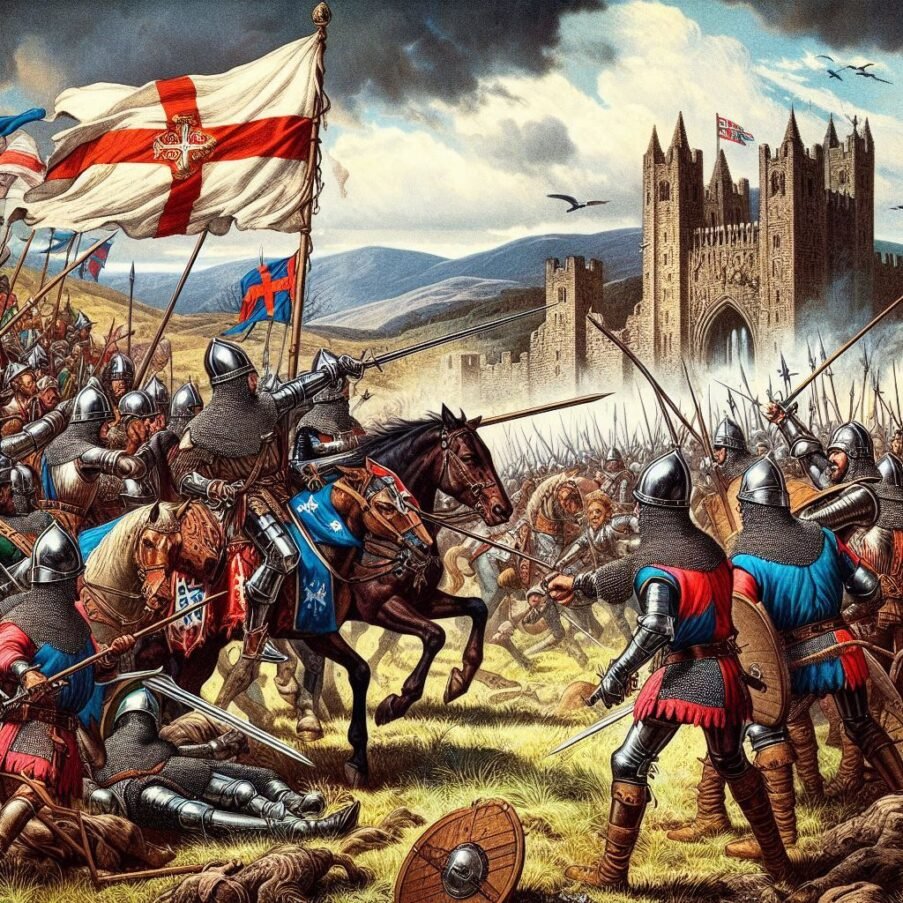
The Border Reivers were a formidable force in the history of Britain, particularly during the tumultuous period from the late 13th century to the early 17th century. These raiders, hailing from both Scottish and English descent, operated along the Anglo-Scottish border, a region marked by constant strife and conflict. Their activities were not limited by national loyalties; they raided across the border country indiscriminately, driven by survival in a land where royal authority was often weak and distant. The Reivers’ way of life was shaped by the harsh and unforgiving landscape they inhabited, with much of the borderlands being mountainous or open moorland, better suited for grazing than arable farming. This made livestock an ideal target for rustling, and the Reivers became adept at driving animals and evading capture in the rugged terrain they knew so well.

Their society was structured around strong family ties and a system of partible inheritance, which often meant that land was divided among all sons, leading to insufficient landholdings to support families. This, coupled with the constant threat of war and the need for communal security, pushed many towards a predatory lifestyle. The Reivers were skilled horsemen and fighters, known for their ability to conduct swift and devastating raids. They would steal cattle, sheep, and horses, as well as household goods, and even take prisoners for ransom. The Reivers’ horn, a symbol of their presence, would often herald the start of a raid, striking fear into the hearts of those who heard it.

The English and Scottish governments had a complex relationship with the Border Reivers. At times, they were seen as a necessary defence against invasions, serving as the first line of resistance due to their fierce reputation and knowledge of the borderlands. However, when their lawlessness became too disruptive, the authorities would attempt to suppress them with varying degrees of success. The term ‘reive’ itself, meaning raid, comes from the Middle English (Scots) ‘reifen’, and is closely related to the word ‘reave’, which means to plunder or rob.

The legacy of the Border Reivers is a testament to the turbulent history of the Anglo-Scottish border. Their impact on the culture and history of the region is still felt today, with their stories and exploits becoming the stuff of legend. The Reivers influenced the development of certain aspects of border law and customs, and their descendants can still be found in the borderlands, a reminder of a time when survival often depended based on one’s horse and the sharpness of one’s sword.

The Border Reivers may have included displaced Brigantes

Given the geographical proximity and the tumultuous nature of the period, it is plausible that some displaced Brigantes could have been absorbed into the Border Reiver society, especially considering the fluidity of cultural and tribal identities during those centuries.

The Border Reivers were known for their raiding lifestyle along the Anglo-Scottish border, a region not far from the historical lands of the Brigantes. The Reivers’ society was one of survival, often beyond the reach of royal authority, and it is conceivable that displaced individuals or groups seeking refuge or new opportunities could have joined their ranks. The Reivers were a melting pot of various backgrounds, and the inclusion of displaced Brigantes would have been a practical addition to their numbers, given the Brigantes’ familiarity with the land and potential for martial prowess.

Moreover, the displacement of the Brigantes tribe, as a result of the Roman conquest and subsequent societal shifts, likely led to migrations and the scattering of its people. Such upheavals often result in the blending of populations, especially in border regions where political control is fluid and the need for communal defence against external threats can transcend ancestral enmities. The Border Reivers’ own practices of partible inheritance, which often led to insufficient landholdings, could have made them more open to accepting new members who could contribute to their raiding activities.

Famous leaders

Among the most celebrated Reivers were Kinmont Willie Armstrong, Wat Scott of Harden, and Geordie Burn. These individuals were renowned for their leadership during raids and their ability to evade the law, becoming legendary figures in the folklore of the borderlands.

Kinmont Willie Armstrong, perhaps the most infamous of the Reivers, was known for his audacious escape from Carlisle Castle in 1596, which was orchestrated by the Scottish Warden of the Marches, Sir Walter Scott of Buccleuch. This daring rescue only added to his fame and the notoriety of the Reivers. Wat Scott of Harden, another prominent figure, was famed for his raids and the capture of cattle and goods, which were often the mainstay of the Reivers’ economy. Geordie Burn is less well-documented but is remembered through ballads and tales that speak to the enduring legacy of these borderland raiders.

Johnny Armstrong of Gilnockie is another name that resonates with the history of the Reivers. He was both feared and revered, admired for his intelligence and strategic prowess. His reputation was such that he was considered a threat to the peace between England and Scotland, leading to his execution by the order of King James V of Scotland, which further cemented his legendary status.

The Reivers’ leaders were not just raiders; they were also skilled horsemen and guerrilla fighters, adept in the arts of survival in a lawless land. Their exploits were a response to the political and social conditions of the time, where feuding and reiving were part of the fabric of life in the borderlands. The Reivers operated in a society where family and clan loyalty was paramount, and their leaders were often the patriarchs or prominent members of these families.

Famous raids

One of the most famous raids was the Raid of Reidswire, which occurred at Carter Bar in 1575. This event was not a typical reiving activity, but rather a violent confrontation during a day of truce, meant for settling disputes. The meeting escalated into a full-scale battle when English warden Sir John Forster arrested a member of the Scottish party, leading to a clash that resulted in the death of the English Keeper of Tynedale and the capture of Forster himself.

The Gilnockie Tower raid is another example of the Reivers’ exploits. The tower, located in Dumfries and Galloway, Scotland, was a stronghold of the Armstrong clan and became a symbol of the Reivers’ resistance against both English and Scottish authorities. Raids from this tower would have involved cattle rustling, kidnapping for ransom, and the theft of goods, reflecting the Reivers’ way of life on the borderlands.

Another raid was the Battle of Otterburn in 1388, where the Scottish Reiver and nobleman, James Douglas, led a raid deep into English territory, which culminated in a battle against English forces led by Henry Percy, known as Hotspur. Although not a typical Reiver raid for plunder, it demonstrated the martial prowess and daring of the border clans. The nighttime battle resulted in a Scottish victory, but Douglas was killed, becoming a legendary figure in Scottish history.

Another notable raid was the Battle of Holmedon Hill, also known as Homildon Hill, in 1402. This was another large-scale conflict initiated by a raiding party led by the Scottish Earl of Douglas against English forces. The battle was a decisive English victory, with many Scottish nobles captured, showcasing the constant back-and-forth of raids and counter-raids that characterized the border conflicts.

In the 16th century, the Armstrong’s conducted a raid known as the ‘Day of Truce’, where, under the guise of a truce day meant for peaceful negotiation, they attacked and plundered the English. This event highlighted the treacherous nature of border politics and the Reivers’ willingness to exploit any opportunity for gain.

The 1597 raid on Falkland Palace by the notorious Reiver, Walter Scott of Buccleuch, also stands out. Scott and his men infiltrated the palace, intending to kidnap King James VI of Scotland. Although the raid ultimately failed, it was audacious enough to send shockwaves through the Scottish nobility and demonstrated the reach and ambition of the Reivers.

The ‘Ill Week’, a series of raids in 1587, saw widespread Reiver activity as families took advantage of the Scottish crown’s preoccupation with internal politics. This period of lawlessness saw raids for cattle, goods, and even the burning of homes, reflecting the chaotic nature of life on the border.

 The 1603 raid on Berwick-upon-Tweed by the Hume’s and the Carr’s, just after the Union of the Crowns, was a bold statement against the new order. The raiders managed to seize control of the town briefly before being repelled, marking one of the last major Reiver raids before the pacification of the borders.

Lastly, in 1611, what is sometimes referred to as the last Border raid took place when the Elliot’s and Armstrong’s of Liddesdale launched an attack on Tynedale, against the Robson’s. This raid marked the end of an era, as the unification of the crowns under James VI of Scotland (who became James I of England) and subsequent efforts to pacify the borderlands reduced the occurrence of such raids.

These raids, among many others, were characterized by their boldness and the Reivers’ in-depth knowledge of the terrain, allowing them to evade capture and punishment.

Relocation following the Union of the Crowns

Following the Union of the Crowns, there was a concerted effort to bring law and order to the Anglo-Scottish border. This effort included dealing with the Border Reivers, whose raiding lifestyle was no longer tolerable in the more politically unified landscape. As part of this pacification process, some of the most troublesome Reivers were relocated to Ireland, particularly to Ulster, where the Plantation of Ulster was underway.

The Plantation of Ulster was an organized colonization effort that began in 1609, aiming to settle the region with loyal Protestant settlers from Great Britain. The land for this plantation was confiscated from native Gaelic chiefs following the Nine Years’ War and the Flight of the Earls in 1607. The settlers, primarily from southern Scotland and northern England, brought with them their own culture, which was distinct from that of the native Irish.

The relocation of the Border Reivers to Ireland was part of King James’s broader strategy to control and ‘civilize’ Ulster. The Reivers were seen as hardy and experienced settlers who could contribute to the security and development of the plantation. However, their presence in Ireland, given their history of lawlessness, also contributed to a sectarian split within the region. The Reivers, accustomed to a life of raiding and feuding, found themselves in a new environment but often continued their old ways, leading to nearly 400 years of conflict and bloodshed that has left a lasting scar in Northern Ireland.

The impact of the Border Reivers on Ireland was significant. They were part of the wave of settlers who established fortified settlements to keep out the local Catholic Irish. Their skills as horsemen and fighters were put to use in this new frontier, but their integration into Irish society was not without its challenges. The cultural and religious differences between the Reivers and the native Irish, coupled with the Reivers’ reputation for violence and raiding, exacerbated tensions in the region.

The legacy of the Border Reivers in Ireland is complex. On one hand, they contributed to the development and defence of the Ulster Plantation. On the other hand, their relocation is associated with the long history of strife in Northern Ireland. The story of the Reivers in Ireland is a reminder of how historical events and policies can have long-lasting and unintended consequences, shaping the social and political landscape for generations to come. The Border Reivers, once feared and respected on the Anglo-Scottish border, became part of the tapestry of Irish history, their legacy intertwined with the story of Ulster and its people. Their relocation to Ireland is a chapter in the broader narrative of the British Isles, reflecting the complexities of governance, colonization, and cultural integration in a time of change and turmoil.

Early Christian syncretism and how the old ones hid amongst the new religion

Syncretism is where two or more differing beliefs become merged. In England, this first happened under Roman rule, where many pre-existing Celtic shrines to specific deities were associated with Roman deities of the same qualities or attributes. Based on extensive research, I am now confident that in Britain, the early Christians undertook a similar process and with that knowledge, we should be able to reverse engineer, to some extent, our local Brigantian Celtic pantheons.

Before I do that, I thought I would write an article on the extent of Syncretism in the Christian church in Europe, to back up some future articles I am planning, where I hope to reveal some specific deities and locations of worship in Brigantia.

This also intertwines with my recent article on the development of the Christian religion in the North of England, which suggests that this early syncretism may well have incorporated Norse and Saxon traditions.

Why did the early Christians syncretize with other religions?

The syncretism observed in early Christianity, where elements of Roman, Hellenistic and other religions were integrated into Christian practices, can be attributed to various factors. The early Christians, living within the vast expanse of the Roman Empire, were influenced by the prevailing cultural and religious norms of their time. The Roman Empire was a melting pot of cultures and religions, and the fusion of these diverse beliefs was commonplace, as seen in the religious syncretism during the Hellenistic period. This cultural milieu would have made it natural for early Christians, many of whom were Romanized in their way of life and thought, to incorporate familiar elements into their new faith.

Moreover, the strategy of syncretism might have been a pragmatic approach to facilitate the acceptance of Christianity among a population steeped in polytheistic traditions. By adopting certain pagan practices and reinterpreting them within a Christian framework, the early Church could make Christianity more accessible and less alien to potential converts. This is evident in the adoption of certain festivals and the Christianization of existing pagan temples. The early Church Fathers, while formulating Christian doctrine, were also influenced by the philosophical thought of the time, which was itself an amalgamation of various cultural philosophies, further contributing to the syncretic nature of early Christian theology.

Additionally, the political landscape of the Roman Empire played a significant role. The conversion of Emperor Constantine and the subsequent Edicts of Milan not only legitimized Christianity but also paved the way for its spread throughout the empire. Constantine’s conversion can be seen as a turning point, where Christianity began to absorb and transform the Roman cultural and religious practices into its own. The Roman infrastructure, such as roads and communication systems, facilitated the dissemination of Christian teachings, while the Roman administrative structure provided a model for the early Church’s hierarchy.

The impact of the Roman’s in Britain

In Roman Britain, the religious landscape was a rich tapestry of beliefs and practices, reflecting the diverse cultures within the Roman Empire. Alongside the emerging Christian faith, a multitude of deities from the classical Roman pantheon were worshipped, including Jupiter, Juno, and Minerva. These gods represented various aspects of life and the universe, and their worship often involved elaborate rituals and offerings at temples and altars throughout the province.

The Romans also practised the Imperial Cult, which involved the veneration of the emperor as a divine figure. This form of worship was not only a religious act but also a demonstration of political loyalty and social status. Participation in the Imperial Cult was sometimes a prerequisite for certain privileges and advancements within the Roman societal structure.

Local Celtic deities continued to be revered, with many being assimilated into the Roman religious system through a process known as syncretism. This blending of beliefs allowed for the worship of hybrid gods, combining attributes of Roman and native gods. For instance, the goddess Sulis was identified with Minerva at the famous Roman Baths in Bath, and Mars was equated with local war deities like Cocidius and Belatucadrus in the region of Hadrian’s Wall.

Mystery cults, originating from different corners of the empire, found their way to Britain and gained followers. These cults often centred around enigmatic deities and promised secret knowledge and personal salvation to their initiates. The cult of Mithras, for example, was particularly popular among Roman soldiers, offering a sense of brotherhood and the promise of life after death.

The reverence for local spirits or genii was another aspect of religious life in Roman Britain. Both Romans and Iron Age Britons believed in the presence of spirits in every person, place, and thing. Honouring these spirits was a common practice, and it was thought to bring protection and favour. This belief system facilitated the integration of Roman and local gods, as there was no fundamental clash between the two belief systems.

The persistence of pre-Roman Iron Age beliefs is also evident in the significance afforded to horned gods, sacred wells, and ritual shafts. The occurrence of gods in groups of three, such as the matres (mothers) and the genii cucullati (hooded deities), carved in stone at Housesteads on Hadrian’s Wall, reflects the continuation of native religious traditions alongside Roman practices.

In summary, the religious practices in Roman Britain were characterized by a remarkable degree of diversity and syncretism. Christianity coexisted with the worship of Roman gods, the Imperial Cult, local Celtic deities, mystery cults, and the veneration of spirits. This pluralistic religious environment was a result of the Roman policy of religious tolerance and the adaptability of religious beliefs to new cultural contexts.

The Roman approach to other beliefs

The Romans’ approach to the various religious practices in Britain was largely characterized by tolerance and syncretism. They had a pragmatic view of religion, seeing it to maintain the social order and unify the diverse peoples within their empire. This is evident in their willingness to incorporate local deities and practices into their own pantheon and religious life. The Romans did not seek to replace the existing religious beliefs, but rather to integrate them, allowing for a coexistence that facilitated the smooth governance of their provinces.

In Roman Britain, the Romans encountered a complex tapestry of religious beliefs, including those of the native Celtic population. Instead of imposing their own religious system, the Romans often equated their gods with local deities, a process known as interpretatio Romana. This practice allowed for the worship of hybrid gods, blending Roman and local attributes, which can be seen in the fusion of the goddess Sulis with Minerva at the Roman Baths in Bath.

The Imperial Cult, which involved the worship of the emperor, was another aspect of Roman religion that was introduced to Britain. While the Romans expected participation in this cult as a sign of loyalty to the empire, they did not enforce it to the extent that it overshadowed local religious practices. The Romans understood the importance of respecting local traditions to maintain peace and order.

The Romans also brought with them various mystery cults, such as those dedicated to Mithras and Isis, which were particularly popular among the military and the urban populations. These cults offered a more personal and mystical religious experience compared to the traditional civic religions of Rome and were allowed to flourish in Britain.

Furthermore, the Romans were known for their belief in numina, the spirits or divine forces believed to inhabit objects and places. This belief was compatible with the Celtic reverence for natural places and spirits, allowing for a harmonious blend of Roman and local religious practices.

The Romans’ religious tolerance is also reflected in their response to Christianity. Although initially suspicious of the new religion due to its exclusivity and refusal to participate in the Imperial Cult, the Romans eventually granted Christianity legal status with the Edict of Milan in AD 313. By the end of the fourth century, Christianity had become the official state religion of the Roman Empire, yet the Romans continued to allow the practice of other religions in Britain.

The Romans did not actively promote one singular religious practice; rather, they implemented a policy of religious tolerance that allowed for the coexistence of various beliefs and practices. However, they did encourage the worship of the Imperial Cult, which involved venerating the emperor as a divine figure. This practice was not only a religious act but also served as a demonstration of political loyalty and social cohesion within the empire. The Romans sought to integrate their gods with those of the local population, a process known as syncretism, which led to the worship of hybrid deities that combined Roman and Celtic attributes. This approach facilitated the smooth governance of their provinces and helped to maintain peace and order.

The oppression of the Druids

The suppression of the Druids during the Roman invasion of Britain is one notable exception to this general policy of tolerance. The Druids were seen as a unifying force among the Celtic tribes and a potential source of resistance against Roman rule. By suppressing the Druids, the Romans aimed to weaken the social and religious structures that could challenge their authority.

The suppression of Druids by the Romans had a significant impact on the religious life in Britain, marking a profound shift in the spiritual landscape. Druidism, which was deeply interwoven with Celtic society, served not only as a religion but also as a system of legal and scholarly practices. The Druids were the intellectual elite, presiding over religious ceremonies, education, and the legal system, and their suppression disrupted these traditional roles.

When the Romans initiated their campaign against the Druids, particularly with the massacre at Anglesey, which was a stronghold of Druidic culture, it symbolized a deliberate effort to dismantle the power structures that could oppose Roman rule. This act was not merely a military endeavour but also a strategic move to erode the social and religious cohesion that the Druids fostered among the Celtic tribes.

The decline of Druidism led to the gradual erosion of the traditional Celtic religious practices that the Druids had upheld. With the Druids’ influence waning, the Roman religious practices and deities gained prominence. The process of syncretism, where Roman gods were equated with Celtic ones, accelerated, leading to a religious amalgamation that reflected the Roman Empire’s cultural dominance.

The suppression also had the unintended consequence of paving the way for the spread of Christianity. As the old religious order collapsed, the new religion found fertile ground. The Christian Church, with its structured hierarchy, filled the void left by the Druids, eventually becoming the dominant religious force in Britain. This transition was facilitated by the Roman Empire’s eventual adoption of Christianity as the state religion, which further marginalized the remnants of Druidic practice.

Moreover, the suppression of the Druids contributed to the loss of cultural heritage. The Druids had been the custodians of oral tradition, and their decline meant that much of the knowledge they held was lost or became fragmented. This loss extended beyond religion to affect the broader cultural, historical, and linguistic heritage of the Celtic peoples.

In the long term, the suppression of the Druids led to a transformation of British religious life from a polytheistic and animistic tradition towards a predominantly Christian one. While the immediate impact was the diminishment of Druidic influence, the long-term effects included the integration of Roman and Christian practices with the remnants of Celtic tradition, creating a unique religious synthesis that would evolve over the centuries.

Despite this, the Romans largely allowed the continuation of local religious practices. They recognized the importance of respecting and incorporating local traditions to ensure the stability of their rule. This is evident in the way local gods were merged with Roman ones, and how the Romans accommodated the worship of Celtic deities alongside their own. For example, at Bath, the goddess Sulis was identified with Minerva, and in the Hadrian’s Wall area, the Roman god Mars was equated with local war gods like Cocidius and Belatucadrus.

The Romans also introduced a range of deities from outside the classical pantheon, reflecting their openness to foreign influences. The cults of Eastern gods such as Mithras and Isis found followers in Britain, particularly among the military and urban populations. These mystery cults offered a more personal and mystical religious experience compared to the traditional civic religions of Rome and were allowed to flourish in Britain.

Furthermore, the Romans’ belief in numina, the spirits or divine forces believed to inhabit objects and places, was compatible with the Celtic reverence for natural places and spirits. This belief system facilitated the integration of Roman and local religious practices, allowing for a harmonious blend of beliefs.

The Romans’ approach to religion in Britain was thus characterized by a combination of tolerance, adaptation, and strategic suppression. While they did not actively promote any particular religious practices, they did encourage the worship of the Imperial Cult and facilitated the syncretism of Roman and Celtic deities. This strategy helped to integrate the Roman and Celtic populations, ensuring the stability and cohesion of Roman Britain.

Christianity in Roman Britain

The advent of Christianity in Roman Britain is a subject of historical interest, reflecting a period where religious beliefs were both diverse and evolving. Christianity was indeed present in Roman Britain from at least the third century, coexisting with various other religious practices, including those of the native Celtic religion and the Roman pantheon. The term ‘syncretic’ aptly describes the blending of different religious traditions, and in the context of Roman Britain, it suggests a fusion of Christian tenets with local and Roman customs. This syncretism was likely a gradual process, influenced by the complex interplay of cultural exchange, political power, and individual belief systems.

Archaeological evidence for Christianity during this period, while not extensive, provides insight into the religious landscape of Roman Britain. Artifacts bearing potential Christian imagery, such as the Chi-Rho symbol, have been discovered, indicating the presence of Christian worship and iconography. Additionally, the existence of church structures and Christian burial traditions points to an organized and practising Christian community. Literary sources, including works by early Christian writers like Bede and Gildas, also reference the presence of Christianity in Britain, further corroborating the archaeological findings.

The religious milieu of Roman Britain was indeed syncretic, with Christianity being one of several eastern cults introduced to the province. The archaeological and literary evidence suggests that while Christianity was not the dominant religion, it was a significant and growing presence. This growth was likely bolstered by the Edict of Milan in AD 313, which recognized Christianity as a licit religion within the Roman Empire, and later by the Edict of Thessalonica in AD 380, which made it the state religion.

The syncretism of early British Christianity can be seen as a reflection of the broader Roman approach to religion, which often incorporated and adapted various beliefs and practices. This adaptability may have facilitated the acceptance and integration of Christian practices into the existing religious framework of Roman Britain. However, it is important to note that the degree of syncretism would have varied across different regions and social strata, with some communities possibly adhering more strictly to orthodox Christian practices, while others blended them with local traditions.

Christian Syncretism in Italy

The relationship between the Roman Catholic Church and the ancient Roman pantheon is complex and multifaceted. Syncretism, the blending of different religious beliefs and practices, was indeed a common feature in the Roman Empire, especially as it expanded and incorporated a multitude of cultures and deities. The early Church, emerging within this syncretic cultural milieu, faced the challenge of defining its identity and doctrines in a world where religious boundaries were often fluid.

While the Church itself did not formally adopt the Roman pantheon, the process of Christianization often involved the reinterpretation or recontextualization of pre-existing religious spaces, practices, and festivals. This can be seen in the transformation of pagan temples into Christian churches or the Christianization of pagan holidays.

For instance, the Pantheon, a temple originally dedicated to all the gods of Ancient Rome, was consecrated as a Christian church dedicated to St. Mary and the Martyrs. Such actions were part of a broader strategy to ease the transition for converts and to establish the dominance of Christianity within the Roman cultural and religious landscape. However, it is important to distinguish between the official stance of the Church and the syncretic practices that may have occurred locally as Christianity spread. The adaptation of local customs and traditions was sometimes a pragmatic approach to evangelization, but it did not necessarily reflect a doctrinal acceptance of the older deities.

Over time, the Church worked to clarify its teachings and to discourage syncretic practices that were at odds with its theology. The nuanced approach of the Church towards syncretism has been a subject of scholarly debate, with some arguing that certain aspects of Christian worship and iconography bear the influence of earlier pagan traditions, while others maintain that the Church maintained a clear doctrinal separation from pagan religions. The historical process of Christianization was undoubtedly complex, involving both deliberate and organic elements of cultural and religious exchange.

The Christianization of Italy, a process marked by both conflict and cultural exchange, offers several examples of syncretism where Christian and pagan practices were intertwined. One of the most emblematic cases is the Feast of the Annunciation, which coincides with the pagan celebration of the coming of spring, symbolizing new life and rebirth, themes that resonate with the Christian narrative of the Incarnation. Additionally, the cult of saints in Christianity often mirrored the veneration of local deities, with many saints becoming patrons of specific places, embodying attributes similar to those of the pre-Christian gods they replaced. The transformation of pagan temples into Christian churches is another example, with the Pantheon in Rome being one of the most famous instances, as it was rededicated to St. Mary and the Martyrs. This act of consecration served not only a religious purpose, but also a political one, asserting the dominance of the new faith over the old.

Moreover, the adaptation of the Roman calendar, with Christian holidays often falling on dates previously reserved for pagan festivities, facilitated a smoother transition for converts. For instance, Christmas was celebrated on December 25th, aligning closely with the Roman festival of Saturnalia, a time of feasting and goodwill. Similarly, the Christian All Saints’ Day followed the pagan festival of Lemuria, dedicated to appeasing the spirits of the dead. The practice of incorporating Christian elements into existing architectural structures can also be seen in the early Christian mosaics of Ravenna, which blend Roman artistic traditions with Christian iconography.

The lives of the early Christian martyrs, as recorded in hagiographies, often contain elements that reflect a syncretic mixture of Christian virtue and classical heroism. These texts served to inspire the faithful by drawing parallels between the martyrs’ sacrifices and the noble deaths of pagan heroes. The Christian doctrine itself was sometimes influenced by the philosophical ideas of the time, with theologians like Augustine of Hippo engaging with and reinterpreting Neoplatonism to explain Christian concepts.

In the realm of literature, Dante Alighieri’s “Divine Comedy” stands as a testament to the syncretic intellectual environment of medieval Italy, where Christian theology, classical mythology, and Dante’s own imaginative vision are interwoven to create a unique allegorical narrative. The work reflects the ongoing dialogue between the ancient and the medieval worlds, showcasing the enduring influence of classical culture on Italian thought and spirituality.
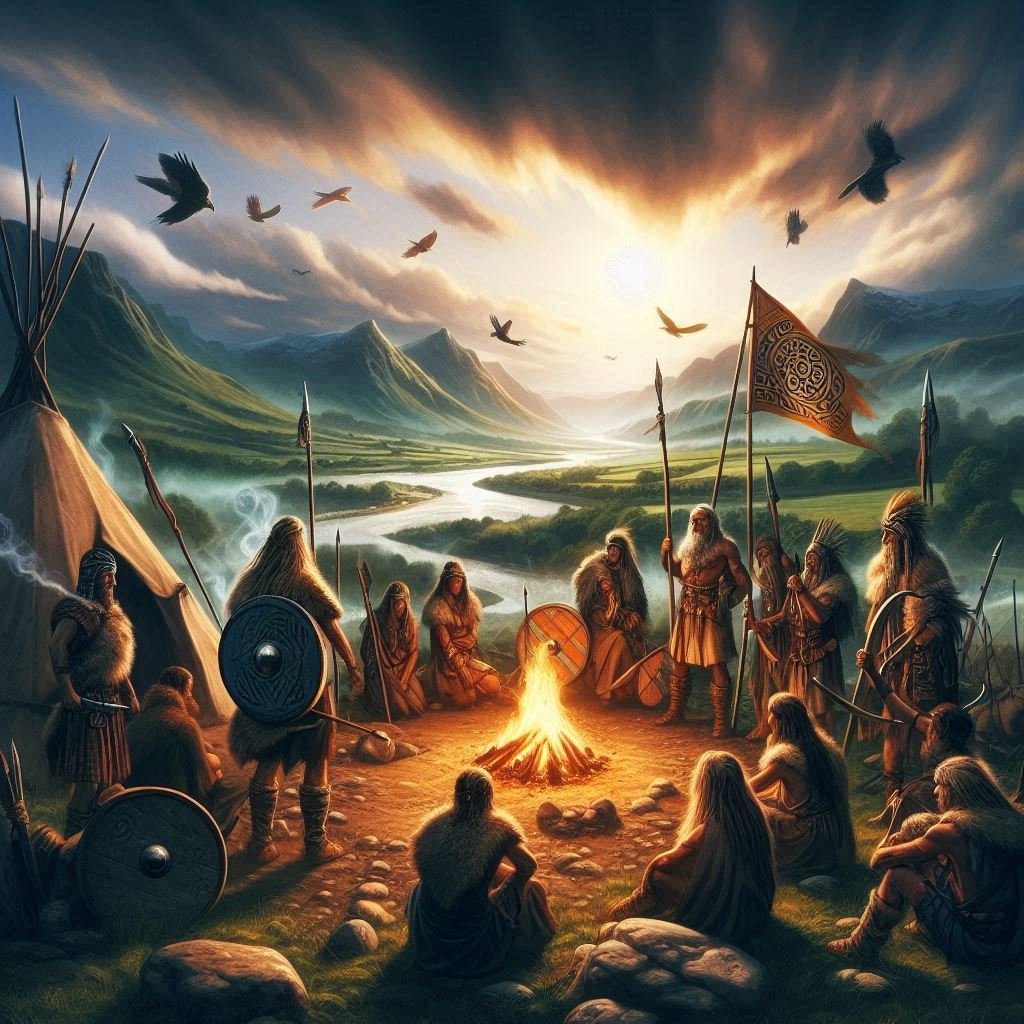
The process of Christianization in Italy was not a simple replacement of one religious system with another, but a complex negotiation between continuity and change. It involved the reinterpretation of old beliefs and practices within the framework of the new faith, often leading to a rich cultural synthesis that shaped the religious and social identity of Italy for centuries to come. This syncretism is a powerful reminder of the dynamic nature of cultural transformation and the ways in which religious traditions can evolve and adapt over time.

Christian syncretism in Greece

In Greece, the process of Christianization also involved syncretism, much like in Italy. The ancient Greeks had a long history of syncretizing their gods with those of other cultures, which set a precedent for later religious transformations. When Christianity spread to Greece, it encountered a rich tapestry of Hellenistic beliefs deeply rooted in the culture. One of the most prominent examples of syncretism in Greece is the integration of the worship of the Egyptian gods Isis and Serapis into the Greek pantheon. This blend of Egyptian and Greek religious practices became particularly popular during the Hellenistic period, following the conquests of Alexander the Great.

The cult of Serapis, a deity that combined aspects of Greek and Egyptian gods, is a striking instance of this syncretism. Serapis was associated with Zeus and Hades from the Greek pantheon and Osiris and Apis from the Egyptian pantheon, embodying attributes of both cultures. The worship of Serapis and Isis in Greece illustrates how the Greeks were open to incorporating foreign elements into their religious life, a trait that would later influence the Christianization process.

Moreover, the adaptation of Christian saints and narratives to local contexts often mirrored earlier Hellenistic practices. For example, many of the qualities of the Greek gods were transferred to Christian saints, who then took on roles similar to the deities they replaced. This is evident in the veneration of Saint Nicholas, who shares many attributes with the Greek god Poseidon, being revered as a protector of sailors and associated with the sea.

The transition of religious festivals from pagan to Christian observances is another aspect of syncretism. The celebration of Easter, for instance, coincides with the timing of the ancient Greek festival of Dionysia, which celebrated the god of wine and fertility, Dionysus. This alignment allowed for a smoother transition by reinterpreting existing celebrations within a Christian framework.

Architectural syncretism is also visible in Greece, where ancient temples were repurposed as Christian churches. This not only provided a physical space for Christian worship, but also symbolically represented the triumph of Christianity over paganism. The Church of Panagia Ekatontapiliani in Paros, for example, is said to have been founded by Saint Helen, the mother of Emperor Constantine, and stands on the site of a former ancient temple.

In literature and philosophy, the works of early Christian writers in Greece often reflect a syncretic approach, incorporating Hellenistic philosophical concepts into Christian theology. The Cappadocian Fathers, for instance, were influential in shaping Christian doctrine using the language and ideas of Greek philosophy.

Greek philosophers played a pivotal role in the shaping of early Christian thought, serving as both a foundation and a foil for the development of Christian theology. The intellectual milieu of the Greco-Roman world was rich with philosophical traditions such as Stoicism, Platonism, Epicureanism, and various sceptic schools, which provided a conceptual framework that early Christian thinkers could engage with and adapt. The New Testament itself records instances of this interaction, notably in Acts 17:18, where the Apostle Paul is described as discussing with Epicurean and Stoic philosophers.

The assimilation of Hellenistic philosophy into Christian thought was anticipated by Philo of Alexandria, a Hellenistic Jew who harmonized Jewish scriptural tradition with Stoic and Platonic philosophy. This syncretic approach influenced early Christian writers like Origen and Clement of Alexandria, who were educated in Greek philosophy and employed its concepts to articulate their Christian beliefs. Clement famously regarded Greek philosophy as a preparatory stage for the Christian faith, suggesting that it contained elements of the true knowledge revealed in Christianity.

The Christian church’s arrival in Ireland

The early Christian church’s arrival in Ireland marked a complex period of religious and cultural transformation. Syncretism, the blending of different religious and cultural influences, played a significant role in this process. As Christianity spread through Ireland from the 5th century onwards, it encountered a deeply entrenched Celtic paganism. This paganism was rich with its own pantheon of deities, rituals, and an Otherworldly mythology that had shaped Irish identity for centuries. The Christian missionaries, including figures like St. Patrick, faced the challenge of converting a population whose spiritual life was closely tied to the natural world and seasonal cycles.

The missionaries adopted a strategy of accommodation and integration rather than outright replacement of the old beliefs. They often built churches on sites that were sacred in the Celtic religion, co-opting the sanctity of these places for Christian worship. Christian saints were sometimes equated with Celtic gods, and Christian holidays were set to coincide with major Celtic festivals, such as Easter with the spring festival of Beltane. This strategic syncretism facilitated a smoother transition by allowing the Irish to retain a sense of continuity with their past while adopting new Christian practices.

The result was a unique form of Christianity that retained many elements of Celtic spirituality. This is evident in the Irish monastic tradition, which became renowned for its scholarship and piety. The monasteries served as centres of learning and preserved not only Christian texts but also the literature and oral traditions of the Celts. The hagiographies of Irish saints often contain elements that are reminiscent of Celtic mythology, suggesting a fusion of Christian and pre-Christian narratives.

The Book of Kells, an illuminated manuscript created by Celtic monks, exemplifies this syncretism through its intricate artwork that combines Christian iconography with Celtic motifs. The persistence of certain Celtic customs and beliefs within Irish Christianity is a testament to the syncretic process that occurred during the early medieval period. The synthesis of Christian and Celtic elements contributed to the rich tapestry of Irish cultural heritage and helped to create a distinctive Irish Christian identity that has endured to this day.

In scholarly research, this period of Irish history is often examined through comparative studies of the Celtic-Irish Otherworld and the Christian Otherworld, revealing a model of syncretism that preserved aspects of both European and Celtic culture. The conversion of Ireland to Christianity was not a swift or simple process but rather a gradual amalgamation of beliefs and practices over several centuries. This syncretism is a key aspect of the historical narrative, illustrating how the early Christian church in Ireland absorbed and transformed the older Irish Celtic pantheons into a new, distinctively Irish expression of Christianity.

The role of Saint Patrick

St. Patrick’s role in the syncretism of Christian and Celtic traditions in Ireland is a fascinating aspect of religious history. Known as the “Apostle of Ireland,” he is credited with spreading Christianity across the country in the 5th century. His approach to conversion was strategic and empathetic, recognizing the deep-rooted spiritual and cultural practices of the Irish people. Instead of attempting to eradicate the existing belief system, St. Patrick sought to integrate Christian teachings with Celtic traditions, facilitating a smoother and more acceptable transition for the local population.

St. Patrick’s methods included the adaptation of symbols and practices that were familiar to the Irish. For instance, he is said to have used the shamrock, a native Irish plant, to explain the concept of the Holy Trinity, thus connecting a symbol from the natural world with a fundamental Christian doctrine. This clever use of symbolism helped bridge the gap between the two belief systems and made the Christian teachings more relatable to the Irish populace.

Moreover, St. Patrick’s efforts to establish Christianity did not stop at mere conversion; he also focused on the education and training of clergy within Ireland. He founded several monasteries, which became centres of learning and Preservation of both Christian and Celtic knowledge. These institutions played a crucial role in the cultural and religious life of Ireland, producing well-educated monks who would continue the work of spreading Christianity while respecting the Celtic heritage.

The legacy of St. Patrick’s syncretic approach is evident in many aspects of Irish Christianity. The Celtic Church, while adhering to the core tenets of Christianity, developed distinct practices and had a unique organizational structure that differed from the Roman model. The Irish penitential system, monastic traditions, and the celebration of feast days are examples of this unique blend of Christian and Celtic practices.

St. Patrick’s success in fostering a syncretic religious culture in Ireland can be attributed to his respect for the existing beliefs and his willingness to find common ground. By elevating and transforming Celtic deities into Christian saints and aligning Christian celebrations with Celtic festivals, he ensured that the transition to Christianity did not feel like a loss of identity for the Irish people. This approach made Christianity more accessible and enriched it with the depth and richness of Celtic spirituality.

The impact of St. Patrick’s work is profound and long-lasting. The syncretism he promoted helped to create a distinctive form of Christianity that was deeply rooted in the Irish cultural context. It is a testament to the power of cultural sensitivity and adaptability in the face of significant religious and cultural shifts. St. Patrick’s role in the Christianization of Ireland remains a pivotal chapter in the history of the early Christian church and its interactions with indigenous cultures.

The incorporation of Celtic culture into Christianity

St. Patrick’s incorporation of Celtic culture into Christianity extended beyond the use of symbols and the adaptation of festivals. His approach was holistic, encompassing various elements of Celtic society, spirituality, and artistic expression. One of the most enduring contributions was the establishment of the Celtic Cross, which combined the Christian cross with the Celtic circle, symbolizing eternity. This fusion of imagery became a central emblem of Celtic Christianity and remains a distinctive feature of Irish heritage.

In the realm of spirituality, St. Patrick and other missionaries embraced the Celtic reverence for nature, which was deeply ingrained in the local cosmology. They did not dismiss the sacredness of wells, trees, and high places, but rather reinterpreted these sites within a Christian context. Many of these natural sites were consecrated as holy wells or associated with saints, thus preserving their significance while aligning them with Christian worship.

The monastic tradition that St. Patrick helped to foster was another significant aspect of this cultural synthesis. The Irish monasteries became renowned for a distinctive style of asceticism that had parallels with earlier Celtic practices. The concept of ‘green martyrdom’ involved withdrawing from society to live a life of penance and prayer, echoing the hermit tradition of the Celts. These monasteries also became centres of learning and artistry, blending Celtic artistic styles with Christian iconography, as seen in illuminated manuscripts like the Book of Kells.

St. Patrick’s influence is also evident in the legal and social systems of the time. He is credited with the ‘Senchus Mór,’ a codification of Irish laws that integrated Christian principles with traditional Brehon law. This legal synthesis ensured that Christian ethics were woven into the fabric of Irish society, influencing everything from property rights to the treatment of slaves.

Furthermore, St. Patrick’s hagiography, which includes the famous ‘Confessio’ and ‘Letter to Coroticus,’ reflects a narrative style that resonates with Celtic storytelling traditions. These texts blend the saint’s personal testimony with elements of Irish oral culture, creating a compelling narrative that facilitated the spread of Christian ideals.

The liturgical practices in the Celtic Church also bore the mark of St. Patrick’s syncretic efforts. The Celtic liturgy developed its own distinct rhythm, with prayers and rituals that reflected the Celtic sense of the divine in everyday life. The emphasis on penitential practices, the celebration of local saints, and the veneration of relics were all influenced by pre-Christian customs.

St. Patrick’s role in the syncretism of Celtic and Christian traditions was multifaceted. He was instrumental in creating a unique form of Christianity that was deeply Irish in character, yet firmly rooted in the universal Christian faith.

Persisting Celtic rituals

The intertwining of Celtic rituals with Christian practices in Ireland created a unique religious tapestry that has persisted through the ages. One of the most prominent examples of this syncretism is the festival of Samhain, which marked the end of the harvest season and the beginning of winter. This festival was seamlessly transformed into All Hallows’ Eve, now known as Halloween, blending the Christian tradition of honouring saints and martyrs with the Celtic celebration of the otherworldly and the end of the year.

Another ritual that found its way into Irish Christianity was the reverence for holy wells. In Celtic times, these wells were believed to be portals to the otherworld and were often the sites of healing and divination. The Christian church rededicated these wells to saints, and they became places of pilgrimage, where people would still come to seek healing and leave offerings, much like their ancestors did.

The Celtic practice of erecting standing stones and high crosses also continued under Christianity. These crosses, which combined the Christian symbol with Celtic art, often marked places of worship or were used as territorial markers, just as standing stones had been used previously. The high crosses remain a distinctive feature of the Irish landscape and a symbol of the syncretic nature of Irish Christianity.

The tradition of the ceilidh, a social gathering that often included storytelling, MUSIC, and dance, was another cultural element that persisted. While the content of the stories and songs shifted to reflect Christian morals and narratives, the communal aspect of sharing and celebrating together remained a vital part of Irish life.

The monastic tonsure, a distinctive hairstyle worn by monks, is another example of a Celtic practice adopted by the Christian church. While the Roman church shaved the top of the head, the Celtic tonsure involved shaving the front of the head from ear to ear, which was a style associated with Druids and warriors in pre-Christian Ireland.

The concept of penance in Irish Christianity also has roots in Celtic customs. The Celtic system of penance was unique in its emphasis on restitution and reconciliation, rather than just contrition and confession. This system was integrated into the Christian practice of confession, which became a central part of spiritual life in Ireland.

Lastly, the popularity of going into “exile for Christ,” where individuals would leave their homes to live as hermits or pilgrims, echoes the Celtic tradition of self-imposed exile for spiritual enlightenment. This practice was seen as a form of martyrdom, a way to share in Christ’s suffering, and was highly regarded in the Celtic Christian tradition.

Celtic deities as saints

The intertwining of Irish Celtic deities with Christian saints is a nuanced aspect of Ireland’s religious history. While it is not common for churches to be named directly after Celtic deities, there was a tendency to revere local figures who may have had connections to pre-Christian traditions and later became recognized as saints within the Christian church. The process of Christianization often involved the transformation of local heroes, leaders, or revered figures into saints, and this sometimes included those who may have been associated with older deities or spiritual entities.

In the context of Irish Christianity, many of the saints venerated had strong ties to the communities where they preached, and over time, their legends and the respect they commanded absorbed elements of the local pre-Christian culture. This is reflected in the hagiographies of Irish saints, which often contain miraculous events and stories that echo the mythological tales of the Celtic gods and heroes.

One of the most prominent examples is St. Brigid of Kildare, who shares many attributes with the Celtic goddess Brigid, known for her association with healing, poetry, and smithcraft. The goddess Brigid was a member of the Tuatha Dé Danann, a group of divine beings in Irish mythology, and was revered as a protector of livestock and a guardian of the home. As Christianity spread, the figure of St. Brigid emerged, carrying over many of the goddess’s qualities and becoming one of Ireland’s most venerated saints, with numerous churches and holy wells dedicated to her.

Another figure of note is St. Columba, also known as Colum Cille, whose name means ‘Dove of the Church.’ He is often associated with the Celtic deity Lugh, a god of light and skill. While the connection is less direct than that of St. Brigid, the attributes of wisdom, leadership, and artistic skill attributed to St. Columba echo those of the god Lugh, suggesting a subtle syncretism at play. St. Columba’s establishment of monasteries and his role in spreading Christianity in Scotland further cemented his status as a pivotal figure in the Christianization of the Celtic world.

St. Patrick himself, while not directly linked to a specific Celtic deity, played a significant role in the syncretic process by incorporating elements of Celtic spirituality into his teachings. His use of the shamrock to explain the Holy Trinity is a well-known example of this synthesis. The shamrock, a common plant in Ireland, was imbued with new meaning as it came to represent an important Christian concept, thus bridging the gap between the old and the new beliefs.

The figure of St. Kevin of Glendalough is another example where pre-Christian elements are woven into the narrative of a Christian saint. St. Kevin is celebrated for his harmony with nature, living as a hermit and forming close bonds with animals. This echoes the Celtic reverence for the natural world and suggests a continuity of the animistic world-view within the Christian context.

In addition to these, there are numerous lesser-known saints whose cults may reflect syncretic origins. Saints such as St. Gobnait, associated with bees and healing, and St. Dymphna, linked with mental health, carry forward the Celtic tradition of specialized deities overseeing particular aspects of life and nature. Their stories and the rituals associated with their veneration often contain echoes of pre-Christian beliefs and practices.

It is important to recognize that while the evidence of syncretism is compelling, the process was likely organic and multifaceted, involving a gradual blending of traditions over time. The saints’ lives, as recorded in hagiographies, were often written centuries after their deaths, and thus, they reflect the evolving understanding of these figures within a Christian framework that had already absorbed many Celtic elements.

The legacy of these syncretic saints is still evident in modern Ireland, where the intertwining of Christian and Celtic traditions continues to shape religious and cultural identity. The veneration of saints with connections to Celtic deities represents a fascinating chapter in the history of Irish Christianity, illustrating the enduring influence of Celtic spirituality and the adaptability of religious practices in the face of cultural change.

The naming of churches after saints in Ireland was a way to establish a Christian presence in areas that held significance in the Celtic belief system. By dedicating these sites to Christian saints, the church could provide continuity with the past while steering the spiritual focus towards the new faith. This practice helped to ease the transition for the local population, who could still visit and hold in esteem these traditional sites, now under the auspices of Christianity.

Moreover, the Irish tradition of naming children after saints, which often extended to the naming of churches, served to reinforce the Christian faith and create a sense of continuity with past generations. This practice ensured that many church names were connected to the church, often reflecting the community’s hope for their collective spiritual life. In this way, the names of churches often became intertwined with the legacy of saints who, in turn, were sometimes linked to the attributes of Celtic deities.

It is important to note that the process of recognizing saints in the early Christian church was less formalized than it is today. Local veneration of saints was common, and many saints were canonized by popular acclaim rather than official declaration. This allowed for a greater blending of local traditions with Christian practices, including the naming of churches after these locally venerated figures.

While it is not accurate to say that many Irish church names directly reflect Celtic deities, there is a complex layer of cultural and religious syncretism where the attributes, legends, and respect for certain Celtic figures were absorbed into the veneration of Christian saints. This syncretism is evident in the names and dedications of churches, which often served as a bridge between the old beliefs and the new Christian faith, reflecting a deep and enduring connection to Ireland’s Celtic heritage.

Conclusion

What is means is that many Christian churches in Brigantia may well be sited exactly where those earlier temples and places of pagan belief were centred, and the imagery found in those churches may well reflect aspects of pagan belief from earlier periods. From my research so far, it’s fairly safe to assume that most churches that existed at the time of the Norman Conquest, were built on Roman temples, which were located on pre-existing sites of Celtic reverence.

Contact Us
close slider