"We were shocked to discover such a huge complex," said Alastair Oswald, archaeological field investigator for English Heritage. Preliminary examinations Read more
These are raised platforms created first and foremost for cult, procession, assembly or conversion—not for fortification or routine boundary-making. They Read more
Hillfort mounds Hillfort mounds are elevated, man-made (or heavily modified) earthen platforms whose crests carry ramparts, palisades or stone walls Read more
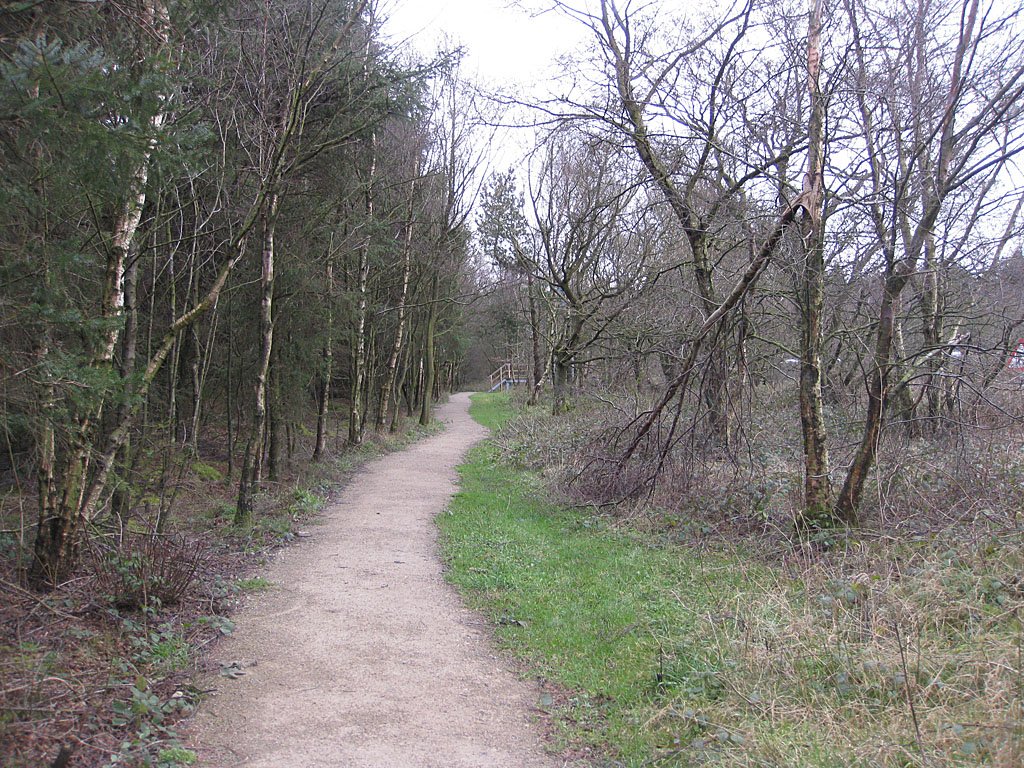
Path following the line of Cleave Dike
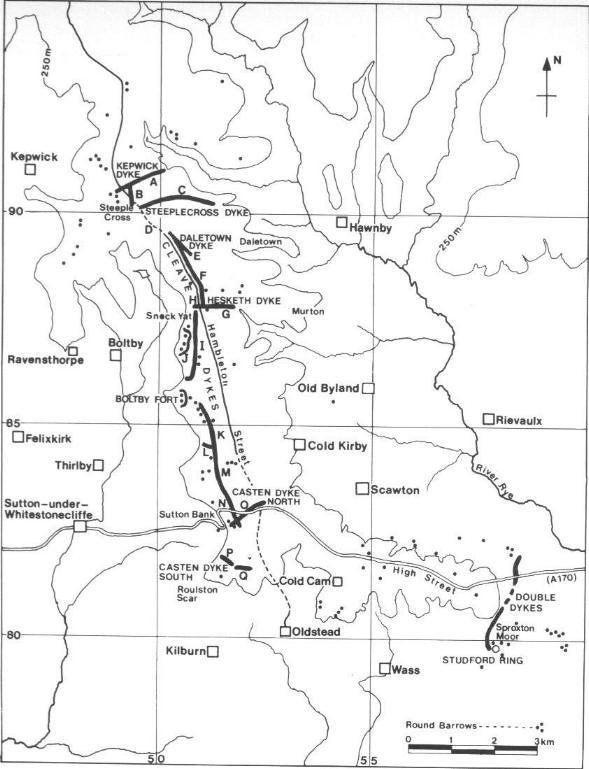
Cleave Dyke System
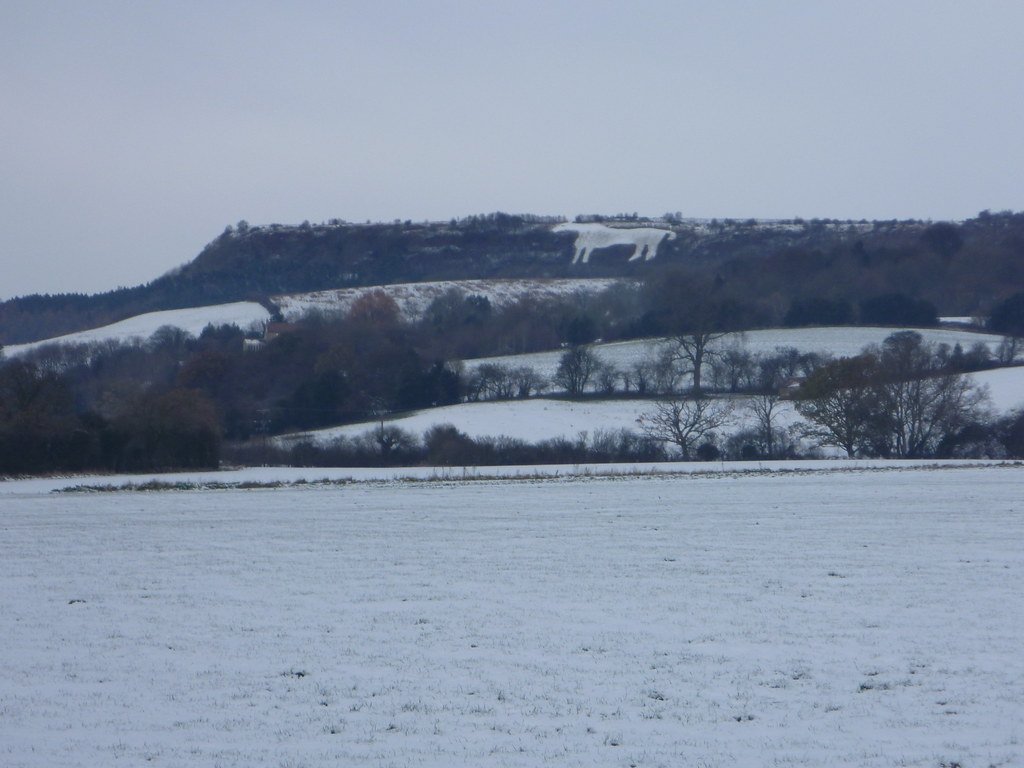
The Cleave dyke system is several Dykes which combine to create a boundary of between 9 and 18 kilometres running north south to the west of Thirsk. To date excavations have found minimal dating evidence, but a pre roman date has been given which means if not built by Venutius the Dyke system was certainly available for use by Venutius. The Dyke itself is in close very close proximity to the hill forts of Boltby and Roulston Scar. Other dykes have been reported to the north and south of this system and it is therefore likely to have been used to define the border and to create a defensive position against possible Roman (or Parisian) attack.
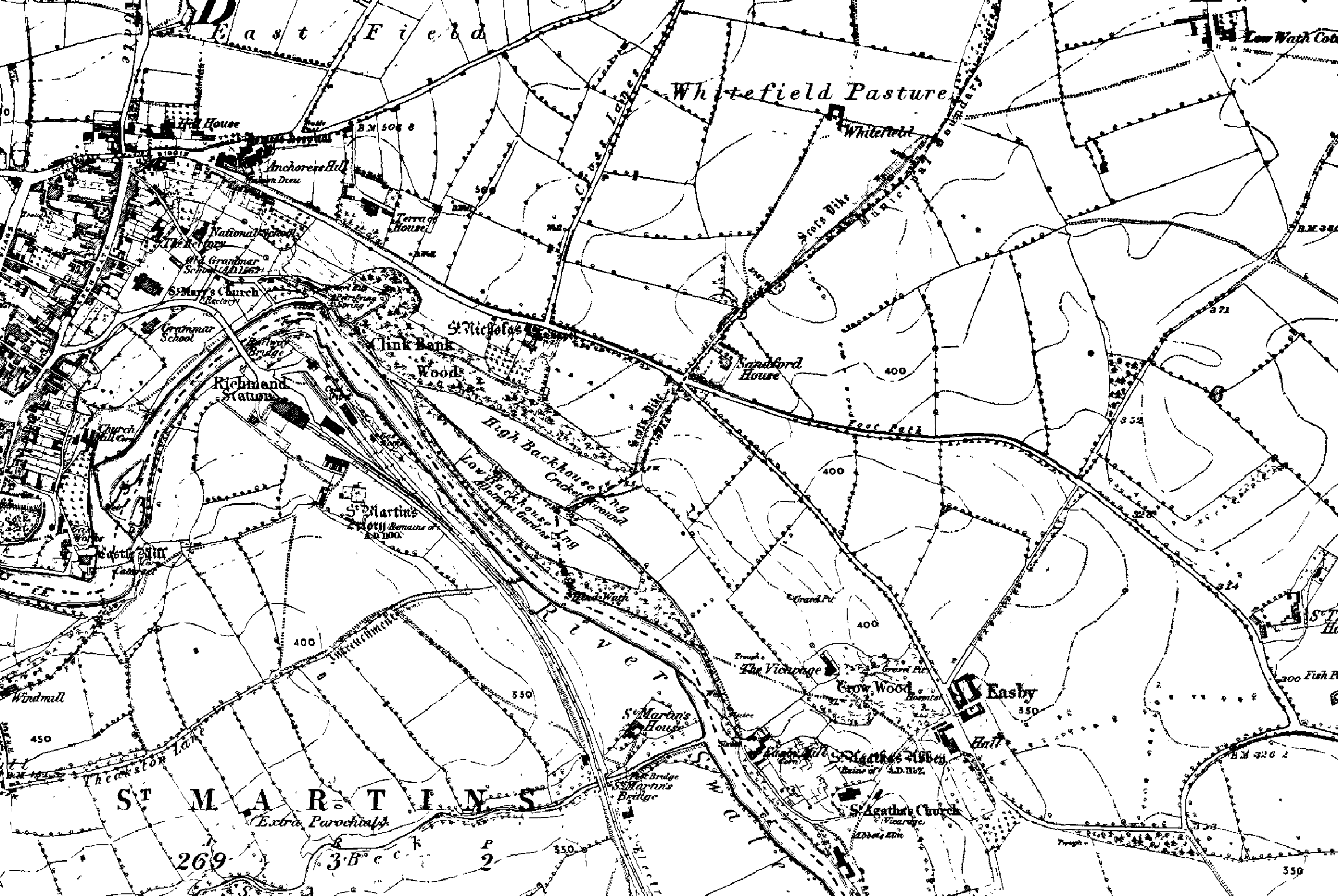
Cleave Dike is the most westerly of a series of cross‐ridge boundary Earthworks that run along the western Scarp of the Hambleton Hills, just to the west of Thirsk in North Yorkshire. Beginning near grid reference SE 501 897, it extends intermittently for some 9 km north–south to SE 519 826, climbing the limestone high ground east of the escarpment and skirting the head of Roulston Scar (heritagegateway.org.uk).
Structure & Form
Where well preserved, Cleave Dike comprises a rubble and earth bank roughly 9–10 ft wide and 4–5 ft high, with a flat-bottomed ditch of about 6 ft width on its east (upslope) side. In places a lower counterscarp bank runs alongside the ditch, completing a defensive profile roughly 15–20 ft across. Variations in width and height along its length suggest that the builders sometimes exploited natural outcrops or re-used earlier features to economize labour (heritagegateway.org.uk).
Geology & Landscape Context
The dyke is set on the Great Scar Limestone of the Carboniferous Askrigg Block, the same bedrock that forms the dramatic escarpments of Sutton Bank and Roulston Scar. Beneath a thin soil mantle, the limestone weathers into angular fragments ideal for constructing stony banks. Above the scarp, the uplands are characterized by dry valleys and Gritstone moors, while below lie the more sheltered pastures of the Vale of Mowbray. Cleave Dike exploits a natural ridge-neck, closing off easy access from the upland plateau into the dale system (historicengland.org.uk).
Date & Archaeology
Though direct excavation has been limited, typological comparison places the dyke in the Later Bronze Age to Early Iron Age (c. 1500–400 BC), a period when many such boundary works were erected across southeast Britain. In the vicinity of SE 5067 8670—where a branch known as Casten Dyke diverges—fieldwalking has recovered Neolithic pottery sherds from pits that pre-date the main bank, hinting at a multi-phased use of the ridge for enclosure and segregation (heritagegateway.org.uk). A small evaluation trench recorded by Spratt (1982) noted charcoal flecks in the ditch fill and occasional worked flints, but no large-scale trenching or geophysical survey has yet been published.
Historical Interpretation
Cleave Dike likely served as a territorial boundary—perhaps between tribal groups such as the Brigantes and neighbouring peoples—controlling movement along the watershed rather than halting livestock outright. Its alignment, parallel to other ridge dykes on the Tabular Hills, suggests a coordinated landscape strategy in the first millennium BC. Later folklore attributed these earthworks to resistance against Roman or “Parisian” incursions, but current consensus sees them as indigenous frontier markers, chosen to reinforce natural divisions and to guard prehistoric Barrow cemeteries on the uplands ( historicengland.org.uk).
Iron Age Borders
Interestingly this defence is some distance from the later Parisi - Brigantes border (other side of York) and may indicate (1) That the Parisii occupied a larger area prior to the Roman conquest, (2) Venutius moved the border to a more defensible position, or (3) the apparent "defending the Barrows" position was deliberate, aimed a providing a defensive wall for the earlier Bronze age barrows. Or a combination of the three.
A complete silver Scottish twelve shillings coin of James VI of Scotland and I of England, eighth coinage post-dating accession to English throne, dating to 1603-1625, Lys initial mark. Reverse has a shield with arms of [...]
A silver Post-Medieval shilling of Elizabeth I, third issue with ‘A’ initial mark dating to 1583-1585. Mint of London. As North Vol 2, p.136, no.2014. [...]
A lead alloy pipe tamper dating to the 17th century. The plate has moulded decoration to both sides depicting Charles I (facing right) and Henrietta Maria of France (facing left). Both images are contained in [...]
A damaged lead-alloy Medieval pilgrim's ampulla, 50mm in length and 35mm wide, with a round bodied flask with a flaring open top which is partially complete. One side of the flask body has traces of moulded [...]
An incomplete Medieval cast copper alloy buckle plate, dating to c. AD 1100-1400. The plate is missing its buckle and part of its sprues. The buckle plate is sub-rectangular in plan. Projecting from one long edge [...]
A Roman copper-alloy nummus of the House of Valentinian , dating to AD 364-7 (Reece Period 19), GLORIA RO-MANORVM reverse type depicting the emperor with right hand dragging captive right and holding a labarum in left hand. Mint of [...]
A Post-Medieval copper alloy farthing of Charles I (AD 1625-1649), dating to AD 1636-1644. Rose type 2, with sceptres in saltire through single crown. Mint of London. Unclear initial mark. North (1991: 165) no. 2291. [...]
A clipped and heavily worn Roman copper alloy nummus of Gratian (AD 367-383) dating to the period AD 367-378 (Reece period 19). SECURITAS REI PUBLICAE reverse type depicting Victory advancing left, holding a wreath and palm. Unknown mint. [...]
A silver Roman siliqua of Honorius (AD 393-423) dating to the period AD 397-402 (Reece Period 21) minted in Milan VIRTVS ROMANORVM reverse type depicting Roma seated left on cuirass, holding Victory on globe and spear. Hoxne, p. 145, no. [...]
An incomplete Roman composite plate brooch probably dating to AD 100-200. The brooch is missing it's pin and part of the top and bottom circles. The brooch is flat in cross section and probably originally consisted of [...]
Fragment from a probable buckle frame dating to the Post Medieval period (c.AD 1720-1790). The fragment is broadly rectangular in plan and includes a short section of the corner of the buckle frame. The fragment includes the [...]
Fragment from a buckle frame dating to the Post Medieval period (c.AD 1720-1790). The fragment is broadly C shaped in plan and D shaped in profile. It consists of two corners and one side of a sub-rectangular [...]
A complete copper alloy bovine (bull's head) vessel / bucket mount, dating to the Roman period (c. AD 50-200).The cast copper alloy mount is a sub-inverted triangle with a pointed lower tip and slightly waisted sides to form the nose.The [...]
An incomplete copper-alloy early Medieval stirrup strap mount of uncertain or unclassified type, dating to c.AD 1050-1150. The central part of the object survives with parts of the open work broken off on all sides except [...]
A near complete Medieval-Post Medieval cast copper alloy buckle with integrated plate dating to the period c.AD 1250-1500. The buckle is missing its pin.It has a rectangular frame, which has a sub rectangular cross-section. The integral plate has [...]
A very worn copper-alloy Roman radiate or nummus of unclear ruler dating to AD 260-402. Unclear reverse type, unclear mint.The coin is chipped around its circumference. [...]
A very worn Roman copper alloy radiate of uncertain emperor dating to the period AD 260-275 (Reece period 13). Unclear reverse type depicting. Unclear mint. [...]
An incomplete Medieval cast copper-alloy rectangular buckle with integral looped plate, dating to c. AD 1200-1400. The buckle is missing its pin. The buckle comprises a rectangular loop and an integral plate. The plate is made [...]