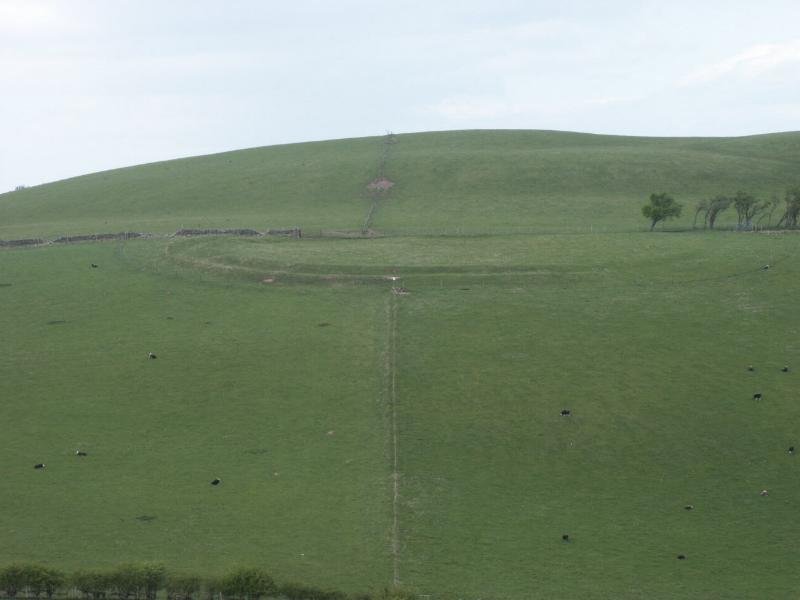
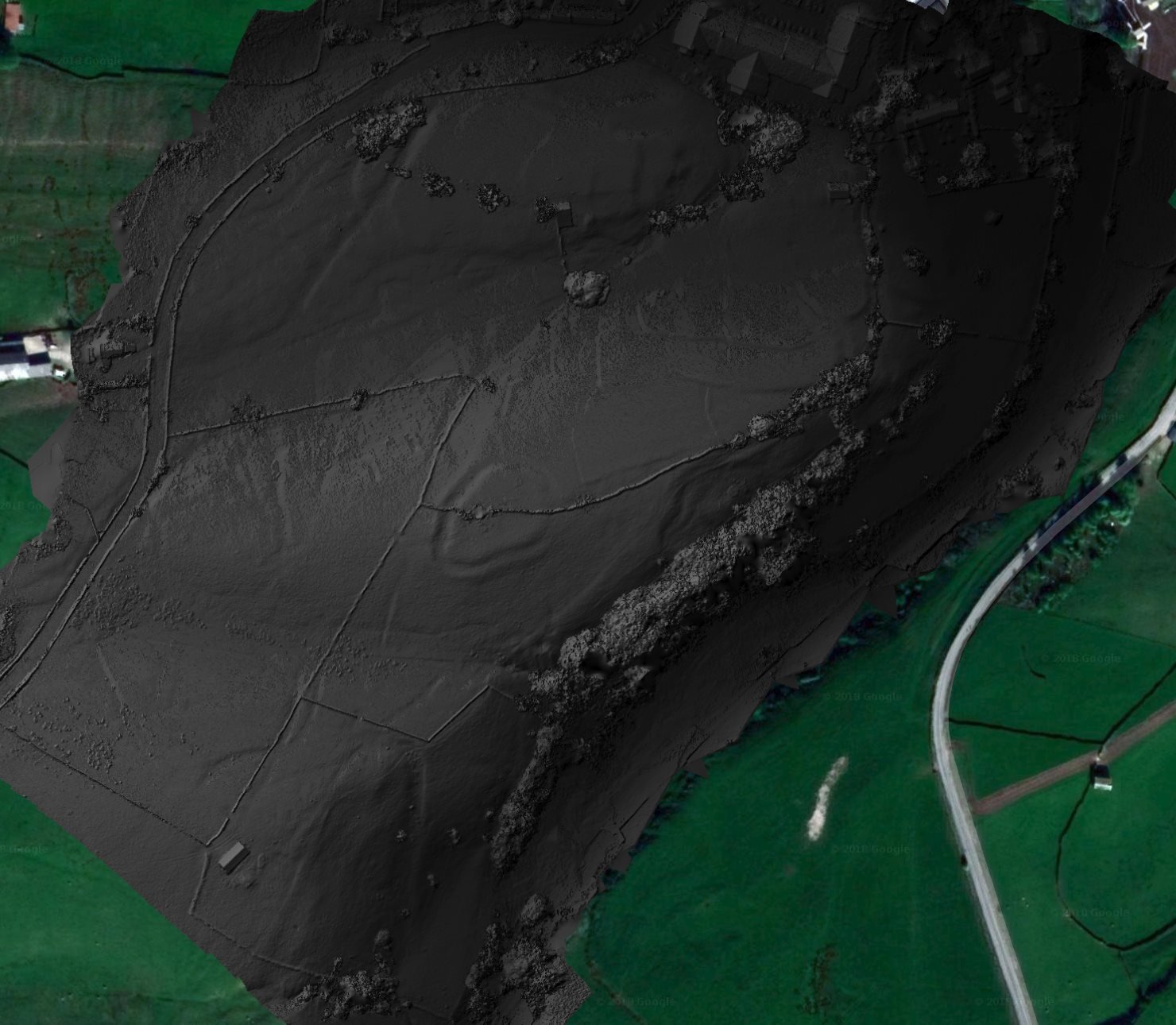
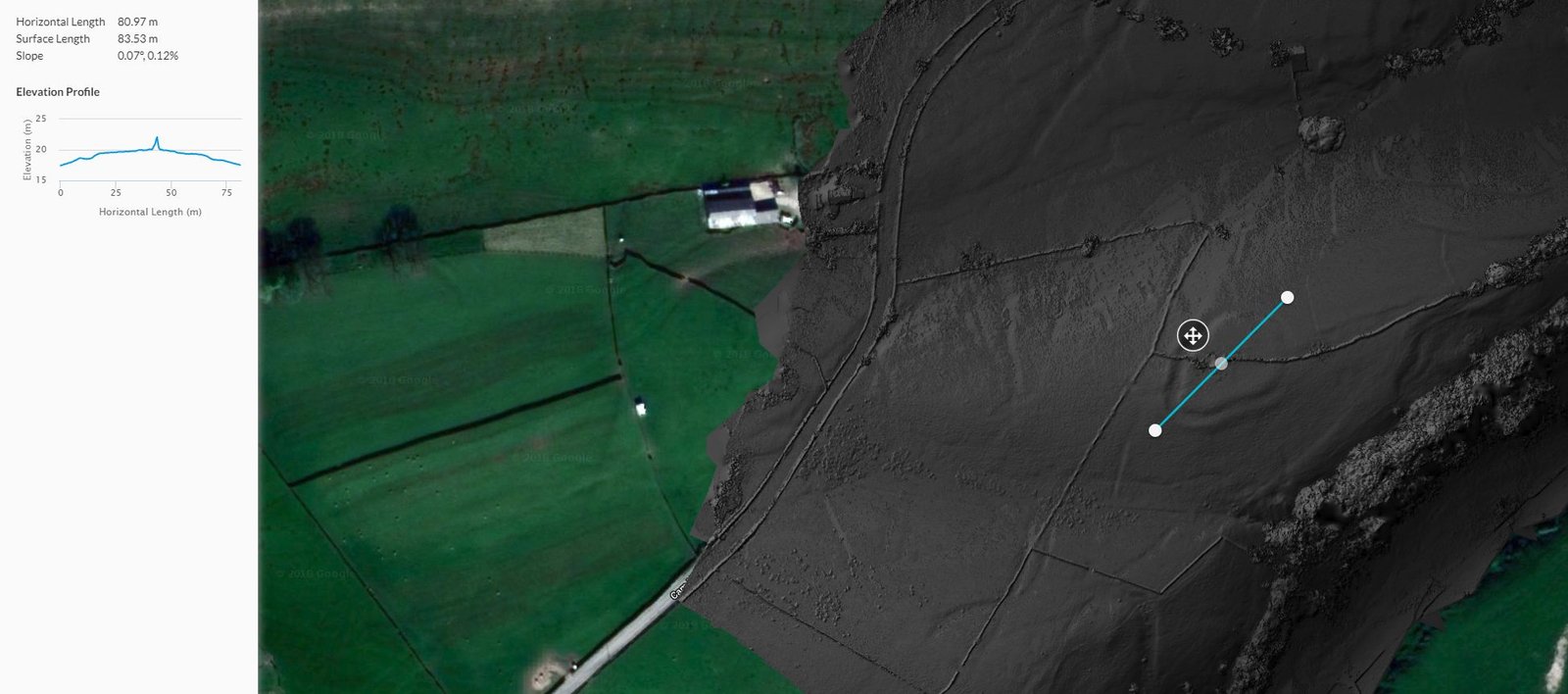
One can only speculate the effect the arrival of the roman fort across the valley (also seen in the 1885 map) had on the occupants.

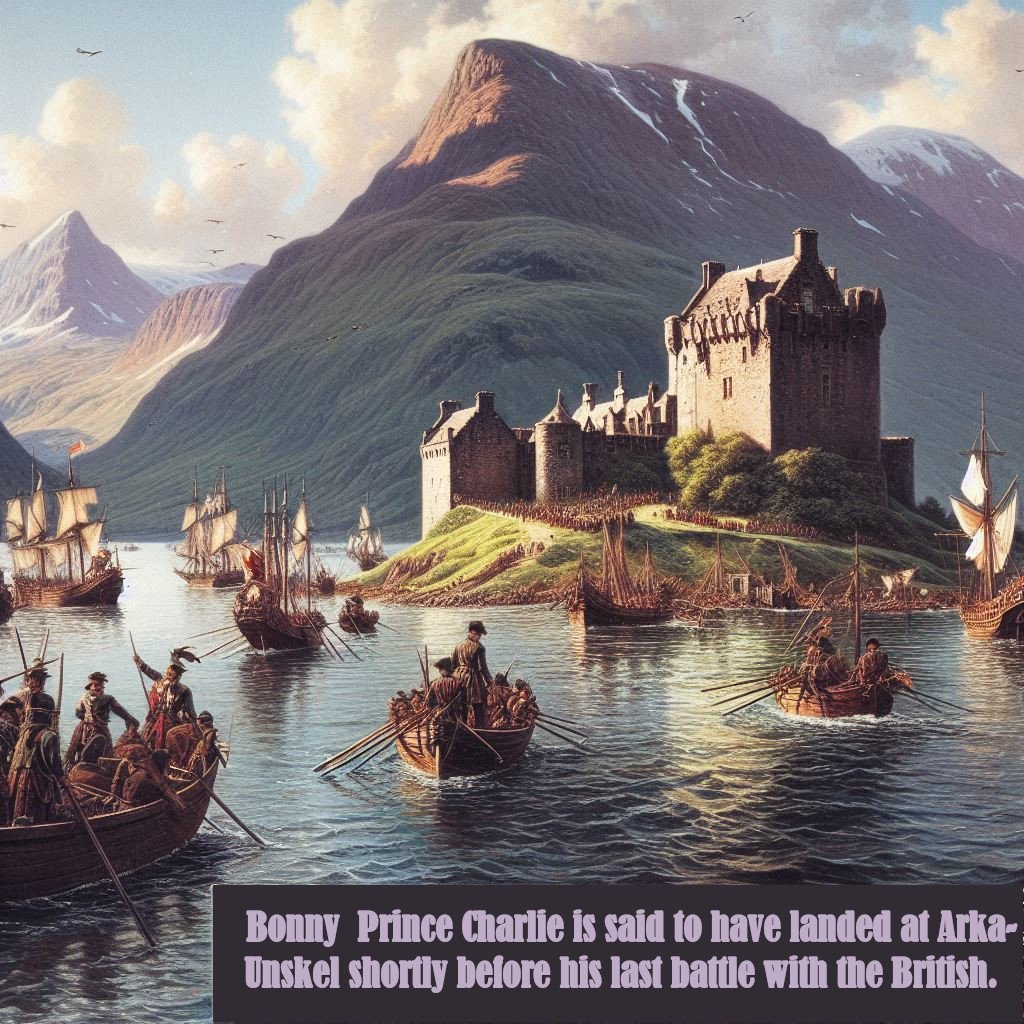
Arka Unskel is 2½ miles ESE of Arisaig at NM693839 and has also been known as Arisaig Fort, Ard Ghaunsgoik Read more
Castle Hill’s imposing silhouette hides a great prehistoric fort, Norman castle and Victorian tower. Thanks to Varley’s trenches and the Read more
"The scale and function of the Earthworks, which may comprise a rampart, a ditch and a counterscarp bank, is massive Read more
This Iron Age Hill Fort is mostly unrecorded and minimal information is available. A site visit is required to further Read more
The Earthwork known in the National Trust inventory as East Witton Camp lies on the north-facing slope of Braithwaite Banks, Read more
A superbly circular "fort", built on the side of the hill, which seems to be a Brigantian fashion (see below). Read more
For over five hundred years, the miners and smelters of Reeth produced mountains of precious lead. The lead ores from Read more
Stanwick is very close to the Scotch Corner junction of the A1, close to Darlington. From Scotch Corner, take the Read more
"We were shocked to discover such a huge complex," said Alastair Oswald, archaeological field investigator for English Heritage. Preliminary examinations Read more
This small farmstead was established on top of the small chalk hills on the northern edge of the Yorkshire Wolds.
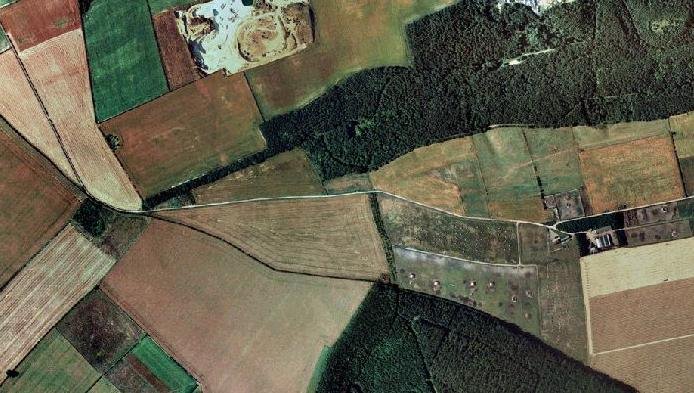
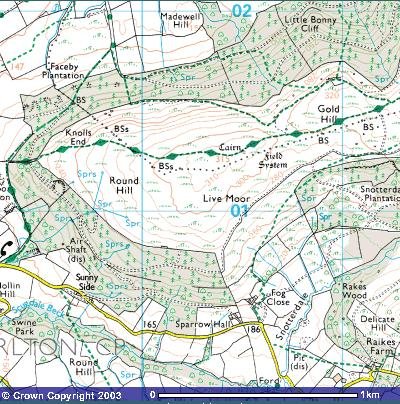
"Whorlton, Live Moor, (NZ 496012) A previously unrecorded Promontory fort was identified by D. Smith on air photographs and later Read more
This is our master collection page for all of our heritage articles and sites. It is the root of our Read more


One can only speculate the effect the arrival of the roman fort across the valley (also seen in the 1885 map) had on the occupants.









Heritage Gateway
An incomplete copper alloy Colchester Derivative, Polden Hill type brooch dating to the Roman period (c. AD 75-175). The brooch is missing both wings but head and bow remain intact. The reverse of the head [...]
A Medieval enamelled cast copper alloy heraldic harness pendant. The plate is trefoil with three rounded lobes, each containing a crown on a recessed field filled with traces of enamel which was probably originally red in [...]
A corroded Roman copper alloy nummus of the House of Constantine dating to AD 330-340 (Reece period 17). [VRBS ROMA] type with a reverse depicting Romulus and Remus suckling a wolf, with three stars above. Uncertain mint. [...]
An incomplete copper alloy crotal or animal bell dating to the Post Medieval period (c. AD 1500-1750). The remains of the bell consist of the upper hemisphere, partial lower hemispheres and the integral, square-shaped suspension loop. The upper hemisphere [...]
An incomplete lead alloy biface token dating to the Medieval period (c. AD 1300-1500). The design on one face is four intersecting lines dividing the face into eight triangular segments. On the opposing face is a hatched grid. This type of [...]
A copper alloy Roman terret dating c. AD50-200.The object comprises a D-shaped loop with three projecting circular knobs set around the outer edge. At the rear is a trapezoidal attachment loop or dropped bar. The dropped [...]
A cast lead alloy disc from a large post Medieval two part cloth seal, 36.2mm in diameter, depicting a crowned double headed eagle. This device suggests that it relates to the Hanseatic Clothworkers Guild. The reverse [...]
A silver Medieval short cross cut halfpenny, of John or Henry III, c. 1204-1247. Moneyer is WIL[LELM ...], London mint. [...]
A copper-alloy Roman nummus of Constantine I (AD 306-337) dating to c. AD 326 (Reece Period 16). PROVIDENTIAE AVGG reverse type depicting a camp gate with two turrets; star above. Mint of Trier. RIC VII, [...]
An incomplete cast copper alloy hinged Roman brooch of south-western T- shaped Type, dating to the 1st-2nd century AD. The arms are tubular and completely enclose the axis bar. The front has an incomplete projecting loop. The main portion of [...]
A copper-alloy Roman nummus of Fausta (AD 324-328) dating to c. AD 326 (Reece Period 16). SPES REI PVBLICAE reverse type depicting Spes, veiled, draped, standing front, head left, holding two children in arms. Mint of [...]
A copper-alloy Roman nummus of Theodora (AD 337-340) dating to the period c. AD 337-340 (Reece Period 17). PIETAS ROMANA reverse type depicting Pietas, draped, standing front, head right, carrying an infant at her breast [...]
A cast copper alloy post Medieval asymmetrical shoe or knee buckle. The frame is triangular with one end tapering to a point with concave sides; the other end has a bar with a curved edge [...]
A copper-alloy Roman nummus of Constantine I (AD 306-337) probably dating to the period c. AD 332-334 (Reece Period 17). GLORIA EXERCITVS reverse type depicting two soldiers and two standards. Probably mint of Lyon. RIC [...]
A cast copper alloy post Medieval double looped buckle, probably from a spur and dating to c. 1575 - 1700. The frame is asymmetrical with one trapezoidal and one round loop with projecting lobes at the corners. [...]
A double looped Post Medieval copper alloy buckle, with pointed ends to each loop of the frame. [...]
A decorated double looped Post Medieval copper alloy buckle, with a moulded rosette on the front of each loop and a lobed knop at either end of the narrowed strap bar. Circa 16th-17th century. [...]
An incomplete cast copper alloy probable single looped buckle or clap. Only the outer edge of the frame survives.The cragment is made of an oval sectioned rod cast into a broadly strecthced C-shape. At its [...]
A Medieval silver Venetian soldino of Doge Nicolo Tron (1466-1473) dating to c. 1471-1473. Little Venice mint. [...]
An incomplete copper alloy medieval scabbard chape, dating to the period c. AD 1200-1500. It is missing the lower half of its terminal. The chape is made of a single sheet of copper alloy that has been rolled into a [...]
© 2026 Brigantes Nation.
Made with by Graphene Themes.