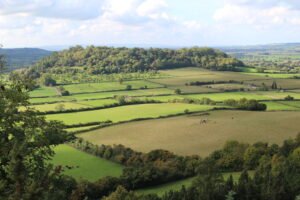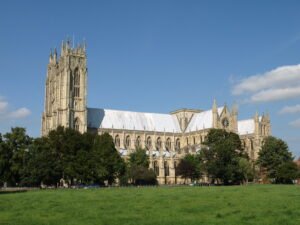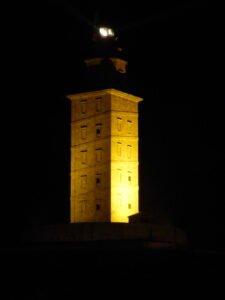
Spain, located on the Iberian Peninsula in the southwestern corner of Europe, is a country of rich contrasts—mountains, beaches, valleys, and vast plains. It shares borders with France and Portugal and is surrounded by the Mediterranean Sea to the east and south, and the Atlantic Ocean to the north and west.
Period: Any Period
Jan 23
Guide – Landscape Features: The Impact of Drainage Ditches
Celtic Heads Celtic Head from Witham, 2nd c B.C. (British Museum) “Celtic” carved heads are found throughout the Read more Timeline 60BC – 138AD This timeline is focussed on the British Celtic culture and those cultures which had influence on the British Celts. It Read more Heads at St Michael, Kirklington An analysis of head …
Jan 23
Guide – Landscape Features
Guide – Archaeological Terms Glossary of Archaeological Terms Acheulian Later stages of Lower Palaeolithic culture defined by their particularly fine hand axes. Aeolian Deposited Read more Guide – Man’s impact on the landscape Man’s impact on the landscape For thousands of years men and women have fashioned the landscape according to their needs. Read more …
Jan 23
Guide – Landscape Features: Drainage Gullies
Guide – Archaeological Terms Glossary of Archaeological Terms Acheulian Later stages of Lower Palaeolithic culture defined by their particularly fine hand axes. Aeolian Deposited Read more Historic Publications Historic Publications Tacitus Tacitus grew up during a the reign of Nero, and may have been a teenager when Nero Read more Southern Roman Forts Map …
Somerset
← World Heritage Dundon Hill Fort Dundon Hill rises as a freestanding Limestone knoll above King’s Sedgemoor near Compton Dundon in central Somerset. A single earth-and-stone Read more Guide – Exploring the Past with LiDAR Imagine being able to see the landscape around you in a completely new way—an invisible layer revealing the hidden structures …
Brigantia
The name Brigantia represents three separate concepts: a goddess, a people, and a tribal federation. By the Roman period, the name represented a tribal federation compromising all of what would become the Roman province of Britannia Secunda, except for the Parisi territory, east of the River Derwent.
East Yorkshire
East Yorkshire’s Middle-Iron-Age story stands out in Britain because the communities who farmed the chalk of the Yorkshire Wolds developed what archaeologists call the Arras culture: a distinctive blend of continental La Tène fashions and local invention that is visible above all in their cemeteries. Three elements make it special.