
Blog Archive

Roman Road to the West uncovered under Manchester Street

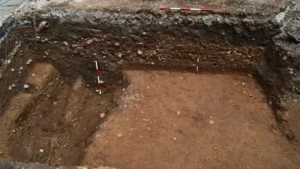
Sections of a Roman road can be seen in this trench

A stretch of Roman road just 38-40 cm (15 in) below Liverpool Road in Castlefield. The trench shows the classic Roman construction sequence – a cambered rubble core surfaced with tightly packed cobbles – and runs on a north-east/south-west alignment that leaves Mamucium’s north gate and heads towards modern Salford.

What might Stonehenge Mean? Dartmoor and Carnac add to the Picture

Dartmoor Stone Rows

Stonehenge has always been enigmatic, due to its use of those definitive morticed trilithons, all of which where squared of, more like the structures of the Maltese temples and other stone structures closer to Africa, as opposed to those of the rest of Britain and most of the wider North-west European ritual landscape.

Megalithic Stone Monuments in France May Be Europe’s Oldest

Carnac

The recent University of Gothenburg–led excavations at Le Plasker, and their startling radiocarbon dates of 4600–4300 BC for the Carnac alignments, deserve both applause for methodological rigor and a measured dose of critical scrutiny before we rewrite Neolithic Europe’s storybook.

Drumanagh Promontory Fort – First Ever Intact Roman Pot Found in Ireland

Roman samian ware

RTE Ireland has reported that more recently they have made yet another remarkable discovery—an intact Roman pot. the first one to be uncovered on Irish soil, and providing more tantalising clues about ancient Roman-Irish interactions.

Although the Roman Empire they never reached Ireland (except, seemingly, in myth). That does not mean, that Roman influence and goods did enter Ireland, and it means that Drumanagh continues to headline as one of Irelands most tantalising archaeological sites for that same reason – exactly what were the Romans doing in Ireland?

Contact Us
close slider