

This small farmstead was established on top of the small chalk hills on the northern edge of the Yorkshire Wolds.
This small farmstead was established on top of the small chalk hills on the northern edge of the Yorkshire Wolds.

“We were shocked to discover such a huge complex,” said Alastair Oswald, archaeological field investigator for English Heritage. Preliminary examinations of the remains suggest it was more than twice the size of most other prehistoric strongholds. Built of timber palisades and girdled by a 1.3 mile circuit of ramparts, 60 per cent of which are cut out of solid limestone, the fort has been provisionally dated at 400BC.
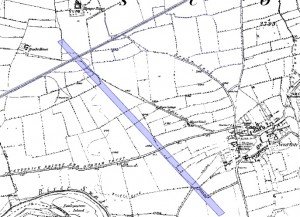
The cursus was originally about 2.1km long and aligned SE-NW. Clustered round the monument were a number of ring ditches, one that was excavated had a single burial with a beaker. This would date the site as being in use from around 3,500BC until at least the Bronze Age c.2,000 BC.
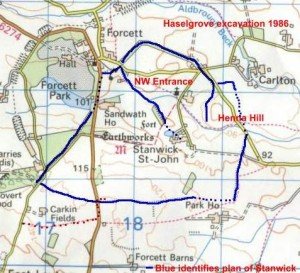
Stanwick is very close to the Scotch Corner junction of the A1, close to Darlington. From Scotch Corner, take the A66 towards Barnard Castle for a couple of miles then take the right turn towards Forcett. The road will take you past part of the defences, at which point a left turn will take you to Stanwick St John Church, which is a suitable starting point for any visit.
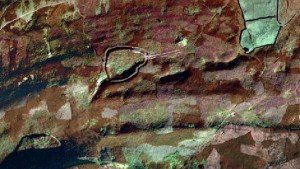
For over five hundred years, the miners and smelters of Reeth produced mountains of precious lead. The lead ores from Reeth had high concentrations of Silver, Lead itself became and important ingredient in bronze. Maiden Castle, deep in the Swaledale lead mining territory a unique piece of Iron Age architecture. It is the only known fort with what seems to be a processional entrance.

The earthwork known in the National Trust inventory as East Witton Camp lies on the north-facing slope of Braithwaite Banks, only a couple of hundred metres uphill from Braithwaite Hall. It is a small, roughly oval Iron-Age enclosure that covers about two and a quarter acres (just under a hectare). We call Braithwaite Wood Fort Iron Age, but it’s actually undated, but its typology indicates a potential Iron Age origin.
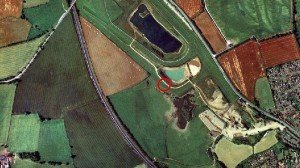
This Iron Age Hill Fort is mostly unrecorded and minimal information is available. A site visit is required to further understand the nature of the site. Note that both this, Roulston and Mam Tor have been dated at around 400BC.

The County of North Yorkshire is a small part of what was once a much larger collection of tribes in a confederation, called the Brigantes, and it is likely that they collectively followed a tribal system that recognised the deity Brigantia, and their supreme being.
 NLS Map Explorer
 Google Earth
 Google Maps
 Lidar Finder
 TMA
TMA
 Megalithic Portal
 Yorkshire Arch. Air Mapping
 ADS
ADS
 Brigantian Adventure FB Group
Stone Bothering FB Group
Stone Faces FB Group
Brigantian Adventure FB Group
Stone Bothering FB Group
Stone Faces FB Group
 Heritage Gateway
 ARCHI® MAPS: UK
 Atlas of Hillforts
 Portable Antiquities
 British History Online
Brigantes Nation FB Group
British History Online
Brigantes Nation FB Group

