Category: Reports

Guide – Congruence in Archaeological Interpretation: Holistic Analysis

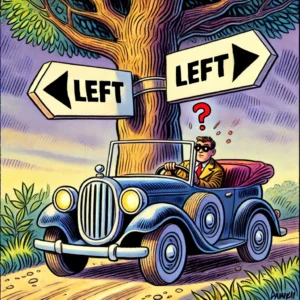
A car approaching a signpost with two arrows pointing in different directions, both leading to the same destination.

In archaeology, congruence refers to the alignment or consistency between various elements of evidence, data, and interpretations. It is the principle that all parts of a research question should fit together seamlessly to offer a coherent and reliable understanding


Guide – Challenging Assumptions with Free Thinking

One of the most powerful tools in archaeology is not just digging deeper into the earth but digging deeper into our own thinking processes. In archaeological research, we often encounter assumptions—either based on prior data, outdated methodologies, or even cultural biases—that shape how we view and interpret the past.

Guide – Introduction to Critical Thinking in Archaeological Research

A car in a river and the driver saying it is a car park

In the world of archaeology, as with all forms of inquiry, the pursuit of truth begins with the ability to think critically and independently. Archaeology is often seen as the science of uncovering the past, but it is equally the art of understanding how we approach and interpret evidence. In the case of the Brigantes Nation, a tribe whose history is riddled with gaps and assumptions, critical thinking is not only useful—it is essential.

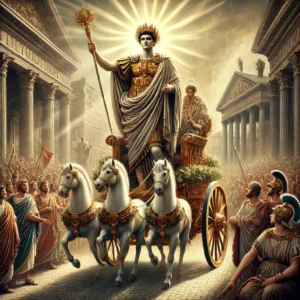
Rome: The Emperors Claim to Divinity

Emperor Augustus dressed as a deity, parading through ancient Rome

Celtic Heads Celtic Head from Witham, 2nd c B.C. (British Museum) “Celtic” carved heads are found throughout the Read more Timeline 60BC – 138AD This timeline is focussed on the British Celtic culture and those cultures which had influence on the British Celts. It Read more Heads at St Michael, Kirklington An analysis of head …

Continue reading

Guide – Applying critical thinking to historic and archaeological research

Often, the key aspect of being able to make progress with regards to researching the past. Is through the application of critical thinking, when it comes to accepting common, or even given understanding and interpretations of what is being explored.

The Golden Rings of our Bronze Age “Elite”

Amesbury Archer - gold hair ornaments

These small, delicate gold objects are highly significant, they offer insight into the social status, trade connections, and cultural practices of early Bronze Age societies in Britain.

The Border Reivers

The Border Reivers were a formidable force in the history of Britain, particularly during the tumultuous period from the late 13th century to the early 17th century. These raiders, hailing from both Scottish and English descent, operated along the Anglo-Scottish border, a region marked by constant strife and conflict.

Early Christian syncretism and how the old ones hid amongst the new religion

Syncretism is where two or more differing beliefs become merged. In England, this first happened under Roman rule, where many pre-existing Celtic shrines to specific deities were associated with Roman deities of the same qualities or attributes. Based on extensive research, I am now confident that in Britain, the early Christians undertook a similar process and with that knowledge, we should be able to reverse engineer, to some extent, our local Brigantian Celtic pantheons.

Iceni

The Iceni tribe, known in Latin as Icēnī, was a powerful and significant group during the Iron Age and early Roman era in what is now eastern Britain.

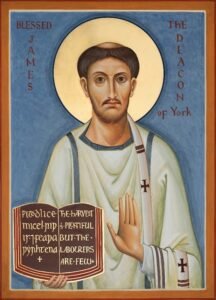
James the Deacon of York

The Gregorian mission, characterized by its strategic and persistent efforts, was bolstered in 601AD with the arrival of Paulinus, one of the monks sent by Pope Gregory to support Augustine’s endeavours. Among those accompanying Paulinus was James the Deacon, a figure shrouded in mystery due to the scant historical records of his life.

Contact Us
close slider