Category: Iron Age

Maiden Castle Fort Pooley Bridge

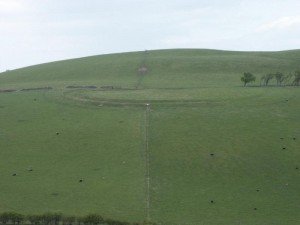
A superbly circular “fort”, built on the side of the hill, which seems to be a Brigantian fashion (see below). This is built with two rampart walls and a very narrow ditch between – 1-2m. If these were defences, they seem pretty slight. In it’s way, a miniature version of Wandlebury, but only about 200m circumference.

East Witton Camp

The earthwork known in the National Trust inventory as East Witton Camp lies on the north-facing slope of Braithwaite Banks, only a couple of hundred metres uphill from Braithwaite Hall. It is a small, roughly oval Iron-Age enclosure that covers about two and a quarter acres (just under a hectare). We call Braithwaite Wood Fort Iron Age, but it’s actually undated, but its typology indicates a potential Iron Age origin.

Barwick in Elmet Iron Age Hill Fort

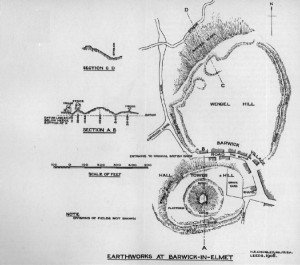
“The scale and function of the earthworks, which may comprise a rampart, a ditch and a counterscarp bank, is massive and assumed to be defensive though large univallate hillforts may have been built on the sites of earlier non-defensive enclosures such as slight univallate hillforts. In area large univallate hillforts vary between 1 and 10 hectares.

Castle Hill, Almondbury

Castle Hill, Huddersfield

Castle Hill’s imposing silhouette hides a great prehistoric fort, Norman castle and Victorian tower. Thanks to Varley’s trenches and the 1995 RCHME survey we have a solid structural framework, yet key chronological pins, remain to be driven. It is therefore both a celebrated landmark for Huddersfield and a live research asset for Iron-Age, and medieval research.

The Kingdom of Venutius

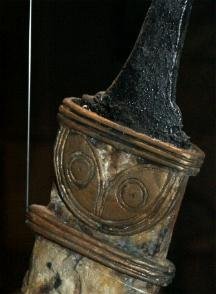
Celtic Heads Celtic Head from Witham, 2nd c B.C. (British Museum) “Celtic” carved heads are found throughout the Read more Timeline 60BC – 138AD This timeline is focussed on the British Celtic culture and those cultures which had influence on the British Celts. It Read more Heads at St Michael, Kirklington An analysis of head …

Continue reading

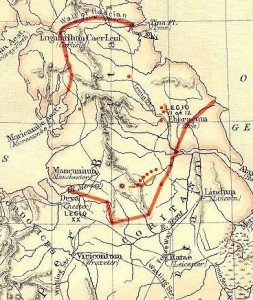
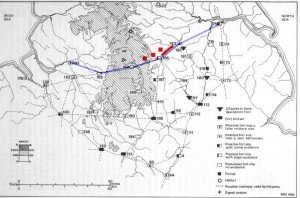
The Gallus Frontier – Brigantia against the Romans

Celtic Heads Celtic Head from Witham, 2nd c B.C. (British Museum) “Celtic” carved heads are found throughout the Read more Timeline 60BC – 138AD This timeline is focussed on the British Celtic culture and those cultures which had influence on the British Celts. It Read more Heads at St Michael, Kirklington An analysis of head …

Continue reading

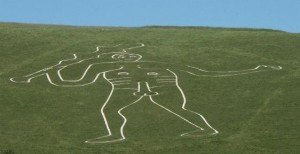
Cerne Abbas Giant, Dorset

Timeline 60BC – 138AD This timeline is focussed on the British Celtic culture and those cultures which had influence on the British Celts. It Read more Cartimandua Yorkshire, and much of northern Britain was also ruled by a queen, the most powerful ruler in Britain in fact. Read more Caratacus Caratacus was highly influenced by …

Continue reading

Stanwick Hill Fort, Forcett, North Yorkshire

Timeline 60BC – 138AD This timeline is focussed on the British Celtic culture and those cultures which had influence on the British Celts. It Read more Cartimandua Yorkshire, and much of northern Britain was also ruled by a queen, the most powerful ruler in Britain in fact. Read more Caratacus Caratacus was highly influenced by …

Continue reading

Barwick in Elmet, West Yorkshire

Timeline 60BC – 138AD This timeline is focussed on the British Celtic culture and those cultures which had influence on the British Celts. It Read more Heads at St Michael, Kirklington An analysis of head carvings in a local area In many churches throughout England there are carvings of possible pagan Read more Cartimandua Yorkshire, …

Continue reading

Arka Unskel hillfort, Highlands

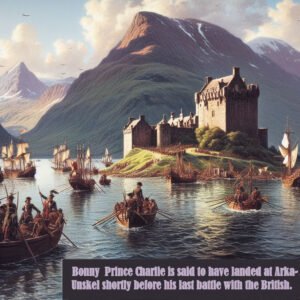
Arka Unskel is 2½ miles ESE of Arisaig at NM693839 and has also been known as Arisaig Fort, Ard Ghaunsgoik and Ard Ghamhgail. Described as on a promontory on the north side of Loch nan Uamh with a heavily vitrified wall.

Contact Us
close slider