Category: Defensive Structures

Hardnott Roman Fort

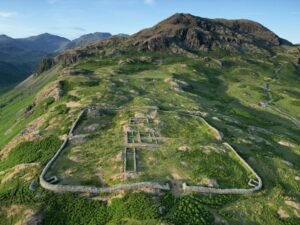
An aerial photo of Hardknott Roman Fort in Cumbria, part of a site report on brigantesnation.com

Hardknott Roman Fort, laying strewn like a discarded child’s toy on the high mountain side, impossibly canted to the east and perched precariously on a rugged cliff edge. Known to its builders as Mediobogdum, the fortress is square, as opposed to the usual rectangular shape. It is 115m to a side, and we have the traditional four gates. These are even today over head height.

Malham Roman Camp, North Yorkshire

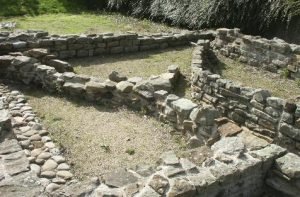
An image illustrating an article about Malham Roman Camp, North Yorkshire on thealicesyndrome.com

← The Yorkshire Dales Greta Bridge Roman Fort The fort lies between the River Greta and the Tutta Beck, just south of their junction, while the Rom,an Road Read more Fremington Hagg Kilgram Bridge Ford Kilgram bridge itself is of known ancient construction, and is believed to date from the early 12th century – probably …

Continue reading

Piercebridge Roman Fort and Vicus

An image illustrating an article about Piercebridge Roman Fort and Vicus on thealicesyndrome.com

The fort at Piercebridge guarded access to the Main north-south crossing of the River Tees in Roman times, a sizeable vicus grew up on it’s eastern side towards the earliest crossing point.

Housesteads Roman Fort

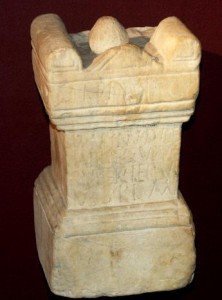
Carved Heads from Housesteads Roman Fort

Eileen na Goar Fort

Eilean nan Gobhar

This island, locally termed Eilean na Goar, is the most eastern and is bounded on all sides by precipitous gneiss rocks; it is the abode and nesting place of numerous sea birds. The flat surface on the top is 120 feet from the sea level, and the remains of the vitrified fort are situated on this, oblong in form, with a continuous rampart of vitrified wall five feet thick, attached at the SW end to a large upright rock of gneiss

Dundon Hill Fort

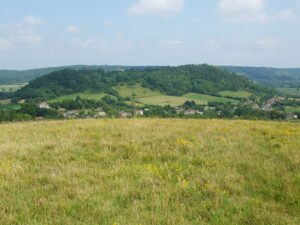
Dundon Hill from Lollover Hill

Dundon Hill rises as a freestanding limestone knoll above King’s Sedgemoor near Compton Dundon in central Somerset. A single earth-and-stone rampart, now anywhere between half a metre and a couple of metres high, encloses roughly five hectares on the summit.

Eboracum, York

Eboracum was the Roman capital of Northern England

Catterick Roman Fort

The Fort at Catterick. It has an unusual shape due to multiple fort plans being overlaid on it. Originally, it was a Roman fort, but a settlement soon sprang up outside the fort, which soon dominated the fort, and Catterick became one of the most important ‘Small towns’ in the north of Britain.

Catterick Roman Marching Camp

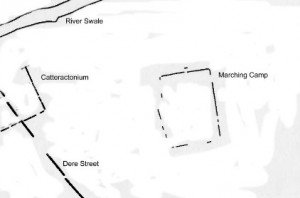
Discovered only recently by air survey and geophysics, this camp lies on the alluvial plain of the River Swale, on the south bank of the river just north-east of Catterick racecourse. The camp lies some 350m to the west of Dere Street.

Troutback Roman Camps

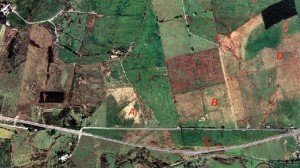
At Troutbeck are three Roman marching camps and a small fort. This could be either a training camp or signs of three campaigns and a later fort.

Contact Us
close slider