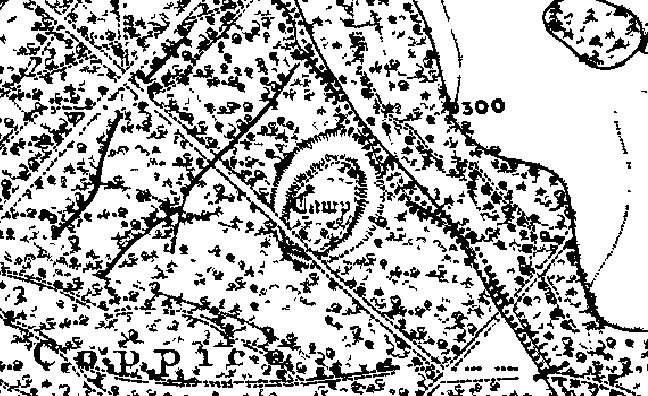
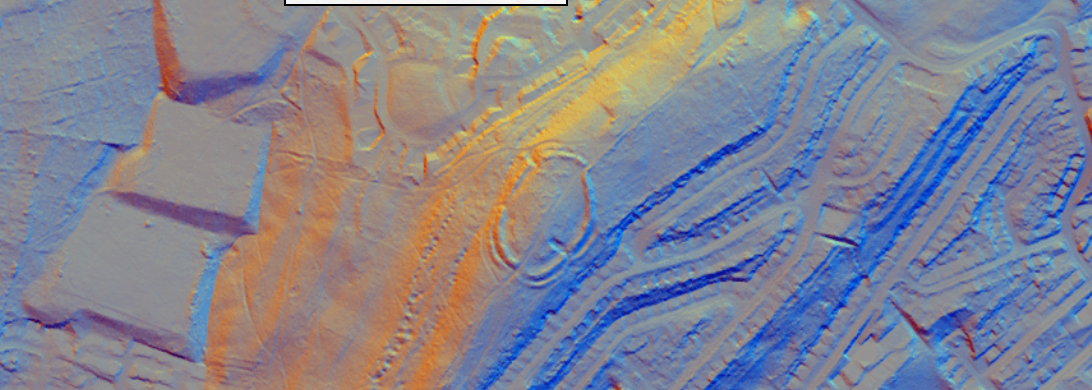
Scholes (or Scoles) Coppice Camp (sometimes called “Caesar’s Camp”) lies just north-west of Kimberworth in Rotherham, atop the same Magnesian Read more
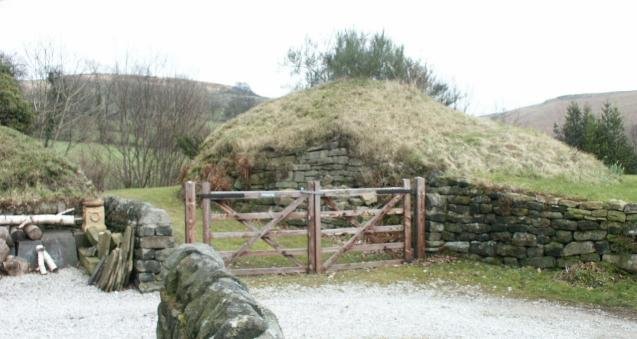
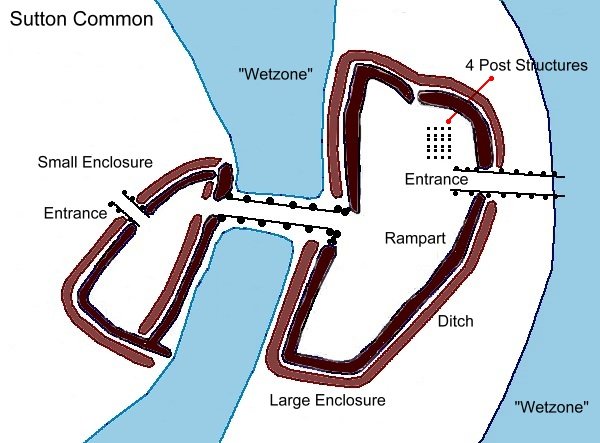
Sutton Common is an early Iron Age fort/enclosure site just north of Doncaster, A key feature of this "marsh fort" Read more
Doncaster Roman Fort (Danum)
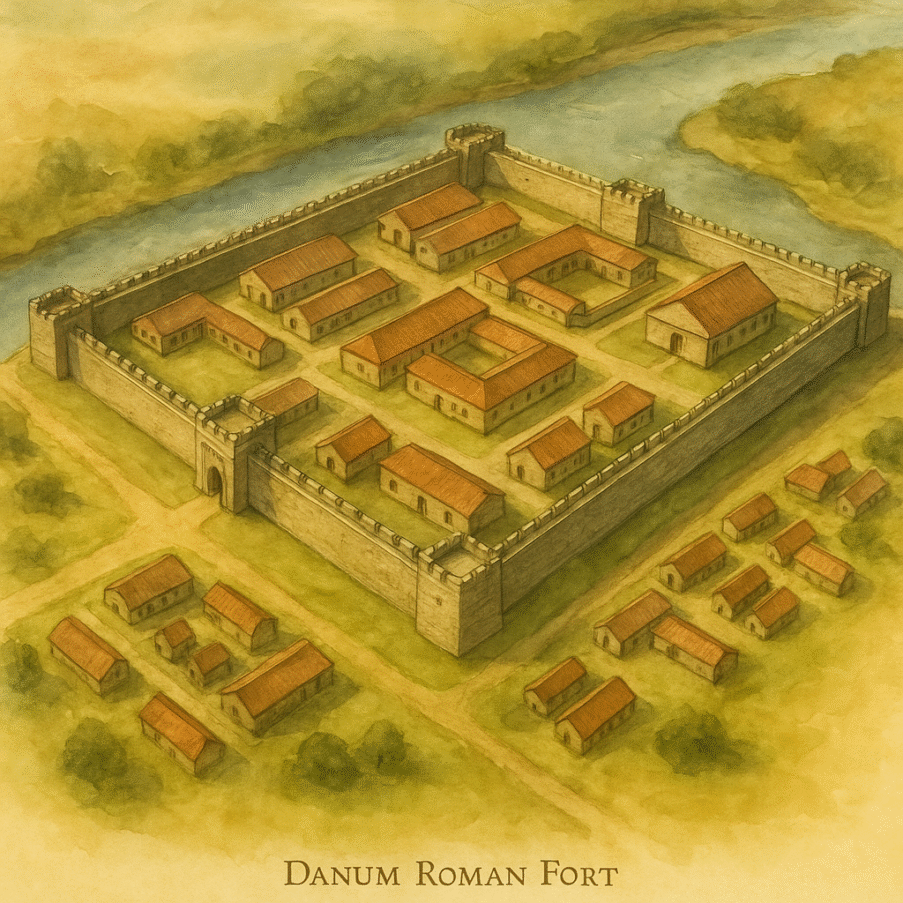
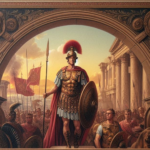
Danum (Doncaster) was one of the principal Roman auxiliary forts in northern Britain, established to guard the crossing of the River Don and to control movement along Ermine Street (the Roman Ridge). Its long occupation and multi-phase development reflect both strategic necessity and the evolving nature of Roman rule in South Yorkshire.
Location & Strategic Setting
Danum lies beneath modern Doncaster Minster (OS grid SE 569 931), at the intersection of Ermine Street and the River Don. Positioned on a gentle gravel terrace just above the river floodplain, it commanded both the major north–south road and the east–west route to Lincoln (roman-britain.co.uk).
Fort Phases & Layout
Flavian Timber Fort (c. AD 71–85): The earliest fort was laid out in timber on a rectangular plan (c. 160 × 135 m, ~2.1 ha), with turf-and-timber ramparts and a single external V-shaped ditch (roman-britain.co.uk).
Trajanic–Hadrianic Enlargement (c. AD 105–125): A second, larger timber fort (c. 175 × 150 m, ~2.6 ha) replaced the original, reflecting the need for more troops during campaigns into Caledonia. This phase introduced internal timber barracks, principia (headquarters) and granaries (heritagegateway.org.uk).
Antonine Stone Refurbishment (c. AD 150–170): Much of the fort was rebuilt in sandstone, including a 2 m-thick curtain wall, corner towers and gatehouses. The defensive ditch was re-cut and strengthened, indicating Danum’s continued importance into the mid-2nd century (roman-britain.co.uk).
Late Occupation (3rd–4th centuries): Evidence for structural repairs, rebuilding of internal timber buildings, and renewed defences shows occupation persisted—perhaps intermittently—until the early 5th century AD (heritagegateway.org.uk).
Garrison & Units
Tile stamps, tombstone inscriptions and military diplomas record units such as:
Cohors IV Gallorum Equitata (the Fourth Cohort of Gauls, partially mounted) (researchframeworks.org).
Ala I Tungrorum (First Wing of Tungrian cavalry) in the late 1st century.
These auxiliary troops were tasked with patrolling the Don corridor, escorting supply trains, and serving as a mobile strike force (roman-britain.co.uk).
Vicus & Civil Industry
Outside the eastern gate, a substantial vicus (civil settlement) developed, comprising:
Timber houses and taverns lining the road trade route.
Workshops producing iron nails, hobnails and coarse wares.
A bath-house complex with a hypocaust and cold-water plunge, fed by local springs (doncaster.gov.uk).
Major Excavations & Finds
1870s–1880s Rotherham Society Trenches: Early trenches uncovered Hadrianic pottery, Samian ware and coins from Vespasian to Constantine—establishing the fort’s long usage (farndalefamily.co.uk).
1916–17 May Rescue Excavations: Detailed recording of rampart foundations and recovery of tile stamps stamped “IV GALL” plus tombstones (including that of Flavius Strabo and his wife Chloris) provided names and origins of soldiers and civilians (farndalefamily.co.uk).
1960s–1970s Inner Ring Road Works: A Danum shield, found in a bonfire layer dated c. AD 85, now resides in Doncaster Museum; its stratigraphy shed light on a controlled abandonment and rapid rebuilding of the fort (en.wikipedia.org).
2000s Geophysics & Watching Briefs: Magnetometry ahead of site redevelopment mapped buried stone wall lines, gates and vicus streets; watching briefs recorded reused masonry in later medieval cellars (researchframeworks.org).
Legacy & Public Interpretation
Doncaster Museum & Art Gallery holds most of the key artifacts—tile stamps, tombstones, the restored Danum shield and vicus ceramics.
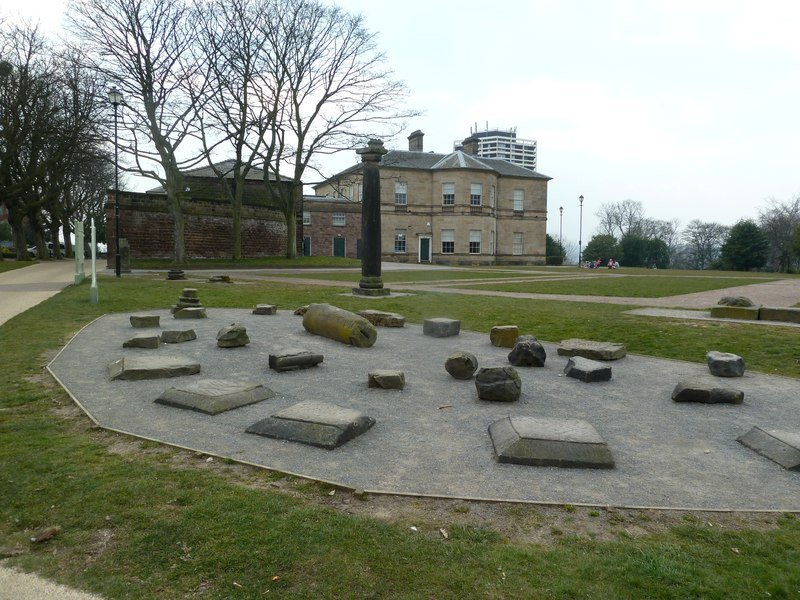
Footprints in the Urban Plan: The Roman street grid survives in the layout around St George’s Minster, where the fort’s principia once stood.
Heritage Trail: Information panels along North Bridge Road and around the Minster outline Danum’s phases, making the Roman past visible within the modern cityscape.
Silver coin. Republican denarius, as kindly identified by the finder, very worn, issue of Calpurnius Piso Frugis [which one is uncertain], probably issue of 90-67BC, Reece period 1Obverse description: Helmeted head of Roma right, small [...]
Base metal plated denarius or forgery, as kindly identified by the finder, of Plautilla (202-205), Reece period 10Obverse description: bust coiffed and draped rightObverse inscription: PLAVTILLA AVGVS[TA]Reverse description: facing figure with propped hoplon shield lower [...]
A Medieval silver cut farthing of John (AD 1199-1216). Class 5b2 (North 970) dating to AD 1204-1209. Mint and moneyer uncertain. North (1994: 221).Overall dimensions: 8.4mm in length, 9.9mm in width, 0.5mm in thickness and [...]
Copper alloy token. Milled halfpenny token issue of 1650-1671Obverse description: wire-drawn circle with text over three lines: THEIR/HALF/PENYObverse inscription: *GABRIEL[---]ORDReverse description: Tudor-style rose within circleReverse inscription: *HOL[--]?OL?[--]Diameter: 18.6mm, Weight: 1.47gms, die axis: 3 [...]
A complete Iron Age gold stater of the East Wiltshire region, dating to the period 50-20 BC. Savernake Forest type. Plain obverse. Reverse: skinny horse right, pellet mane, solar spiral above and large wheel below, torc motif in front [...]
Copper alloy brooch fragment. The bow and foot of a cast Colchester brooch, Mackreth type C 2. A thin bow of plain rounded section tapers to its foot end where an integral unpierced catch plate [...]
Copper alloy brooch. Cast rear-hook fastening Colchester derivative brooch, cf. Mackreth types CD RH 5.c/?5.i. Plain semi-circular wings with a central blob of solder in the gutter formerly retained a spring [now lost] assisted by [...]
Silver coin. Voided long cross cut farthing, possibly of Henry III (1216-1272), issue of 1248-1278, moneyer possibly Nicole.Obverse description: facing bust, hair [right] includes a neat curl and pellet.Obverse inscription: (--)CVS(--)Reverse description: voided long cross, [...]
An incomplete copper alloy strap end dating to the Early Medieval period (c. AD 750-900). The object is sub-oval in shape and flat in cross-section, with a zoomorphic terminal at one end and a pointed worn break [...]
Copper alloy unidentified object fragment. A small cast oval plate with a longitudinal rib behind, on which a spot of rust remains. The display side bear a penannular border with a low central boss. The [...]
A silver Roman denarius of Antoninus Pius (AD 138-161), dating to AD 138, (Reece period 7). AVG PIVS P M TR P COS DES II reverse type with Fides standing right holding corn ears and basket of fruit. Mint [...]
An incomplete copper alloy Colchester Derivative, Polden Hill type brooch dating to the Roman period (c. AD 75-175). The remains of the brooch consist of the head with partial wings. On the reverse of the head the [...]
Copper alloy finger ring. A small narrow cast band with a flat upstanding plain circular bezel flanked by pairs of rectangular billets at the shoulders, all these details being integrally cast. The small size might [...]
An incomplete copper alloy double-looped buckle dating to the late Medieval period (c. AD 1400-1500). The buckle has one complete loop and one partial loop, with only part of the frame arm remaining. The complete loop [...]
A bent post-medieval silver halfgroat of Charles I (1625-1649). Group D dating to the period 1641-1643. I.m: probably triangle in circle. Tower mint. North (1991) no. 2258. [...]
Silver coin fragment. Slightly under one half of a broken Flavian denarius (69-96), Reece period 4, very worn.Obverse description: craggy head laureate right; trace of wordy legendReverse description: possibly pair of oxen walking leftDiameter: 16.6mm, [...]
An incomplete openwork, copper alloy belt or strap mount dating from the early Post-medieval period, AD 1500 - 1700.There is a teardrop shaped loop with a fleur de lis terminal extending from the pointed end and a rounded [...]
An incomplete copper alloy single-loop buckle dating to the Medieval period (c. AD 1250-1350). The buckle is formed of a D-shaped loop, with a thin bar that protrudes slightly beyond the edge of the frame. The pin is [...]
Lead spindle whorl, as kindly identified by the finder. Cast plano-convex whorl with a central moulded aperture of diameter 9.2mm, probably cast using one half of a biconvex whorl as a master; worn smooth and [...]
An incomplete copper alloy Vessel of Modern date (AD 1800-1910). The object is a jardinere, with a shallow circular form and rolled everted lip. The object retains three applied feet with quatrefoil upper plate and [...]